
三农问题

Search documents
他们,将影响你的生意和生活|农业农村部部长韩俊
Jing Ji Guan Cha Bao· 2026-02-25 09:36
Core Viewpoint - The focus is on addressing the "three rural issues" as a priority, emphasizing the need for modernizing agriculture and improving rural living conditions to enhance farmers' livelihoods [2][5]. Group 1: Agricultural Production and Policies - The 2026 agenda emphasizes the importance of agricultural modernization and rural revitalization, aiming to enhance food production and maintain reasonable prices for key agricultural products to ensure stable income for farmers [2][3]. - A new initiative aims to increase grain production capacity by implementing a new round of actions to boost grain output, focusing on improving crop varieties and quality [3][5]. - The government plans to strengthen agricultural infrastructure, including water conservancy and meteorological monitoring, to enhance disaster prevention and mitigation capabilities in agriculture [3][4]. Group 2: Poverty Alleviation and Farmer Support - Establishing a mechanism to prevent large-scale poverty and ensuring continuous support for underdeveloped areas is crucial for consolidating the achievements of poverty alleviation [3][6]. - The government aims to promote stable income for farmers by improving the income guarantee mechanisms for grain producers and supporting rural employment and entrepreneurship [3][4]. Group 3: Rural Environment and Reform - Continuous efforts are needed to improve rural living conditions, addressing issues such as sanitation and waste management [4]. - The government plans to deepen rural reforms, including extending land contracts and innovating financing mechanisms for rural development [4][6]. Group 4: Agricultural Modernization and Challenges - The agricultural sector has seen stable grain production, with output expected to reach a historical high of 1.4298 trillion jin by 2025, ensuring food security for the population [5]. - Despite advancements, challenges remain in agricultural foundations and rural development, necessitating coordinated efforts in technology, green agriculture, and quality improvement [6].
时·势·实:读懂中央一号文件的三重深意
Xin Lang Cai Jing· 2026-02-07 20:46
Core Viewpoint - The recent document from the Central Committee and the State Council emphasizes the modernization of agriculture and rural areas, marking a significant focus on comprehensive rural revitalization as a key theme in China's development strategy [3][4]. Group 1: Time Perspective - The document identifies the current period as crucial for achieving socialist modernization, highlighting the need to address shortcomings in agriculture and rural areas [4]. - The focus has shifted from merely ensuring food security to enhancing food quality and safety, as well as stabilizing and increasing farmers' incomes [4][5]. - Key terms in the document reflect a systemic and higher-level development requirement, indicating a transformation in agricultural practices and rural development strategies [5]. Group 2: Policy Trends - The consistent prioritization of "three rural issues" in the central government's annual documents signifies an unwavering commitment to agriculture and rural development [6]. - The document continues to emphasize food security and agricultural production capacity, maintaining a strong policy continuity that supports rural revitalization efforts [7]. - It highlights the importance of tailored approaches in rural construction, moving away from one-size-fits-all solutions to respect local conditions and characteristics [7]. Group 3: Practical Approaches - The document outlines specific, actionable goals for agricultural modernization, breaking down broad visions into annual, measurable tasks [8]. - It addresses farmers' income through targeted measures for both operational and wage income, emphasizing the need for collaboration between agricultural enterprises and local economies [8][9]. - Innovative methods such as "area-based promotion" in rural construction are introduced to tackle resource allocation challenges, ensuring policies are grounded in local realities and farmer needs [9].

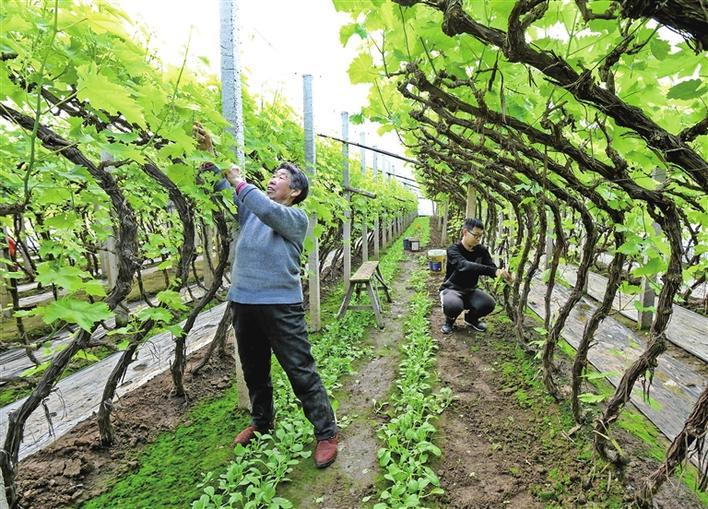
夯实“压舱石”,加快农业农村现代化
Ren Min Ri Bao· 2026-02-03 23:59
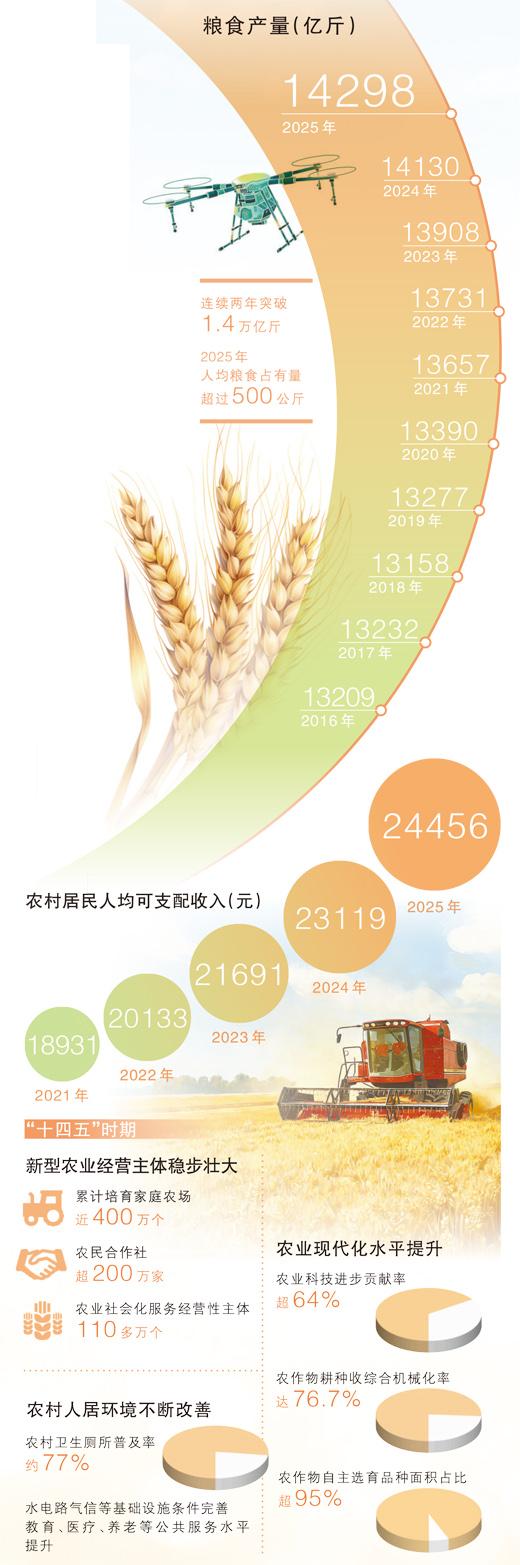
Core Insights - The central document emphasizes the importance of agricultural and rural modernization as a key component of China's overall modernization strategy, particularly in the context of the 14th central document focusing on "three rural issues" [1][2] Group 1: Agricultural Production and Economic Impact - By 2025, China's grain production is expected to reach a historical high of 14.298 billion jin, maintaining stability above 14 trillion jin for two consecutive years [2] - The per capita disposable income for rural residents is projected to reach 24,456 yuan, indicating a positive trend in rural economic development [2] Group 2: Policy and Strategic Focus - The central document outlines measures to stabilize grain and oil production, enhance farmland protection, and improve agricultural technology innovation [3] - The focus on rural revitalization and modernization is seen as essential for addressing social imbalances and ensuring food security [3][4] Group 3: Implementation and Governance - The document calls for a unified approach to implement the central government's directives on "three rural issues," emphasizing the need for practical and effective policy execution [4] - It highlights the importance of integrating urban and rural development to foster economic growth and improve public services in rural areas [4]
朝着建设农业强国目标扎实迈进(政策解读·中央一号文件)
Ren Min Ri Bao· 2026-02-03 22:23
Core Viewpoint - The central government emphasizes the importance of addressing agricultural and rural issues as a priority, aiming for modernization in agriculture and improved living conditions for farmers by 2026 [3]. Group 1: Agricultural Production and Food Security - Grain production in China is expected to remain stable at around 1.4 trillion jin, with a focus on enhancing agricultural productivity and quality [4][5]. - The government aims to implement measures to increase grain yield, including optimizing agricultural production structures and improving crop quality [5][6]. - Strengthening disaster prevention and response capabilities is crucial for enhancing grain production capacity [6][7]. Group 2: Rural Development and Poverty Alleviation - The government stresses the need for continuous support to prevent large-scale poverty and ensure the sustainability of poverty alleviation efforts [9][10]. - A systematic approach to regularized assistance is proposed, focusing on maintaining financial support and optimizing existing policies to enhance effectiveness [9][10][11]. - The emphasis is placed on targeted assistance for different regions, particularly for underdeveloped areas, to ensure equitable development [11]. Group 3: Income Growth for Farmers - Increasing farmers' income is identified as a central task, with measures to broaden income channels and enhance agricultural productivity [13][14]. - The average disposable income for rural residents is projected to reach 24,456 yuan in 2025, reflecting a nominal growth of 5.8% [13]. - The government plans to support farmers through various income sources, including agricultural production, labor income, and local industries [14][15]. Group 4: Infrastructure and Rural Living Conditions - The government aims to improve rural infrastructure and public services, addressing issues such as transportation, water supply, and waste management [16][18]. - There is a focus on enhancing the quality of rural living environments and ensuring that development aligns with local needs and conditions [17][18]. - The initiative includes promoting cultural and social improvements in rural areas to foster a better quality of life [17][19].
经济日报金观平:把解决好“三农”问题作为重中之重
Xin Lang Cai Jing· 2026-01-09 22:40
Core Viewpoint - Agricultural modernization is essential for China's overall modernization, as emphasized by the recent Central Rural Work Conference, which aims to transform agriculture into a modern industry and improve living conditions in rural areas [1] Group 1: Agricultural Development - The situation of "three rural issues" (agriculture, rural areas, and farmers) has improved significantly in recent years, with stable grain production and continuous increases in economic crops [1] - Major crops have achieved full mechanization in planting and harvesting, enhancing productivity and efficiency [1] Group 2: Rural Transformation - There have been substantial changes in rural landscapes, with the development of advantageous specialty industries in poverty alleviation areas, indicating strong growth potential [1] - New industries such as rural tourism and e-commerce are thriving, contributing to improved production and living conditions in rural areas [1]
把解决好“三农”问题作为重中之重
Jing Ji Ri Bao· 2026-01-09 22:04
Core Viewpoint - The modernization of agriculture and rural areas is essential for China's overall modernization, with a focus on improving living conditions for farmers and enhancing agricultural productivity [1] Group 1: Agricultural Modernization - The recent Central Rural Work Conference emphasized the need to build a modern agricultural industry and improve rural living conditions, aiming for a prosperous life for farmers [1] - Despite recent successes in agricultural production, challenges remain, including the need for stronger agricultural foundations and addressing the income pressures faced by farmers [1][2] Group 2: Food Security - Ensuring stable supply of food and important agricultural products is a top priority for agricultural modernization, with a focus on increasing grain production capacity and promoting efficient agricultural practices [2] - The government aims to maintain reasonable prices for key agricultural products to incentivize farmers and prevent large-scale poverty [2] Group 3: Rural Development - The construction of beautiful homes and improved living standards for farmers is a key aspiration, requiring tailored approaches to rural development based on local conditions [3] - Optimizing county-level industrial structures and resource allocation is crucial for enhancing rural living and working conditions, promoting integrated development across urban and rural areas [3] Group 4: Strategic Importance - Achieving agricultural and rural modernization is a systematic and strategic task that requires urgent and sustained efforts, with a focus on addressing "three rural issues" as a priority [3]
国家发改委:以保障国家粮食安全和防止规模性返贫致贫为底线
Di Yi Cai Jing· 2025-12-24 01:41
Core Viewpoint - The article emphasizes the importance of the "14th Five-Year Plan" period as a critical time to achieve the strategic goals set by the 20th National Congress of the Communist Party of China, aiming for agricultural modernization and improved rural living conditions by 2035 [1] Group 1: Agricultural Modernization - The goal is to achieve basic agricultural modernization by 2035, with a focus on addressing the "three rural issues" as a top priority for the Party's work [1] - The article advocates for prioritizing agricultural and rural development, leveraging the experience from the "Ten Thousand Projects" initiative [1] Group 2: Rural Revitalization - The approach to rural revitalization will be comprehensive, integrating rural industry development, construction, and governance [1] - Ensuring national food security and preventing large-scale poverty are highlighted as fundamental objectives [1] Group 3: Policy Implementation - The article calls for deepening rural reforms and developing new productive forces in agriculture as a driving force for progress [1] - Urban-rural integration is emphasized as a key strategy for achieving the overall goals of rural revitalization [1]
给总理写信的李昌平:我永远站在农民利益这边|我们的四分之一世纪
经济观察报· 2025-12-18 11:10
Core Viewpoint - The article highlights the journey of Li Changping, a former official and rural reform advocate, who has dedicated his life to standing with farmers and addressing their struggles in rural China [5][6][18]. Group 1: Background and Personal Journey - Li Changping, aged 62, grew up in a fishing village in Hubei and became a grassroots official after graduating from university [4]. - He experienced the hardships of farmers firsthand, witnessing their migration for work and the challenges they faced in rural life [10][11]. - In 2000, he wrote a heartfelt letter to then-Premier Zhu Rongji, expressing the dire situation of farmers and urging for reforms [5][12]. Group 2: Impact of the Letter - The letter detailed alarming statistics, such as 80% of farmers losing money on their crops and the increasing financial burdens on the elderly and children [13]. - Following the letter, significant reforms were initiated in Hubei, aimed at alleviating the financial burdens on farmers [15]. - Li Changping's advocacy led to a series of reforms that, while beneficial for many, also made him a target for criticism from those whose interests were threatened [18]. Group 3: Continued Advocacy and Experiments - After leaving his official position, Li engaged in various roles, including working with NGOs and conducting rural reform experiments [19]. - He founded the China Rural Construction Institute, focusing on innovative projects in over 700 rural areas, such as wind power and land improvement [19]. - Influenced by notable experts, Li emphasizes the importance of practical experiments in understanding and addressing rural issues [20][22]. Group 4: Current Life and Philosophy - Li currently lives in a rural area, where he continues to engage with local communities and advocate for farmers' rights [28]. - He maintains a routine that includes writing and connecting with nature, reflecting a deep commitment to rural life [27]. - His experiences have shaped a philosophy of patience and understanding, as he navigates the complexities of rural reform and advocacy [29].
“十五五”关键部署:加快农业农村现代化 扎实推进乡村全面振兴
Sou Hu Cai Jing· 2025-11-02 14:33
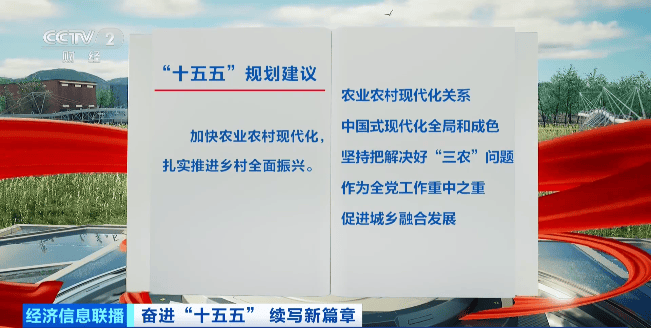
Core Viewpoint - The "14th Five-Year Plan" emphasizes accelerating agricultural and rural modernization and solidly promoting comprehensive rural revitalization [1] Group 1: Agricultural Modernization - The modernization of agriculture and rural areas is crucial for the overall and qualitative development of Chinese modernization [1] - The plan prioritizes addressing the "three rural issues" as a key focus for the entire party's work [1] Group 2: Rural Revitalization - The strategy aims to promote urban-rural integration and continuously consolidate and expand the achievements of poverty alleviation [1] - It seeks to ensure that rural areas have basic modern living conditions and accelerate the construction of a strong agricultural nation [1] Group 3: Policy Effectiveness - The plan aims to enhance the effectiveness of policies that benefit farmers and promote agricultural prosperity [1] - It includes initiatives to improve the quality and efficiency of agricultural production [1]
中共中央新闻发布会丨农业农村现代化是需要优先补上的最大短版
Yang Shi Xin Wen Ke Hu Duan· 2025-10-24 06:00
Core Viewpoint - The modernization of agriculture and rural areas is crucial for the overall modernization of China and is identified as a significant shortcoming that needs to be prioritized [2] Group 1 - The Central Committee emphasizes addressing the "three rural issues" (agriculture, rural areas, and farmers) as a top priority for the entire party's work [2] - The proposal for the 15th Five-Year Plan highlights the importance of promoting urban-rural integration and accelerating the construction of a strong agricultural nation [2]