不完美美学

Search documents
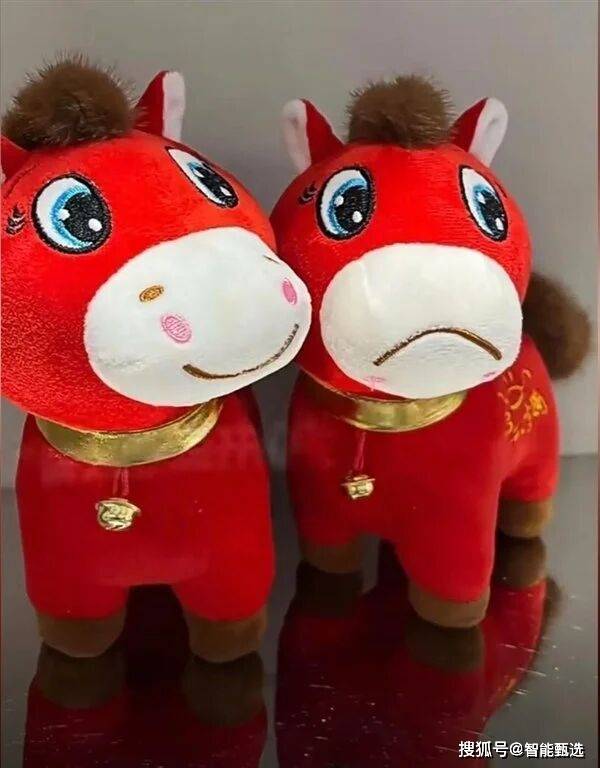
“哭哭马”逆袭:消费生态中不完美与情绪价值的共振
Sou Hu Cai Jing· 2026-01-10 17:11
Core Insights - The rise of the "Crying Horse" toy in Yiwu reflects a collision of "imperfect aesthetics" and "emotional value," highlighting the flexible transformation of Chinese manufacturing and the Z generation's demand for authentic emotional connections [1][4] Group 1: Emergence of "Crying Horse" - The "Crying Horse" gained popularity due to a production accident where a factory worker mistakenly sewed the mouth upside down, creating a toy with a sad expression that resonated with consumers [3][4] - Initial trial sales of the flawed toy resulted in 5,000 orders within three days, demonstrating the power of social media in driving consumer interest [3][4] Group 2: Emotional Consumption Trends - A report indicates that 56.3% of young consumers are willing to pay for emotional value, suggesting a shift from functional to emotional pricing in the new consumption era [4][6] - The "Crying Horse" serves as a vehicle for emotional expression, aligning with the self-deprecating culture prevalent among younger consumers [4][6] Group 3: Flexible Production and Market Response - The Yiwu manufacturing ecosystem showcased a rapid response mechanism, with factories operating 24/7 to produce tens of thousands of units within days, adapting to the surge in demand [5][6] - The supply chain was adjusted within 72 hours to ensure continuous product availability, demonstrating the agility of the industry [5][6] Group 4: Cultural and Social Implications - The "Crying Horse" has become a social currency among young people, symbolizing an understanding of the "crying while running" philosophy of life [6][8] - The toy's imperfections are viewed as valuable differentiators in a market saturated with industrial perfection, appealing to consumers' desire for authenticity [5][8] Group 5: Future of Manufacturing - The phenomenon indicates a shift towards a more human-centered manufacturing approach, where emotional resonance and authenticity take precedence over mere perfection [8][10] - Companies are encouraged to embrace consumer feedback for product iteration, fostering a collaborative relationship between brands and consumers [10]

品牌完美人设,正在劝退年轻人
3 6 Ke· 2025-06-24 02:38
Core Perspective - The article discusses the emerging trend of consumers embracing "imperfect" products as a new form of aesthetic and self-expression, moving away from the traditional pursuit of perfection in consumer goods [2][12][24] Group 1: Consumer Behavior Shift - There is a significant shift from "standardization worship" to "individual awakening," where consumers are overwhelmed by uniform products and are now seeking unique, imperfect items that resonate with their personal identity [3][5] - The popularity of "peel-off stickers" among young consumers highlights a desire for authentic experiences, as these products offer a sense of randomness and uniqueness, appealing to the Gen Z's craving for real-life engagement [5][9] - Consumers are redefining value, prioritizing sustainability and uniqueness over the traditional notion of "new and flawless," as seen in the growing vintage clothing market [6][8] Group 2: Sustainability and Value Reassessment - The fast fashion industry generates approximately 92 million tons of waste annually, prompting a reevaluation of "imperfect" items as sustainable choices, with vintage clothing becoming a social currency among youth [6][8] - The global vintage market is projected to reach $218 billion by 2026, growing at a rate 11 times faster than the traditional apparel sector, indicating a strong consumer preference for sustainable and unique products [6] Group 3: Brand Strategies and Marketing - Brands are increasingly adopting "imperfect" as a marketing strategy, but must genuinely embrace this aesthetic rather than using it as a mere gimmick to gain consumer trust [13][19] - Successful brands are showcasing "real imperfections" in their marketing, which resonates more with consumers than idealized images, as demonstrated by brands like Aerie and Patagonia [17][19] - The concept of "defect co-creation" is emerging, where brands engage consumers in product development, transforming them from passive buyers to active participants, enhancing brand loyalty [20][22] Group 4: Design and Aesthetic Evolution - High-end brands are finding inspiration in imperfection, with designers like Issey Miyake and Yohji Yamamoto incorporating intentional flaws into their creations, challenging traditional beauty standards [14][16] - The integration of "imperfection" into product design not only satisfies consumer desires for uniqueness but also helps brands differentiate themselves in a crowded market [16] Group 5: Emotional Connection and Consumer Trust - Consumers are increasingly seeking emotional connections with brands, preferring those that acknowledge their imperfections and resonate with their values, rather than those that present a facade of perfection [23][24] - The shift towards "embracing reality" reflects a broader societal trend where consumers are more accepting of flaws, viewing them as symbols of individuality and authenticity [12][24]