不平等贸易协议

Search documents
玉渊谭天丨美国国际贸易协议的“明枪”与“暗箭”
Yang Shi Xin Wen· 2025-08-01 07:53
Core Points - The recent trade agreements announced by the U.S. government with various countries reveal numerous "unequal" demands that may harm these nations further [2][10] - The agreements emphasize a narrative of "winning" for the U.S., often framing concessions as rewards rather than negotiations [3][6] - The U.S. is expanding its development space at the expense of other countries' autonomy [10][24] Group 1: Unfair Development Rights - The U.S. agreements often highlight the narrative of victory, with statements emphasizing what the U.S. has gained [3][4] - The agreements impose higher tariffs on other countries compared to the concessions they receive, creating a disparity in tax rates [7] - Additional conditions, such as "transshipment" restrictions, further complicate the agreements, impacting countries like Vietnam that rely heavily on foreign investment [7][9] Group 2: Unfair Market Access - The agreements require countries to open their markets to U.S. goods, particularly focusing on expanding U.S. agricultural exports [10][11] - The U.S. is facing a food trade deficit for the third consecutive year, with imports exceeding exports by nearly $50 billion [12] - The agreements with countries like Japan require significant increases in U.S. agricultural imports, which may disrupt local markets and regional trade [15][18] Group 3: Unfair Political Constraints - The recent trade agreement with the EU requires significant investments and energy purchases from the U.S., leading to internal dissent within the EU [20][21] - The EU is expected to invest $600 billion and purchase $750 billion in U.S. energy over three years, raising concerns about loss of energy sovereignty [22][24] - The energy purchasing requirement is seen as unrealistic and may disrupt global energy trade dynamics [23][24]
欧洲签下“不平等条约”,美元、欧元分别创出5月以来最大涨幅和跌幅
Hua Er Jie Jian Wen· 2025-07-29 01:13
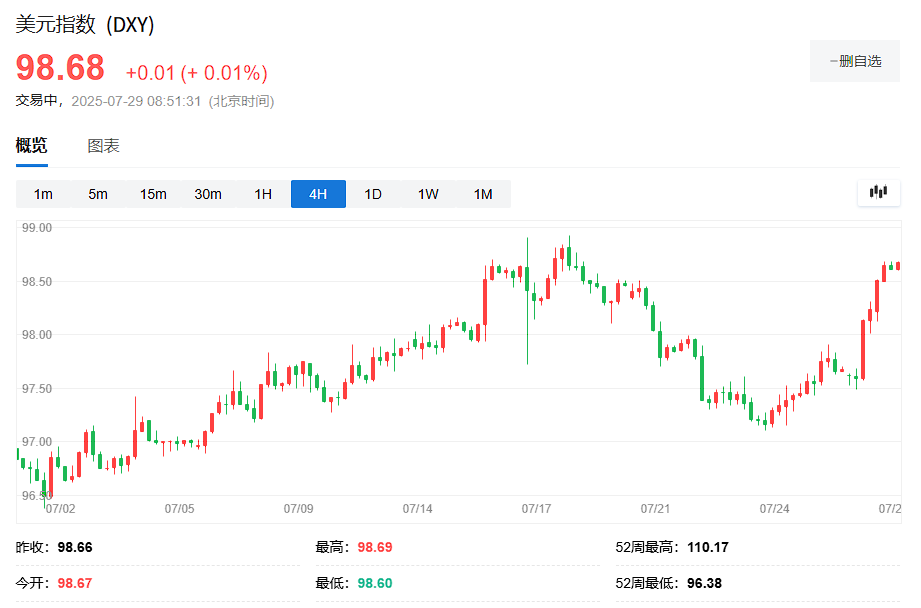
Group 1 - The US and EU have reached a 15% tariff agreement, which is seen as unequal and has raised concerns among investors about its impact on global economic growth [1][2] - The agreement is described as the largest trade deal in history, covering nearly 44% of global GDP, but has faced strong criticism from European leaders [1][2] - The market reaction indicates a shift towards the US dollar as a safe haven, with the dollar index rising 0.8%, marking its largest single-day increase since May [1][3][6] Group 2 - Despite the agreement being better than the previously threatened 30% tariffs, the 15% rate is still double the average tariffs imposed by the US on the EU before April [2] - European leaders, including those from Germany and France, have expressed strong dissatisfaction, labeling the day of the agreement as a "dark day" for the EU [2] - The automotive sector is particularly affected, with stocks in this industry dropping 1.8% in the Stoxx Europe 600 index due to the tariff impacts [7]