世界建模

Search documents
英伟达Jim Fan:“世界建模”是新一代预训练范式
3 6 Ke· 2026-02-05 07:34
Core Insights - The emergence of world modeling as a new pre-training paradigm is anticipated to significantly impact robotics and multimodal AI by 2026 [1][2][20] - World modeling involves predicting the next reasonable state of the world given an action, expanding beyond traditional AI video applications [5][20] - The shift from language-centered models to vision-centered models is expected to enhance physical AI capabilities [6][10][30] Group 1: World Modeling Definition and Implications - World modeling is defined as predicting the next reasonable world state based on a given action, which is crucial for advancements in physical AI [5][20] - The current hype around world models is primarily focused on AI video, but a breakthrough in physical AI is expected by 2026 [5][20] - A new reasoning form is anticipated, emphasizing visual space thinking chains rather than language-based reasoning [16][17] Group 2: Technical Challenges and Developments - The transition from pixel-based to physical action generation in large world models presents significant challenges, including geometric consistency and real-time response [28] - Visual reasoning is gaining attention, suggesting that reasoning does not necessarily depend on language but can be achieved through visual simulations [28][30] - The need for high-frequency response in robotics highlights the importance of reducing latency in large world models [28] Group 3: Industry Trends and Investments - Major players like Google and NVIDIA are investing in world modeling technologies, indicating a competitive landscape in virtual gaming, video, and physical robotics [26][31] - Recent funding activities, such as World Labs seeking a valuation of approximately $5 billion and AMI Labs potentially reaching $3.5 billion, reflect rapid commercial advancements in this field [31]


英伟达Jim Fan:「世界建模」是新一代预训练范式
量子位· 2026-02-05 04:10
Core Viewpoint - The article discusses the emergence of "world modeling" as a new pre-training paradigm in AI, particularly in robotics and multimodal AI, predicting that 2026 will be a pivotal year for its application [3][8][28]. Group 1: Definition and Transition - World modeling is defined as predicting the next reasonable state of the world given an action, marking a shift from the previous paradigm of next word prediction [5][6][9]. - The current hype around world models is primarily focused on AI video applications, but the real breakthrough is expected in physical AI by 2026 [7][10]. Group 2: Implications for Robotics - The article emphasizes that world models will serve as a foundation for robotics and multimodal AI, enabling a new reasoning form based on visual space rather than language [10][25][45]. - The transition from pixel-based models to physical action generation remains challenging, requiring advancements in data and computational needs [41][42]. Group 3: Visual-Centric Reasoning - Visual reasoning is highlighted as a crucial aspect, where geometric and motion simulations can facilitate reasoning processes without relying on language [43][46]. - The article draws parallels with biological intelligence, suggesting that high dexterity in physical tasks does not necessarily depend on language skills, as exemplified by primates [19][21][46]. Group 4: Industry Developments - Major players like Google and NVIDIA are investing in world modeling technologies, with significant funding rounds reported for startups like World Labs and AMI Labs [40][47]. - The article suggests that 2026 may mark a shift away from language models in robotics, focusing instead on building native systems that leverage visual capabilities [46].

第二代AI预训练范式:预测下个物理状态
机器之心· 2026-02-04 11:20
Core Viewpoint - The article discusses the shift from the first generation of AI models, primarily based on "next word prediction," to a second generation focused on "world modeling" or "predicting the next physical state," highlighting the limitations of current AI applications in the physical world [4][8]. Group 1: Current AI Paradigms - The first generation of AI models, exemplified by large language models (LLMs), has achieved significant success but struggles with real-world applications [4]. - The second generation, as proposed by Jim Fan, emphasizes world modeling, which involves predicting reasonable physical states under specific actions, marking a transformative shift in AI development [8]. Group 2: World Modeling Definition and Implications - World modeling is defined as predicting the next physical state based on specific actions, with video generation models serving as a practical example [8]. - The article anticipates that 2026 will be a pivotal year for large world models (LWMs) in robotics and multimodal AI, establishing a real foundation for future advancements [8]. Group 3: Comparison of AI Models - Visual language models (VLMs) are described as "language-first," where visual information is secondary, leading to a disparity in physical understanding compared to LLMs [9]. - The design of VLA (visual-language-action) models prioritizes language over physical interactions, resulting in inefficiencies in physical AI applications [10]. Group 4: Biological Insights and Future Directions - The article draws parallels between human cognitive processing and AI, noting that a significant portion of the human brain is dedicated to visual processing, which is crucial for physical interaction [11]. - The emergence of world modeling is seen as a response to the limitations of current AI paradigms, with potential for new types of reasoning and simulation that do not rely on language [12]. Group 5: Challenges and Future Research - The article raises questions about the future of AI, including how to decode action instructions and whether pixel reconstruction is the optimal goal for AI development [13]. - It emphasizes the need for further exploration in the field, suggesting a return to fundamental research principles as the industry seeks to advance towards a "GPT-3 moment" in robotics [13].

KAIST团队:基于双流扩散的世界模型增强VLA模型
具身智能之心· 2025-11-05 00:02
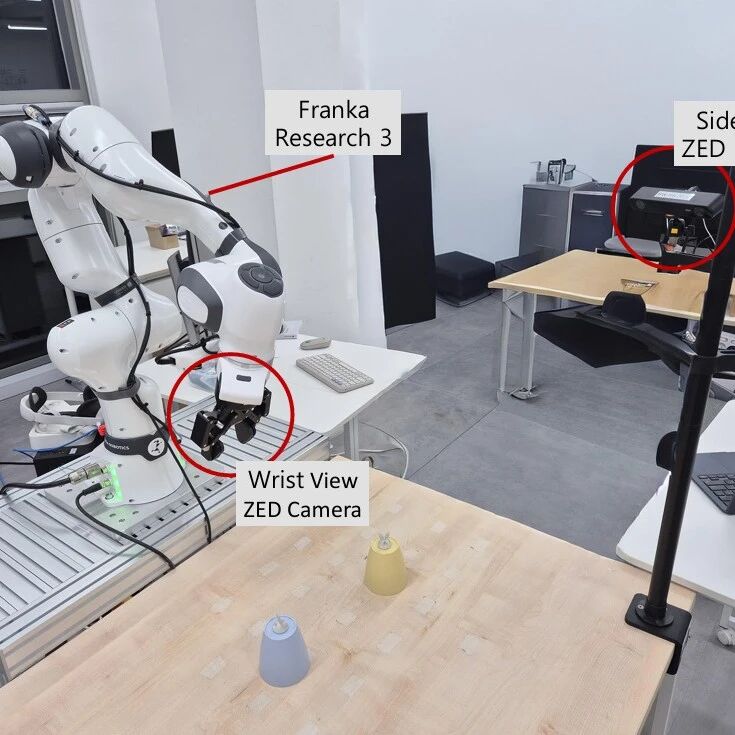
Group 1 - The core issue addressed in the article is the limitation of Vision-Language-Action models (VLAs) in modeling the impact of actions on the environment, which affects their generalization and robustness [3][4][8] - The proposed solution is the Dual-Stream Diffusion Framework (DUST), which aims to maintain modality specificity while enabling cross-modal knowledge sharing to resolve the modal conflict in joint predictions [5][10] Group 2 - DUST is built on the foundation of diffusion-based VLA designs, focusing on semantic feature extraction, action diffusion modeling, and a reasoning process that avoids pixel-level modeling costs [9][12] - The architecture of DUST includes a multi-modal diffusion Transformer (MMDiT) that separates the processing of action and visual streams while allowing for temporary information exchange through cross-modal attention layers [16][33] Group 3 - Experimental results demonstrate that DUST outperforms state-of-the-art models in both simulated and real-world scenarios, showing an average success rate improvement of 18% over GR00T-N1.5 and 5% over FLARE in simulated environments with 100 demonstrations [20][25] - DUST's ability to utilize unannotated video data for pre-training significantly reduces the reliance on costly robot demonstration data, achieving a 13% higher average success rate compared to GR00T-N1.5 in transfer learning tasks [25][26] Group 4 - The article highlights the importance of asynchronous joint sampling strategies in DUST, which allows for flexible balancing between prediction accuracy and inference speed by adjusting the number of denoising steps for different modalities [18][28] - The necessity of DUST's core components is validated through ablation studies, confirming that the combination of dual-stream architecture and decoupled training is essential for optimal performance [29][30]
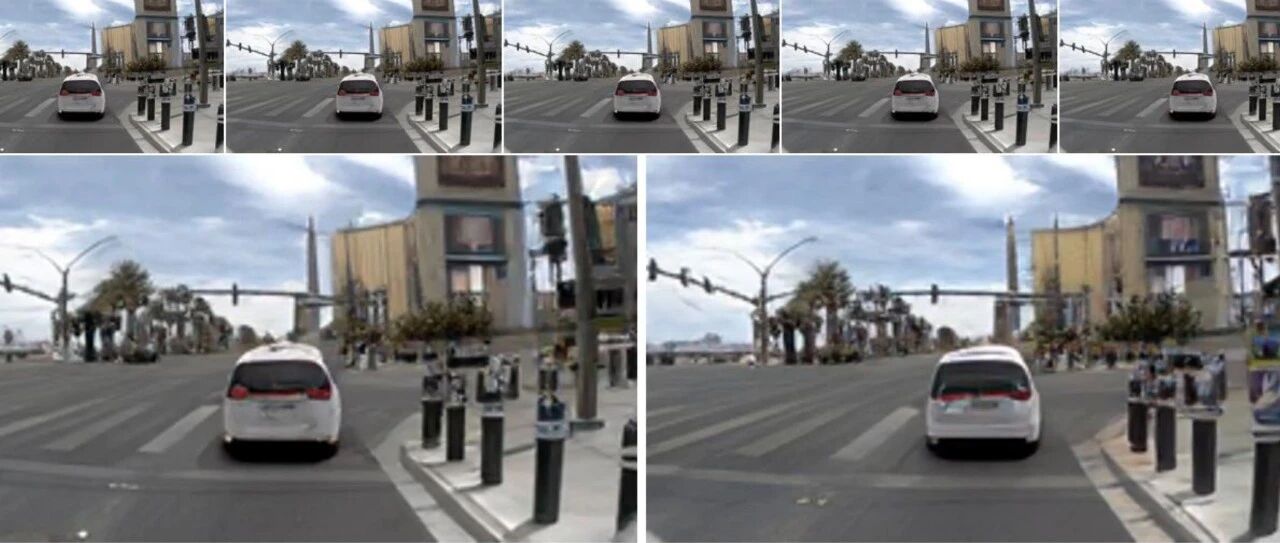
世界模型VLA!DriveVLA-W0:7000万数据解锁自动驾驶VLA Scaling(中科院&引望)
自动驾驶之心· 2025-10-17 00:03
Core Insights - The article discusses the introduction of the DriveVLA-W0 training paradigm by the Chinese Academy of Sciences and Huawei, which addresses the "supervision deficit" issue in VLA models for autonomous driving [2][5][30] - The proposed method enhances the model's ability to learn from sparse action signals by incorporating world modeling tasks to generate dense self-supervised signals, thereby improving the model's performance as the training dataset scales [4][30][31] Summary by Sections Background - Scaling laws present an attractive path for achieving more generalizable driving intelligence, with expectations to utilize PB-level driving data for training robust foundational models [5] - The current challenge lies in the mismatch between the large scale of VLA models and the sparse supervision signals, leading to a "supervision deficit" that limits the model's ability to learn rich world representations [5][30] DriveVLA-W0 Paradigm - The DriveVLA-W0 paradigm introduces world modeling as a strong self-supervised approach to supplement sparse action signals, allowing the model to learn the underlying dynamics of driving environments [5][30] - The method has been validated on two mainstream VLA architectures, demonstrating significant improvements over baseline models [4][6] Experimental Validation - Extensive experiments on various datasets, including a large internal dataset of 70 million frames, confirm that the world modeling approach amplifies data scaling laws, leading to enhanced model performance [11][30] - The introduction of a lightweight action expert based on a mixture-of-experts (MoE) architecture reduces inference latency to 63.1% of the baseline model while maintaining strong performance [11][20] Key Contributions - The article identifies "supervision deficit" as a critical bottleneck in VLA scaling and proposes the DriveVLA-W0 paradigm to address this issue [11][30] - The findings reveal that as data scales up, the performance trend of action decoders reverses, with simpler autoregressive models outperforming more complex flow-matching models in large datasets [30][31] Conclusion - The research emphasizes that adopting predictive world modeling is crucial for unlocking the potential of large-scale data and achieving more generalizable driving intelligence [30][31]