世界模型架构

Search documents
忍无可忍,LeCun离职:Meta市值应声蒸发1400亿
虎嗅APP· 2025-11-12 09:48
Core Viewpoint - Yann LeCun's departure from Meta signifies a critical shift in the company's AI strategy, moving away from long-term academic research towards a more aggressive, product-driven approach [2][8][33] Group 1: Departure of Yann LeCun - LeCun announced his departure from Meta, intending to start his own venture [3] - Following the news, Meta's market value dropped by 1.5%, equating to over $20 billion [5] - LeCun's dissatisfaction had been building due to frequent restructuring within Meta's AI division, which hindered research progress [12][20] Group 2: Changes in AI Strategy - Meta's AI strategy is shifting under CEO Mark Zuckerberg's leadership, focusing on rapid product development to compete with Google and OpenAI [8][26] - The FAIR lab, led by LeCun, is being strategically abandoned, with significant layoffs occurring under the new leadership of Alexandr Wang [8][19] - LeCun's vision of a "world model" architecture contrasts sharply with Meta's current focus on large language models (LLMs), which he criticizes as lacking true understanding [23][24] Group 3: Historical Context of LeCun's Role - LeCun joined Meta in 2013 and established the FAIR lab, which was characterized by its academic freedom and focus on foundational research [28][30] - His contributions to AI were recognized with the Turing Award in 2018, marking a peak in Meta's reputation in AI research [30] - The departure of LeCun marks the end of an era for Meta's "academic" research approach, as the company pivots towards a more aggressive, product-oriented strategy [33]


忍无可忍,LeCun离职!Meta市值应声蒸发1400亿
猿大侠· 2025-11-12 05:53
Core Viewpoint - Yann LeCun's departure from Meta signifies a critical shift in the company's AI strategy, moving away from long-term foundational research towards a more aggressive, product-driven approach [1][5][37]. Group 1: Departure and Immediate Impact - LeCun announced his departure from Meta, intending to pursue entrepreneurial ventures [2]. - Following the news of his exit, Meta's market value dropped by approximately 1.5%, equating to over $20 billion [4]. - The decision to leave was influenced by ongoing dissatisfaction with Meta's shifting AI strategy and the recent layoffs within his team [6][10]. Group 2: Strategic Changes at Meta - Meta's AI strategy has undergone multiple reorganizations, with four significant internal restructurings in just six months, hampering research progress [10][11]. - The appointment of a new chief scientist for the MSL lab effectively sidelined LeCun, altering his influence within the organization [13][14]. - The new leadership has imposed additional scrutiny on research outputs, further exacerbating tensions [16]. Group 3: Philosophical and Strategic Divergence - LeCun's vision for AI, which emphasizes foundational research and open-source principles, contrasts sharply with Meta's current focus on rapid product development and competitive positioning against rivals like Google and OpenAI [25][26]. - Meta's aggressive capital expenditure plans, projected to reach $70-72 billion by 2025, reflect a shift towards immediate results rather than long-term research [29][30]. - The internal conflict between LeCun's academic approach and the new leadership's product-centric strategy has made collaboration increasingly untenable [27][28]. Group 4: Legacy and Future Implications - LeCun's tenure at Meta, marked by the establishment of the FAIR lab and significant contributions to AI research, is now seen as the end of an era for the company's academic pursuits [31][37]. - His departure raises questions about the future direction of Meta's AI initiatives and the potential loss of foundational research capabilities [36][38]. - The shift away from the "academy-style" research model that LeCun championed indicates a broader trend within the tech industry towards prioritizing immediate commercial applications over long-term scientific inquiry [35][36].

忍无可忍,LeCun离职,Meta市值应声蒸发1400亿
3 6 Ke· 2025-11-12 01:35
Core Insights - Yann LeCun, a prominent figure in AI research at Meta, has announced his departure from the company to pursue entrepreneurial ventures, marking a significant shift in Meta's AI strategy [1][5][11]. Group 1: Departure and Market Reaction - LeCun's resignation led to a 1.5% drop in Meta's market value during pre-market trading, equating to a loss of over $20 billion [2]. - The ongoing adjustments in Meta's AI strategy, particularly under the leadership of Alexandr Wang, have contributed to LeCun's decision to leave [5][11]. Group 2: Internal Changes and Discontent - LeCun's dissatisfaction with Meta has been building due to frequent restructuring within the AI department, with four reorganizations occurring in just six months, hindering research progress [6][10]. - The recent layoffs of over 600 employees from LeCun's FAIR lab, including key personnel, intensified his frustrations and ultimately influenced his decision to resign [5][10]. Group 3: Strategic Divergence - LeCun's vision for AI, focusing on long-term foundational research and the "world model" architecture, contrasts sharply with Meta's current push towards rapid product development and large language models (LLMs) [11][12]. - The leadership changes at Meta, including the appointment of Wang, have marginalized LeCun's role, leading to a significant shift in the company's AI research direction [8][11]. Group 4: Historical Context - LeCun joined Meta in 2013 and established the FAIR lab, which was known for its academic freedom and focus on foundational AI research, earning him the Turing Award in 2018 [13][14]. - His departure signifies the end of an era for Meta's "academic" approach to AI research, as the company pivots towards a more aggressive, product-driven strategy [16].
突发!忍无可忍,首席人工智能科学家离职!Meta市值应声蒸发1400亿
是说芯语· 2025-11-11 23:52
Core Viewpoint - Yann LeCun's departure from Meta signifies a critical shift in the company's AI strategy, moving away from long-term foundational research towards a more aggressive, product-driven approach [2][19][27]. Group 1: LeCun's Departure - LeCun announced his departure from Meta, intending to pursue entrepreneurial ventures [2]. - Following the news of his exit, Meta's market value dropped by approximately 1.5%, equating to over $20 billion [4]. - LeCun's dissatisfaction had been building due to frequent restructuring within Meta's AI division, which hindered research progress [8][12]. Group 2: Changes in AI Strategy - Meta's AI strategy has undergone multiple shifts, with four reorganizations in just six months, leading to instability in research [8]. - The appointment of a new chief scientist, who is significantly younger and less experienced, further marginalized LeCun's role within the organization [12]. - Meta's new direction under CEO Mark Zuckerberg emphasizes rapid product development and resource allocation towards competitive AI technologies, particularly large language models (LLMs) [22][27]. Group 3: Conflict of Vision - LeCun advocates for a "world model" approach, which he believes is a long-term vision requiring a decade to develop, contrasting sharply with Meta's immediate focus on LLMs [19][20]. - The internal conflict is exacerbated by a shift towards closed-source models, which opposes LeCun's open-source philosophy [21]. - LeCun's departure marks the end of an era for Meta's AI research, which had been characterized by a commitment to foundational science and open collaboration [27].

忍无可忍,LeCun离职!Meta市值应声蒸发1400亿
量子位· 2025-11-11 16:01
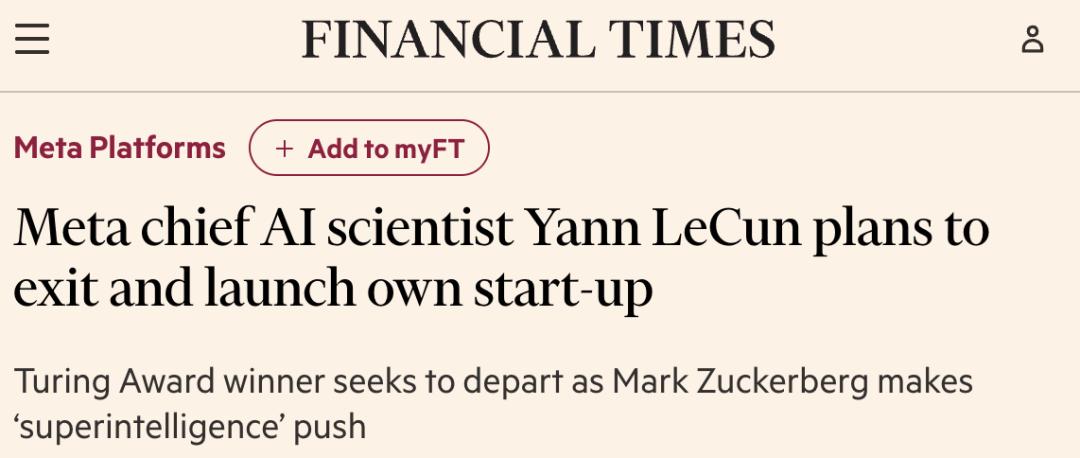
Core Viewpoint - Yann LeCun's departure from Meta signifies a critical shift in the company's AI strategy, moving away from long-term foundational research towards a more aggressive, product-driven approach [1][5][36]. Group 1: Departure and Immediate Impact - LeCun announced his departure plans to colleagues, intending to pursue entrepreneurship [2]. - Following the news of his departure, Meta's market value dropped by 1.5%, equating to over $20 billion [4]. - The decision to leave was influenced by ongoing dissatisfaction with Meta's AI strategy and organizational changes, including significant layoffs within his team [6][10][22]. Group 2: Strategic Shifts at Meta - Meta's AI strategy has undergone multiple reorganizations, with four internal restructurings in just six months, hindering research progress [10][11]. - The appointment of a new chief scientist for the MSL lab effectively sidelined LeCun, altering his influence within the organization [13][14]. - Meta's shift towards a more aggressive AI strategy under CEO Mark Zuckerberg contrasts sharply with LeCun's long-term vision for foundational AI research [27][36]. Group 3: Philosophical and Ideological Differences - LeCun advocates for a "world model" approach, which he believes is essential for true AI understanding, while Meta is focusing on large language models (LLMs) for immediate product development [24][25]. - The ideological clash is further emphasized by the internal discussions at Meta regarding the potential closure of Llama's future versions, which LeCun opposes [26]. - LeCun's commitment to open-source principles stands in stark contrast to the direction taken by Meta's new leadership [26]. Group 4: Historical Context and Legacy - LeCun joined Meta in 2013 and established the FAIR lab, which was known for its academic freedom and focus on foundational research [31][32]. - His contributions to AI were recognized with the Turing Award in 2018, marking a peak in Meta's reputation in AI research [33]. - The end of LeCun's tenure at Meta represents the conclusion of a decade-long era of academic-style research within the company [37].