业态升级

Search documents
锅圈:业态升级助力26年业绩展望超预期-20260313
HTSC· 2026-03-13 07:25
Investment Rating - The report maintains a "Buy" rating for the company with a target price of HKD 6.05 [6][5]. Core Insights - The company reported a revenue of HKD 7.81 billion for 2025, representing a year-over-year increase of 20.7%, and a net profit of HKD 450 million, up 88.2% year-over-year [1]. - The company plans to open over 2,934 new stores in 2026, bringing the total to more than 14,500, with a strong focus on store efficiency and category innovation [1][4]. - The company has seen significant growth in its franchise sales, with a 16.6% increase in revenue to HKD 3.62 billion in the second half of 2025, and a net addition of 1,168 franchise stores [2]. - The gross margin for the second half of 2025 was 21.2%, with expectations for improvement in 2026 due to scale advantages and the production of proprietary products [3]. Summary by Sections Financial Performance - For 2025, the company achieved a core operating profit of HKD 460 million, a year-over-year increase of 48.2%, aligning with performance forecasts [1]. - The company expects a significant increase in core operating profit growth in 2026, outpacing revenue growth due to scale effects [4]. Store Expansion and Market Strategy - The company is accelerating its store openings, particularly in rural markets, with 1,004 new stores opened in these areas, accounting for 71% of total new openings in 2025 [2]. - The company has effectively utilized platforms like Douyin, achieving over 9.4 billion exposures and a 75.3% increase in retail revenue from promotional packages [2]. Profitability and Cost Management - The company has improved its sales expense ratio, which decreased by 0.8 percentage points to 8.7%, reflecting enhanced efficiency in advertising and marketing expenditures [3]. - The administrative expense ratio also fell by 0.6 percentage points to 5.6%, indicating better cost management as the company scales [3].
锅圈(02517):业态升级助力26年业绩展望超预期
HTSC· 2026-03-13 06:22
Investment Rating - The report maintains a "Buy" rating for the company with a target price of HKD 6.05 [6][5]. Core Insights - The company reported a revenue of HKD 7.81 billion for 2025, representing a year-over-year increase of 20.7%, and a net profit of HKD 450 million, up 88.2% year-over-year [1]. - The company is expected to open over 2,934 new stores in 2026, bringing the total to more than 14,500, with a strong focus on store efficiency and category innovation [1][4]. - The company has successfully expanded its presence in rural markets and through platforms like Douyin, achieving significant growth in sales and membership [2][4]. Summary by Sections Financial Performance - In 2H25, the company achieved a gross margin of 21.2%, maintaining year-over-year stability, with expectations for improvement in 2026 due to scale advantages and the production of proprietary products [3]. - The core operating profit margin increased by 1.0 percentage points to 5.9% in 2H25, reflecting improved efficiency in advertising and marketing expenditures [3]. Growth Strategy - The company plans to accelerate store openings and enhance store types and product categories, which are expected to drive long-term growth [1][4]. - The introduction of new product categories such as fresh-cut beef, steaks, and craft beer has attracted a more diverse customer base [4]. Profitability Forecast - The adjusted net profit forecast for 2026 and 2027 has been raised by 18% and 21% respectively, with an introduction of a new forecast for 2028 at HKD 1 billion [5]. - The company is projected to maintain a high growth momentum in store efficiency and profitability, with core operating profit growth expected to outpace revenue growth in 2026 [4].
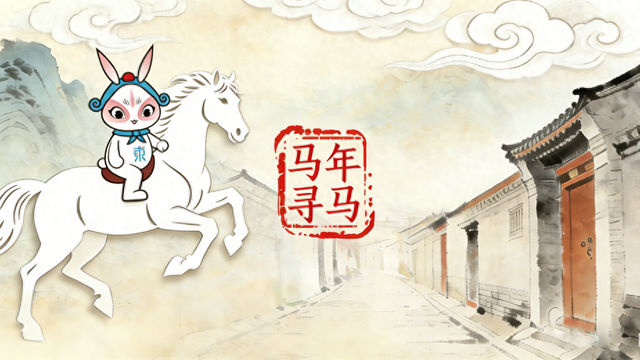
马年寻马|亮马河:从皇家“晾马河”到“幸福河湖”新地标
Xin Lang Cai Jing· 2026-02-19 04:32
Core Insights - The article highlights the cultural and historical significance of Liangma River in Beijing, emphasizing its transformation into a vibrant urban space that integrates ecological restoration and cultural heritage [2][6][10]. Group 1: Historical Significance - Liangma River, originally known as "Liangmahe," has deep roots in horse culture, dating back to the Ming Dynasty when it served as a royal horse bathing area [6]. - The river was a crucial commercial hub during the Ming and Qing dynasties, where merchants would wash and rest their horses before entering the city [6]. - The name "Liangma" is derived from the "Liangma Bridge," built during the Qing Dynasty, which further solidified the cultural foundation of the area [6]. Group 2: Ecological Renewal - Recent efforts in Chaoyang District have revitalized Liangma River, transforming it into a model of ecological governance and urban renewal, recognized as a "Happy River" by the Ministry of Water Resources [8]. - The revitalization project involved six major initiatives, resulting in the release of nearly 800,000 square meters of urban space and the creation of an 18-kilometer waterfront corridor [8]. - The project also added 16.67 hectares of urban water surface and 64.1 hectares of high-quality public space, enhancing accessibility and inclusivity [8]. Group 3: Cultural and Economic Development - Liangma River has evolved into a composite development model that combines ecology, culture, and consumption, becoming a new benchmark for nighttime cultural tourism [10]. - The area features impressive nighttime light shows and attractions, such as water-based performances and artistic installations, creating a three-dimensional visual experience [10]. - The integration of cultural and commercial elements has attracted over 400 well-known brands, fostering a positive cycle of community engagement and economic activity [10].

京东把线下商场打通关了
半佛仙人· 2025-11-05 09:10
Core Viewpoint - The article discusses the evolving landscape of offline retail, particularly in the home appliance and furniture sectors, emphasizing the importance of experiential shopping and the integration of online and offline channels, exemplified by JD MALL's approach to retail [5][8][21]. Group 1: Consumer Behavior - Consumers often prefer offline shopping for large items due to high trial costs associated with home appliances and furniture, leading to a fear of making the wrong purchase [5][7]. - The experience of physically interacting with products is crucial, as online descriptions cannot fully convey the quality and feel of items [5][6]. - The willingness to pay a premium for certainty and a better shopping experience drives consumers to brick-and-mortar stores despite the availability of cheaper online options [5][6]. Group 2: Offline Retail Challenges - High operational costs for physical stores, including rent, utilities, and labor, necessitate higher prices for consumers [7][8]. - Traditional retail struggles to adapt to the competitive pricing of e-commerce, leading to a perception of decreased value for consumers [7][8]. - The need for a transformation in the offline retail model is evident, as consumers seek both experience and value [8][21]. Group 3: JD MALL's Strategy - JD MALL integrates online and offline shopping by offering the same prices and services in-store as online, enhancing consumer confidence [8][9]. - The store features immersive experience zones, allowing customers to interact with products in a way that traditional stores do not [16][21]. - JD MALL aims to attract consumers who may be hesitant to shop online by providing a risk-free environment to experience products firsthand [19][21]. Group 4: Market Positioning - JD's self-operated model allows for better control over logistics and pricing, giving it a competitive edge in both online and offline markets [11][12]. - The focus on high-value items, such as large appliances and electronics, positions JD MALL as a key player in the premium segment of the market [14][19]. - The store serves not only as a sales point but also as a trust-building platform for consumers unfamiliar with JD, enhancing brand loyalty [14][19].


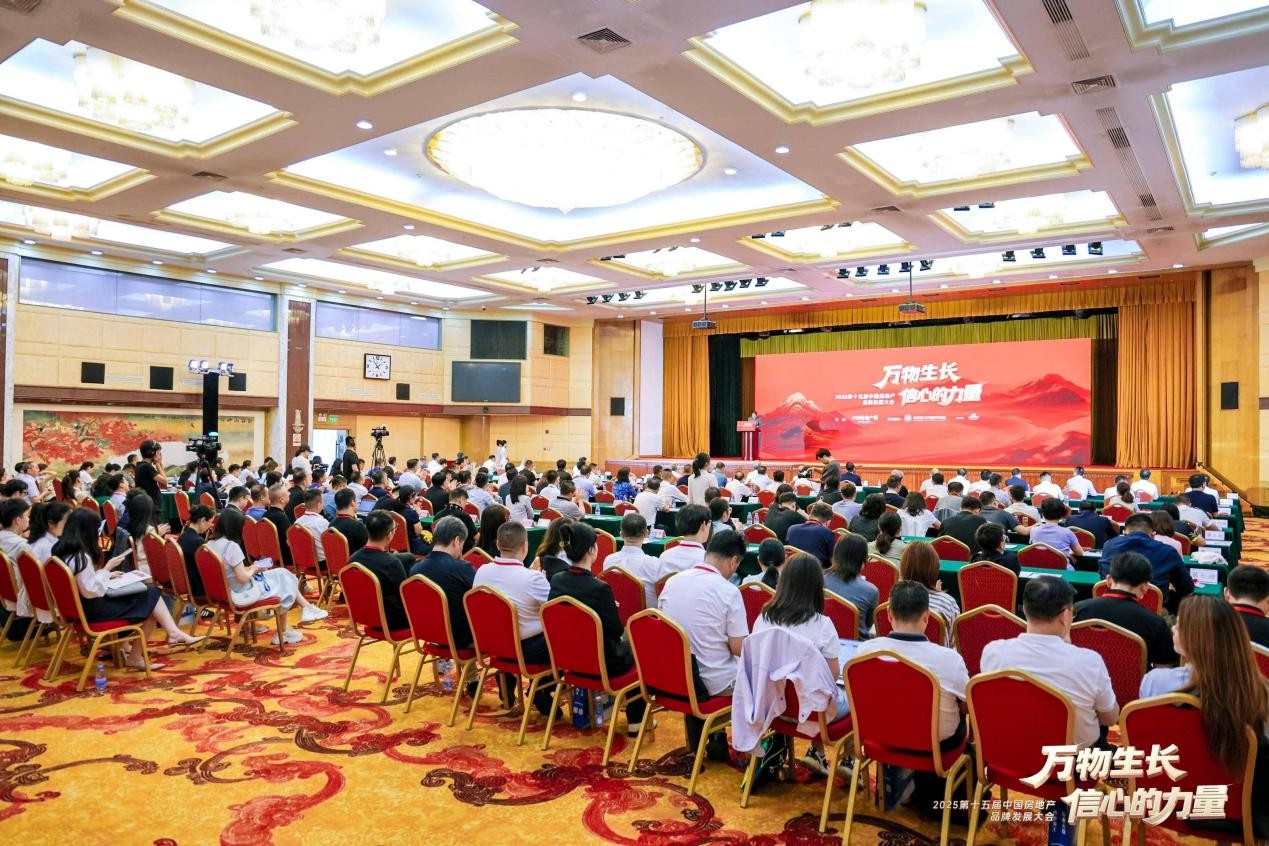
好房子建设与城市更新是房地产行业未来十年的重大机遇
3 6 Ke· 2025-08-21 01:15
Group 1 - The global economic landscape is undergoing profound adjustments, with China's economy transitioning from high-speed growth to high-quality development, presenting new opportunities in the real estate sector, particularly in housing construction and urban renewal [1] - The real estate industry is entering a new development phase centered on urban renewal, where success is measured by long-term operational capabilities and social value creation rather than mere development scale [1][3] - The current structural bias in consumption is a significant challenge, but addressing it could provide growth momentum comparable to past real estate booms, supporting stable economic growth [3] Group 2 - The power of real estate branding is becoming increasingly prominent, with a focus on reconstructing brands to fulfill promises and contribute to civilization [3] - The speed of product iteration in the real estate sector is accelerating, with companies needing to adapt quickly to policy and customer changes to avoid obsolescence [3] - The industry is shifting from a focus on scale and speed to value and quality, emphasizing the importance of providing life experiences rather than just living spaces [4]