中国—中亚经贸合作

Search documents
中国—中亚经贸合作逆势前行、彰显韧性(环球热点)
Ren Min Ri Bao· 2026-02-08 19:23
Core Insights - The trade volume between China and the five Central Asian countries is projected to exceed $100 billion by 2025, marking a continuous growth for five years, with China becoming the largest trading partner for these nations [2][3] - The trade structure between China and Central Asia is continuously optimizing, with significant increases in exports and imports, particularly in machinery, high-tech products, and non-resource products [3][4] Group 1: Trade Dynamics - By 2025, China's exports to Central Asia are expected to reach $71.2 billion, a year-on-year increase of 11%, while imports are projected at $35.1 billion, up 14% [3] - The political mutual trust and strategic demand complementarity between China and Central Asia form a resilient foundation for their economic relations, facilitating large-scale infrastructure and energy projects [3][4] Group 2: Economic Cooperation - China and Central Asian countries have established comprehensive strategic partnerships, covering various areas including political, economic, and cultural interactions, which are based on principles of non-interference and mutual benefit [4][7] - The economic development stages of Central Asian countries align well with China's mature industrial capabilities, particularly in infrastructure modernization and green energy, creating strong endogenous motivation for cooperation [4][7] Group 3: Market Opportunities - The growing demand for renewable energy and modern agriculture in Central Asia presents significant opportunities for collaboration, as countries like Kazakhstan and Uzbekistan pursue low-carbon development strategies [8][9] - The youthful population and increasing internet penetration in Central Asia indicate a vast potential for digital consumption, encouraging joint efforts in digital infrastructure and localized innovations [9] Group 4: Strategic Recommendations - To capitalize on the transformation opportunities in Central Asia, companies should engage in multi-faceted cooperation, responding proactively to market demands and aligning with the region's development needs [8][9] - Tailored strategies for each Central Asian country, considering their unique resources and development stages, will enhance the effectiveness of cooperation and ensure sustainable connectivity [9]

2025年中国与中亚国家货物贸易额首破千亿美元 中国首次跃居中亚各国第一大贸易伙伴
Yang Guang Wang· 2026-01-19 01:50
Core Insights - In 2025, China-Central Asia economic and trade cooperation has made significant progress, with total import and export value of goods exceeding $100 billion for the first time, reaching $106.3 billion, a year-on-year increase of 12% [1] Trade Performance - China's exports to Central Asia amounted to $71.2 billion, growing by 11%, with strong growth in machinery, high-tech products, and an expanding market share of "new three samples" products [1] - Imports from Central Asia reached $35.1 billion, a 14% increase, with a wider variety of non-resource products such as chemicals, steel, and agricultural products [1] New Trade Dynamics - The cross-border e-commerce between China and Central Asia has maintained rapid growth, with the establishment of the China-Central Asia trade cooperation platform, enhancing trade efficiency [1] - Agricultural products have emerged as a new growth point in trade between China and Central Asia, benefiting the local populations [1] - Cross-border e-commerce is promoted by China as a new trade method, elevating cooperation to a new level [1]
前三季度我省中亚班列开行量同比增8%
Xin Hua Ri Bao· 2025-10-15 23:18
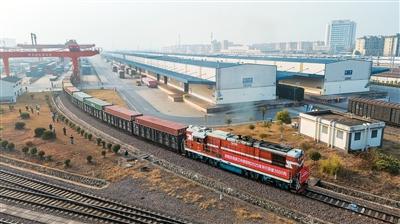
Core Insights - A dedicated freight train carrying 55 cars of household appliances departed from Nanjing, showcasing the effective alignment of provincial freight services with export demands to support stable foreign trade [1] - The trade cooperation between China and Central Asia is deepening, with Jiangsu's local products such as vehicles, home appliances, and photovoltaic components seeing steady growth in export volumes through freight trains [1] Summary by Categories Export Performance - In the first three quarters, Jiangsu's Central Asia freight trains operated 1,089 times, transporting 89,382 TEUs, which accounted for 60.6% of the province's total, marking an 8% year-on-year increase [1] - The province's freight services are ranked among the top in the country in terms of total operations [1] Development Goals - The provincial freight company aims for "higher quality, better efficiency, and greater safety" in its operations [1] - New international rail routes have been developed, including the Xuzhou and Nantong routes, to enhance the multi-channel transportation system [1] Growth in Intermodal Transport - In the first three quarters, a total of 2,812 TEUs were dispatched via the China-Kyrgyzstan-Uzbekistan intermodal freight trains, representing a 65% year-on-year increase, leading the Yangtze River Delta region [1]
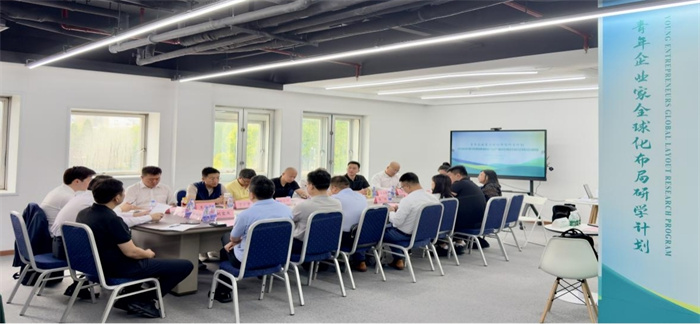
青年企业家全球化布局研学计划——中国中亚贸易便利化与产业合规战略实践培训班在京举办
人民网-国际频道 原创稿· 2025-08-08 09:12
Core Viewpoint - The training program focused on enhancing understanding and cooperation between Chinese and Central Asian entrepreneurs, addressing key issues in trade facilitation and investment strategies in the region [1][2][3]. Group 1: Event Overview - The training program was held from August 4 to 6, organized by the China International Youth Exchange Center, with participation from approximately 30 representatives from the Shanghai Cooperation Organization, Central Asian embassies, and young entrepreneurs [1]. - Key speakers included officials from the National Development and Reform Commission and the Shanghai Cooperation Organization, who discussed critical topics related to China-Central Asia economic cooperation [2]. Group 2: Training Content - The curriculum covered new trends in regional economic cooperation, analyzing outcomes from the China-Central Asia summit, trade facilitation policies, and directions for industrial cooperation [2]. - Specialized sessions featured discussions on the business environments in Kazakhstan and Uzbekistan, highlighting investment incentives, key industry development plans, and bilateral cooperation opportunities [2]. Group 3: Practical Insights - Participants visited the Xiaomi Automotive Super Factory and engaged in discussions at the Shanghai Cooperation Organization Secretariat, exploring new investment opportunities within the framework of the organization [3]. - The training effectively addressed challenges faced by companies in market entry, cultural adaptation, and policy compliance, enhancing their confidence in entering the Central Asian market [3].