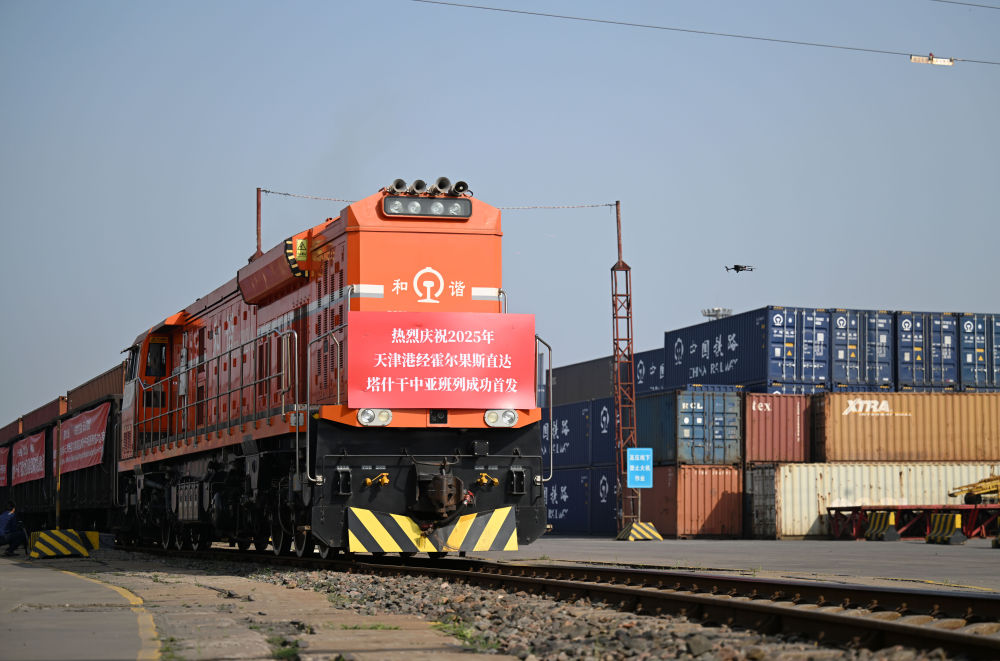
中亚班列运输服务

Search documents
循着开放脉络见证共赢实践 中国交出一份沉甸甸的“十四五”开放答卷
Yang Shi Wang· 2025-10-20 07:14
Group 1 - China's trade scale has ranked first globally for eight consecutive years, with service trade expected to exceed $1 trillion in 2024, maintaining the second position worldwide [1][2] - The 22 free trade pilot zones contribute nearly one-fifth of the national foreign investment and import-export volume, despite occupying less than 0.04% of the country's land area [1] - The China-Europe Railway Express has operated over 110,000 trains, and the new western land-sea corridor connects to 577 ports in 127 countries [1] Group 2 - The Tianjin Central Station has seen the Central Asia Railway Express operate with over 1,400 tons of cargo, enhancing logistics efficiency by reducing the distance to Tashkent by over 800 kilometers [3][7] - The annual capacity at the Tianjin station has increased from 400,000 to 800,000 standard containers, with train frequency rising from one to six per week [11] Group 3 - Shanghai is projected to become the first city in China with a GDP exceeding 5 trillion yuan in 2024, showcasing continuous economic vitality [12] - The city has developed a robust transportation network, including a 40-minute connection between Hongqiao and Pudong airports, and an expanding railway network with 11 stations [12][14][16] - The China International Import Expo has attracted over 1,700 new products and technologies from around the world, with participation from nearly 300 Fortune 500 companies [18][20] Group 4 - Hainan's Yangpu Port has expanded its capacity significantly, with the ability to accommodate 200,000-ton vessels and an annual throughput capacity of 5 million TEUs [21][23] - The port's route network has grown to 63 lines, including 33 foreign trade routes, enhancing Hainan's role as a key hub for international and domestic trade [21] Group 5 - The Alashankou port has become a critical point for the China-Europe Railway Express, with over 7,684 trains passing through in 2024, marking a 30% increase from 2021 [28] - The port has facilitated the export of over 200 types of Chinese manufactured goods, contributing to local economic growth and employment [26][30] Group 6 - Jiangsu province has integrated "industrial belts" with "cross-border e-commerce," enabling local products to access global markets effectively [31] - The region has seen significant growth in e-commerce, with over 30,000 companies operating in the sector, particularly in pet products and beauty items [35][37] Group 7 - The China-Laos Railway has fostered cultural and professional exchanges, training over 700 Laotian railway personnel through a mentorship program [39][42] - This initiative exemplifies the soft connectivity aspect of China's Belt and Road Initiative, enhancing bilateral relations and operational efficiency [43][45]

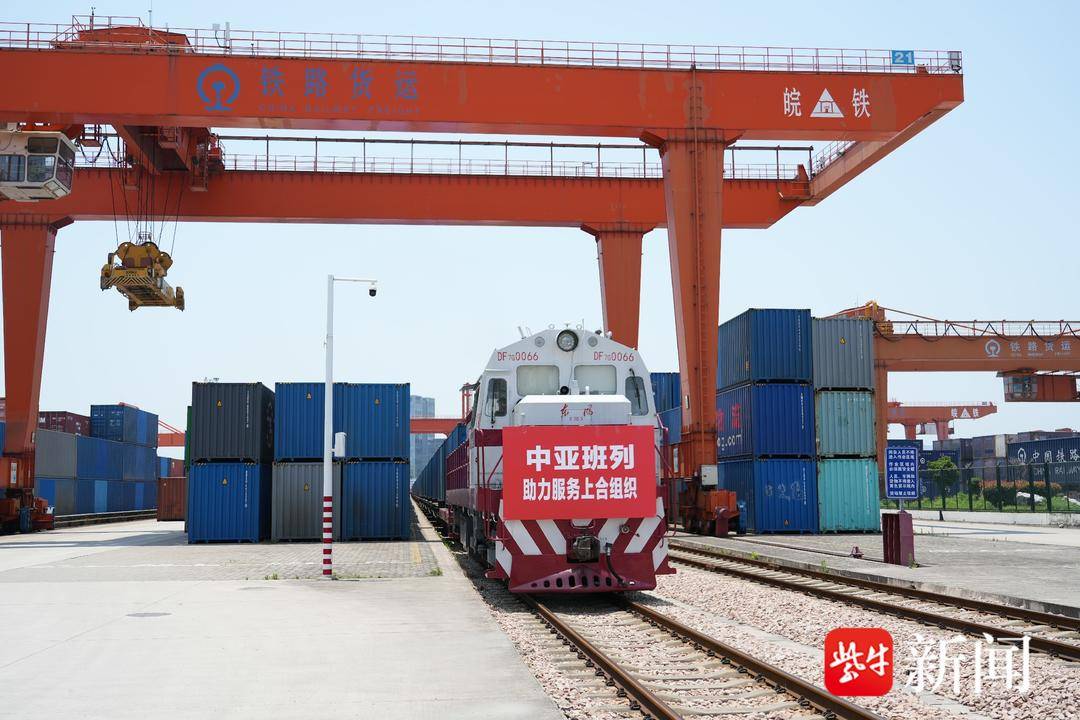
前三季度我省中亚班列开行量同比增8%
Xin Hua Ri Bao· 2025-10-15 23:18
Core Insights - A dedicated freight train carrying 55 cars of household appliances departed from Nanjing, showcasing the effective alignment of provincial freight services with export demands to support stable foreign trade [1] - The trade cooperation between China and Central Asia is deepening, with Jiangsu's local products such as vehicles, home appliances, and photovoltaic components seeing steady growth in export volumes through freight trains [1] Summary by Categories Export Performance - In the first three quarters, Jiangsu's Central Asia freight trains operated 1,089 times, transporting 89,382 TEUs, which accounted for 60.6% of the province's total, marking an 8% year-on-year increase [1] - The province's freight services are ranked among the top in the country in terms of total operations [1] Development Goals - The provincial freight company aims for "higher quality, better efficiency, and greater safety" in its operations [1] - New international rail routes have been developed, including the Xuzhou and Nantong routes, to enhance the multi-channel transportation system [1] Growth in Intermodal Transport - In the first three quarters, a total of 2,812 TEUs were dispatched via the China-Kyrgyzstan-Uzbekistan intermodal freight trains, representing a 65% year-on-year increase, leading the Yangtze River Delta region [1]
天津经霍尔果斯图定中亚班列13日首发
Bei Jing Ri Bao Ke Hu Duan· 2025-10-14 03:02
Core Points - The successful launch of the Central Asia freight train from Tianjin marks the first scheduled service from Tianjin to Central Asian countries via the Horgos port, operating weekly [1][3] - The train carries 55 forty-foot containers, with a transportation cycle of approximately 10 days, connecting cities like Almaty in Kazakhstan and Sergeli in Uzbekistan [3] - In the first three quarters of this year, Tianjin Container Center Station has operated 284 Central Asia and China-Europe freight trains, a 40% year-on-year increase, enhancing trade links between Tianjin and Central Asian countries [3] Industry Developments - Tianjin has been approved as the Central and Eastern Europe freight train gathering center in North China, with the Tianjin Container Center Station being the first comprehensive container railway hub in the Beijing-Tianjin-Hebei region [3] - The launch of the scheduled Central Asia freight train will provide stable and efficient logistics support for products from the Beijing-Tianjin-Hebei region to go global [3] - Tianjin Port is strengthening cooperation with various border ports, establishing an international logistics corridor connecting East Asia, Southeast Asia, South Asia, and regions like Beijing-Tianjin-Hebei and South China [3]
前8月中亚班列发送货物增长超三成
Ren Min Ri Bao· 2025-09-12 22:16
Core Insights - The China-Europe Railway Express has achieved a record high of 9,626 trains operated in the first eight months, with a year-on-year increase of 22.7% in the number of trains and 31.1% in the volume of goods sent, totaling 751,000 TEUs [1] Group 1: Operational Performance - The cumulative number of trains operated by the China-Europe Railway Express has exceeded 69,000, with over 5.19 million TEUs of goods sent since its inception [1] - The opening of new transport corridors, such as the China-Laos Railway and the Trans-Caspian Transport Corridor, has expanded the coverage of the China-Europe Railway Express to over 100 cities in 11 Asian countries and 128 cities in 28 provincial-level regions in China [1] Group 2: Cargo Diversification - The types of goods transported have diversified from mainly second-hand vehicles to include 22 major categories such as new energy vehicles, photovoltaic products, and machinery [1] - Goods from Central Asia, including cotton yarn, antimony concentrate, and barley, as well as tropical fruits and fertilizers from Southeast Asia, are entering the Chinese market [1] - Chinese manufactured goods, including new energy vehicles, photovoltaic components, electronic products, and daily necessities, are increasingly reaching various Asian countries and regions [1] Group 3: Efficiency Improvements - The transportation time for the China-Europe Railway Express from Lianyungang, China, to Almaty, Kazakhstan, has been reduced from over 10 days in 2014 to 6 days currently [1] - The upcoming launch of the "cross-border e-commerce special train" in 2024 will enable shipments from Yiwu, Zhejiang, to Tashkent, Uzbekistan, in just 10 days, at a cost 80% lower than air freight [1]
护航“钢铁驼队”!2025年苏州中亚班列已开行77列
Yang Zi Wan Bao Wang· 2025-08-29 13:01
Core Viewpoint - The "Belt and Road" initiative is enhancing the quality and quantity of Central Asia freight trains, significantly contributing to the cooperation within the Shanghai Cooperation Organization (SCO) and fostering a community of shared destiny between China and Central Asian countries [1] Group 1: Freight Train Operations - From January to July this year, the Suzhou Central Asia freight trains operated 77 trains and dispatched 3,965 containers, marking a year-on-year increase of nearly 35% [3] - The Suzhou West Station, a key hub for Central Asia freight trains, is experiencing a surge in operational frequency during the summer transportation period, with the team led by Chen Yan handling nearly 70% of the station's workload [5] - The Central Asia freight trains are crucial for deepening connectivity and promoting development between China and Central Asian countries, with over 50,000 tons of goods transported annually for SCO member states [5][8] Group 2: Key Personnel Contributions - Chen Yan, the team leader, has established a party member task force to efficiently manage the increased transportation demand, coordinating over 40 personnel daily during peak periods [5] - Sun Tianqiu, a seasoned driver, ensures safety by meticulously checking the locomotive systems before operations, effectively mitigating potential risks [6][8] - Both Chen Yan and Sun Tianqiu exemplify dedication and responsibility in their roles, contributing significantly to the safe and efficient operation of the Central Asia freight trains [5][8] Group 3: Future Outlook - The railway department plans to continue leveraging the "China-Central Asia spirit" to enhance strategic channel functions, promote economic cooperation, and advance the high-quality development of the "Belt and Road" initiative [8]
国际经贸变局之下:中欧班列逆势回暖
21世纪经济报道· 2025-06-13 03:42
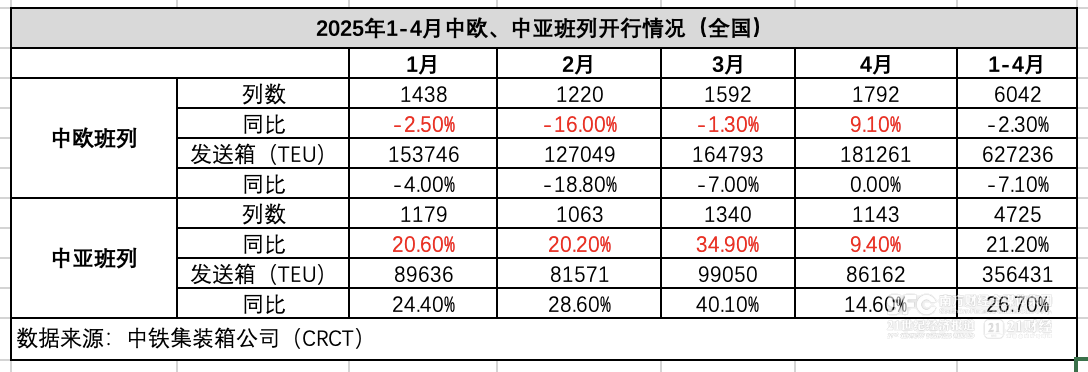
Core Insights - The international trade market has faced significant challenges this year, leading to changes in China's international logistics network, particularly in the context of the Belt and Road Initiative [1][19] - The China-Europe Railway Express has seen a decline in the number of trains and container shipments in the first quarter, but there was a recovery in April with a 9.1% year-on-year growth [1][14] - In contrast, the Central Asia Railway Express has experienced double-digit growth in both train numbers and container shipments, indicating a shift in logistics patterns [2][17] Group 1: China-Europe Railway Express Performance - In the first four months of the year, a total of 6,042 China-Europe Railway Express trains were operated, a decrease of 2.3% year-on-year, with outbound trains down by 18.2% and return trains up by 17.8% [10] - The total number of containers sent was 627,236, reflecting a 7.1% year-on-year decline, with outbound containers down by 22.1% and return containers up by 11.7% [10] - The decline in train operations is attributed to geopolitical factors, including the Russia-Ukraine conflict, which has affected operational efficiency and diverted some export demand to Central Asia [13][12] Group 2: Central Asia Railway Express Growth - The Central Asia Railway Express has shown remarkable growth, with train numbers increasing by 20.6%, 20.2%, and 34.9% in the first three months of the year, and a 9.4% increase in April [17] - The total container shipments from Central Asia have also surged, with increases of 24.4%, 28.6%, and 40.1% in the first three months, and a 14.6% increase in April [17] - The growth in Central Asia is linked to a shift in logistics routes as companies adapt to changing global trade dynamics [2][19] Group 3: Future Outlook and Developments - The China-Europe Railway Express is expanding its routes, including a new southern corridor that bypasses the Black Sea, and plans to test a full schedule for a route across the Caspian Sea [3][20] - The logistics network is becoming denser, with 128 cities in China connected to the China-Europe Railway Express, reaching 229 cities in 26 European countries and over 100 cities in 11 Asian countries [20] - Future opportunities may arise from improved cooperation between China and the EU, particularly regarding electric vehicle tariffs, which could increase the volume of goods transported via the China-Europe Railway Express [21]
国际经贸变局之下:中欧班列逆势回暖
2 1 Shi Ji Jing Ji Bao Dao· 2025-06-12 13:03
Core Insights - The international trade market has faced significant challenges this year, leading to changes in China's international logistics network [1][6] - The China-Europe Railway Express (CRE) experienced a decline in operation numbers and container shipments in the first quarter, but saw a recovery in April with a 9.1% year-on-year growth [1][7] - In contrast, the Central Asia Railway Express has shown robust growth, with double-digit increases in both operation numbers and container shipments [2][9] Summary by Sections China-Europe Railway Express (CRE) - In the first four months of the year, a total of 6,042 CRE trains were operated, reflecting a 2.3% year-on-year decrease, with outbound trains down by 18.2% and return trains up by 17.8% [5] - The total number of containers sent via CRE was 627,236, a 7.1% year-on-year decline, with outbound shipments down by 22.1% [5] - April marked a turning point with a 9.1% increase in the number of trains operated compared to the previous year, indicating a potential recovery in the CRE's performance [7] Central Asia Railway Express - The Central Asia Railway Express has seen significant growth, with operation numbers increasing by 20.6%, 20.2%, and 34.9% in the first three months of the year, and a 9.4% increase in April [9] - Container shipments via the Central Asia Railway Express also grew substantially, with increases of 24.4%, 28.6%, and 40.1% in the first three months, and a 14.6% increase in April [9] - The trade volume from Central Asian countries like Kyrgyzstan, Tajikistan, and Uzbekistan has surged, with April growth rates of 50.6%, 7.3%, and 4.7% respectively [2][9] Market Dynamics and Future Outlook - Geopolitical factors, including the Russia-Ukraine conflict, have impacted the efficiency of the CRE, leading to a diversion of some export demand to Central Asia [6][11] - The logistics landscape is evolving, with new routes being established, such as the direct South Corridor from Zhengzhou to Europe, and plans for new stations in Budapest [10] - The ongoing tariff disputes and changing global trade dynamics may create new opportunities for the CRE, particularly in the context of EU-China cooperation on electric vehicle tariffs [11]
天津港直达乌兹别克斯坦中亚班列发车
Xin Hua She· 2025-05-20 14:28
Group 1 - The first direct freight train from Tianjin Port to Uzbekistan via Horgos has been launched, carrying 50 containers primarily of auto parts, machinery, construction materials, and home appliances [1][3][5] - The new route reduces overall transportation costs by 20% to 30% compared to previous logistics methods [3] - The direct train service eliminates over 800 kilometers of travel, enhancing efficiency and opening new logistics channels for customers [5] Group 2 - Tianjin Port Group has optimized port operation resources to improve terminal unloading efficiency and reduce cargo dwell time [5] - Tianjin New Port Customs is facilitating faster customs clearance for shipping and trade enterprises through a "multi-point operation, rapid release" solution [5] - China Railway Container Transport Company is working on precise matching of domestic and international transport solutions to lower costs and improve logistics efficiency [5]