中国式现代企业管理

Search documents
茅忠群:在中国经济转型浪潮中书写“文化引领、创新驱动”的企业答卷
Jing Ji Wang· 2026-02-02 08:13
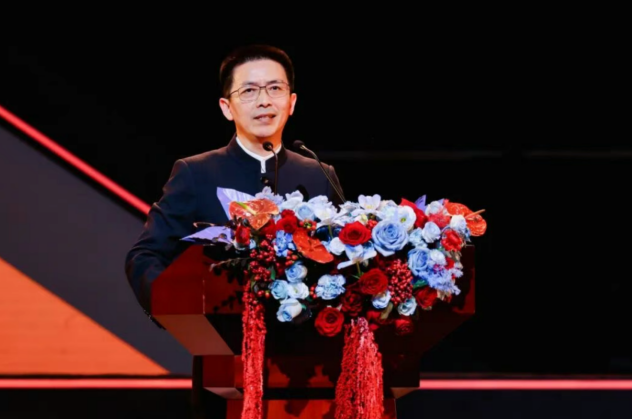
Core Insights - The Chinese kitchen appliance industry is experiencing a mild recovery in 2025, supported by the "trade-in" national subsidy policy, but competition among existing players is intensifying, with retail sales reaching 78.9 billion yuan in the first half of the year, highlighting further industry differentiation [1] - Fotile Group has achieved annual revenue exceeding 17 billion yuan, showing a slight year-on-year increase, thereby solidifying its leading position in the high-end kitchen appliance market [1] Group 1: Company Growth and Management Philosophy - Founded in 1996, Fotile has evolved into a leading enterprise in China's kitchen appliance sector, with its growth trajectory closely aligned with China's economic cycles, manufacturing transformation, and cultural revival [1] - Chairman and CEO Mao Zhongqun emphasizes "cultural leadership and innovation-driven" as the essence of Fotile's growth over the past decade, which serves as a mature case for modern enterprise management in China [1][7] - In its early years, Fotile adopted a "professional, high-end, and boutique" strategy, investing 30 million yuan in R&D to establish a high-end brand for Chinese consumers [2] Group 2: Management System Development - Faced with management bottlenecks that led to two years of stagnation, Mao pursued an EMBA to learn Western management practices, which were then integrated into Fotile's operations [2] - Fotile became one of the first Chinese companies to adopt Western management systems, implementing tools such as 5S management, TQM, and IPD processes to transition into a modern enterprise [2] Group 3: Cultural Integration and Innovation - Recognizing the challenges of applying Western management in China, Mao sought to blend traditional Chinese culture with modern management practices, inspired by successful Japanese models [3] - Starting in 2004, Mao engaged in studies of traditional Chinese culture, laying the groundwork for the establishment of the "Fotile Culture" management system [4] - The introduction of Confucian values into the management framework helped address issues of employee behavior and compliance, fostering a culture of self-discipline [5] Group 4: Achievements and Future Goals - By 2017, Fotile became the first kitchen appliance company in China to surpass 10 billion yuan in revenue, prompting Mao to consider promoting Fotile's management model to other enterprises [6] - The company's cultural management practices have been recognized by institutions like Harvard Business School, with over 30 instances of being cited as a classic case [6] - Looking ahead, Fotile aims to establish itself as a national treasure brand, create a global development framework, and lead innovations in kitchen and family health solutions, targeting a revenue milestone of 100 billion yuan [9]

东润公益孔东梅:企业需将自身打造为拥有优秀文化内核与现代管理能力的世界级企业
Xin Lang Cai Jing· 2025-12-09 04:15
Group 1 - The 2025 China Entrepreneur Influence Entrepreneur Conference will be held from December 5 to 7 in Beijing, focusing on the theme "Emergence·Infinity - Co-creating New Forms of Intelligent Business" [1][4] - Kong Dongmei, founder and chairman of the Dongrun Public Welfare Foundation, emphasized that culture is the soul of an enterprise, using Apple, Microsoft, and McDonald's as examples of companies with strong cultural foundations that drive their success [3][6] - Kong stated that the direction of modern Chinese enterprise management lies in creatively integrating excellent traditional Chinese culture with modern corporate spirit, aiming to transition Chinese enterprises from "efficiency competition" to "value competition" [3][6][7] Group 2 - The Chinese economy has shifted from high-speed growth to a stage of high-quality development, possessing the world's most complete industrial system and a vast market advantage [4][7] - In the context of global industrial order restructuring, Chinese enterprises must build themselves into world-class companies with strong cultural cores and modern management capabilities, which is essential for their transformation and international market stability [4][7]
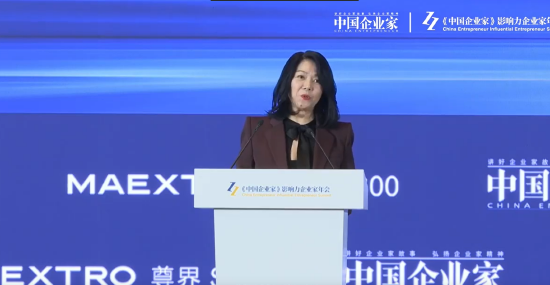
孔东梅:共筑社会价值创新生态
Xin Lang Cai Jing· 2025-12-09 02:13
Core Viewpoint - The conference emphasizes the importance of cultural confidence and the concept of "business for good" as guiding principles for modern enterprises in China [3][14]. Group 1: Cultural Confidence - The essence of a company lies in its culture, which is the deepest layer beyond tangible assets and capabilities [5][17]. - The direction of modern Chinese enterprise management is to creatively integrate traditional Chinese culture with modern corporate spirit, transitioning from "efficiency competition" to "value competition" [6][18]. - Companies must consider the coexistence of growth and social responsibility as a critical issue of the times [15][21]. Group 2: Business for Good - "Business for good" is defined as leveraging commercial power to address social and environmental issues while creating economic value [20][21]. - The concept is rooted in both Western and Chinese traditions, highlighting the importance of social responsibility over mere profit maximization [20][21]. - Companies are encouraged to find intersections between public welfare and business, adopting a "benefit through righteousness" approach to create shared value [21][22]. Group 3: Sustainable Social Value - The idea of "sustainable social value innovation" transcends traditional corporate social responsibility, making social progress a core mission of enterprises [23][24]. - Building an open and collaborative ecosystem is essential for addressing social issues through shared resources and technology [23][24]. - The integration of cultural confidence and social responsibility is seen as vital for Chinese companies to become world-class enterprises with both commercial value and social commitment [24].