中式奢侈品

Search documents
1克两千块,发货等一年:资本押注下一个老铺黄金
3 6 Ke· 2025-12-22 11:38
Core Insights - The competition in the traditional gold jewelry market is intensifying, with brands like Baolan and Linchao Jewelry securing significant financing to expand their presence in the "ancient gold" segment, which is characterized by high craftsmanship and premium pricing [1][10] - The market for ancient gold jewelry in China has seen substantial growth, with a projected increase from 130 billion yuan in 2018 to 4.214 trillion yuan by 2028, reflecting a compound annual growth rate of 64.6% [10] Company Summaries - Baolan and Linchao Jewelry have recently completed financing rounds, with Baolan backed by notable investors including Challenger Capital and Kering Group, while Linchao has established a dedicated post-investment support team [1] - Linchao Jewelry, despite having only one physical store, has leveraged online platforms effectively, achieving significant fan engagement on social media, with 1.356 million followers on Douyin and 507,000 on Taobao [2][4] - The sales performance of Old Puhuang remains strong, with projected revenues of 5 billion yuan in 2025, while Linchao is also expected to exceed 500 million yuan in annual sales despite its limited physical presence [4] Market Dynamics - The ancient gold segment is characterized by high price points, with products like Linchao's "Zodiac Gold Buddha Pendant Necklace" priced at 22,440 yuan per gram, significantly higher than competitors like Chow Tai Fook [2] - The brands are adopting strategies to create a sense of scarcity, such as limited releases and high customization, which enhances their luxury appeal [3][11] - The consumer base for ancient gold jewelry is increasingly overlapping with that of high-end luxury brands, indicating a shift in consumer preferences towards gold jewelry as a form of investment and luxury [7] Challenges and Opportunities - The industry faces challenges related to product delivery times and quality control, with Linchao's custom pieces often requiring long lead times, which can affect customer satisfaction [3][5] - There is a growing concern about market homogenization, as many brands offer similar designs and craftsmanship, which could dilute brand differentiation in the long term [11] - The entry of capital into the ancient gold market is expected to drive further expansion and innovation, but the ability to maintain unique craftsmanship while scaling operations will be crucial for success [10][11]
小米创始人雷军杀入古法黄金“新王之战”,2000元/克的“寶蘭”要叫板老铺黄金?专家:同质化风险日益凸显
Sou Hu Cai Jing· 2025-12-12 02:21
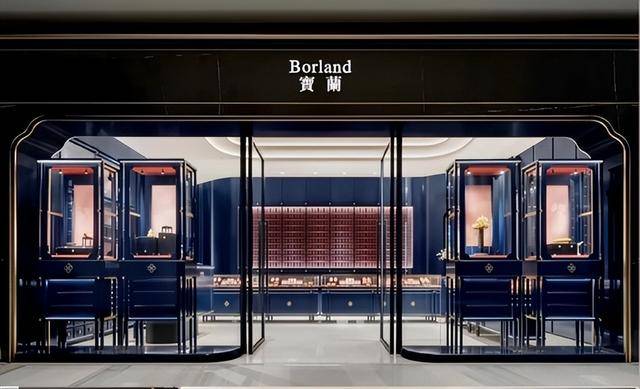
Core Insights - Lei Jun, the chairman of Xiaomi Group, has invested in the high-end gold jewelry brand Borland, which recently completed over 100 million RMB in Series A financing, alongside other notable investors like Kering Group and Challenger Capital [2][4] - Borland's price per gram is approaching 2000 RMB, with a brand premium exceeding 50% compared to competitors like Chow Tai Fook and Chow Sang Sang, positioning it alongside established brands like Laopai Gold [2][10] - Despite having only three physical stores, Borland has actively pursued a price increase strategy, announcing two price hikes within 2025 [2][13] Company Background - Borland's origins date back to 1988, founded by Xu Bidong, who recognized the value of "flower silk inlay" craftsmanship before it gained market attention [5] - The brand was officially established in 2017, with Xu Bidong's son, Xu Zewei, now serving as the core manager and major shareholder [5][6] - Borland has registered over 50 trademarks related to its brand and operates under the legal entity of Hangzhou Baolan Golden Culture Development Co., Ltd. [5] Market Positioning - Borland's products are priced similarly to those of Laopai Gold, with a significant focus on unique craftsmanship rather than just gold weight [12] - The brand's pricing strategy reflects its commitment to handmade quality, with production cycles typically lasting around three months [12] - Borland's limited physical presence is a result of its handcrafted production model, which poses challenges for scaling [12][17] Industry Dynamics - The "ancient method gold" market is becoming increasingly crowded, raising concerns about homogenization risks among brands [15][17] - The capital influx into Borland indicates a strong belief in the potential of the high-end gold jewelry sector, particularly in the context of rising consumer interest in Chinese luxury brands [16] - Experts suggest that while Borland has the potential to become a leading brand in the sector, it faces significant challenges in establishing a unique identity amidst growing competition [17]

雷军杀入“古法金战”:成2000元/克的黄金公司股东
Xin Lang Ke Ji· 2025-12-12 01:28
Core Insights - The article discusses the recent A-round financing of the high-end gold jewelry brand Borland, led by prominent investors including Xiaomi's Lei Jun and luxury goods giant Kering, indicating strong market interest in the brand's potential [1][2][11] - Borland's pricing strategy positions its products at a premium, with per gram prices nearing 2000 RMB, reflecting a significant brand premium over competitors like Chow Tai Fook and Chow Sang Sang [1][7][10] - The brand's unique selling proposition lies in its craftsmanship, particularly the "flower silk inlay" technique, which is recognized as an intangible cultural heritage, although the crowded market raises concerns about differentiation and sustainability [9][12] Company Overview - Borland was founded in 1988 by Xu Bidong, who recognized the value of traditional gold craftsmanship before it gained market attention [3][4] - The brand's formal operations began in 2017, with Xu Bidong's son, Xu Zewei, now leading the company as a second-generation successor [4][5] - Borland has registered over 50 trademarks related to its brand and operates under the legal entity of Hangzhou Baolan Golden Culture Development Co., Ltd. [3][4] Market Positioning - Borland's products are priced similarly to other top-tier brands in the "ancient method gold" segment, with a notable example being a gold earring priced at 67,598 RMB, translating to approximately 1988 RMB per gram [7][10] - The brand currently operates only three physical stores, strategically located in major urban centers, and has a limited online presence with around 60 products available on its Tmall flagship store [8][9] - Despite its limited store count, Borland has implemented aggressive price increases, with two announcements for price hikes planned for 2025 [1][9] Industry Context - The ancient method gold market is experiencing rapid growth, with established players like Laopai Gold reporting significant revenue increases, highlighting the potential for new entrants like Borland [10][11] - The investment from major players indicates a belief in the growth potential of high-end Chinese brands, particularly in the luxury segment [11][12] - However, the market's increasing competition raises concerns about product differentiation and the risk of homogenization among brands [12][13]
雷军杀入“古法金战”,2000元/克的“寶蘭”要叫板老铺黄金?|贵圈
Xin Lang Cai Jing· 2025-12-12 00:35
Group 1 - The core point of the article is that the high-end gold jewelry brand Borland has completed a Series A financing round exceeding 100 million yuan, with notable investors including Xiaomi's Lei Jun, Kering Group, and the founder of Yuanqi Forest, Tang Binsen [2][4][21] - Borland's price per gram is approaching 2000 yuan, with a brand premium exceeding 50% compared to ordinary gold jewelry brands like Chow Tai Fook and Chow Sang Sang, positioning it alongside Laopuhuang [2][10][28] - Despite having only three offline stores, Borland has actively implemented price increases, announcing two price hikes for its entire product line within 2025 [2][31] Group 2 - Borland's history dates back to 1988, founded by Xu Bidong, who recognized the value of "flower silk inlay" craftsmanship before it gained market attention [6][24] - The brand's operational entity, Hangzhou Borland Gold Culture Development Co., Ltd., was established in 2018, with Xu Bidong's son, Xu Zewei, now serving as the core manager and major shareholder [6][25] - Borland has upgraded its production lines twice in 2019 and 2023, currently employing a team of 60 goldsmiths, and is the first domestic brand to launch gold products that meet industry standards for flower silk inlay [9][27] Group 3 - Borland's pricing strategy aligns with luxury brands, with products priced significantly higher than the market average, reflecting the unique craftsmanship rather than just the gold weight [10][30] - The brand's current market presence is limited, with only three stores located in major urban commercial areas, and plans for future expansion are being considered [30][31] - The competitive landscape for "ancient method gold" brands is becoming crowded, raising concerns about the risk of homogenization and the challenge for Borland to establish a unique identity [16][19][35] Group 4 - The high-end ancient method gold market is experiencing rapid growth, with Laopuhuang reporting a revenue increase of 251% in the first half of 2025, indicating strong market validation [33][34] - Capital investment in Borland reflects a broader trend of seeking the next potential leader in the high-end gold jewelry sector, with a focus on Chinese luxury brands [34][36] - Experts suggest that while Borland has the potential to become a leading brand, it faces significant challenges in scaling production and differentiating itself in a competitive market [35][36]
一年赚近200万,老铺黄金让黄牛赚翻了
投中网· 2025-09-12 06:49
Core Viewpoint - The article highlights the remarkable growth of a local brand, Laopu Gold, in the Chinese luxury goods market, driven by a significant increase in gold prices and a unique pricing strategy that redefines gold jewelry as a luxury item [5][9][24]. Group 1: Market Performance - As of September 9, international spot gold prices surpassed $3,670, with a year-to-date increase of over 40%, boosting gold jewelry consumption in China [5]. - In the first half of 2025, Laopu Gold achieved sales of 141.8 billion yuan, a year-on-year increase of 249%, with adjusted net profit rising by 291% to 23.5 billion yuan [5][9]. - The company's market capitalization surged from 6.8 billion HKD a year ago to 125.8 billion HKD by September 11, reflecting an increase of over 18 times [5][8]. Group 2: Business Strategy - Laopu Gold's success is attributed to its "one-price" strategy, which positions its products as luxury items, appealing to a consumer base that overlaps significantly with high-end brands like LV and Cartier [6][9]. - The company operates primarily through offline stores, generating 86.9% of its revenue from physical locations, while online sales grew by 313% to 16.2 billion yuan [10]. - The brand's marketing relies on organic word-of-mouth through VIP customers on social media, achieving significant engagement on platforms like Xiaohongshu [10][11]. Group 3: Pricing and Consumer Behavior - Laopu Gold frequently raises prices, with a recent increase of 10-12% leading to consumer skepticism about its pricing strategies [7][18]. - The brand's pricing strategy aligns closely with luxury goods, making its products attractive to younger consumers who prioritize design and cultural expression over traditional luxury branding [11][15]. - The emergence of a secondary market for Laopu Gold products indicates strong consumer demand, with items often reselling for 60-70% of their original price [20]. Group 4: Financial Management and Challenges - Laopu Gold initiated a 26.98 billion HKD equity financing shortly after its IPO, raising concerns among investors about its financial management and high dividend payouts [7][22]. - The company faces challenges related to cash flow due to its heavy inventory procurement model, resulting in a net cash outflow of 22.15 billion yuan in the first half of 2025 [12]. - Despite high profitability, the company's gross margin decreased from 41.2% to 38.1% amid rising gold prices, highlighting potential pressure on profit margins [11][12]. Group 5: Market Position and Future Outlook - Laopu Gold's rapid growth reflects a shift in consumer preferences towards local brands amid a cooling demand for international luxury goods in China [9][24]. - The brand's expansion strategy includes opening new stores in prime locations, with plans to enhance its presence in major commercial centers [21]. - The sustainability of Laopu Gold's growth story remains uncertain due to market volatility, pricing controversies, and the impact of speculative buying behavior [24].
老铺黄金的隐忧:越赚钱,越缺钱
Sou Hu Cai Jing· 2025-08-24 02:26
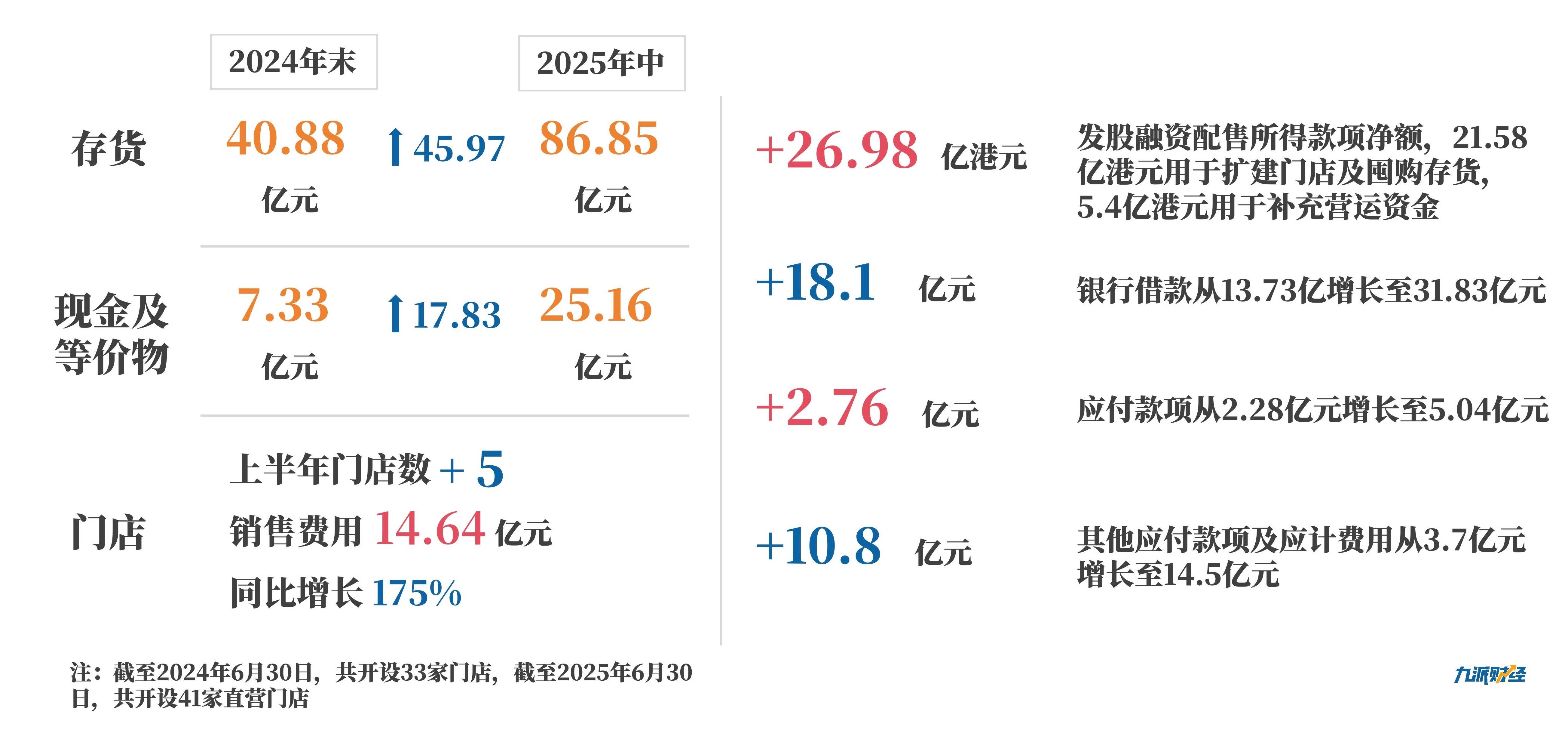
Core Viewpoint - Laopuhuang has successfully detached itself from the correlation with international gold prices and is redefining the gold industry with a focus on "traditional gold" as a luxury product, aiming to establish a unique brand positioning that emphasizes value preservation rather than material value [1][27]. Financial Performance - In the first half of 2025, Laopuhuang achieved a revenue of 12.355 billion yuan, representing a year-on-year growth of 251%, with a gross profit margin of 38% [8][35]. - The company reported a significant operating cash flow deficit of 2.215 billion yuan during the same period, indicating a trend of negative cash flow despite revenue growth [9][15]. - The inventory turnover days stood at 150 days, with total inventory valued at 8.685 billion yuan, reflecting a substantial increase in stock levels [8][20]. Expansion Strategy - Laopuhuang has invested heavily in expansion, with 1.81 billion yuan in new bank loans and net proceeds of 2.698 billion HKD from new share issuance primarily directed towards store expansion and gold inventory [3][27]. - The company opened 5 new stores in the first half of 2025, with sales expenses reaching 1.464 billion yuan, a 175% increase year-on-year [3][8]. - The management aims for an average store performance exceeding 1 billion yuan, with plans to close underperforming stores [8][28]. Risk and Liquidity - Laopuhuang's liquidity ratio is 2.28, but the quick ratio drops to 0.73 when excluding inventory, indicating potential liquidity risks [24]. - The company has not employed any hedging strategies against gold price fluctuations, which could expose it to risks associated with gold price volatility [26][35]. Market Positioning - Laopuhuang targets high-net-worth individuals who are less sensitive to material value fluctuations, positioning itself in the gold product sector rather than solely as a jewelry brand [30][35]. - The product matrix includes over 1,800 SPUs and 2,700 SKUs, covering various categories and price ranges to meet diverse customer needs [30][35]. Competitive Landscape - Laopuhuang's gross profit margin of 38.1% is significantly higher than its competitors, but still falls short of luxury brands like Richemont and Hermès, which have margins of 67% and 70.3% respectively [35]. - The company's stock price has shown a high correlation with gold prices, indicating that its growth is still influenced by market demand for gold as a safe-haven asset [35].