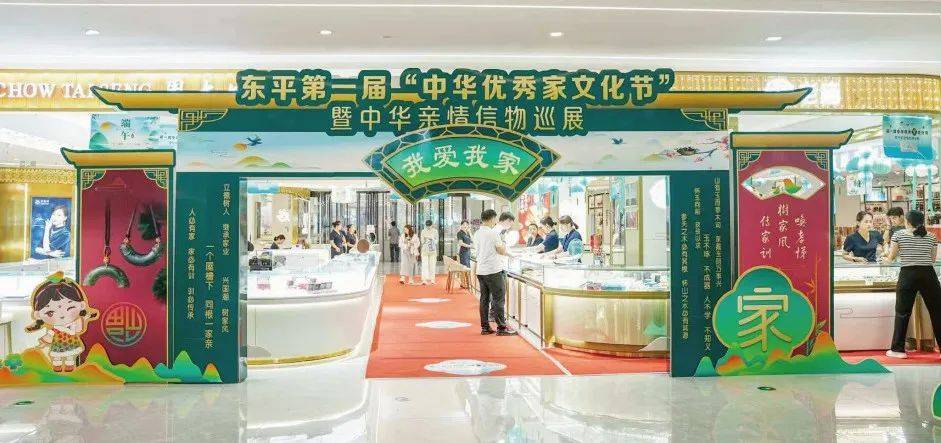
古法黄金首饰

Search documents
当SKP的队伍转向老铺,奢侈品逻辑已改写
Jing Ji Guan Cha Wang· 2026-01-20 12:36
Core Insights - The high-end consumer market in China, traditionally dominated by Western brands, is being disrupted by the local brand Laopu Gold, which has seen significant consumer interest and growth despite a global slowdown in luxury goods [1][12]. - According to Bain & Company, the global luxury market is entering a critical adjustment phase, with the Chinese market expected to contract by 3% to 5% from 2022 to 2025, as consumers shift towards local brands and experiential categories [2]. - A notable trend among high-net-worth individuals is a decreased desire for conspicuous consumption, moving away from visible logos as status symbols [2][3]. Market Dynamics - The luxury market in China has evolved from a phase driven by logo-centric consumption to one where consumers seek products that embody cultural depth and craftsmanship [3][4]. - Laopu Gold's success is attributed to its focus on traditional craftsmanship and cultural value, appealing to consumers' desire for authenticity and heritage [8][9]. Brand Positioning - Laopu Gold emphasizes its unique selling propositions, including ancient craftsmanship techniques and a stable Eastern aesthetic that resonates with Chinese consumers [8][9]. - The brand's approach transforms the purchase of gold from a mere transaction into a cultural experience, enhancing consumer engagement through immersive service and storytelling [9][10]. Competitive Landscape - Laopu Gold has established itself as a leading brand in China's luxury jewelry market, outperforming international luxury brands in terms of store efficiency and customer overlap with high-end brands like Hermès and Chanel [12][15]. - The brand's ability to detach from gold price fluctuations and establish a new pricing power through emotional storytelling and high-end service positions it competitively against established Western luxury brands [15][16]. Cultural Impact - The rise of Laopu Gold signifies a shift in the luxury market, highlighting the importance of cultural resonance and consumer value perception over mere brand symbolism [15][16]. - The brand's success reflects a broader trend of consumers transitioning from status-driven purchases to those that offer deeper personal and cultural significance [10][15].

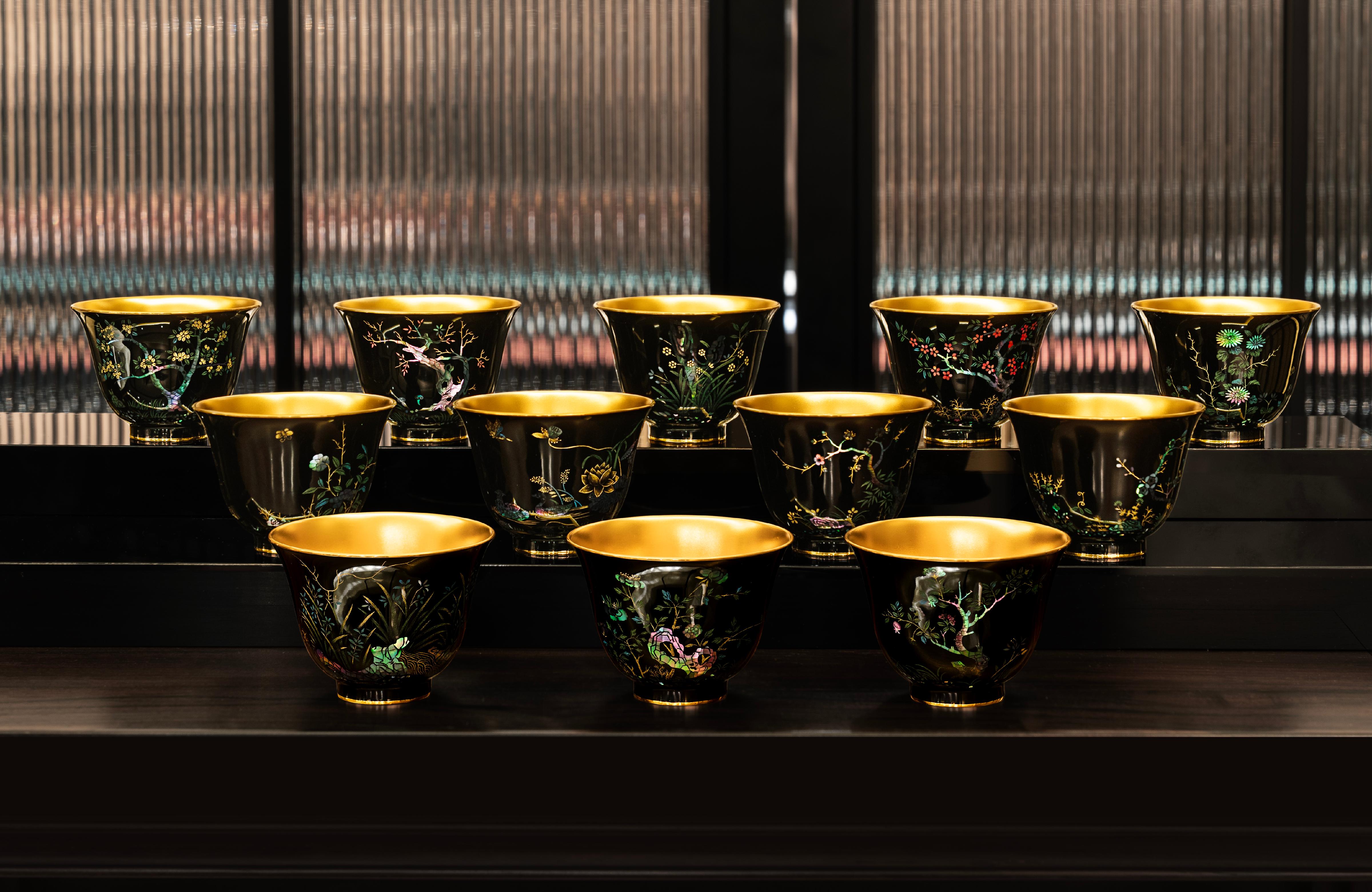
1克两千块,发货等一年:资本押注下一个老铺黄金
3 6 Ke· 2025-12-22 11:38
Core Insights - The competition in the traditional gold jewelry market is intensifying, with brands like Baolan and Linchao Jewelry securing significant financing to expand their presence in the "ancient gold" segment, which is characterized by high craftsmanship and premium pricing [1][10] - The market for ancient gold jewelry in China has seen substantial growth, with a projected increase from 130 billion yuan in 2018 to 4.214 trillion yuan by 2028, reflecting a compound annual growth rate of 64.6% [10] Company Summaries - Baolan and Linchao Jewelry have recently completed financing rounds, with Baolan backed by notable investors including Challenger Capital and Kering Group, while Linchao has established a dedicated post-investment support team [1] - Linchao Jewelry, despite having only one physical store, has leveraged online platforms effectively, achieving significant fan engagement on social media, with 1.356 million followers on Douyin and 507,000 on Taobao [2][4] - The sales performance of Old Puhuang remains strong, with projected revenues of 5 billion yuan in 2025, while Linchao is also expected to exceed 500 million yuan in annual sales despite its limited physical presence [4] Market Dynamics - The ancient gold segment is characterized by high price points, with products like Linchao's "Zodiac Gold Buddha Pendant Necklace" priced at 22,440 yuan per gram, significantly higher than competitors like Chow Tai Fook [2] - The brands are adopting strategies to create a sense of scarcity, such as limited releases and high customization, which enhances their luxury appeal [3][11] - The consumer base for ancient gold jewelry is increasingly overlapping with that of high-end luxury brands, indicating a shift in consumer preferences towards gold jewelry as a form of investment and luxury [7] Challenges and Opportunities - The industry faces challenges related to product delivery times and quality control, with Linchao's custom pieces often requiring long lead times, which can affect customer satisfaction [3][5] - There is a growing concern about market homogenization, as many brands offer similar designs and craftsmanship, which could dilute brand differentiation in the long term [11] - The entry of capital into the ancient gold market is expected to drive further expansion and innovation, but the ability to maintain unique craftsmanship while scaling operations will be crucial for success [10][11]
雷军杀入“古法金战”,2000元/克的“寶蘭”要叫板老铺黄金?|贵圈
新浪财经· 2025-12-12 09:44
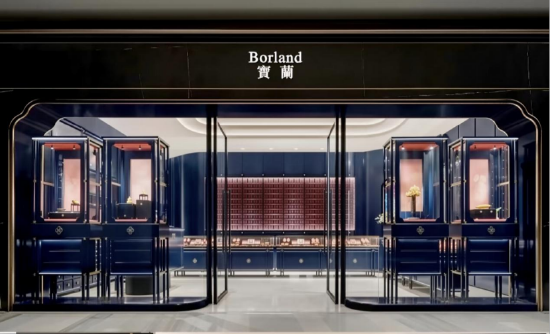
Core Viewpoint - The article discusses the recent A-round financing of the high-end gold jewelry brand Borland, led by notable investors including Lei Jun of Xiaomi and the Kering Group, highlighting the brand's premium pricing strategy and market positioning in the competitive "ancient gold" sector [3][6][24]. Financing and Investor Background - Borland recently completed over 100 million RMB in A-round financing, with a strong backing from prominent investors such as Challenger Capital led by Tang Binsen and Kering Group, indicating confidence in the brand's potential [3][6]. - The brand's origins date back to 1988, founded by Xu Bidong, who recognized the value of "flower silk inlay" craftsmanship before it gained market attention [7][8]. Product Pricing and Market Positioning - Borland's price per gram is approaching 2000 RMB, with a brand premium exceeding 50% compared to competitors like Chow Tai Fook and Chow Sang Sang [3][15]. - The brand has implemented aggressive price increases, announcing two price hikes within 2025, reflecting its premium positioning despite having only three physical stores [20][19]. Competitive Landscape and Challenges - The "ancient gold" market is becoming increasingly crowded, raising concerns about product differentiation and the risk of homogenization among brands [4][22]. - Borland's unique selling proposition lies in its craftsmanship, but it faces challenges in scaling production while maintaining quality, as its products are handcrafted and require significant time to produce [25][19]. Market Trends and Future Outlook - The ancient gold market is experiencing growth, with Borland positioned among the top brands, but it must navigate the balance between growth and maintaining its artisanal identity [24][25]. - Experts suggest that the investment from major players indicates a belief in the potential of Chinese high-end brands, with Borland seen as a possible contender to follow in the footsteps of established brands like Laopuhuang [24][25].
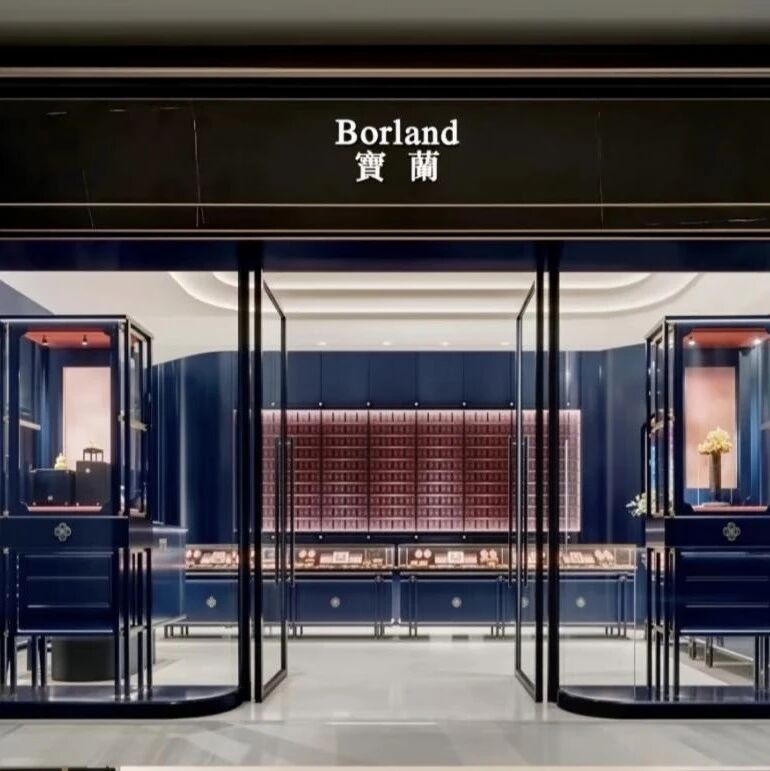
小米创始人雷军杀入古法黄金“新王之战”,2000元/克的“寶蘭”要叫板老铺黄金?专家:同质化风险日益凸显
Sou Hu Cai Jing· 2025-12-12 02:21
Core Insights - Lei Jun, the chairman of Xiaomi Group, has invested in the high-end gold jewelry brand Borland, which recently completed over 100 million RMB in Series A financing, alongside other notable investors like Kering Group and Challenger Capital [2][4] - Borland's price per gram is approaching 2000 RMB, with a brand premium exceeding 50% compared to competitors like Chow Tai Fook and Chow Sang Sang, positioning it alongside established brands like Laopai Gold [2][10] - Despite having only three physical stores, Borland has actively pursued a price increase strategy, announcing two price hikes within 2025 [2][13] Company Background - Borland's origins date back to 1988, founded by Xu Bidong, who recognized the value of "flower silk inlay" craftsmanship before it gained market attention [5] - The brand was officially established in 2017, with Xu Bidong's son, Xu Zewei, now serving as the core manager and major shareholder [5][6] - Borland has registered over 50 trademarks related to its brand and operates under the legal entity of Hangzhou Baolan Golden Culture Development Co., Ltd. [5] Market Positioning - Borland's products are priced similarly to those of Laopai Gold, with a significant focus on unique craftsmanship rather than just gold weight [12] - The brand's pricing strategy reflects its commitment to handmade quality, with production cycles typically lasting around three months [12] - Borland's limited physical presence is a result of its handcrafted production model, which poses challenges for scaling [12][17] Industry Dynamics - The "ancient method gold" market is becoming increasingly crowded, raising concerns about homogenization risks among brands [15][17] - The capital influx into Borland indicates a strong belief in the potential of the high-end gold jewelry sector, particularly in the context of rising consumer interest in Chinese luxury brands [16] - Experts suggest that while Borland has the potential to become a leading brand in the sector, it faces significant challenges in establishing a unique identity amidst growing competition [17]
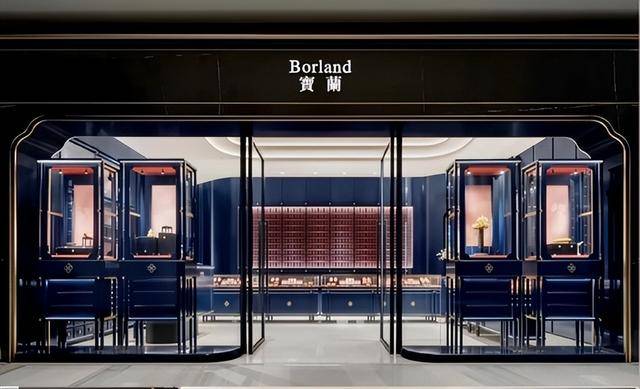
雷军杀入“古法金战”:成2000元/克的黄金公司股东
Xin Lang Ke Ji· 2025-12-12 01:28
Core Insights - The article discusses the recent A-round financing of the high-end gold jewelry brand Borland, led by prominent investors including Xiaomi's Lei Jun and luxury goods giant Kering, indicating strong market interest in the brand's potential [1][2][11] - Borland's pricing strategy positions its products at a premium, with per gram prices nearing 2000 RMB, reflecting a significant brand premium over competitors like Chow Tai Fook and Chow Sang Sang [1][7][10] - The brand's unique selling proposition lies in its craftsmanship, particularly the "flower silk inlay" technique, which is recognized as an intangible cultural heritage, although the crowded market raises concerns about differentiation and sustainability [9][12] Company Overview - Borland was founded in 1988 by Xu Bidong, who recognized the value of traditional gold craftsmanship before it gained market attention [3][4] - The brand's formal operations began in 2017, with Xu Bidong's son, Xu Zewei, now leading the company as a second-generation successor [4][5] - Borland has registered over 50 trademarks related to its brand and operates under the legal entity of Hangzhou Baolan Golden Culture Development Co., Ltd. [3][4] Market Positioning - Borland's products are priced similarly to other top-tier brands in the "ancient method gold" segment, with a notable example being a gold earring priced at 67,598 RMB, translating to approximately 1988 RMB per gram [7][10] - The brand currently operates only three physical stores, strategically located in major urban centers, and has a limited online presence with around 60 products available on its Tmall flagship store [8][9] - Despite its limited store count, Borland has implemented aggressive price increases, with two announcements for price hikes planned for 2025 [1][9] Industry Context - The ancient method gold market is experiencing rapid growth, with established players like Laopai Gold reporting significant revenue increases, highlighting the potential for new entrants like Borland [10][11] - The investment from major players indicates a belief in the growth potential of high-end Chinese brands, particularly in the luxury segment [11][12] - However, the market's increasing competition raises concerns about product differentiation and the risk of homogenization among brands [12][13]
老铺黄金(6181.HK):金价之上 价值为王 古法工艺有望持续引领消费热潮
Ge Long Hui· 2025-10-17 20:46
Core Viewpoint - The company, Laopuhuangjin, has demonstrated significant revenue and profit growth in the first half of 2025, driven by its unique craftsmanship and cultural narrative, positioning itself as a leader in the traditional gold jewelry market in China and abroad [1][2]. Financial Performance - In H1 2025, the company's revenue reached 12.354 billion RMB, a year-on-year increase of 251% [1]. - Offline store revenue accounted for 10.736 billion RMB (86.9% of total revenue), growing by 243.2% year-on-year, while online platform revenue was 1.618 billion RMB (13.1% of total revenue), increasing by 313.3% [1]. - Gross profit margin was 38.09%, down 3.24 percentage points year-on-year, primarily due to price adjustments not keeping pace with rising gold prices [2]. - Net profit attributable to shareholders was 2.268 billion RMB, a year-on-year increase of 285.76% [2]. - Basic earnings per share were 13.38 RMB, up 225.55% year-on-year [2]. Operational Efficiency - The company has improved its operational efficiency, with inventory turnover days decreasing from 195 days in 2024 to 150 days in the reporting period [2]. - Trade receivables turnover days reduced from 25 days in 2024 to 12 days, indicating enhanced cash flow management [2]. Product Strategy - Laopuhuangjin has diversified its product offerings beyond traditional jewelry to include cultural and lifestyle products, creating a unique market position with minimal direct competition [2]. - The company has developed over 2,100 original designs and holds numerous patents, emphasizing its commitment to innovation [2]. Market Expansion - In May 2025, the company raised 2.698 billion HKD through a share placement to support business development and expand its store network in mainland China [3]. - The company plans to enhance its presence in high-end commercial centers across various cities, supporting existing store expansions and same-store sales growth [3]. Industry Outlook - The gold consumption in China decreased by 3.54% year-on-year in H1 2025, with gold jewelry consumption down 26%, yet high-value and well-designed products continue to perform well [4]. - The market for traditional gold jewelry is projected to reach approximately 421.4 billion RMB by 2028, with a compound annual growth rate of 21.8% [4]. Competitive Positioning - Laopuhuangjin's consumer overlap with major luxury brands like Louis Vuitton and Hermès is as high as 77.3%, reinforcing its high-end market positioning [5]. - The recent opening of a new store in Hong Kong's IFC has attracted significant customer interest, indicating strong demand for its products in international markets [5]. Future Projections - Revenue forecasts for Laopuhuangjin are 26.324 billion RMB, 33.793 billion RMB, and 40.045 billion RMB for the years 2025 to 2027, respectively [5]. - Expected earnings per share for the same period are projected at 29.61 RMB, 38.14 RMB, and 45.36 RMB, with corresponding price-to-earnings ratios of 23.5x, 18.2x, and 15.3x [5].
老铺黄金上海新天地门店启幕 加码上海市场剑指国际影响力
Zheng Quan Ri Bao Wang· 2025-08-04 08:57
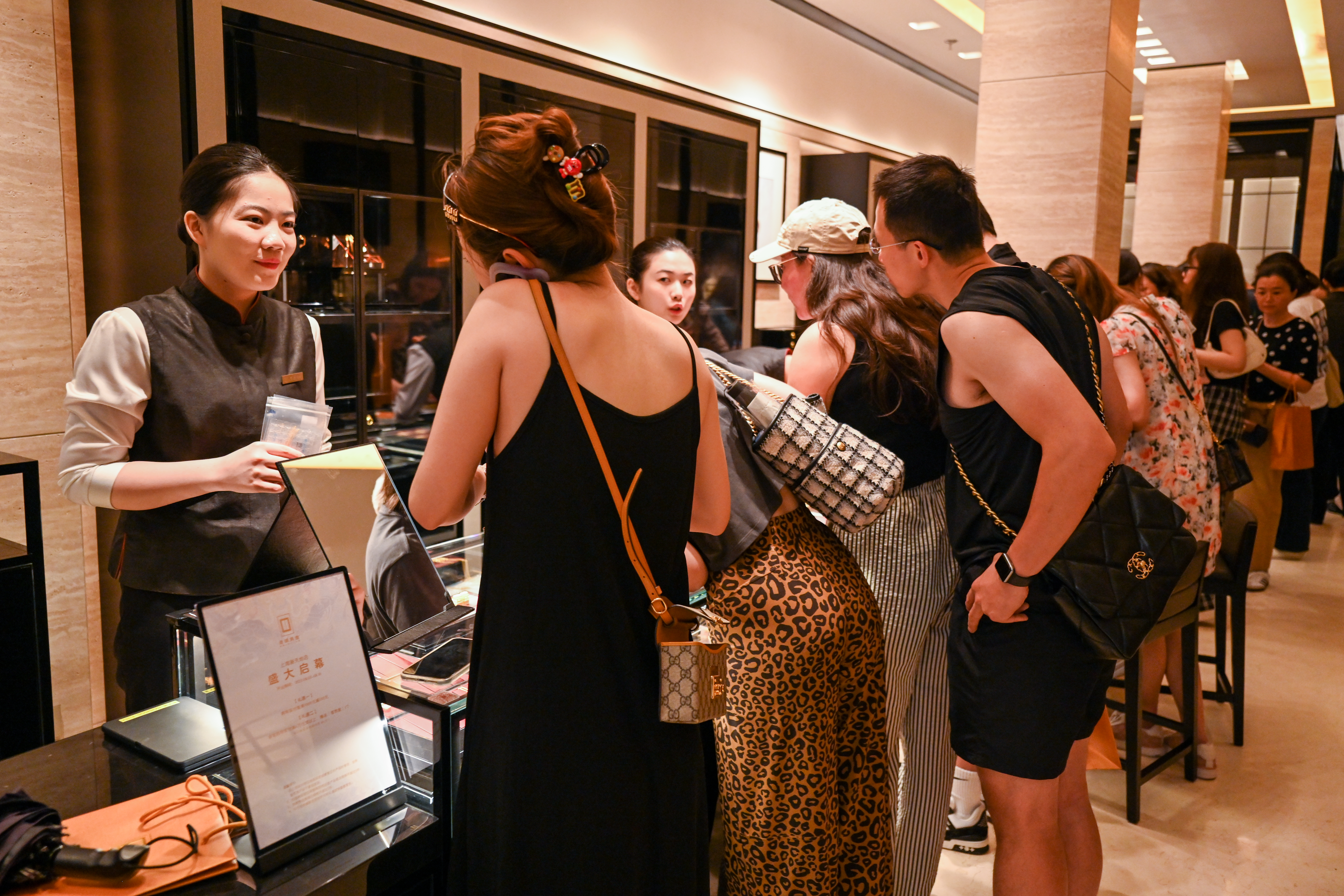
Core Viewpoint - The article highlights the rise of domestic brands in China's high-end consumer market, exemplified by the recent opening of Lao Pu Gold's new store in Shanghai, which reflects the brand's strategic expansion and growing influence in the luxury sector [1][6][9]. Group 1: Company Expansion - Lao Pu Gold opened its third store in Shanghai within three months, following openings in May and June at other high-end locations [1][7]. - The new store is strategically located in a prominent luxury shopping area, enhancing Lao Pu Gold's presence in key commercial centers [7][8]. - The brand's international expansion is also notable, with the opening of its first overseas store in Singapore, which has exceeded expectations in terms of customer traffic and sales [8][10]. Group 2: Consumer Engagement - The opening event attracted significant consumer interest, with long queues and a proactive approach to enhance customer experience, including providing umbrellas and fans [7][8]. - Customers expressed enthusiasm for the brand's products, noting the craftsmanship and cultural significance of the jewelry [7][10]. Group 3: Financial Performance - Lao Pu Gold's sales performance is impressive, with a projected revenue of 14.3 billion yuan for the first half of the year, representing a 252% year-on-year increase [10][11]. - The brand's net profit is expected to reach 2.36 billion yuan, reflecting a 292% increase compared to the previous year [10][11]. - The company's growth is attributed to its expanding brand influence, product optimization, and strategic store openings, which are expected to continue driving revenue growth [11].
走出焦虑不安,黄金珠宝业者的出路在哪里?
Sou Hu Cai Jing· 2025-07-17 12:26
Core Viewpoint - The Chinese gold and jewelry industry is facing significant challenges due to high gold prices, low consumer demand, and the departure of leading brands to Southeast Asia, which has created a sense of anxiety among operators [1][2][4]. Group 1: Market Dynamics - The current gold price trend has lasted nearly 14 months, with a shift from consumer-oriented gold jewelry to investment gold bars, leading to a decline in sales of mid-to-high weight gold jewelry [1]. - The departure of leading brands from the domestic market has negatively impacted the confidence of agents and franchisees, as these brands are market leaders whose strategies influence overall market sentiment [1][2]. - The market is experiencing a structural transformation, with many operators recognizing the need for adjustment but often being distracted by short-term profits from traditional gold jewelry sales [2][4]. Group 2: Innovation and Adaptation - The industry is entering a "recessionary market," necessitating structural transformation for survival and future growth, with a focus on innovation primarily driven by small and medium enterprises [4][11]. - The successful brands emerging in this environment are those that leverage technological and cultural innovations, creating unique products that resonate with contemporary consumer preferences [7][10]. - The cultural revival and the trend towards "Guochao" (national trend) are driving demand for traditional Chinese jewelry, such as jade and pearls, which are filling the market gap left by declining diamond sales [12]. Group 3: Strategic Recommendations - Companies must align their strategies with national goals of innovation and quality improvement, as failure to adapt could lead to market elimination [5]. - The focus should be on developing core competitive advantages through original cultural IP and innovative applications of traditional craftsmanship, rather than merely following trends [11][12]. - The industry is encouraged to embrace change and seek new business models that can thrive in a challenging market environment, as historical patterns show that crises often lead to significant innovation [4][12].