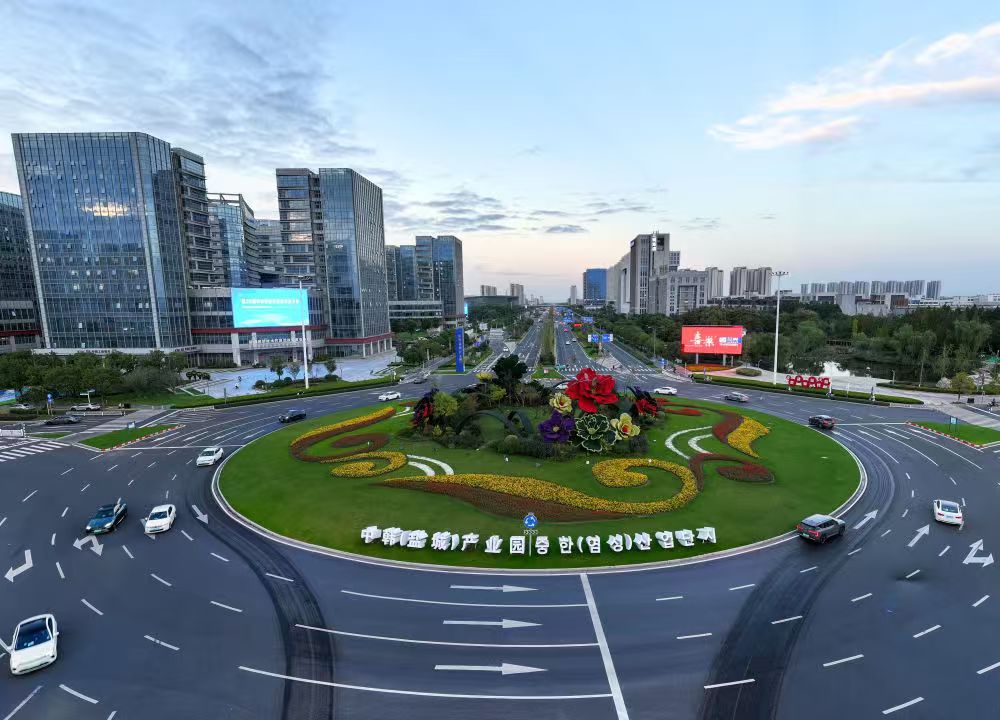
中韩自贸协定第二阶段谈判

Search documents
韩国总统李在明抵达北京
第一财经· 2026-01-04 05:43
Core Viewpoint - The article discusses the significance of South Korean President Lee Jae-myung's state visit to China from January 4 to 7, 2026, emphasizing its potential to enhance Sino-Korean relations and explore new economic cooperation models [3][4]. Group 1: Diplomatic Significance - This visit marks Lee Jae-myung's first state visit to China since taking office and is the first visit by a South Korean president in nearly nine years, indicating a renewed focus on bilateral relations [3][4]. - The visit is expected to facilitate the implementation of previously agreed-upon consensus and address outstanding issues between the two nations [4][5]. Group 2: Economic Cooperation - A key focus of the visit is to explore new economic cooperation models, particularly in high-tech industries such as artificial intelligence and advanced technology [5][9]. - The bilateral trade volume between China and South Korea has significantly increased from approximately $5 billion in 1992 to $328.08 billion in 2022, with a trade volume of $242.29 billion recorded in the first three quarters of 2025 [5][6]. - In 2023, South Korea experienced a trade deficit with China for the first time in 31 years, with exports to China at $124.83 billion and imports at $142.85 billion, highlighting the need for new cooperation strategies [6][10]. Group 3: Investment Trends - Chinese investment in South Korea has surged, with reported investment applications reaching $5.786 billion in 2024, a 266.1% increase year-on-year, and actual funds amounting to $514 million, up 68.4% [10]. - The article notes that the changing dynamics of U.S.-Korea trade relations may provide opportunities for increased Chinese investment in South Korea [10]. Group 4: Technological Collaboration - There is potential for collaboration in high-tech sectors, particularly in electric vehicles and battery technology, where South Korea has advantages and China presents a significant market opportunity [9][10]. - The article emphasizes the importance of South Korea recognizing China's technological advancements to foster smoother cooperation in the future [10].

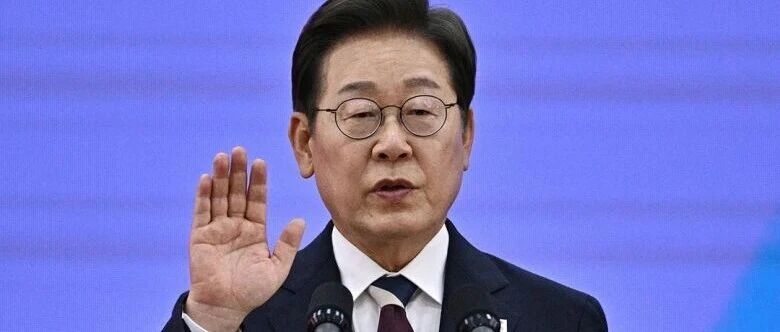
前瞻|韩总统李在明新年首访中国,外界期待“与尹锡悦不同”
Xin Lang Cai Jing· 2026-01-03 23:44
Group 1 - The visit of South Korean President Yoon Suk-yeol to China from January 4 to 7 marks the first state visit by a South Korean leader in nearly nine years, indicating a potential thaw in Sino-Korean relations [1][2] - The visit is accompanied by a large economic delegation of over 200 South Korean business leaders, including heads of major conglomerates, highlighting the economic significance of this diplomatic engagement [1][6] - The agenda includes discussions on supply chain investments, digital economy, and cooperation against transnational crime, with expectations of multiple memorandums of understanding being signed [3][7] Group 2 - The bilateral trade between China and South Korea reached $328.08 billion in 2024, reflecting a year-on-year growth of 5.6%, with China being South Korea's largest trading partner for 21 consecutive years [8] - The two countries are expected to discuss the second phase of the China-South Korea Free Trade Agreement negotiations, which have been a focus of recent diplomatic communications [7][8] - There is a strong emphasis on enhancing cooperation in high-tech sectors such as artificial intelligence and semiconductors, as both countries seek to address economic challenges and leverage their complementary strengths [6][7]
李成钢会见韩国产业通商部通商交涉本部长吕翰九
Xin Lang Cai Jing· 2025-12-30 12:41
Core Viewpoint - The meeting between Chinese and South Korean trade representatives aims to accelerate the second phase negotiations of the China-South Korea Free Trade Agreement (FTA) based on the recent consensus reached by the leaders of both countries [1] Group 1: Meeting Outcomes - Chinese Vice Minister of International Trade Negotiations, Li Chenggang, emphasized the importance of the recent leaders' meeting in providing strategic guidance for the healthy and stable development of bilateral economic and trade relations [1] - Both parties expressed a commitment to focus on key issues, address differences, and expedite the negotiations for substantial outcomes in the second phase of the FTA [1] Group 2: Future Cooperation - South Korean Minister of Trade, Yoo Han-koo, indicated a willingness to work together with China to achieve a mutually beneficial and balanced result in the FTA negotiations [1] - Discussions also included the high-quality implementation of the FTA and China's potential accession to the Digital Economy Partnership Agreement (DEPA) [1]
韩媒:韩四大集团掌门人明年或集体访华
券商中国· 2025-12-23 01:25
Core Viewpoint - The article discusses the upcoming visit of a South Korean economic delegation to China, led by prominent business leaders, aimed at enhancing bilateral trade relations and cooperation between the two countries [1][2][3]. Group 1: Economic Delegation Details - The economic delegation will be organized by the Korea Chamber of Commerce and Industry, with approximately 200 business representatives expected to participate [1]. - The delegation will be led by Choi Tae-won, who also serves as the chairman of the Korea Chamber of Commerce and Industry, and previously visited China in October [2]. - During the visit, the delegation will participate in the Korea-China Business Forum and one-on-one business meetings, marking the first such delegation visit in six years [3]. Group 2: Bilateral Trade Discussions - On December 12, Chinese Commerce Minister Wang Wentao met with South Korea's Minister of Trade, Industry and Energy, Kim Jong-hwan, to discuss the implementation of key agreements between the two nations [3]. - The discussions focused on accelerating the second phase of the China-South Korea Free Trade Agreement negotiations and enhancing cooperation in both traditional and emerging sectors [3][4]. - Both sides emphasized the importance of maintaining stable supply chains and deepening local economic cooperation, as well as collaborating within frameworks like the WTO and APEC to uphold free trade [4].
中韩元首将会晤 近邻伙伴锚定关系发展方向
Zhong Guo Xin Wen Wang· 2025-10-28 09:56
Core Points - The meeting between Chinese President Xi Jinping and South Korean President Yoon Suk-yeol marks a significant opportunity to enhance the strategic partnership between China and South Korea [3][5] - This visit is Xi's first state visit to South Korea in 11 years and the first meeting between the two leaders since Yoon took office [3][5] - The two countries aim to strengthen cooperation in various fields, including trade, investment, and cultural exchanges, amidst evolving international dynamics [5][6] Trade and Economic Relations - China has been South Korea's largest trading partner for 21 consecutive years, with bilateral trade reaching $328.08 billion last year [5] - The 10th anniversary of the China-South Korea Free Trade Agreement is being marked this year, with ongoing negotiations for the second phase focusing on cross-border services, investment, and financial services [5] - The visit is expected to facilitate closer bilateral cooperation and advance the second phase of the free trade agreement negotiations [5][6] Multilateral Cooperation - Both countries share a commitment to multilateralism and free trade, which will be emphasized during the APEC meeting hosted by China next year [6] - The leaders' meeting is anticipated to send a positive message regarding mutual support and consensus-building in maintaining the multilateral trading system [6] Cultural and People-to-People Exchanges - There is a growing emphasis on enhancing cultural, educational, and technological exchanges between the two nations [7] - The visit is expected to yield new agreements and initiatives aimed at fostering a favorable environment for youth talent development and furthering mutual understanding [7]