中韩经贸合作

Search documents
首届韩国企业平谷行专场论坛暨中韩企业冰雪联谊会在北京平谷举办
Xin Lang Cai Jing· 2026-01-15 09:08
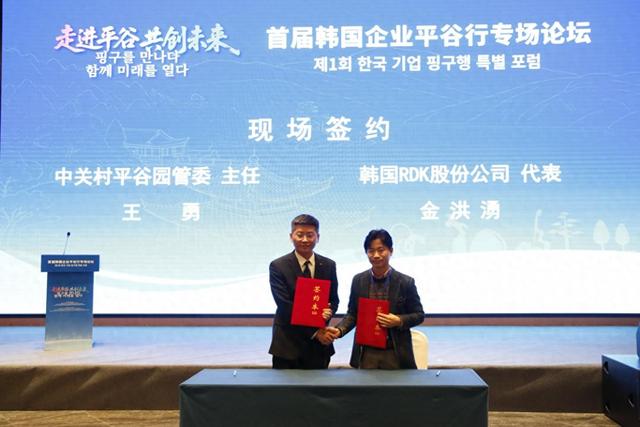
Core Viewpoint - The first Korea Enterprises Pinggu Forum and the inaugural China-Korea Ice and Snow Enterprises Networking event were held in Pinggu, focusing on deepening cooperation between Chinese and Korean enterprises across various sectors, including automotive parts, food processing, medical devices, and cultural tourism [1][3]. Group 1: Event Overview - The forum aimed to explore business opportunities and enhance industrial connections through a combination of thematic presentations, enterprise sharing, and ice and snow networking activities [3]. - The event showcased investment opportunities in areas such as food nutrition, pet economy, synthetic biology, and modern agriculture, aligning with Korean enterprises' investment directions [3][5]. Group 2: Industry Insights - Pinggu is positioned as a key area for international exchanges in Beijing, with a focus on enhancing cooperation with South Korea since the entry of the first Korean automotive parts companies in 2002 [3]. - The ice and snow venue in Pinggu, covering over 300,000 square meters, features 13 ski trails and has hosted over 200 events, establishing itself as a comprehensive cultural and tourism enterprise [6]. Group 3: Cultural Exchange - The event included cultural displays such as traditional Chinese calligraphy and violin craftsmanship, highlighting Pinggu's cultural heritage and industrial strengths [9][11]. - Interactive experiences, including a unique pet-themed ice and snow park, were introduced to attract visitors and enhance the local ice and snow economy [6][12]. Group 4: Future Prospects - Pinggu plans to leverage this event as a catalyst for further cooperation in key sectors like automotive parts, food nutrition, and synthetic biology, aiming to create a favorable business environment for Korean enterprises [12].

对韩经贸合作,“近水楼台”的威海怎样“再得月”?
Qi Lu Wan Bao· 2026-01-13 07:43
Core Viewpoint - Weihai, a coastal city in China, is leveraging its geographical proximity to South Korea to enhance economic cooperation and transform into a comprehensive hub for trade and logistics in Northeast Asia [1][2]. Group 1: Geographical and Historical Context - Weihai is the closest Chinese city to South Korea, with five major shipping routes, making it a key player in Sino-Korean trade [1]. - The city has a historical connection with South Korea, dating back to the opening of the first shipping route in 1990, two years before the formal diplomatic relations were established [1]. Group 2: Economic Cooperation and Strategic Initiatives - South Korea is Weihai's largest trading partner, accounting for 26.4% of the city's total import and export volume, and over half of the foreign investment comes from South Korea [1]. - The establishment of the China-South Korea Free Trade Agreement in 2015 has positioned Weihai and Incheon as local economic cooperation demonstration zones, fostering institutional innovation [1]. Group 3: Logistics and Trade Integration - Weihai has implemented a "Four Ports Linkage" strategy to enhance connectivity between sea and air transport, significantly reducing logistics costs by 30% and improving delivery times by 5 hours [3]. - The city has hosted the Korea (Shandong) Import Commodity Expo for five consecutive years, maintaining a leading position in trade volume with South Korea [3]. Group 4: Challenges and Market Dynamics - Traditional trade models are facing challenges due to increased competition from domestic manufacturing and changing consumer preferences among younger generations in China [4]. - Weihai's strategy includes direct supply to major retailers, reducing retail prices by approximately 30% to remain competitive [4]. Group 5: Cultural and Human Exchange - Cultural exchanges are vital for economic cooperation, with initiatives like the Incheon Pavilion providing one-stop services for Korean businesses entering China [6][7]. - Weihai has established international schools and healthcare collaborations with South Korean institutions, enhancing cultural ties and mutual understanding [6]. Group 6: Future Development Strategies - Weihai aims to transition from a trade corridor to a comprehensive hub by focusing on high-value sectors such as R&D and supply chain management [8]. - The city is seeking to establish itself as a preferred platform for South Korea-China cooperation through innovative institutional frameworks and enhanced connectivity [8][9].
中委经贸合作、对日出口管制、Meta收购Manus成焦点,商务部回应
第一财经· 2026-01-08 08:31
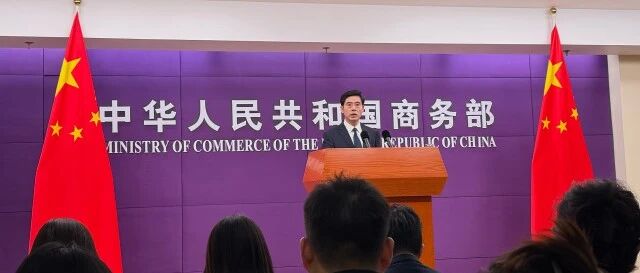
Core Viewpoint - The article discusses recent statements from China's Ministry of Commerce regarding international trade relations, particularly focusing on China's economic cooperation with Venezuela and South Korea, as well as export controls on dual-use items to Japan. Group 1: China-Venezuela Economic Cooperation - China's Ministry of Commerce firmly opposes U.S. interference in China-Venezuela economic cooperation, emphasizing that such cooperation is protected by international law and the laws of both countries, and that China will continue to deepen economic relations regardless of Venezuela's political situation [5] - The cooperation is based on principles of equality and mutual benefit, with China not seeking to establish a sphere of influence or target any specific party [5] Group 2: Export Controls to Japan - The Ministry of Commerce announced strengthened export controls on dual-use items to Japan, citing concerns over Japan's military ambitions and statements from its leadership that threaten China's sovereignty [7] - The measures aim to prevent Japan's re-militarization and nuclear ambitions, while ensuring that civilian trade is not affected [7] Group 3: China-South Korea Economic Cooperation - Recent meetings between Chinese and South Korean leaders have resulted in significant agreements to enhance economic cooperation, with China remaining South Korea's largest trading partner [10][11] - In 2025, trade between China and South Korea reached $298.9 billion, with South Korea's cumulative investment in China amounting to $104.65 billion [11] - Agreements were signed to establish a dialogue mechanism for economic cooperation and to deepen collaboration in industrial parks, aiming to enhance the quality and upgrade of bilateral economic relations [11]
韩国四大财团访华!
国芯网· 2026-01-05 11:07
Group 1 - The article highlights the significance of the recent visit by South Korean President Lee Jae-myung to China, marking his first visit since taking office, accompanied by a large economic delegation from South Korea [2][4] - The economic delegation, led by prominent figures from major South Korean corporations, aims to strengthen economic ties and includes over 200 members, indicating a strong commitment to enhancing bilateral trade and cooperation [4] - Data shows that in 2024, the bilateral trade volume between China and South Korea is projected to reach $328.08 billion, reflecting a growth of 5.6%, with China being South Korea's largest trading partner for 21 consecutive years [4]
何立峰出席中韩商务论坛时指出,中韩应拉紧经贸纽带,开创合作共赢新局面
Xin Hua Cai Jing· 2026-01-05 06:36
Group 1 - The core viewpoint emphasizes the importance of enhancing economic and trade cooperation between China and South Korea, guided by the strategic consensus reached during the visits of the two countries' leaders [1] - China is committed to expanding high-level opening-up and welcomes investments from South Korean companies and other foreign enterprises to share development opportunities [1] - The forum was co-hosted by the China Council for the Promotion of International Trade and the Korea Chamber of Commerce and Industry, with approximately 400 representatives from both governments and the business community in attendance [1] Group 2 - The South Korean President expressed a willingness to strengthen mutually beneficial cooperation with China, aiming to bring more welfare to the people of both nations [1]
何立峰出席中韩商务论坛时指出 中韩应拉紧经贸纽带 开创合作共赢新局面
Hua Er Jie Jian Wen· 2026-01-05 06:29
Group 1 - The core viewpoint emphasizes the importance of enhancing economic and trade cooperation between China and South Korea under the strategic consensus reached during the visits of the two countries' leaders [1] - China is committed to expanding high-level opening-up and welcomes investments from South Korean enterprises and other foreign companies to share development opportunities [1] - The forum was co-hosted by the China Council for the Promotion of International Trade and the Korea Chamber of Commerce and Industry, with approximately 400 representatives from both governments and the business community in attendance [1] Group 2 - The South Korean President expressed a willingness to strengthen mutually beneficial cooperation with China, aiming to bring more welfare to the people of both countries [1]
韩国总统时隔9年再度访华,专家:李在明此访利于韩国“重新认识中国”
Di Yi Cai Jing· 2026-01-04 03:08
Group 1 - The core point of the news is that South Korean President Lee Jae-myung will visit China from January 4 to 7, 2026, marking his first state visit to China since taking office, and it is expected to enhance the strategic partnership between China and South Korea [1][7] - This visit is significant as it is the first state visit by a South Korean president to China in nearly nine years, following the visit of former President Moon Jae-in in 2017 [1][7] - The visit comes 215 days after Lee's inauguration and follows a previous meeting between the two leaders at the APEC summit in November 2023, indicating a renewed focus on bilateral relations [1][7] Group 2 - A key focus of Lee's visit will be to explore new economic cooperation models between China and South Korea, particularly in high-tech industries such as artificial intelligence [3][9] - Lee will lead a trade delegation of approximately 200 members, including representatives from major South Korean companies, to discuss economic collaboration [3][9] - The bilateral trade volume between China and South Korea has significantly increased from about $5 billion in 1992 to $328.08 billion in 2022, with China being South Korea's largest trading partner for 21 consecutive years [3][9] Group 3 - In 2023, South Korea experienced a trade deficit with China for the first time in 31 years, with exports to China amounting to $124.835 billion and imports totaling $142.849 billion, resulting in a deficit of approximately $18 billion [4][11] - The need for new cooperation models is emphasized due to the changing dynamics of trade, with the U.S. becoming South Korea's largest trade surplus country [4][11] - The second phase of the China-South Korea Free Trade Agreement (FTA) negotiations is expected to expand market access beyond industrial goods and agricultural products to include services and investments [4][11] Group 4 - South Korea's government has allocated 10.1 trillion won (approximately 53.5 billion yuan) for AI development in its 2026 budget, which is three times the budget for 2025, indicating a strong focus on high-tech industries [5][12] - There is a growing trend of bilateral investment, with Chinese investment in South Korea reaching $5.786 billion in 2024, a 266.1% increase year-on-year [6][13] - The recognition of China's technological advancements is crucial for South Korean companies, as they seek to enhance cooperation in sectors like electric vehicles and semiconductors [5][12][13]
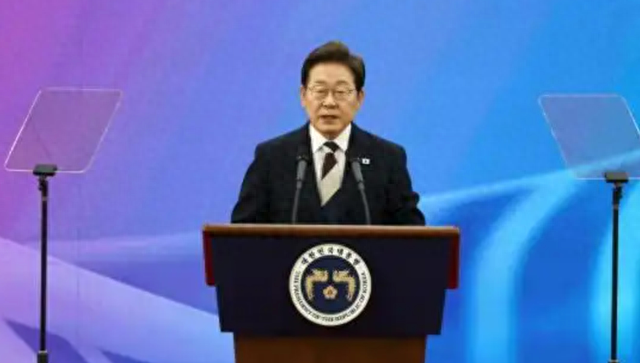
韩媒:韩四大集团掌门人明年或集体访华
券商中国· 2025-12-23 01:25
Core Viewpoint - The article discusses the upcoming visit of a South Korean economic delegation to China, led by prominent business leaders, aimed at enhancing bilateral trade relations and cooperation between the two countries [1][2][3]. Group 1: Economic Delegation Details - The economic delegation will be organized by the Korea Chamber of Commerce and Industry, with approximately 200 business representatives expected to participate [1]. - The delegation will be led by Choi Tae-won, who also serves as the chairman of the Korea Chamber of Commerce and Industry, and previously visited China in October [2]. - During the visit, the delegation will participate in the Korea-China Business Forum and one-on-one business meetings, marking the first such delegation visit in six years [3]. Group 2: Bilateral Trade Discussions - On December 12, Chinese Commerce Minister Wang Wentao met with South Korea's Minister of Trade, Industry and Energy, Kim Jong-hwan, to discuss the implementation of key agreements between the two nations [3]. - The discussions focused on accelerating the second phase of the China-South Korea Free Trade Agreement negotiations and enhancing cooperation in both traditional and emerging sectors [3][4]. - Both sides emphasized the importance of maintaining stable supply chains and deepening local economic cooperation, as well as collaborating within frameworks like the WTO and APEC to uphold free trade [4].
商务部副部长鄢东会见韩国驻华大使卢载宪
Zheng Quan Shi Bao Wang· 2025-12-01 03:17
Group 1 - The core viewpoint of the article is the meeting between China's Vice Minister of Commerce, Yan Dong, and South Korea's Ambassador to China, Lu Zai Xian, to discuss deepening economic and trade cooperation between China and South Korea [1] Group 2 - The meeting took place on the afternoon of November 28 [1] - The discussion focused on exchanging opinions regarding the enhancement of economic and trade collaboration [1]
2025韩国商品(盐城)贸易投资博览会收官,3天销售额破千万
Sou Hu Cai Jing· 2025-11-24 05:58
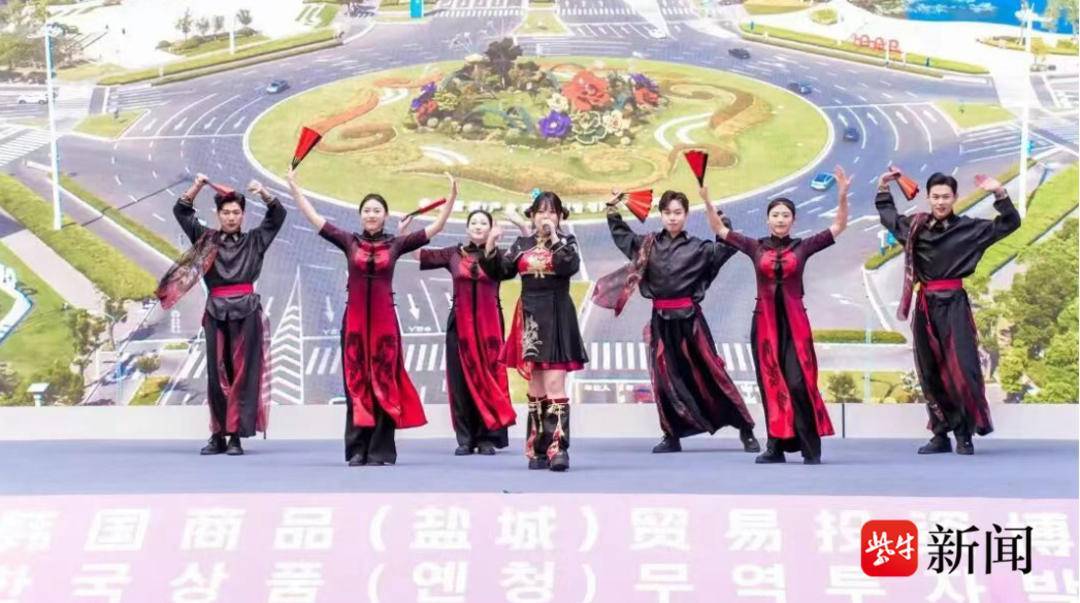
Core Insights - The 2025 Korea Commodity (Yancheng) Trade and Investment Expo successfully concluded, attracting over 50,000 visitors and achieving sales exceeding 10 million yuan, showcasing the vibrant consumer market [1][3]. Group 1: Event Highlights - The expo featured a display area of 14,000 square meters with three themed exhibition zones and over 200 participating companies, creating a local consumption festival [1]. - The Korean premium zone saw continuous foot traffic at booths of national brands like Jeonggwanjang, Nongshim, and Lock & Lock, indicating strong consumer interest [3]. - Local products from Yancheng, such as the "Salt Flavor" agricultural products from Yinbao Group and cultural creations from Yanwu Group, attracted many consumers due to their regional characteristics [3]. Group 2: Business Opportunities - The expo served as an effective platform for companies to connect and explore collaboration opportunities, with many businesses engaging in face-to-face discussions to seek new ventures [5]. - The event included various cultural activities, such as intangible cultural heritage experiences and food tastings, enhancing cultural exchange between China and South Korea [7]. Group 3: Future Development - Yancheng aims to deepen its openness and establish itself as a key area for China-South Korea industrial cooperation, focusing on creating a "most Korean characteristic" brand [7].