为人民服务

Search documents
《求是》杂志发表习近平总书记重要文章《树立和践行正确政绩观》
证监会发布· 2026-03-31 09:29
Core Viewpoint - The article emphasizes the importance of establishing and practicing a correct view of political achievements, focusing on serving the people and ensuring that the actions of party members and leaders align with the fundamental purpose of the Communist Party, which is to serve the public [2][25][57]. Group 1 - Good cadres must be steadfast in their beliefs, serve the people, be diligent and practical, dare to take responsibility, and maintain integrity [3][20]. - The fundamental measure of party character is the distinction between public and private interests, with a strong emphasis on serving the public without personal motives [7][9]. - The relationship between the people and cadres is that of servant and master, where cadres must prioritize serving the people over seeking power [9][29]. Group 2 - A correct view of political achievements requires a focus on practical results that benefit the people, avoiding superficial projects that do not address real needs [11][35]. - Achievements should be evaluated based on the actual feelings of the people, with a focus on long-term benefits rather than immediate gains [36][53]. - The importance of a differentiated evaluation system for assessing cadres' performance is highlighted, ensuring that evaluations are relevant and scientifically grounded [38][59]. Group 3 - The article stresses the need to avoid practices that prioritize personal gain over public service, such as "image projects" and "political performance projects" [34][57]. - It calls for a commitment to high-quality development, emphasizing that political achievements should not come at the expense of the people's welfare [44][46]. - The necessity of rectifying deviations in the view of political achievements is underscored, with a focus on practical solutions and accountability [63][65].

山东新春第一会重温毛泽东同志《为人民服务》,有何深意?
Da Zhong Ri Bao· 2026-02-26 00:59
Core Viewpoint - The meeting emphasizes the importance of serving the people as a fundamental principle for governance and performance evaluation, drawing on Mao Zedong's classic article "Serve the People" to inspire current leaders and party members [1][5][8] Group 1: Historical Context - The meeting revisits Mao Zedong's speech from 1944, which highlighted the spirit of sacrifice for the people's interests, reinforcing the party's commitment to serving the public [2][3] - The speech underscores the significance of the phrase "for the people," which is central to the party's mission and governance philosophy [3][6] Group 2: Governance and Performance - The concept of "correct performance view" is identified as a fundamental issue that relates to the party's commitment to public service and governance for the people [4][5] - Xi Jinping's "three questions on performance view" are referenced, emphasizing the need to clarify for whom performance is created, what kind of performance is desired, and how to achieve it [5][6] Group 3: Practical Implications - The meeting calls for a focus on practical actions that directly benefit the people, stressing that lofty plans without a connection to the people's needs are meaningless [6][7] - It highlights the necessity for party members, especially leaders, to prioritize the concerns of the public and integrate the spirit of serving the people into their daily work and policies [7][8]
关爱盈斗室 真情满华夏
Xin Lang Cai Jing· 2026-02-13 22:46
Core Viewpoint - The article emphasizes the importance of connecting individual family well-being with national prosperity, highlighting the efforts of Xi Jinping in visiting ordinary families and expressing care for their lives and aspirations [1][19][25]. Group 1: Visits and Engagements - Xi Jinping visited various households across China, including elderly care facilities and disaster recovery areas, to understand their living conditions and offer New Year greetings [2][3]. - The visits included interactions with families affected by natural disasters, showcasing the government's commitment to rebuilding and improving their lives [3][4]. - The article details specific instances where Xi Jinping engaged with families, asking about their needs and expressing concern for their well-being [10][11][12]. Group 2: Themes of Care and National Unity - The narrative illustrates the theme of "family" being intertwined with "nation," where the happiness of individual families contributes to the overall strength of the country [16][25]. - Xi Jinping's remarks during visits reflect a deep understanding of the struggles faced by ordinary citizens, reinforcing the idea that addressing their needs is a priority for the government [15][19]. - The article highlights the emotional connections formed during these visits, portraying Xi Jinping as a leader who genuinely cares for the people [9][24]. Group 3: Development and Progress - The article mentions the transformation of communities through government initiatives, such as poverty alleviation and infrastructure development, leading to improved living standards [20][22]. - It emphasizes the importance of sustainable development and ecological tourism as part of the broader strategy for economic growth [22]. - The narrative concludes with a vision for a prosperous future, where the well-being of every family is seen as essential to national success [25].
时刻准备着——追记辽宁时代楷模、辽宁中医药大学学生金城龙
Xin Lang Cai Jing· 2026-02-03 23:54
Core Viewpoint - The article highlights the heroic actions of Jin Chenglong, a young man who sacrificed his life while attempting to save others, embodying the spirit of selflessness and responsibility in society [2][19]. Group 1: Heroic Actions - Jin Chenglong, a student and former soldier, demonstrated extraordinary bravery by rushing to save a drowning family, ultimately losing his life in the process [4][19]. - His actions were not isolated; he had a history of helping others, having saved people multiple times before, driven by a sense of duty and compassion [5][9]. - Jin's commitment to helping others was evident in his daily life, where he consistently intervened in emergencies and volunteered for various rescue organizations [7][10]. Group 2: Personal Background and Values - Jin Chenglong was influenced by the spirit of Lei Feng, a Chinese cultural icon known for his selflessness, which shaped his character from a young age [8][19]. - He had a strong sense of responsibility, often preparing for emergencies by carrying a first aid kit and participating in community service [6][10]. - His dedication to helping others extended to his academic pursuits, where he excelled in medical studies and actively engaged in volunteer work [14][17]. Group 3: Legacy and Recognition - Following his death, Jin Chenglong was posthumously honored as a "Model of the Times" in Liaoning Province, encouraging others to emulate his selfless spirit [19][20]. - His story serves as an inspiration for the community, emphasizing the importance of altruism and the impact of individual actions on society [21].
舒同书法的守正创新
Ren Min Ri Bao· 2025-11-29 22:11
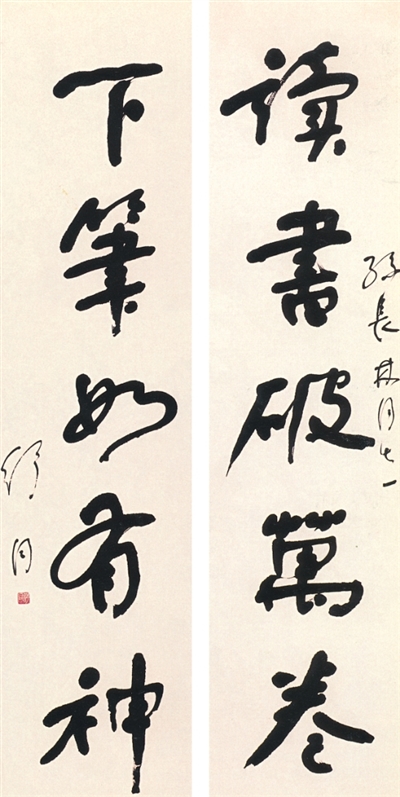
Core Viewpoint - The exhibitions commemorating the 120th anniversary of Shu Tong's birth highlight his dual legacy as a revolutionary figure and a calligrapher, showcasing how his art served the people and contributed to the revolutionary cause [1][2][3]. Group 1: Historical Contributions - Shu Tong joined the Chinese Communist Party in 1926, using his calligraphy to inspire and unite people during turbulent times [1]. - In the 1980s, he played a pivotal role in establishing the China Calligraphers Association, which elevated calligraphy to an independent art form and fostered a diverse creative environment [2]. - His philosophy of "calligraphy should serve the people and socialism" continues to guide the China Calligraphers Association today [2]. Group 2: Artistic Philosophy - Shu Tong's calligraphy was deeply rooted in serving the people, with many of his works dedicated to schools and grassroots workers, reflecting his commitment to making art accessible [3]. - He advocated for a creative approach that balanced tradition with innovation, exemplified by his unique "Shu style" that integrated various traditional techniques while addressing contemporary needs [4]. - His artistic journey illustrates the principle of "guarding the essence while innovating," providing valuable insights for modern calligraphers [4]. Group 3: Cultural Impact - Shu Tong's contributions have become an integral part of national culture, with his spirit and artistic legacy resonating through time [5]. - The exhibitions serve not only as a celebration of his artistic achievements but also as a reminder of the enduring power of faith and cultural identity [5].
寻常事里见担当
Ren Min Ri Bao· 2025-11-05 04:55
Group 1 - The core idea emphasizes the importance of responsibility and dedication in both significant challenges and everyday tasks for party members [1][2] - The concept of "greatness from the ordinary" suggests that with firm ideals and diligent efforts, ordinary individuals can achieve extraordinary results [1] - The need for meticulous handling of routine tasks is highlighted as essential for the success of larger missions [1][3] Group 2 - The responsibility of party members is fundamentally linked to serving the people, addressing their immediate concerns and needs [2] - Small, seemingly trivial matters are identified as critical to the public's sense of well-being and security, requiring party members to treat them with utmost seriousness [2] - The importance of empathy and proactive engagement in addressing community issues is stressed, ensuring tangible benefits for the public [2] Group 3 - The persistence and dedication required in daily work are acknowledged as challenging, necessitating a strong work ethic and commitment [3] - A warning is issued against the tendency of some party members to focus on visible achievements while neglecting underlying community needs [3] - The "nail-driving spirit" is advocated, emphasizing the importance of consistent effort and follow-through in all tasks [3] Group 4 - The evaluation of party members should incorporate both their performance in critical moments and their consistent contributions in routine tasks [4] - A multi-dimensional assessment approach is suggested to recognize those who excel in ordinary roles, promoting a culture of diligence and accountability [4] - The goal is to inspire more party members to take initiative and responsibility in their everyday duties, contributing to the overall mission of the party [4]
厚植为民情怀 笃行实干担当
Hai Nan Ri Bao· 2025-10-30 01:45
Core Points - The article highlights the dedication and practical approach of Huang Manyu, a local government official, in addressing the pension insurance issues for farmers affected by land acquisition [2][3] - Huang's initiatives have led to significant improvements in local governance and community services, emphasizing the importance of grassroots engagement and problem-solving [2][3] Group 1 - Huang Manyu led a 56-member team to assist farmers in processing pension insurance subsidies, achieving a 100% system entry rate for the affected individuals [2] - The establishment of a "multi-dispute mediation center" in Lingcheng Town has become a model for grassroots governance, successfully resolving complex historical disputes [2][3] - Huang implemented a streamlined approval process that reduced the average processing time from 25 days to 14 days, enhancing service efficiency for the community [2][3] Group 2 - During Typhoon "Mojia," Huang demonstrated her commitment by staying at the command center for three consecutive days [3] - The introduction of a "seven-step work method + grid management" in public service has resulted in a 100% satisfaction rate for the 12345 hotline [3] - The development strategy "one core, two chains" has revitalized Lingcheng Town, leading to significant growth in tropical agriculture and tourism, with over 500,000 annual visitors [3]
你可知道路生梅?
Xin Hua She· 2025-10-18 11:07
Core Viewpoint - The article highlights the dedication and impact of Lu Shengmei, a doctor who has served in Jia County, Shaanxi Province for 57 years, establishing the first formal pediatric care and training over 50 pediatric healthcare professionals, earning her the title of "People's Healthcare Worker" and a national honor [2][11]. Group 1: Background and Early Career - Lu Shengmei graduated from Beijing Second Medical College and was assigned to work in Jia County, Shaanxi, where she initially faced the challenges of poverty and inadequate living conditions [4][6]. - Upon her arrival, she was shocked by the local poverty, living in a cave dwelling and struggling with basic necessities, which motivated her to continue her medical practice despite personal hardships [6][8]. Group 2: Professional Development and Contributions - Lu quickly adapted to her environment, learning from local doctors and studying medical knowledge at night, which allowed her to become a versatile healthcare provider [8][10]. - She identified critical health issues, such as the high neonatal tetanus mortality rate, and took immediate action to improve medical practices in the area [10][11]. Group 3: Long-term Commitment and Legacy - After retiring in 1999, Lu refused to leave Jia County for urban life, instead committing to continue her service, stating "life does not end, service does not stop" [13][15]. - Lu's enduring presence in the community has made her a beloved figure, with locals frequently greeting her, reflecting her deep connection to the people she serves [15][17].

跨越60年的守护 易车编辑自发修复戈壁精神地标
Di Yi Cai Jing· 2025-10-13 09:33
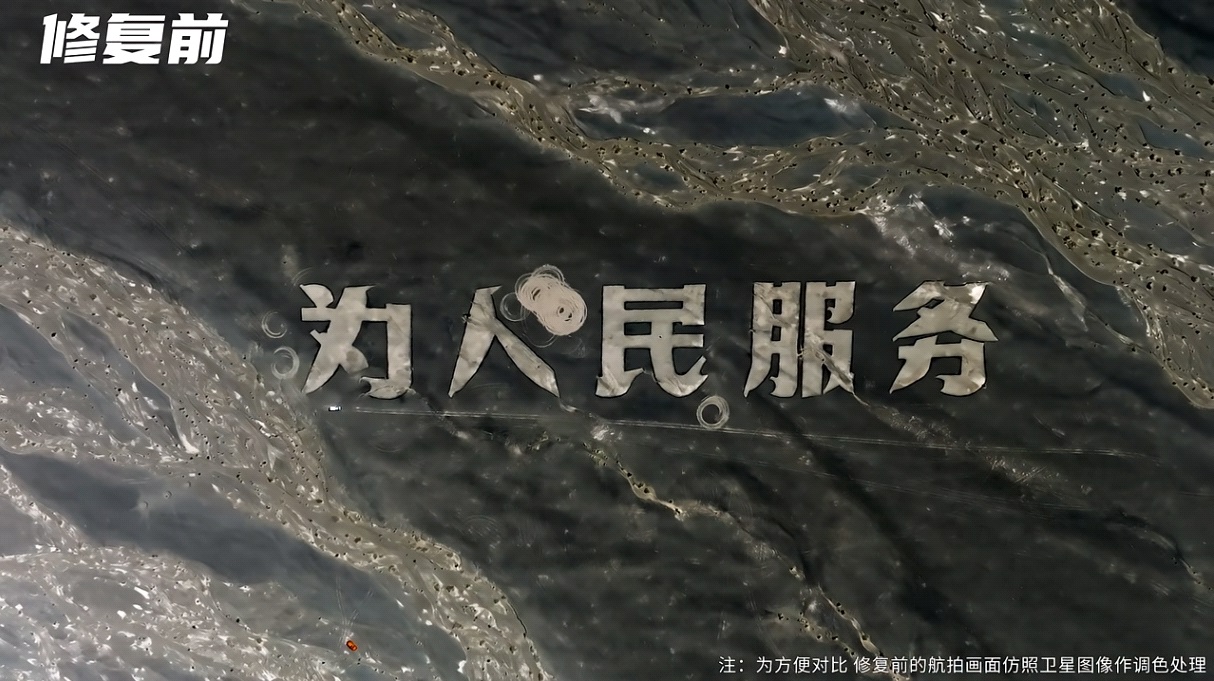
Core Viewpoint - The video released by "Lue Kuaipao Travel Agency," a subsidiary of Yiche, showcasing the restoration of a historical landmark in the Gobi Desert has sparked widespread public interest, with millions of views and likes across various platforms, highlighting a strong emotional resonance with the community [1][11]. Group 1: Historical Significance - The five giant characters "Serve the People" in the Gobi Desert are not just ordinary slogans but are considered revolutionary relics from the 1960s, serving as a flight navigation landmark for the Air Force [1][3]. - These characters were created by Air Force pilots using rudimentary tools to guide their navigation in an area lacking distinct geographical features [3]. Group 2: Restoration Efforts - The landmark has endured natural erosion over the years but has suffered from human damage, with visible ruts and marks left by off-road vehicles [5]. - A team led by an editor from Yiche initiated a restoration project, carefully sourcing matching stones to ensure the repairs were non-destructive and harmonious with the original landscape [7][9]. - The restoration process involved transporting 20 tons of stone from a nearby railway to the site, with the team working for a week to fill in the damage [9]. Group 3: Community Engagement - The release of the restoration video ignited a wave of online support, with many viewers expressing their appreciation for the historical significance of the landmark and the efforts to preserve it [11]. - The restoration symbolizes a connection between past military efforts and present-day community actions, reinforcing the collective memory and values associated with the phrase "Serve the People" [11]. Group 4: Documentation and Impact - After the restoration was completed, the team coordinated with Changguang Satellite to capture the landmark from space, providing a poignant visual comparison of the site before and after restoration [12].
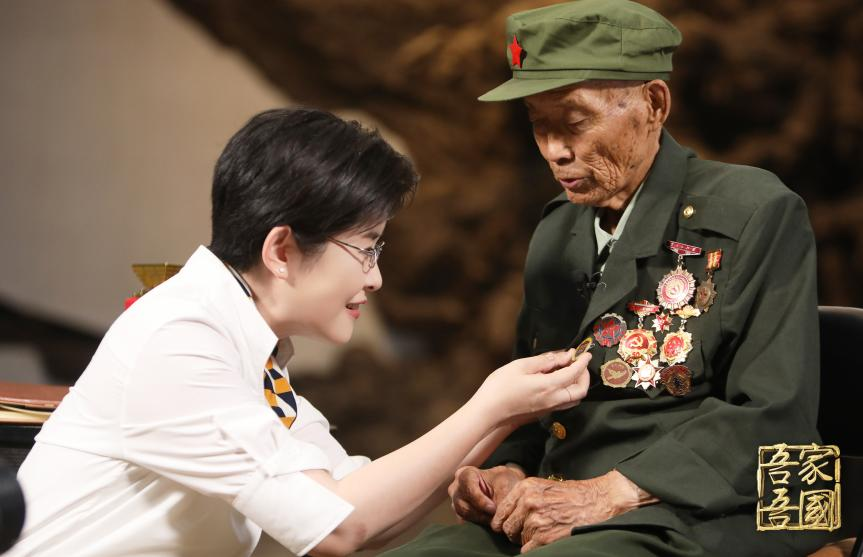
吾家吾国丨主动请缨炸碉堡 他用一生诠释“保家卫国、为人民服务”
Yang Shi Xin Wen· 2025-10-02 00:25
Core Points - The article highlights the life and contributions of Gao Diansheng, a veteran who participated in significant battles and the founding ceremony of New China, embodying loyalty and dedication to the country and its people [1][19]. Group 1: Historical Contributions - Gao Diansheng served in the military from the age of 17, participating in key battles such as the Liaoshen Campaign, Pingjin Campaign, and the Korean War, showcasing his commitment to national defense [1][19]. - He was a tank commander during the founding ceremony of New China on October 1, 1949, where he witnessed the birth of the new nation [2][19]. - Gao developed a unique communication method using foot signals to coordinate tank movements during parades, which was crucial for maintaining formation [2]. Group 2: Personal Experiences and Beliefs - Gao's early life as a herdsman shaped his resilience and determination, leading him to master tank driving and maintenance [12]. - He emphasized the importance of the Black Mountain Blocking Battle, stating that its victory was pivotal for the success of subsequent military operations [15]. - Gao's actions during the Korean War, including a daring mission to destroy an enemy bunker, exemplified the spirit of sacrifice and bravery inherent in the People's Liberation Army [18][20].