主力洗盘

Search documents
股票经常高开低走意味着什么?我从这三个角度找到了答案
Sou Hu Cai Jing· 2026-02-26 05:37
Core Viewpoint - The phenomenon of "high open and low close" is a common market pattern that indicates a complex battle between bulls and bears, often misleading novice investors who may misinterpret the surface movements of stock prices [1] Group 1: Volume Analysis - High open indicates a short-term bullish signal driven by funds or sentiment, while low close suggests that selling pressure exceeds buying strength, indicating a potential shift in market sentiment [3] - Volume analysis is crucial to distinguish between "washing" and "distribution" actions by the main players. A decrease in volume during a low close after a high open typically indicates a "washing" scenario, where the main players are not genuinely selling but are instead forcing out weak hands [4] - Conversely, a significant increase in volume during a low close suggests a "distribution" scenario, where the main players are taking advantage of the high open to sell off shares, indicating a potential "true decline" [5] Group 2: Price Positioning - The significance of the "high open and low close" pattern varies greatly depending on the price position. In low price areas, it often indicates a washing scenario, while in high price areas, it suggests a distribution scenario [4][5] - In low price regions, if the stock price has not significantly exceeded the main players' cost, it is likely a strategy to accumulate shares before a potential upward movement [4] - In high price regions, where the stock has appreciated over 50%, the likelihood of distribution increases as the main players seek to realize profits [5] Group 3: News Impact - High opens are often driven by news, and the nature of the news directly influences the subsequent low close. If positive news is already priced in, the actual announcement may lead to a sell-off, as seen in cases where companies report significant earnings increases [7][8] - If a high open occurs without clear positive news, it may indicate market sentiment or technical-driven fluctuations, often leading to short-term adjustments [10][11] - Repeated occurrences of this pattern may signal a cooling of market sentiment and a gradual withdrawal of funds from the sector [12] Group 4: Common Misconceptions - A common misconception is that a high open automatically indicates bullish sentiment, while a low close signals panic. It is essential to consider volume and price position for a comprehensive assessment [13] - Another misconception is that a long upper shadow always indicates negative sentiment. In low volume scenarios, it may represent a washing action, while in high volume scenarios, it signals risk [14] - Continuous occurrences of the "high open and low close" pattern suggest an imbalance between bulls and bears, warranting caution and potential reduction in positions [15] Group 5: Conclusion - The key to interpreting the "high open and low close" pattern lies in understanding the interplay of volume, price position, and news context, allowing investors to discern the intentions of main players and navigate market complexities effectively [16][19]


A股:换手率一旦大于7%,毫不犹豫满仓,不是涨停就是涨个不停!
Sou Hu Cai Jing· 2026-02-02 14:09
Group 1 - The article emphasizes the importance of understanding market dynamics and developing a unique trading system over time to transition from a novice to a seasoned investor [1] - It highlights the significance of maintaining a calm mindset and having a well-thought-out strategy before making trades, which is essential for long-term success in the stock market [1] Group 2 - High turnover rates in the stock market indicate active trading and investor participation, but do not necessarily guarantee price increases [3] - Specific turnover rate phenomena, such as high turnover at low prices, can signal that major players are accumulating shares in preparation for price increases [3][4] - An increase in turnover during price corrections may indicate that major players are "washing out" weak hands, allowing them to accumulate more shares [5][6] Group 3 - Sustained high turnover without significant price movement often suggests that major players are consolidating their positions before a potential price increase [4][5] - Gradual increases in turnover at low price levels can indicate that major players are slowly accumulating shares, setting the stage for future price increases [5][9] - A sharp increase in turnover accompanied by a breakout in volume typically signals that major players have completed their accumulation phase and are ready to push prices higher [6] Group 4 - High turnover following a significant price drop can indicate that major players are collecting shares at lower prices, suggesting a potential rebound [6] - Maintaining high turnover during a volume contraction phase often signals that a price adjustment is nearing its end and a rebound may be imminent [6] - Moderate volume increases during price rises indicate that major players are controlling the pace of price increases, presenting lower risk for investors [6] Group 5 - The article discusses practical case studies illustrating how low turnover at market bottoms can signal accumulation by major players, leading to significant price increases [7][10] - It also mentions that low turnover during corrective phases in a bull market can indicate that major players are absorbing shares, preparing for future price increases [9] Group 6 - The article outlines methods for analyzing market behavior, such as observing the balance between buying and selling pressure, which can indicate major player activity [13][14] - It emphasizes the importance of understanding market signals and maintaining strict risk management practices to ensure long-term trading success [15][16]

1484只个股获融资买入!但真正能赚钱的只有…
Sou Hu Cai Jing· 2025-11-17 06:38
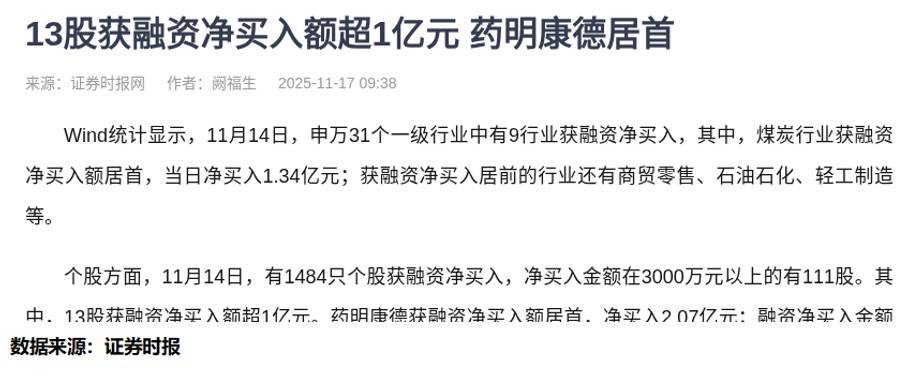
Group 1 - The core phenomenon in the market is the contrasting behavior of institutional investors and retail investors, where significant capital inflows into cyclical stocks and leading companies like WuXi AppTec are observed, while retail investors complain about their losses [1][3] - On November 14, financing data showed that the coal industry led with a net buying amount of 134 million yuan, while WuXi AppTec received a substantial 207 million yuan in investments, indicating market recognition of cyclical sectors and leading stocks [3][5] - The complexity of institutional trading strategies is highlighted, as they often use public positive news as a cover for reverse operations, which retail investors may not understand [3][4] Group 2 - High-quality stocks face inherent contradictions: increasing speculative buying and profit-taking, leading to volatility in their prices [4][6] - A "slow bull, fast adjustment" pattern is identified, where stocks may double in value over four months but experience significant corrections, causing panic among retail investors [6][9] - Quantitative analysis reveals that price fluctuations often mask underlying institutional behaviors, such as "institutional shaking," which is a tactic used to create panic and facilitate profit-taking [9][10] Group 3 - The coal sector's financing data illustrates why retail investors may find themselves trapped after following positive news without understanding the true intentions of institutional investors [9][10] - Recommendations for ordinary investors include avoiding being misled by surface data, understanding the implications of large capital inflows, and recognizing the combination of price movements and institutional inventory as signs of potential manipulation [10][12] - Emphasizing the importance of viewing market behavior through a quantitative lens, the focus should be on the underlying logic reflected by the data rather than the numbers themselves [12]
量化数据揭示主力洗盘真相
Sou Hu Cai Jing· 2025-10-30 11:37
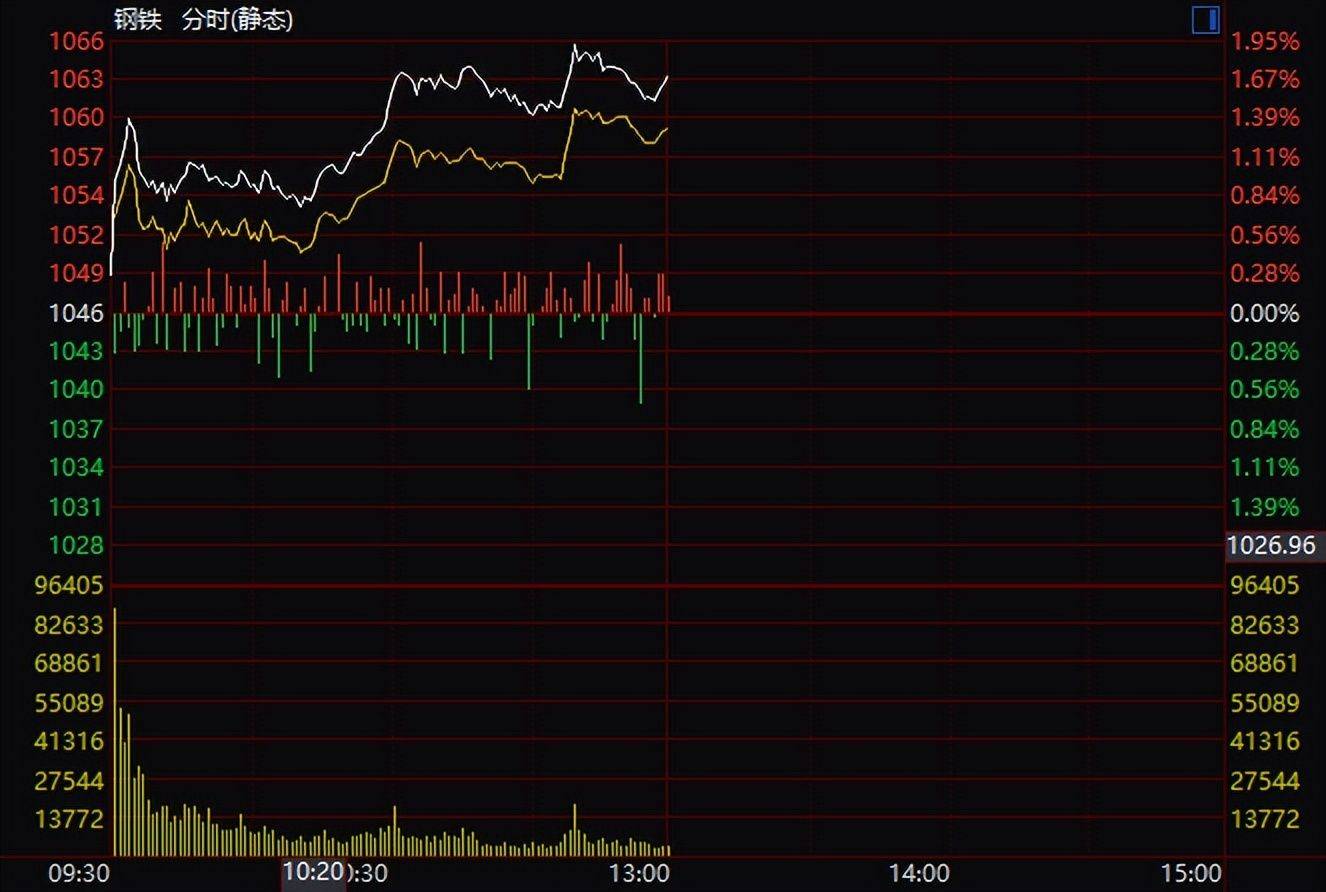
Core Viewpoint - The A-share market is exhibiting unpredictable behavior, with the Shanghai Composite Index fluctuating around the 4000-point mark, while sectors like steel and coal are performing well, contrasting with the decline of previously strong stocks like Tianfu Communication and New Yi Sheng [1][3]. Group 1: Market Behavior - The market is characterized by a "reshuffling" game orchestrated by large funds, where stocks must overcome two hurdles: speculative buying and profit-taking [3]. - The current market dynamics resemble a psychological battle, where large funds manipulate stock prices to shake off weak hands before a genuine rally begins [3][4]. - The performance of stocks is not solely determined by financial metrics; for instance, the best-performing stocks during a past rally were in the solar sector, despite the entire industry being in losses [4]. Group 2: Institutional Influence - Institutional funds play a crucial role in determining stock price movements, as their investments are driven by cost considerations rather than arbitrary decisions [4][6]. - The presence of institutional activity can be identified through data analysis, which reveals the true dynamics behind stock movements, contrasting with superficial appearances [6][8]. - The current market leaders, such as steel and coal, are driven by significant institutional interest, indicating that market trends are largely dictated by fund movements [8].
融资客狂买5亿,看懂主力洗盘套路再上车!
Sou Hu Cai Jing· 2025-09-17 13:10
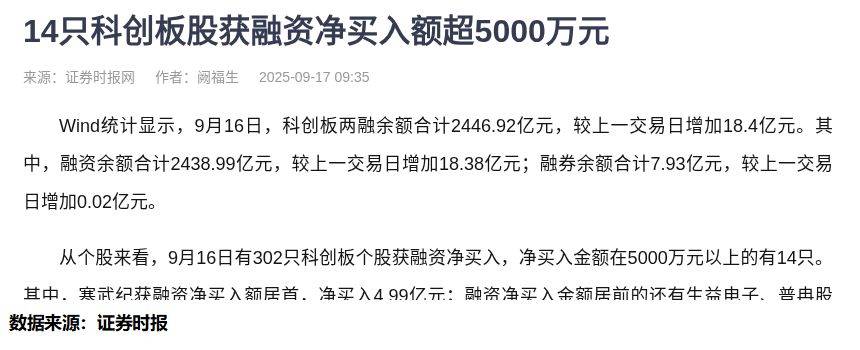
Group 1 - The recent surge in margin trading data on the STAR Market indicates a significant influx of retail investment, with a notable increase of 1.84 billion yuan on September 16, and a standout performance from companies like Cambricon, which attracted 499 million yuan [1][3] - The apparent excitement surrounding stocks like Cambricon and Shengyi Electronics may mask deeper risks, as historical patterns suggest that when stocks gain widespread attention, they often have already completed the most profitable phase [3][4] - The phenomenon of "washing" by institutional investors is highlighted, where they strategically shake out retail investors during periods of price consolidation, leading to a situation where retail investors sell at a loss just before a price rebound [4][10] Group 2 - Quantitative data reveals that seemingly random price fluctuations often follow clear mathematical patterns, indicating that price drops accompanied by increased short covering may not signify selling pressure but rather a cleansing process [6][8] - Despite the high financing figures for stocks like Cambricon, quantitative models suggest that such high-profile stocks are often subject to more intense price fluctuations, which can mislead ordinary investors [8][14] - The ability to interpret market behavior through data analysis allows for a more composed response to market volatility, distinguishing between normal price adjustments and genuine risk signals [11][13] Group 3 - Ordinary investors are advised to be cautious of surface-level data, as record-high financing balances can represent both opportunities and potential traps [15] - Understanding the essence of market dynamics is crucial, as stock price increases require continuous cleansing of floating capital [15] - In an information-inequitable market, investors should seek tools that provide a more objective perspective to navigate the complexities of market behavior [15]

这2种情况是主力在洗盘,别轻易下车,最后一跌之后必然直线拉升
Sou Hu Cai Jing· 2025-06-02 22:40
Group 1 - The stock market is unpredictable, and investors must develop their own investment style through practice and knowledge accumulation [1] - Many investors dream of riding on high-performing stocks but often sell too early due to psychological pressure from price fluctuations [3] - Understanding the strategies and timing of major players in the market can help investors avoid being manipulated and maintain composure during market volatility [3] Group 2 - The timing of the washout process is critical, with different stages requiring different durations to effectively clean out floating shares without losing market interest [4][5] - Initial washouts typically last around 10 trading days, while bottom-building washouts can vary from 2-3 days to several months depending on the technical patterns involved [4][5] - The rapid washout during the price surge phase is usually short, lasting 2-3 days, to prevent excessive market attention [5] Group 3 - Major players use two primary washout methods: horizontal oscillation and aggressive price suppression, each with distinct characteristics and implications for trading volume [5] - Horizontal oscillation involves price fluctuations within a stable range, indicating that major players are not significantly reducing their holdings [5] - Aggressive price suppression creates panic among short-term traders, leading to a quick sell-off, but does not involve substantial selling by major players [5] Group 4 - Examples illustrate the differences between washout methods, such as the case of Taihe Group, which experienced a rapid decline with shrinking volume, indicating a typical aggressive washout [8] - In contrast, Changcheng Information showed a prolonged horizontal consolidation with decreasing volume, suggesting that major players were still in control and preparing for a potential upward movement [11] - Understanding these washout techniques can help investors maintain their positions and develop a rational perspective on market fluctuations [11]