主导动能

Search documents
迎春行情走强之后,厉害的门道在震荡里
Sou Hu Cai Jing· 2026-02-18 02:33
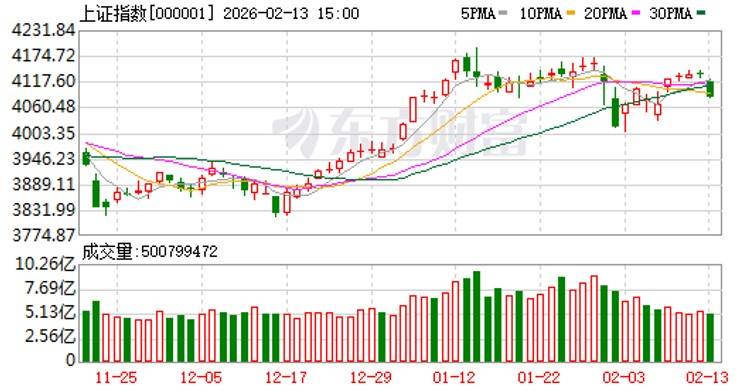
Group 1 - The market atmosphere has improved significantly, with the Shanghai Composite Index showing strong upward momentum, particularly in sectors like cultural media and photovoltaic equipment, while northbound capital trading activity remains high [1] - Many investors struggle to hold onto stocks despite market gains, often influenced by superficial price fluctuations and making decisions based on intuition rather than data [2][5] - The core issue of not being able to hold good stocks is often due to subjective misjudgments based on price movements, neglecting the underlying reasons for volatility [3][6] Group 2 - Traditional charts may induce panic during price fluctuations, but a quantitative data system reveals a different truth, highlighting key information such as dominant trading behaviors and institutional inventory levels [5][6] - The value of quantitative data lies in distinguishing between "true adjustments" and "false fluctuations," as active institutional participation during adjustments indicates ongoing interest rather than a lack of confidence [6][11] - Recognizing the essence of fluctuations through quantitative data allows investors to avoid being swayed by short-term price movements and to identify underlying signals from large funds [9][11] Group 3 - The ability to identify the strength of large funds through quantitative data is crucial, as repeated similar fluctuation signals indicate that the driving funds are willing to invest in participant selection [13] - A shift in perspective towards using quantitative data to understand market behavior can help investors avoid emotional decision-making and enhance their judgment [15]

再融资规则有变,抽血方便了机构如何应对?
Sou Hu Cai Jing· 2026-02-10 02:54
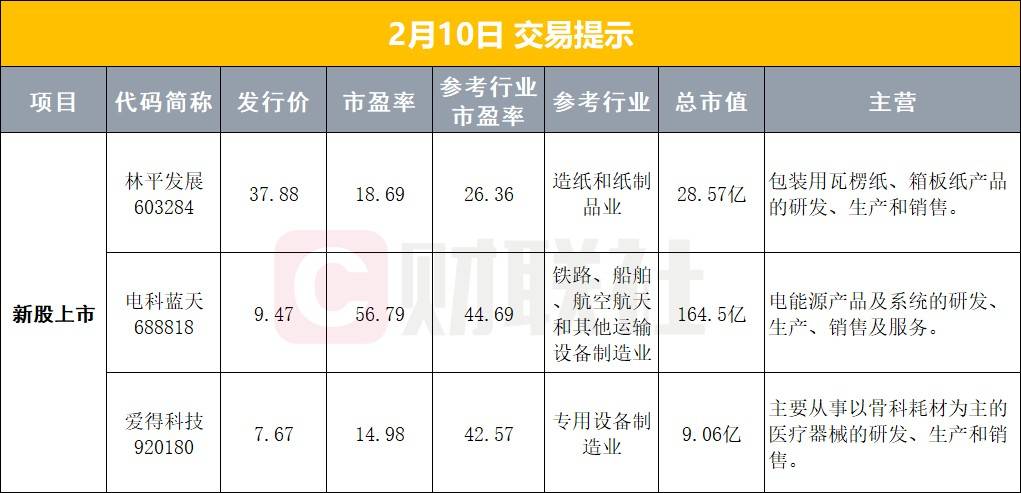
Group 1 - The core message highlights that the three major exchanges in China have optimized the refinancing rules for listed companies, creating a "green channel" for high-quality companies to access funds more easily for development [1] - The adjustments specifically benefit innovative enterprises by changing the criteria for recognition, facilitating their ability to secure financing [1] - Despite the positive news, market reactions can be volatile, with stocks experiencing fluctuations that may confuse investors [1] Group 2 - The article introduces two key indicators for quantitative analysis: "institutional inventory" and "dominant momentum," which simplify the understanding of stock performance [2][3] - "Institutional inventory" serves as a measure of stock activity, indicating the level of participation from large funds, while "dominant momentum" records different trading states [3] - The presence of both indicators together suggests strong involvement from large funds, indicating a more sustainable market trend [3][8] Group 3 - The article warns against mistaking retail investor activity for institutional investment, emphasizing the importance of distinguishing between the two to avoid poor investment decisions [8] - It provides examples of stocks where the presence of institutional inventory and dominant momentum indicates genuine market strength, contrasting with stocks driven by retail investors [8][11] - The analysis likens market behavior to observing a sports game, where the actions of substitutes can indicate the readiness of the main team to perform [11][15] Group 4 - The popularity of quantitative trading is attributed to its ability to capture signals of large fund activity, which can be likened to observing preparations before a concert [15] - The article encourages new investors to focus on the two core indicators without needing to understand complex mathematical formulas, making quantitative analysis more accessible [15] - By monitoring these indicators, investors can gain clearer insights into market dynamics and avoid confusion during volatile periods [15]
减持与持股并行,看懂资金少踩坑
Sou Hu Cai Jing· 2026-01-26 14:54
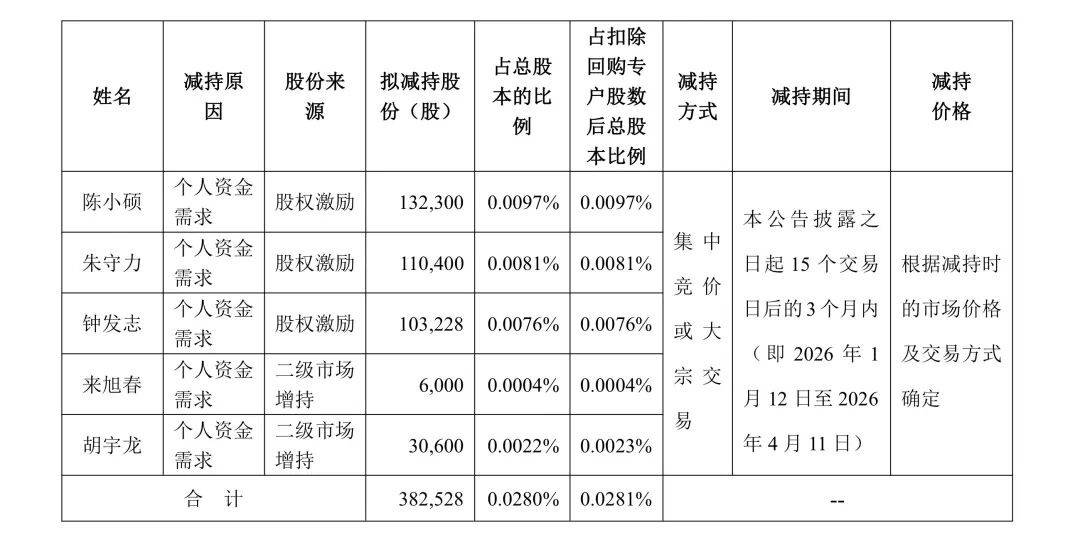
Core Viewpoint - The article discusses the impact of executive share reduction announcements on stock prices and the subsequent introduction of employee stock ownership plans, highlighting the potential for perceived arbitrage opportunities and the importance of understanding underlying market dynamics through quantitative data analysis [1][4]. Group 1: Executive Actions and Market Reactions - A company recently announced an executive share reduction plan followed by an employee stock ownership plan at a price lower than the current market price, raising concerns about potential arbitrage [1]. - The legal analysis indicates that the reduction and employee stock ownership plans are compliant with existing regulations, but the timing may create discomfort among ordinary investors [1][4]. Group 2: Investment Strategies and Data Analysis - Investors often react emotionally to stock price fluctuations and negative news, leading to hasty decisions such as selling or refraining from buying [4]. - Utilizing quantitative data tools can help investors understand the true trading behaviors behind stock price movements, moving beyond superficial trends [4][6]. Group 3: Understanding Market Dynamics - The article emphasizes the importance of distinguishing between different trading behaviors, such as buying, selling, and institutional activity, to gain insights into market trends [6]. - The presence of institutional trading activity can indicate whether a stock is undergoing a "shakeout" or if it is genuinely weakening, which can inform investment decisions [6][7]. Group 4: Cognitive Upgrades in Investment Approaches - The shift from emotional decision-making to data-driven analysis represents a significant cognitive upgrade for investors, leading to more stable and informed investment strategies [7]. - The article concludes that understanding the real actions of capital, rather than just reacting to news and price changes, is crucial for long-term investment success [7].
融资资金持续布局,量化拆解震荡背后的玄机
Sou Hu Cai Jing· 2026-01-19 04:17
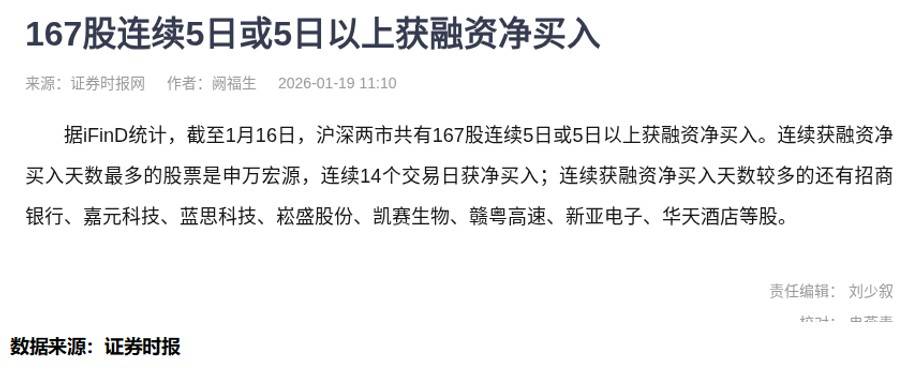
Core Viewpoint - The article emphasizes the importance of quantitative data in understanding market dynamics and avoiding subjective biases in investment decisions. It highlights how many investors fall into traps during volatile markets, often driven by emotions rather than data-driven insights [1][3][10]. Group 1: Market Dynamics - Recent statistics show that 167 stocks in the Shanghai and Shenzhen markets have experienced net financing inflows for over five consecutive days, with many leading stocks seeing net inflows for more than ten days [1]. - Investors often react to such data with either a rush to buy popular stocks or skepticism about potential manipulation, reflecting a gap between subjective perceptions and actual market behavior [1][10]. Group 2: Quantitative Data Insights - The article introduces two core indicators from quantitative data: the "dominant momentum" which reflects four trading behaviors (buying, profit-taking, short-selling, and covering), and "institutional inventory" which indicates the activity level of large funds [6]. - When the dominant momentum shows a "covering" behavior while institutional inventory remains active, it signals that large funds are quietly accumulating positions, which is a key indicator of market strength [7]. Group 3: Historical Performance and Probability Advantage - An analysis of a specific stock in the solid-state battery sector revealed that there were nine instances of "shock warehouse" signals since the second quarter of last year, with six of these signals marking local lows, indicating a higher probability of successful investment compared to random timing [11]. - The article argues that quantitative data provides a probability-based approach to identify better entry points, contrasting with the often misguided timing of average investors who rely on gut feelings [14]. Group 4: Rational Trading Mindset - The current market environment is characterized by an overload of information, leading to emotional trading behaviors such as impulsive buying during rallies and panic selling during corrections [15]. - The article advocates for a shift towards a rational trading mindset, where the focus is on the sustained activity of large funds rather than merely the stocks being bought, to differentiate between genuine long-term investments and short-term speculation [15][16].
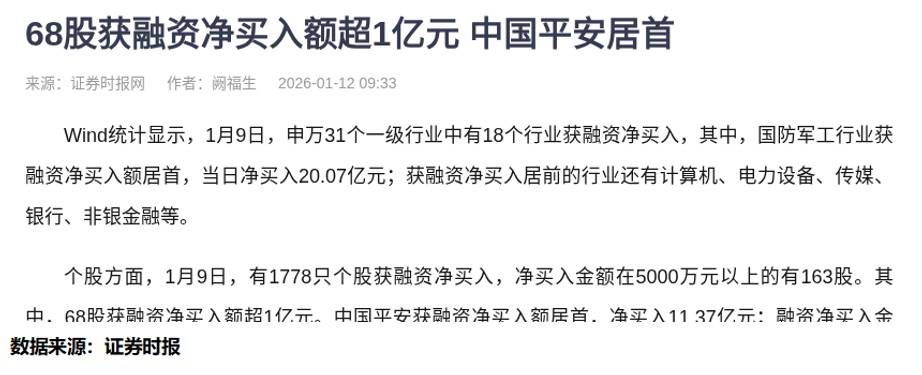
融资资金抢筹,量化辨明方向
Sou Hu Cai Jing· 2026-01-12 17:06
Group 1 - Over half of the 31 primary industries in the Shenwan index have seen net financing inflows, with the defense and military industry showing the most significant net inflow [1] - Popular sectors such as computer, power equipment, and media are also included in the list of industries with net financing inflows [1] - Many individual stocks have received net financing inflows, with several exceeding 1 billion yuan, and some even surpassing 10 billion yuan [1] Group 2 - Investors often misinterpret market trends, focusing on superficial price movements rather than underlying trends, leading to poor investment decisions [3][5] - The key to successful investing lies in understanding the nature of price adjustments rather than just timing the entry points [5] - Quantitative data can help clarify the true intentions behind trading behaviors, providing insights that traditional methods may overlook [5][9] Group 3 - Two core data sets, "dominant momentum" and "institutional inventory," can reveal the real actions of funds, distinguishing between institutional and retail trading behaviors [7] - A combination of these data sets can indicate whether large funds are actively participating in market movements or if retail investors are merely reacting to price changes [7][8] - Understanding these dynamics can help investors differentiate between genuine market trends and temporary fluctuations [8] Group 4 - Relying on quantitative data can replace subjective guesses with objective insights, allowing investors to navigate market volatility more effectively [9] - The recent surge in financing inflows should be analyzed in conjunction with quantitative data to assess whether the funds are making strategic investments or engaging in short-term speculation [9]