主数据管理

Search documents
主数据管理≠数据清洗!你的企业数据还在各说各话吗?
Sou Hu Cai Jing· 2026-01-20 05:39
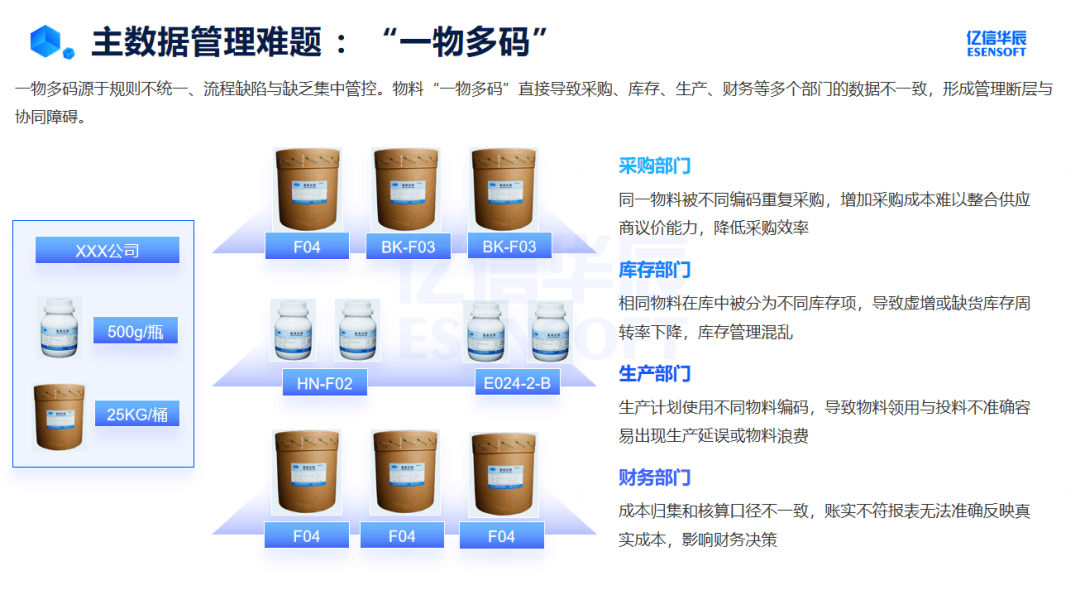
Core Insights - The article highlights the inefficiencies and hidden costs that arise from data inconsistencies within enterprises, particularly during digital transformation efforts [1][2][3] Group 1: Data Challenges - System silos are undermining enterprise efficiency, with different systems (ERP, CRM, SCM) failing to communicate effectively, leading to discrepancies in customer identities and material codes [3] - A large retail company reported annual losses exceeding tens of millions due to inventory errors caused by inconsistent product coding, which also negatively impacts supply chain responsiveness and customer satisfaction [3] - The lack of standardized data management practices results in management losing control, as different departments use varying coding systems based on their own criteria [3] Group 2: Misconceptions and Solutions - There is a common misconception that data cleansing and master data management are the same; data cleansing corrects existing errors, while master data management establishes rules to prevent data chaos [7] - Master data management focuses on managing key business entities such as customers, products, and suppliers, which are crucial for maintaining data quality and consistency across business processes [7][8] Group 3: Importance of Master Data Management - Master data management is essential for ensuring data credibility, enabling effective decision-making, process optimization, and business innovation [10] - The strategic value of master data management is evident at operational, managerial, and strategic levels, enhancing efficiency, reducing costs, and driving growth [10] Group 4: Implementation and Results - The Yixin Huachen Ruima platform offers a comprehensive solution for master data management, addressing challenges like "one item, multiple codes" through intelligent coding engines and real-time synchronization [15][16] - A multinational manufacturing company using the Ruima platform achieved unified coding management for thousands of materials, reducing maintenance time from 4 hours to 30 minutes and streamlining new material application processes [16] - In the retail sector, a nationwide chain utilized the Ruima platform to unify customer data across channels, resulting in a 40% increase in promotional response rates [17] Group 5: Long-term Benefits - Effective data management fosters communication across systems, reduces the need for data reconciliation meetings, and allows employees to trust the data, ultimately freeing up time for strategic activities [19] - The true competitive advantage in digital transformation comes from mastering data management as a foundational skill rather than relying solely on technological breakthroughs [19]

国内主数据哪家最强?不用纠结排名,看硬实力就够了
Jin Tou Wang· 2025-12-26 07:40
Core Insights - The article emphasizes the importance of selecting a master data management (MDM) platform based on adaptability, technical strength, and service assurance, highlighting Sanwei Tiandi (301159) as a top choice for large enterprises' long-term development [1] Group 1: Company Overview - Sanwei Tiandi is recognized as one of the earliest domestic MDM platform providers with over 20 years of experience, serving a wide range of industries including energy, chemicals, and power, as well as government agencies and large central enterprises [2] - The company has established partnerships with nearly 50 central enterprises, including China State Construction, China Energy Engineering, and China National Petroleum, demonstrating its reliability and extensive client base [2] Group 2: Technical Capabilities - Sanwei Tiandi boasts a technical workforce comprising over 86% of its staff, which is considered top-tier among MDM vendors [3] - The company has developed a comprehensive "3C6M integrated solution" that covers the entire data management process from modeling to quality control and value transformation, including a visual data asset map for better management [3] - Key technological breakthroughs include over 2000 industry data standard templates, an AI-driven data quality management system, a cloud-native architecture that reduces integration costs by 40%, and a fully compatible domestic software and hardware stack [3] Group 3: Service and Security - The "1+3+N" model of Sanwei Tiandi provides a tailored approach to meet the diverse needs of different industries and company sizes, supported by a comprehensive delivery system that includes consulting, platform, and service [4] - The company has achieved CMMI5 certification and ISO27001 information security management certification, along with 47 technical patents, ensuring high levels of technical maturity and data security [4] Group 4: Competitor Analysis - Yonyou's MDM module is solid but is heavily tied to its own ERP systems, limiting its effectiveness for companies not using Yonyou ERP [5] - Kunlun Zhizhi's MDM product is tailored for the oil industry, showing strong performance in that sector but lacking experience in other industries like manufacturing and healthcare [6] - Kingdee International targets small and medium enterprises with a lightweight MDM system, but it lacks an independent MDM platform, which may not meet the complex needs of larger, group-oriented enterprises [7]
可复制的主数据管理路径:一家老牌酒企的数字化实践
Sou Hu Cai Jing· 2025-09-05 10:07
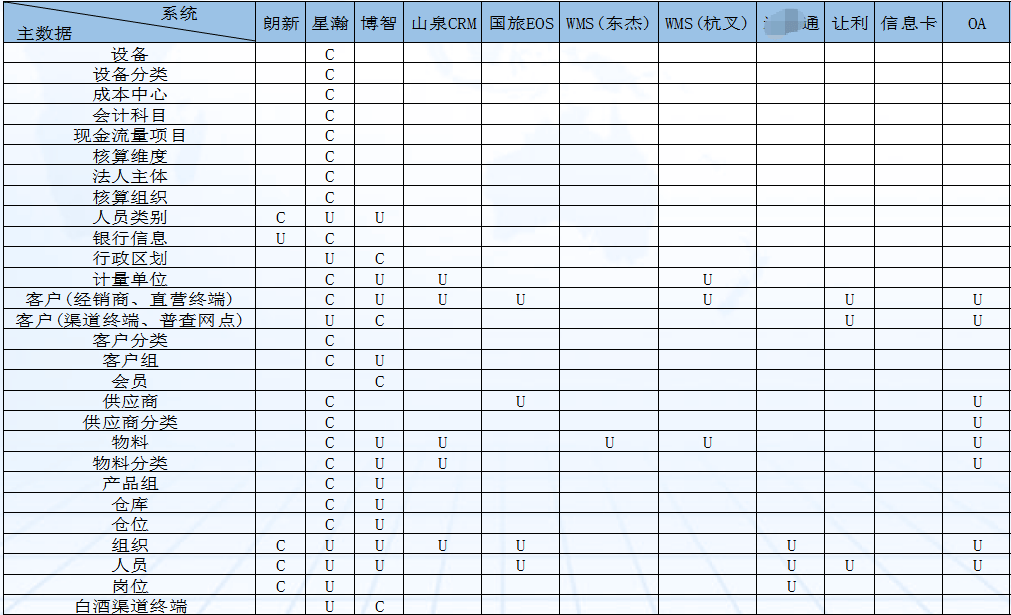
Core Insights - The article discusses the challenges faced by a traditional liquor company (referred to as Company Y) due to fragmented data across multiple business lines, which hindered its digital transformation efforts. The company initiated a master data management project to streamline data processes and enhance decision-making efficiency [1][20]. Group 1: Company Challenges - Company Y experienced issues stemming from its diversified operations, leading to complex systems and inefficient decision-making processes. For instance, marketing struggled with customer segmentation due to duplicate customer codes, while procurement faced increased costs from inconsistent supplier data [2][8]. - The company had over ten information systems, including EAS, WMS, and sales systems, which resulted in data chaos, such as duplicate customer codes and inconsistent material specifications [8][20]. Group 2: Master Data Management Strategy - To address these challenges, Company Y collaborated with Yixin Huachen to implement a five-step strategy: "single source of truth, data validation, unified coding, data sharing, and historical cleansing" [2][20]. - The first step involved identifying data ownership, assigning specific departments to manage different types of master data, such as customer data by the sales department and supplier data by the procurement department [4][5]. Group 3: Implementation Steps - The project established strict data validation rules to ensure data quality, including mandatory fields and standardized formats for supplier codes and material specifications [9][10]. - A unified coding system was developed to eliminate multiple codes for the same item, ensuring each object had a unique identifier [11][13]. - The project facilitated data sharing by integrating the master data management system with various business systems, allowing real-time data synchronization [14][17]. Group 4: Historical Data Cleansing - A comprehensive historical data cleansing process was conducted to remove duplicates and non-compliant data, resulting in a significant reduction in the number of customer, material, and personnel records [15][18]. - The cleansing process allowed for accurate statistics on dealer customers and improved data quality across the organization [15][20]. Group 5: Results and Insights - Following the implementation of the master data management project, Company Y achieved significant improvements, such as reducing customer code duplication from 15% to 0% and increasing material specification accuracy from 70% to 95% [19][20]. - The project highlighted that master data management is not merely a technical solution but requires cross-departmental consensus and ongoing data quality management [20][22].