
乳腺结节

Search documents
连吃1个月,结节突然疯长!很多人冬天爱这么吃,医生提醒
Ren Min Ri Bao· 2025-12-10 04:43
Core Viewpoint - The article highlights the potential health risks associated with excessive consumption of health supplements, particularly those containing estrogen-like substances, which can exacerbate existing health conditions such as breast nodules [2][6][7]. Group 1: Case Study - A 58-year-old woman, referred to as Li Ayi, experienced rapid growth of a previously stable breast nodule after consuming various health supplements, including donkey-hide gelatin and royal jelly, for a month [2][4]. - The breast nodule increased from approximately 5 millimeters to nearly 18 millimeters, indicating a risk of abnormal proliferation or malignancy, leading to surgical intervention [4][6]. Group 2: Medical Insights - Medical professionals note that many health supplements contain natural or estrogen-like components that can stimulate abnormal cell proliferation in breast tissue, particularly in individuals with pre-existing nodules [6][7]. - The formation of breast nodules is influenced by various factors, including genetics, hormonal imbalances, emotional stress, and lifestyle choices [7]. Group 3: Recommendations - For women with known breast nodules, it is advised to adhere to the "three principles": regular check-ups every 6-12 months, cautious consumption of supplements, and maintaining a balanced lifestyle [8]. - It is emphasized that dietary supplementation should be tailored to individual health conditions, and overconsumption can lead to digestive issues and exacerbate existing health problems [10][11].

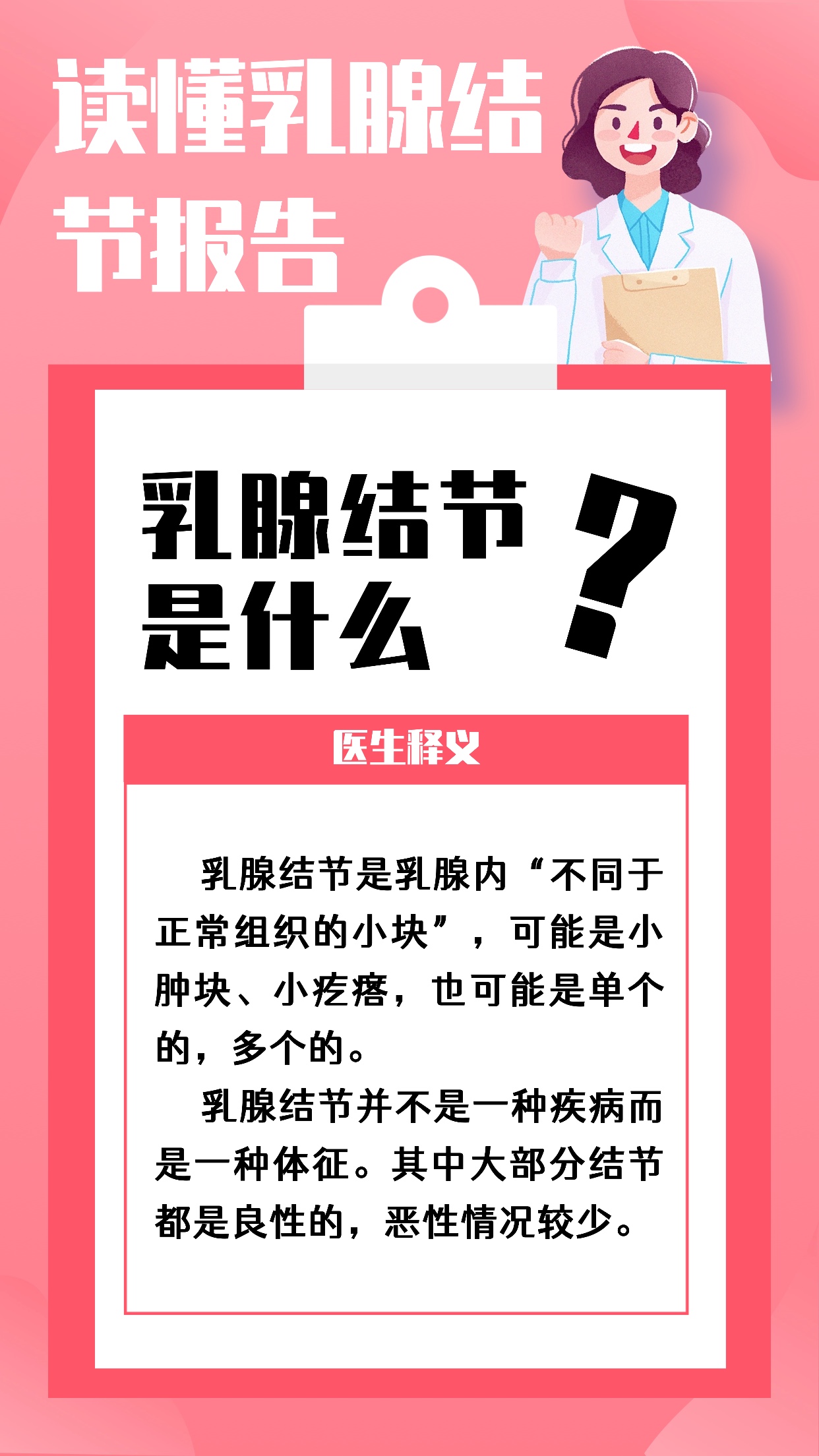
读懂乳腺结节报告 出现这些指征需警惕
Ren Min Wang· 2025-11-27 03:24
Core Points - The article emphasizes that breast nodules are not diseases but rather a description of a condition, with most nodules being benign and malignant cases being rare [3][4]. Group 1: Understanding Breast Nodules - Breast nodules are a common concern, often discovered during self-examinations or medical check-ups, and they can appear as single or multiple lumps in one or both breasts [5][6]. - Symptoms associated with breast nodules may include localized pain, nipple discharge, skin changes, and swelling of nearby lymph nodes [6][8]. Group 2: Risk Factors - Genetic factors, such as a family history of breast cancer or carrying BRCA1/2 genes, increase the risk of developing breast nodules [11]. - Reproductive and hormonal history, including early menstruation, late menopause, and lack of childbirth, are also significant risk factors [12]. - Lifestyle choices, such as high sugar and fat diets, obesity, excessive alcohol consumption, and lack of exercise, contribute to the risk [14]. - Emotional stress and poor sleep patterns can lead to hormonal imbalances, increasing the likelihood of nodules [15][36]. Group 3: Self-Examination and Screening - Self-examination techniques are recommended, including visual inspection and tactile checks for lumps [16][19]. - Various screening methods, such as ultrasound and mammography, are essential for early detection of breast cancer and assessing nodules [24][25]. - BI-RADS classification is used to evaluate the risk of malignancy in detected nodules, with categories ranging from benign to highly suspicious [29][30]. Group 4: Management and Prevention - Regular check-ups and self-examinations are crucial for early detection and management of breast nodules [41]. - Maintaining a balanced diet, managing stress, and ensuring adequate sleep can help reduce the risk of developing nodules [37][40].
朝“问”健康丨查出结节别慌 看准体检报告上这些数据科学应对
Yang Shi Xin Wen· 2025-09-06 03:15
Group 1: Thyroid Nodules - The most common examination for thyroid nodules is thyroid ultrasound, which can diagnose the presence of nodules [1] - X-ray examination can observe whether there is calcification in thyroid nodules [1] - Thyroid nuclear scanning can determine whether the nodules are cold or hot [1] - Generally, if a thyroid nodule reaches grade 4, it requires specialist consultation and close follow-up, which involves increased frequency of specialized examinations rather than annual check-ups [1] Group 2: Breast Nodules - Breast ultrasound remains the first choice for screening breast nodules due to its non-invasive, painless, and radiation-free nature [3] - Mammography is effective in capturing microcalcifications and is suitable for women over 50 or those with less breast tissue as an additional examination [3] - According to ultrasound grading reports, if a nodule reaches grade 4, immediate specialist consultation is recommended [3] Group 3: Lung Nodules - Lung nodules refer to space-occupying lesions in the lung with a diameter of less than 3 centimeters, typically examined through chest X-rays and chest CT scans [5] - Chest X-rays can detect larger nodules, while nodules near the lung hilum may require chest CT for further evaluation [5] - Generally, solid nodules larger than 6 millimeters and ground-glass nodules larger than 8 millimeters are recommended for further evaluation [5]
