云贵准静止锋

Search documents
特写:云贵准静止锋下,那群追“锋”的人
Xin Hua She· 2026-01-23 11:33
Core Viewpoint - The article highlights the significance of the Yunnan-Guizhou quasi-stationary front in influencing weather patterns across a substantial portion of China, emphasizing the challenges in accurate weather forecasting due to its complex dynamics and the region's topography [4]. Group 1: Research and Development - The Yunnan-Guizhou quasi-stationary front is characterized by its high frequency and wide impact, affecting nearly one-fifth of China's weather and climate, making it a major challenge for meteorological forecasting [4]. - The establishment of the China Meteorological Administration's Yunnan-Guizhou quasi-stationary front field scientific experiment base in 2021 marked a significant step in organized observation and mechanism research of the quasi-stationary front [4]. - Over the past four years, research teams have conducted extensive field experiments using advanced meteorological equipment, resulting in high-quality datasets and the development of key technologies for objective identification of fronts and AI-based temperature forecasting [6]. Group 2: Impact on Weather Forecasting - The accuracy of weather forecasts in regions affected by the Yunnan-Guizhou quasi-stationary front has improved by over 10% from 2021 to 2025, demonstrating the effectiveness of the research efforts [6]. - The proactive measures taken based on improved forecasts have led to successful preemptive actions, such as evacuations before severe weather events, showcasing the practical benefits of enhanced meteorological predictions [6][8]. - Local farmers have adapted their practices based on weather forecasts, reducing the negative impact of sudden rainfall associated with the quasi-stationary front, indicating a positive shift in agricultural resilience [8].

云贵准静止锋下,那群追“锋”的人
Xin Lang Cai Jing· 2026-01-22 00:44
Core Viewpoint - The article highlights the significance of the Yunnan Meteorological Bureau's research on the quasi-stationary front in the Yunnan-Guizhou Plateau, emphasizing its impact on weather forecasting and the advancements made in observational technology and data accuracy [4][7]. Group 1: Research and Observational Advances - The Yunnan Meteorological Bureau has established a scientific research base focused on the quasi-stationary front, which has been operational since 2021, leading to organized observations and mechanism studies [4]. - Advanced meteorological equipment, including drones and new ground-based remote sensing devices, have been utilized to collect high-quality observational data, enhancing the understanding of the quasi-stationary front [7]. - The research teams have developed key technologies such as objective identification methods for the front, multi-modal evaluation corrections, and AI-based temperature forecasting, which have improved the accuracy of weather predictions [7]. Group 2: Impact on Weather Forecasting - The accuracy of weather forecasts in regions affected by the quasi-stationary front in Yunnan has improved by over 10% from 2021 to 2025, demonstrating the effectiveness of the research efforts [7]. - Local communities have benefited from timely weather warnings, allowing for proactive measures to be taken, such as evacuations before severe weather events, which were previously reactive [8]. - Farmers have adapted their practices based on improved forecasts, reducing the negative impact of sudden weather changes on their crops, indicating a positive shift in agricultural resilience [8].

在弥勒,揭秘云贵高原“天气魔术师”云贵准静止锋空基综合观测试验开展
Xin Lang Cai Jing· 2026-01-16 09:52
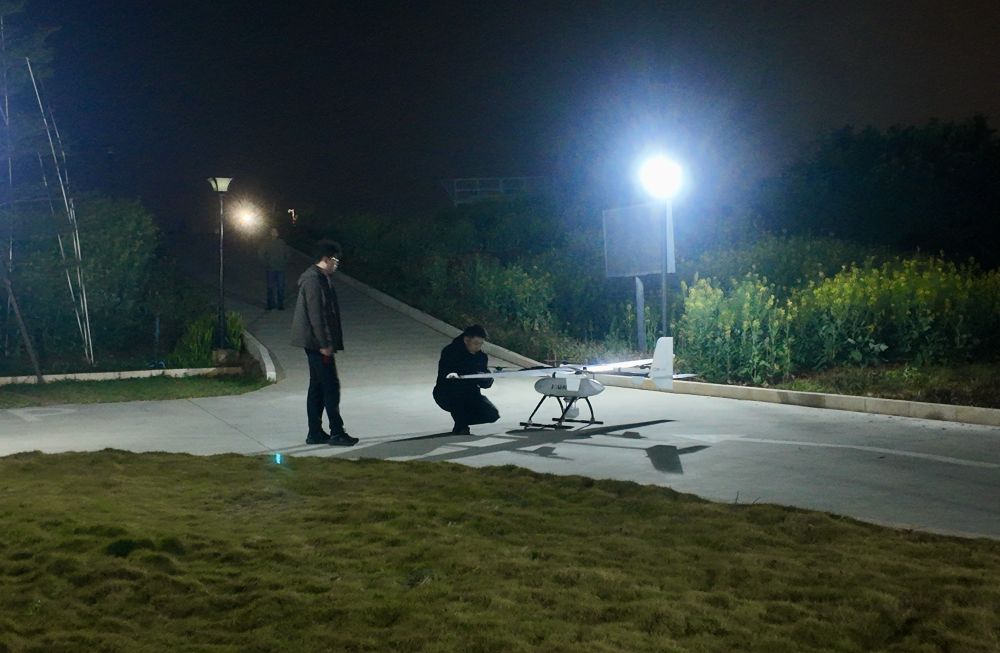
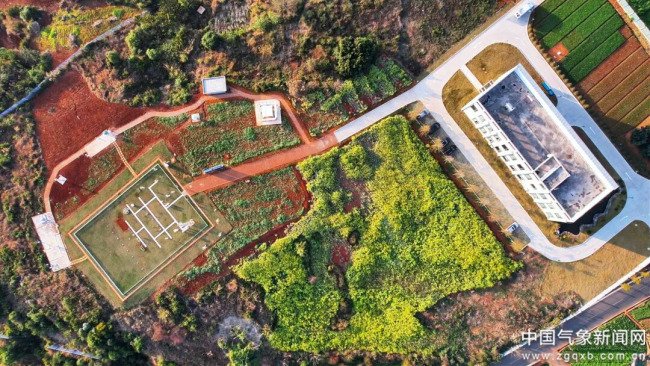
Core Viewpoint - The cloud and plateau quasi-stationary front research is crucial for improving weather forecasting accuracy in Southwest China and addressing severe weather challenges such as low-temperature rain and snow, as well as strong convective weather [2][12]. Group 1: Experiment Overview - The cloud and plateau quasi-stationary front airborne comprehensive observation experiment was conducted from January 15 to March 1 at the Yunnan Meteorological Bureau's experimental base in Mile City, Yunnan Province [1]. - The experiment utilized self-developed high-altitude drone systems and ground-based remote sensing vertical observation equipment to collect meteorological data at various heights and locations of the front [1][5]. - The base has established a comprehensive observation system combining "point-line-surface" to study the fine structure characteristics and evolution of the quasi-stationary front [5][12]. Group 2: Research Significance - The research on the quasi-stationary front is expected to enhance the understanding of its vertical structure and movement patterns, particularly during the winter when its activity is most pronounced [5][10]. - The findings from this research have been integrated into Yunnan's intelligent forecasting platform, contributing to the "1262" refined forecasting and emergency response mechanism [7][12]. - The experiment aims to provide data support for improving monitoring and forecasting capabilities for severe weather in the region [12]. Group 3: Future Directions - The research team plans to expand the experiment's scope by deploying ground-based remote sensing vertical observation equipment in five key areas affected by the quasi-stationary front [10]. - There is an emphasis on collaboration with experts and scholars to enhance observation experiments, mechanism research, and forecasting technology development [10][12].
今年10月,我国已经进入拉尼娜状态
Yang Shi Xin Wen· 2025-12-15 08:01
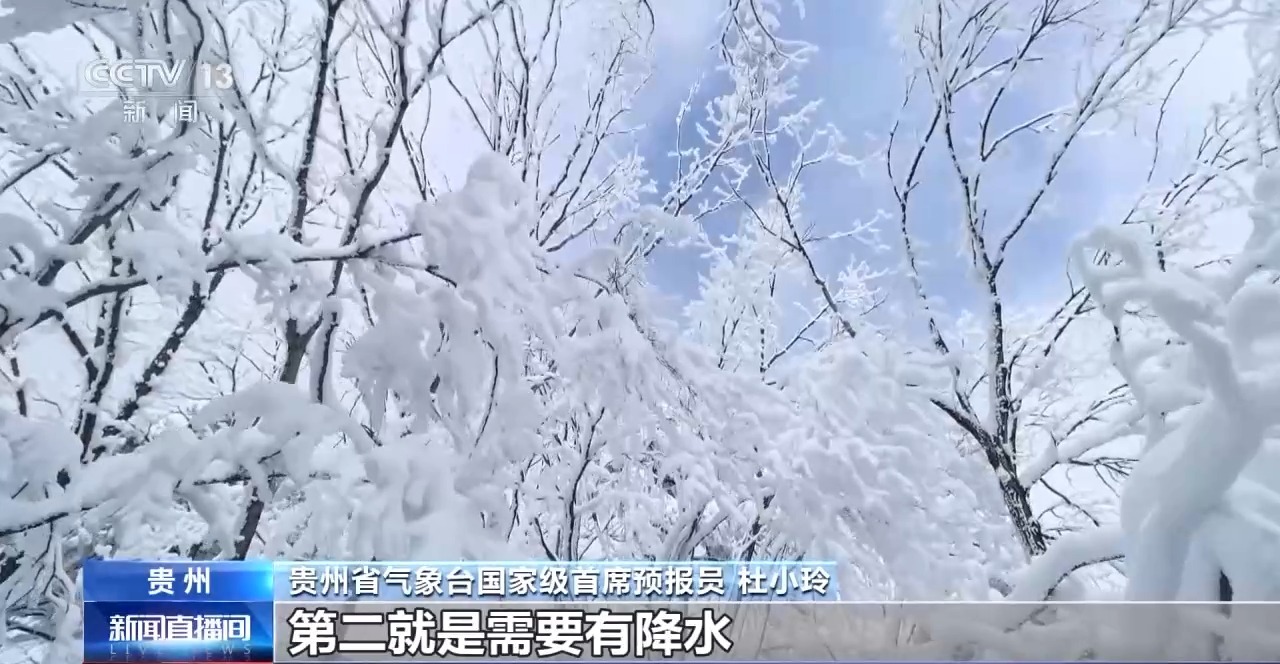
Group 1: La Niña Phenomenon - The La Niña phenomenon refers to the significant and sustained cooling of sea surface temperatures in the eastern and central equatorial Pacific Ocean, with China entering a La Niña state in October this year [1] - La Niña state does not equate to a La Niña event; a La Niña event is defined by the NINO 3.4 index remaining below -0.5 degrees Celsius for five consecutive months [2] - The probability of a double La Niña event occurring this winter is low, despite the ongoing La Niña state having some impact on China's climate [2] Group 2: Impact on Weather Patterns - La Niña directly influences weather by generating a cyclonic circulation anomaly over the Northwest Pacific and South China Sea, leading to prevailing northeast winds that suppress moisture transport to eastern and southern China, potentially causing drought conditions [4] - The expected winter conditions in regions like East and South China may lead to prolonged dry spells, particularly in the winter-spring period [4] Group 3: Freezing Rain and Its Effects - Freezing rain is a hazardous winter weather phenomenon where liquid rain freezes upon contact with surfaces below 0 degrees Celsius, posing risks to transportation, power supply, and daily life [5] - The formation of freezing rain requires two key conditions: sufficiently low temperatures (between -8 to 0 degrees Celsius near the ground) and the presence of precipitation [7] - Freezing rain can lead to the formation of ice layers on power lines and trees, increasing the risk of power outages and damage to vegetation [10] Group 4: Regional Analysis of Freezing Rain - Guizhou province experiences the highest frequency of freezing rain in China, with the winter months from December to February being the peak period for such weather [13] - This winter, the probability of widespread freezing rain in Guizhou is expected to be lower than usual, with average temperatures projected at 7.1 degrees Celsius [15] - The distribution of freezing rain in Guizhou shows a pattern where western regions experience more occurrences due to higher altitudes and stable weather systems [16][18]
拉尼娜状态下今冬气候如何?专家:可能出现冬春连旱
Yang Shi Xin Wen Ke Hu Duan· 2025-12-15 02:17
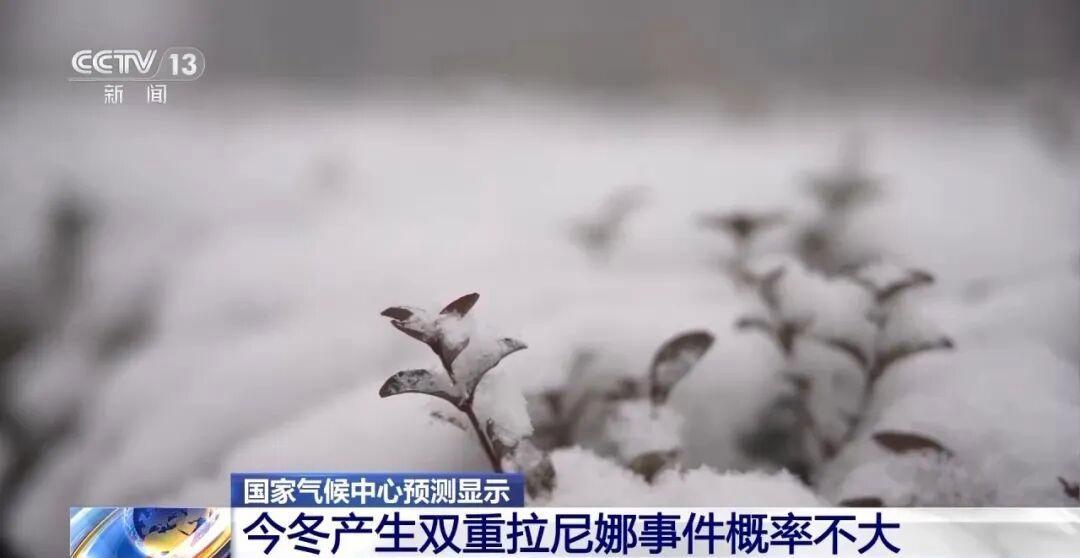
Group 1: La Niña Phenomenon - The La Niña phenomenon refers to the significant and sustained cooling of sea surface temperatures in the eastern and central equatorial Pacific Ocean, with China entering a La Niña state in October this year [1] - A La Niña state does not equate to a La Niña event; a La Niña event is recognized only when the NINO 3.4 index remains below -0.5 degrees Celsius for five consecutive months [1] - The probability of a double La Niña event occurring this winter is low, despite the ongoing La Niña state having some impact on China's climate [1] Group 2: Impact on Weather Patterns - La Niña directly influences weather by generating a cyclonic circulation anomaly over the Northwest Pacific and South China Sea, leading to prevailing northeast winds that suppress moisture transport to eastern and southern China [2] - This suppression may result in below-average precipitation in regions such as East and South China, with predictions indicating potential winter-spring droughts in these areas [2] Group 3: Freezing Rain and Its Effects - Freezing rain is a hazardous winter weather phenomenon where liquid rain freezes upon contact with surfaces below 0 degrees Celsius, creating ice that poses risks to transportation, power supply, and daily life [3] - The formation of freezing rain requires two key conditions: sufficiently low temperatures near the ground and the presence of precipitation, typically occurring when a warm layer exists above freezing temperatures [5] - Freezing rain can lead to significant hazards, including power line breakage and damage to vegetation, with rain ice (凇) being more destructive than fog ice (雾凇) due to its weight [7] Group 4: Regional Analysis of Freezing Rain - Guizhou Province experiences the highest frequency of freezing rain in China, with the peak season from December to February, although this winter's probability of widespread freezing rain is relatively low [10] - The average temperature in Guizhou is expected to be 7.1 degrees Celsius this winter, with a lighter incidence of freezing disasters compared to historical averages [10] - The distribution of freezing rain in Guizhou is influenced by its unique topography and stable weather systems, with higher occurrences in the western and central regions due to lower temperatures at higher altitudes [11]