
五良融合

Search documents
新华访谈|李奕迅代表:三链融合 促农增收 助力龙江大豆产业高质量发展
Xin Lang Cai Jing· 2026-02-01 10:01
Core Viewpoint - Heilongjiang Province is a major soybean production area in China, and Longwang Food has developed a "three-chain integration" model to enhance the soybean industry and support farmers' income growth [1] Group 1: Industry Development - Longwang Food is leveraging Heilongjiang's high-quality soybean resources to upgrade the soybean beverage industry, focusing on quality innovation and brand building [5] - The company has established a full-chain quality traceability system, collaborating with local partners to create a 100,000-acre dedicated planting base, ensuring every soybean is traceable and meets higher than national standards [5] - Longwang Food aims to transform from raw material output to brand output, enhancing its market presence in various supermarkets across the country [5] Group 2: Farmer Support and Income Growth - The company has implemented a "three-chain integration" model to support farmers, which includes stable order agriculture, technological services, and profit-sharing mechanisms [7] - In collaboration with cooperatives and large growers, Longwang Food has signed contracts covering 100,000 acres, benefiting 12,000 farming households, with an average increase of 3,000 yuan per household in 2024 [7] - The company has established a 15-member agricultural technology service team to provide unified services, resulting in an average yield increase of over 50 kg per acre [7] Group 3: Technological Advancements - Longwang Food is focusing on modern agricultural technology to enhance the competitiveness of soybean beverages, including digital planting, intelligent processing, and data-driven management [8] - The company has achieved a 20% reduction in water usage and a 10% reduction in fertilizer usage through technology applications, while maintaining soybean protein content above 40% [8] - The establishment of an intelligent soybean powder production line has significantly improved production efficiency, increasing product quality from 98% to 99.8% [8]


宾县 稳面积增单产 “两手发力”促丰收
Xin Lang Cai Jing· 2026-01-12 22:07
Core Insights - The article highlights the agricultural development strategy in Bin County, focusing on increasing grain production and soybean cultivation while maintaining stable planting areas [4][5]. Group 1: Agricultural Production Goals - By 2025, Bin County aims to achieve a grain production of 23.84 billion jin, reflecting a year-on-year increase of 0.68% [4]. - The total sown area for grain crops is projected to be 2.7606 million acres, with specific areas allocated for corn (2.3782 million acres), rice (98,500 acres), and soybeans (275,100 acres) [4]. Group 2: Production Enhancement Initiatives - The county is implementing the "Five Good" integration strategy to enhance crop yields, including the promotion of high-yield cultivation techniques [5]. - The application area for large ridge planting technology is expected to reach 205,900 acres in 2025, an increase of 80,100 acres from the previous year [5]. - Specific projects include the transformation of 839 acres of rice fields and the establishment of a water and fertilizer integration project covering 529 acres [5]. Group 3: Technological and Training Efforts - The county is focusing on technological advancements in agriculture, with the establishment of nine modern agricultural technology demonstration bases, four of which have been recognized at the provincial level [6]. - Over 50 training sessions are planned for 2025, targeting more than 3,000 participants, with a focus on practical agricultural production techniques [5][6]. - The promotion of agricultural technology through digital platforms, including the use of the China Agricultural Technology Promotion APP, is also emphasized [5].
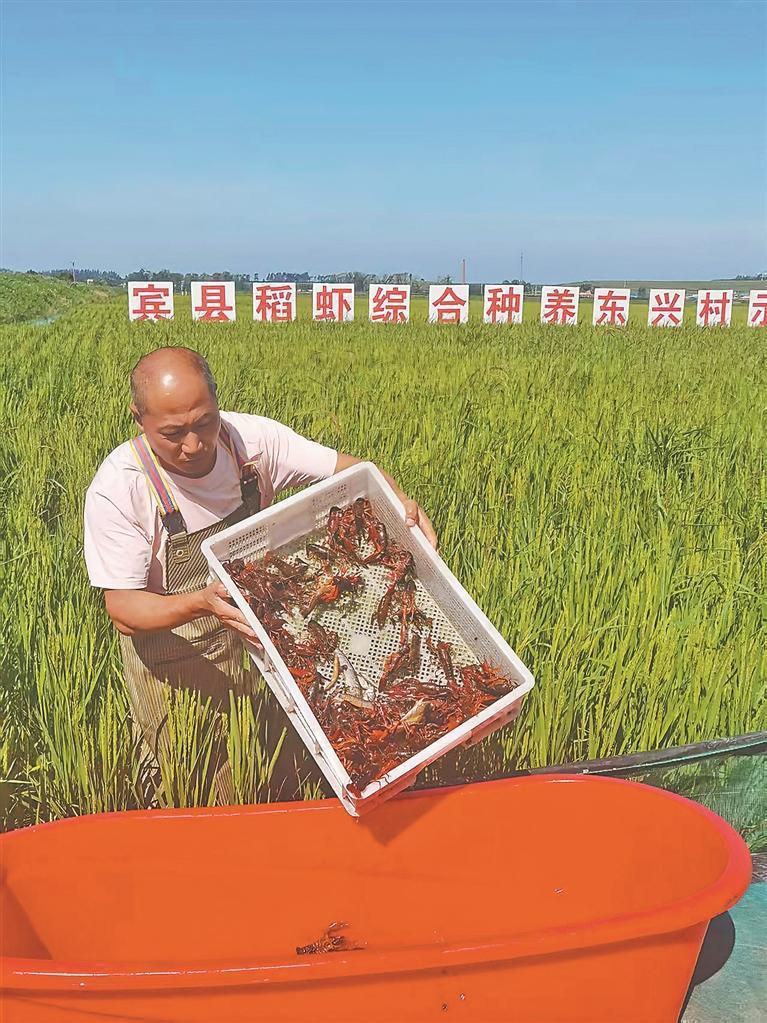
2025 又是一个丰收年
Xin Lang Cai Jing· 2026-01-12 22:06
Core Viewpoint - The article highlights the significant role of Harbin in China's grain production, emphasizing its contribution to national food security and the implementation of various agricultural strategies to enhance grain yield and quality [23]. Group 1: Agricultural Strategies - Harbin's nine counties (cities) are committed to ensuring national food security by implementing the strategy of "storing grain in the land and technology" and focusing on stabilizing area and increasing yield [23]. - The counties are advancing the integration of "good land, good seeds, good technology, good opportunities, and good systems" to enhance grain production potential [23][24]. - Key projects such as the national green high-yield and efficient action demonstration counties and major grain crop yield enhancement actions are being implemented to improve overall agricultural planting levels and grain output [24]. Group 2: Technological Advancements - The promotion of high-standard farmland construction, water field grid transformation, and protective tillage is being emphasized to boost grain production [24]. - Techniques such as large ridge dense planting, soil testing and fertilization, and "one spray multiple promotions" are being adopted to enhance agricultural efficiency [24]. - The article acknowledges the contributions of farmers and agricultural workers in the region, highlighting the importance of their efforts in achieving higher yields [24].
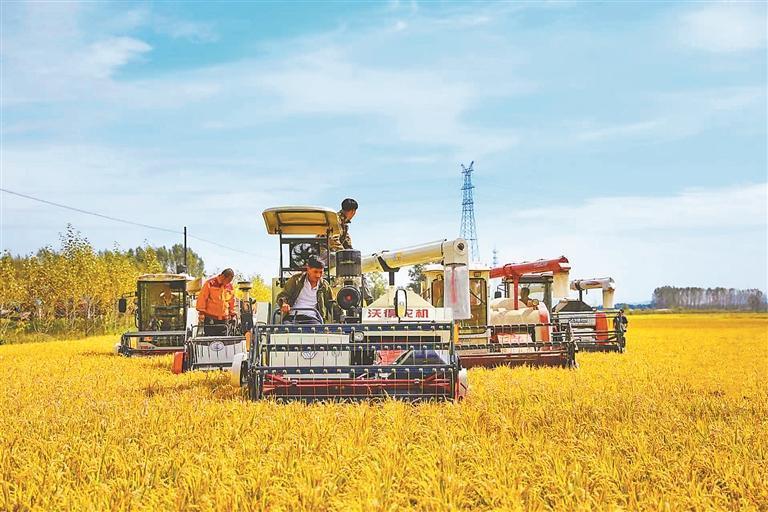
北大荒集团建设农场以"双融双促"绘就乡村振兴高质量发展画卷
Xin Lang Cai Jing· 2025-12-25 01:00
Core Insights - The company is focusing on the "Three Major and One Aircraft Carrier" strategic goals by 2025, utilizing the "Beian Model" and the "Torch Model" for integrated agricultural development [1][2] - The farm achieved impressive yields with soybeans at 567.4 jin per mu and corn at 1737 jin per mu, indicating a dual improvement in quality and efficiency [1] - The integration of technology in agriculture is emphasized, with practices such as precision planting, green pest control using fixed-wing aircraft, and efficient harvesting with combine harvesters [1] Group 1: Technological Integration - The farm implements a deep integration of "good fields, good seeds, good opportunities, good methods, and good systems" to enhance agricultural productivity [1] - The use of smart planting machines and collaborative pest control methods demonstrates a shift from traditional farming to technology-driven practices [1] - A grid management model ensures that each plot of land has a dedicated "technical steward," promoting a transition from experience-based farming to technology-based income generation [1] Group 2: Community Engagement and Support - The farm's "Torch Model" promotes high-standard demonstration fields in collaboration with surrounding towns, helping 60% of local farmers adopt high-yield technologies [2] - Investment of 13.49 million yuan in 15 livelihood projects reflects the farm's commitment to community welfare and support for farmers [2] - The farm's party committee is actively involved in addressing technical challenges faced by farmers, with training sessions reaching over 200 participants [2] Group 3: Future Development Goals - The farm aims to continue deepening the "Five Good Integration" and expanding the connotation of the "Torch Model" to further enhance rural revitalization efforts [2] - The focus on party leadership and technological innovation is seen as a foundation for sustainable agricultural development [2] - The ongoing commitment to community engagement and support is expected to yield significant benefits for local farmers and the agricultural sector as a whole [2]


又是一年好收成
Xin Lang Cai Jing· 2025-12-24 22:53
Core Viewpoint - The province of Heilongjiang is set to achieve a total grain output of 1640.1 billion jin by 2025, marking the 22nd consecutive year of bumper harvests and maintaining its position as the top grain-producing region in China. The increase in grain output is attributed to favorable weather conditions, improved agricultural practices, and the implementation of high-standard farmland projects [3][4]. Group 1: Grain Production Achievements - Heilongjiang's grain output increased by 39.7 billion jin, accounting for 23.6% of the national increase, which is a 4.4 percentage point rise from the previous year [3]. - The province's grain production area has remained stable at over 220 million mu since 2022, laying a solid foundation for consistent grain output growth [4][5]. - The average yield per mu for rice reached over 1100 jin, with farmers experiencing significant income increases [3]. Group 2: Agricultural Infrastructure and Technology - The construction of high-standard farmland has been prioritized, with 150.37 million mu built, enhancing grain production capacity by over 15% compared to ordinary farmland [4][5]. - The province's agricultural technology contribution rate reached 70.8%, surpassing the national average by 7.6 percentage points, indicating a strong integration of technology in farming practices [6]. - The implementation of advanced irrigation techniques, such as drip irrigation, has led to water savings of over 30% and fertilizer savings of 20%, contributing to increased yields [6][7]. Group 3: Agricultural Management Innovations - The province has promoted agricultural socialization services, with 1.7 million mu of farmland under management, leading to cost savings and improved efficiency [8]. - The use of mechanization and drone technology in farming has significantly reduced labor requirements while increasing productivity, with some cooperatives achieving yields of over 2400 jin per mu [8][9]. - A shift towards precise agricultural management practices has been observed, focusing on reducing losses during harvesting and storage, thereby enhancing overall grain quality [9].
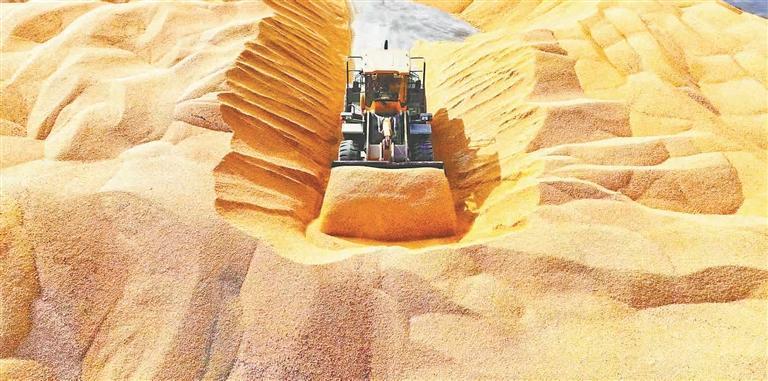
山东莱西:“五良融合”稳产增效
Jing Ji Ri Bao· 2025-11-11 22:14
Group 1: Agricultural Development in Laixi City - Laixi City has implemented a comprehensive approach to enhance grain yield by focusing on improving soil quality, crop varieties, and farming techniques, resulting in a significant increase in grain production [1][2] - The city has established high-standard farmland covering 1.112 million acres, with 45,000 acres newly built this year, aiming to create stable and high-yield "ton grain fields" [2] - The introduction of high-quality corn varieties has led to an increase in corn yield by over 40 kilograms per acre, with a coverage rate of 98% for improved seed varieties [2] Group 2: Technological Advancements in Agriculture - The use of modern machinery has been promoted, with over 800 large tractors and 1,400 corn harvesters, achieving a mechanization rate of 91.62% in crop farming [4] - Laixi City has introduced a "grain bank" model, allowing farmers to store grain and access agricultural resources and credit support, enhancing their financial flexibility [3] - The integration of digital technology in agricultural management has improved efficiency and provided farmers with precise information and support [5]
新疆连续三年刷新全国冷凉区玉米大面积单产纪录
Xin Hua She· 2025-10-15 14:04
Core Insights - Xinjiang has achieved a significant increase in corn yield, setting new records for large-scale production in cold regions, with average yields of 1551.54 kg per mu for 100 mu, 1506.09 kg per mu for 1000 mu, and 1405.78 kg per mu for 10,000 mu, marking a 14% increase after standard moisture adjustment [1] - The narrowing yield gap across different plot sizes indicates a clear trend towards balanced large-scale production [1] - The record-setting demonstration fields were established through collaboration between agricultural experts and local agricultural departments, utilizing advanced cultivation techniques and optimized management practices [1] Industry Context - Cold regions, characterized by long winters and short cool summers, present unique challenges for corn production, necessitating higher standards for stable yields [2] - Xinjiang is strategically positioned as a key supplier of high-quality agricultural products in China, with ongoing initiatives to enhance large-scale yields of grains and cotton, maintaining a leading position in national corn production [2]
中国农民丰收节 | 用手机种地?黑龙江农户靠数据种出高产稻
Xin Hua Wang· 2025-09-23 04:42
Core Viewpoint - The article emphasizes the importance of food security in China, highlighting the advancements in agricultural technology and practices in Heilongjiang Province, particularly at the Qixing Farm, to enhance grain production efficiency and sustainability [1][2]. Group 1: Agricultural Technology and Practices - Heilongjiang Province is focusing on modernizing agriculture through the "storing grain in the ground and technology" strategy, enhancing agricultural technology support [1]. - The Qixing Farm utilizes drones for various agricultural tasks, significantly improving efficiency and reducing production costs, thus promoting an integrated service system in agriculture [1]. - The farm has successfully restored 15,000 acres of paddy fields and expects an increase in yield by over 200 jin per acre through improved practices [2]. Group 2: Data-Driven Agriculture - The farm is transitioning from traditional farming methods to data-driven approaches, utilizing smart irrigation systems and drones to monitor and manage crop health and resource usage [3]. - Farmers can now control irrigation remotely via mobile apps, leading to more efficient water usage and improved crop yields [3]. - The introduction of smart agricultural machinery has increased operational efficiency by 30% and stabilized work quality [3]. Group 3: Mechanism and Participation - The farm has implemented a "model management area" evaluation mechanism to encourage active participation from farmers, focusing on technology implementation rates and yield improvements [5]. - The establishment of "New Farmer Technology Stations" facilitates on-site learning and problem-solving for farmers, enhancing the adoption of new technologies [5]. - The farm aims to transform agriculture from being weather-dependent to data-driven, promoting a comprehensive intelligent operation system for crop management [5].
总产、单产均创三年来新高! 茂名早稻迎来丰收
Nan Fang Nong Cun Bao· 2025-09-05 13:34
Core Insights - The early rice harvest in Maoming has achieved record high total production and yield in three years, with a total planting area exceeding 1.44 million acres and total output surpassing 620,000 tons [2][3]. Group 1: Production and Yield - The total production and yield of early rice in Maoming have increased by 0.4% and 0.9% year-on-year, respectively, marking a "double increase" [3]. - The average yield reached 431 kg per acre, with demonstration areas achieving theoretical yields exceeding 600 kg per acre [2][11]. Group 2: Agricultural Strategies - Maoming has implemented the national food security strategy, focusing on "storing grain in the land and technology," and promoting the integration of five key elements: good land, good seeds, good practices, good opportunities, and good systems [4][5]. - The city is actively promoting reasonable planting density for rice, with a demonstration area of 85,000 acres, increasing planting density to over 16,000 holes per acre, which is 15% higher than non-demonstration areas [9][10]. Group 3: Support and Services - The city is enhancing the production capacity of grain and oil by supporting large-scale planting entities and integrating high-yield technology models [12][14]. - Socialized agricultural service entities are providing comprehensive services, including machine tillage, harvesting, and pest control, covering over 500,000 acres and benefiting 120,000 small farmers [26][27]. Group 4: Pest Control and Loss Management - Maoming is conducting a "pest control for grain" initiative, ensuring a pest control response rate of 100% and controlling grain loss to below 5% [23][25].

顶住旱情稳大盘——河南小麦生产一线观察
Xin Hua She· 2025-06-18 11:50
Core Insights - The article highlights the successful wheat harvest in Henan province, which accounts for one-fourth of China's total wheat production, emphasizing its critical role in national food security [1][2]. Group 1: Wheat Production and Harvesting - Henan has completed the harvest of over 85 million acres of wheat, maintaining overall summer grain production stability despite drought conditions during the critical growth period [1][2]. - The average wheat yield for major growers in Henan is approximately 1,100 pounds per acre, consistent with previous years, despite increased irrigation efforts due to lower-than-average rainfall [2][3]. - The province has implemented extensive irrigation measures, including the release of 2.36 billion cubic meters of water and the maintenance of over 56,000 wells, significantly reducing drought-affected areas from 11.07 million acres to 1.1 million acres [2][3]. Group 2: Agricultural Technology and Practices - The integration of high-standard farmland and modern irrigation techniques has been pivotal in enhancing wheat yields, with some farmers reporting yields of up to 1,300 pounds per acre [4][5]. - The use of advanced irrigation systems, such as mobile-controlled pivot and linear sprinklers, has allowed for efficient water management, contributing to stable or increased yields in favorable regions [3][4]. - The province has established 127,000 agricultural service organizations, effectively addressing the challenges of labor shortages in farming and improving pest control measures, resulting in a reduction of pest-affected areas by 12.72 million acres compared to the previous year [5][6]. Group 3: Harvest Efficiency - The province has achieved a remarkable 99.8% mechanization rate in wheat harvesting, with approximately 210,000 combine harvesters deployed over a 22-day period [6]. - Efforts to minimize harvesting losses have been emphasized, with a target loss rate of under 1%, and competitive events to train operators have been organized to enhance efficiency [6].