五行文化

Search documents
贵州茅台酒(丙午马年)正式亮相 1月6日起 i茅台App每日9点开售
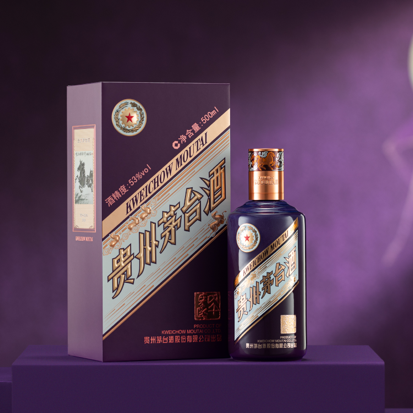
Zheng Quan Ri Bao Wang· 2026-01-05 13:44
Core Viewpoint - The launch of Guizhou Moutai's (600519) 2026 Year of the Horse liquor series emphasizes traditional craftsmanship and cultural significance, with products available for purchase starting January 6 through the iMoutai App [1][10]. Group 1: Product Details - The 2026 Year of the Horse liquor series includes three versions: Classic Edition, Gift Box Edition, and Premium Edition, each crafted using local high-quality ingredients and traditional brewing techniques [2]. - The Premium Edition features a blend of over 200 different base liquors, while the Classic and Gift Box Editions are based on nearly 200 distinct base liquors, catering to diverse tasting experiences [2]. Group 2: Cultural Significance - The main color of the 2026 Year of the Horse liquor is "Qi Purple," symbolizing elegance and depth, aligning with the energy of the Year of the Horse, which is associated with "yang fire" [3]. - The design incorporates elements of zodiac culture, five elements, calligraphy, and traditional Chinese colors, reflecting a blend of artistic and cultural heritage [4]. Group 3: Packaging and Design - The Premium Edition features a wooden box that integrates traditional architectural elements and artistic designs, while the Classic and Gift Box Editions include artwork from notable Chinese artists, enhancing both aesthetic and cultural value [8]. Group 4: Digital and Environmental Initiatives - The iMoutai App will offer enhanced digital services and the product packaging will utilize biodegradable materials, promoting both quality and ecological sustainability [10]. - Customers can choose between random or self-selected production dates for their purchases, with specific limits on quantities per user [10]. Group 5: Sales and Availability - The Premium Edition will only be available during key promotional events throughout the year, with the first sales event already concluded [11]. - Customers who pre-ordered during the initial sales event must complete their payments by January 9, 2026, to avoid automatic cancellation of their orders [12].


银行精细化管理 落地路径与实施策略
Jin Rong Shi Bao· 2025-09-25 03:11
Core Viewpoint - The traditional scale expansion model of the Chinese banking industry faces severe challenges due to the new economic cycle, interest rate liberalization, financial disintermediation, and technological waves. A shift towards quality and efficiency, characterized by data-driven refined management, is essential for banks to build core competitiveness in the new era [1]. Group 1: Necessity of Refined Management - The implementation of refined management is a pressing need to address internal and external challenges, including the need to enhance value creation capabilities due to narrowing net interest margins [2]. - It is necessary to manage the complexity of risks during economic downturns, requiring a shift from broad risk control to refined risk measurement and management [2]. - To achieve differentiation in a highly competitive market, banks must accurately identify target customers and provide tailored products and services through refined operations [2]. - The digital transformation necessitates a change in management models, with refined management serving as the foundation for data-driven decision-making [2]. Group 2: Insights from Five Elements Culture - The "Five Elements Culture" provides philosophical guidance for implementing refined management, ensuring that management reforms remain on the right track [3]. - Compliance and risk control must be the rigid bottom line of refined management, fostering a culture where everyone is a risk officer [4]. - Customer-centricity should be the fundamental principle, focusing on enhancing customer experience and internal collaboration [4]. - Talent cultivation is essential, requiring investment in employee training and technology empowerment to support refined management [4]. - Passion and efficiency should drive refined management, avoiding bureaucratic pitfalls and igniting employee motivation [4]. - Data integrity is crucial, necessitating a culture of truthfulness and reliance on solid data for decision-making [4]. Group 3: Application of Five Insights Management Philosophy - The "Five Insights" philosophy provides actionable methodologies for implementing refined management, ensuring that management requirements penetrate to the operational level [6]. - Addressing strategic disconnection, execution gaps, and result discrepancies is vital for establishing a comprehensive management control system [6][7]. - Management must be systematic, with strategic choices translating into actionable plans and budget management [6]. - Specificity in management is required, with budget preparation and performance evaluation linked to individual teams and activities [7]. - Visibility in management is essential, focusing on key behaviors and process indicators that drive results [7]. - Root cause analysis of business outcomes is necessary to derive insights for continuous improvement [7]. Group 4: Tools Supporting Refined Management - Comprehensive budget management and performance management are the two most effective tools for driving refined management [8]. - The budget management system serves as a core tool for translating strategic goals into quantifiable indicators and resource allocation [9]. - Establishing a budget organization system and aligning strategy with actionable plans are critical for effective budget management [10]. - Performance management ensures alignment between organizational goals and individual actions, driving strategic execution [12]. - The integration of budget and performance management creates a continuous feedback loop, enhancing overall management effectiveness [14]. Group 5: Implementation Strategies for Refined Management - Implementing refined management requires systematic planning and phased execution, starting with top-level design and cultural alignment [15]. - Organizational restructuring should focus on optimizing structures and enhancing departmental collaboration [15]. - Investment in technology and data infrastructure is necessary to support refined management practices [15]. - Process reengineering should eliminate inefficiencies and ensure alignment with business needs [16]. - Talent development is crucial, requiring comprehensive training for employees to adapt to refined management practices [17]. - Pilot programs should be initiated to validate tools and methods before broader implementation across the organization [17].
邮储银行天津西青支行营业部:祖孙同堂乐享金融服务新体验
Xin Lang Cai Jing· 2025-09-10 07:30
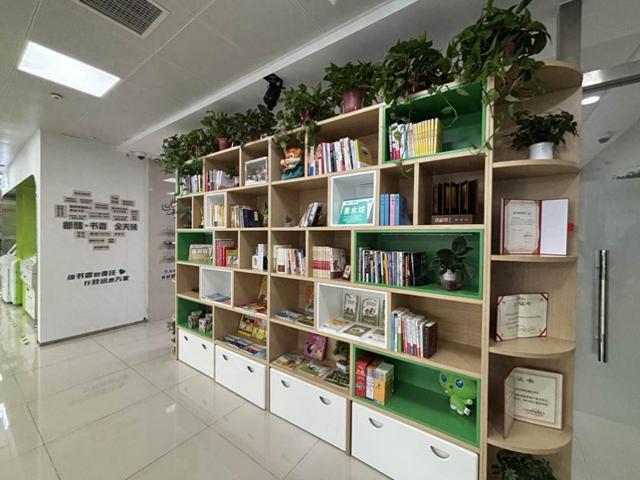
Core Viewpoint - Postal Savings Bank of China has transformed its Tianjin Xiqing branch into a regional flagship comprehensive service point, integrating the "Five Elements" (Metal, Wood, Water, Fire, Earth) into its design to create a diverse and comfortable financial service environment for all age groups [1][6]. Group 1: Branch Features - The "Metal" area, known as Xinrui Fang, showcases efficiency and professionalism, featuring a wall of honors and product introductions, enhancing customer confidence [3]. - The "Wood" area, called Qingmu Fang, serves as a community space for learning, where activities like reading sessions for children and financial education for seniors are held [3]. - The "Water" area, named Lanhui Fang, combines digital meeting technology with a traditional tea setting, providing a relaxed environment for small business owners to conduct discussions [5]. - The "Fire" area, known as Yanchuang Fang, is a vibrant space hosting events like coffee tasting and health seminars, fostering community engagement among different age groups [5]. - The "Earth" area, called Kunan Fang, offers a familiar and comfortable waiting area with clear service processes, emphasizing the bank's commitment to customer service [5]. Group 2: Customer Engagement - The branch aims to break the stereotype that financial service points are merely transactional spaces, creating an environment where both young and older customers can find suitable services [6]. - The integration of the "Five Elements" promotes interaction among different customer demographics, fostering a harmonious atmosphere where older customers can guide younger ones and vice versa [6].