交易纪律

Search documents
黄金,即将打破僵局!
Sou Hu Cai Jing· 2026-02-27 02:36
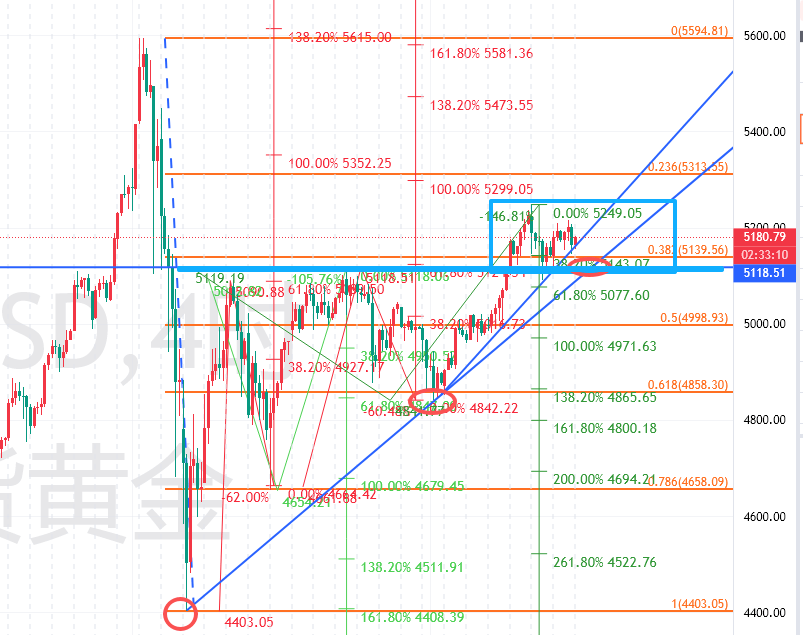
Core Insights - The article emphasizes the importance of having strict trading principles and discipline in trading, suggesting that without these, technical skills are rendered ineffective [1][2][3] Trading Principles - Frequent trading should be avoided; the focus should be on making money rather than just executing trades for the sake of it [1][2] - Position sizes for international commodities like gold and silver should be controlled between 3% to 5%, while domestic futures should maintain a risk rate below 30% [2] - Stop-loss orders are crucial for survival in the market, and holding onto losing positions is discouraged [2] - Traders should only engage with market conditions they understand, as there are always opportunities available [2] - Maintaining personal conviction and not following the crowd is essential to avoid confusion and regret in trading decisions [2] Market Analysis - The gold market is currently experiencing volatility, with potential upward targets of $5300 and $5440-$5460, while downward targets could reach $4900-$4850 [3][4] - Silver has shown a weaker recovery compared to gold, having dropped nearly 50% since late January, while gold has regained most of its losses [4] - The oil market is projected to experience a bull market this year, with short-term support at $62-$63 and long-term targets of $95-$100 [9]

一笔黄金单子平仓后的反思:真正毁掉交易的不是亏损,而是“事后诸葛亮式思维”
Sou Hu Cai Jing· 2026-02-09 10:10
Core Viewpoint - The article discusses the emotional challenges traders face after closing positions, particularly the feelings of regret and second-guessing decisions made during trading. It emphasizes the importance of adhering to a trading plan and managing emotions to improve trading discipline and decision-making. Group 1: Trading Experience and Regret - The trader experienced regret after closing a profitable position in gold, despite the market showing signs of further potential gains. This highlights the emotional aspect of trading where decisions can be influenced by short-term market movements and personal feelings [2][4]. - The trader's confidence in the gold market fluctuated based on discussions with peers and market movements, illustrating how external opinions can impact trading decisions [3][4]. Group 2: Managing Emotions in Trading - The article suggests that traders should stop dwelling on past decisions and focus on executing their trading plans consistently. It emphasizes that hindsight can distort perceptions of past market conditions [8][10]. - It is noted that self-reflection should be constructive, aimed at learning from past trades rather than fostering regret. The focus should be on improving future decision-making rather than lamenting past choices [11][12]. Group 3: Practical Strategies to Overcome Regret - The article provides practical strategies to combat regret, such as maintaining a trading journal to document thoughts and decisions prior to trades, which can help in understanding the rationale behind actions taken [12]. - It also recommends thorough backtesting of trading systems to build confidence in long-term strategies, thereby reducing the likelihood of second-guessing based on recent trades [13]. - Regular performance reviews of trading systems are advised to ensure evaluations are based on systematic rules rather than memory, reinforcing the importance of long-term probability over short-term outcomes [14].
关于“止赢”和“止损”:只有学会输的人,才能收获赢!
申万宏源证券上海北京西路营业部· 2025-08-07 02:30
Core Viewpoint - The article emphasizes the importance of understanding emotional control and self-discipline in stock trading, suggesting that only by mastering the ability to accept losses can one achieve long-term gains in the capital market [3][11]. Emotional Influence on Trading - Many traders struggle with holding onto profitable stocks during pullbacks due to fear and emotional responses, leading to premature selling [3][8]. - Conversely, traders often hold onto losing positions, hoping for a turnaround, which can exacerbate losses [9][10]. Self-Discipline and Decision Making - The article highlights that successful trading requires overcoming natural instincts and emotional biases, advocating for a disciplined approach to decision-making [4][8]. - It suggests that traders should train themselves to act decisively and without emotion, focusing on risk management rather than succumbing to comfort-seeking behaviors [9][11]. Practical Advice - The article encourages readers to reflect on their trading behaviors and to engage in deliberate practice to internalize the principles of disciplined trading [11]. - It stresses the need for continuous learning and adaptation in the face of market challenges, suggesting that traders are not alone in their struggles [11].