
交通治理

Search documents
全力保障城市道路安全、有序、畅通
Xin Lang Cai Jing· 2026-02-25 22:06
Core Viewpoint - The Shenyang Public Security Traffic Management Bureau is implementing a series of measures under the "2026 Security Action Plan" to ensure road safety, order, and smooth traffic in the city by 2026 [1] Group 1: Traffic Safety Measures - The Shenyang police are promoting a comprehensive approach to traffic accident prevention, conducting special actions to eliminate safety hazards, and implementing a checklist for rectification and closed-loop management of identified road safety risks [2] - The establishment of the "Shenyang Road Traffic Risk Prevention Platform" enables intelligent hazard detection, real-time risk warnings, and rapid incident response, while enhancing supervision of key transportation enterprises and vehicles [2] Group 2: Traffic Order Management - The police maintain a strict enforcement stance against prominent violations such as drunk driving, speeding, and fatigue driving, while optimizing the "photo enforcement" feature to encourage public participation in traffic governance [2] - The implementation of differentiated parking management and the innovative "Shenyang model" for electric vehicle violation supervision through an intelligent monitoring platform aims to standardize road traffic order [2] Group 3: Traffic Governance Optimization - The police focus on addressing congestion points through refined traffic organization and "micro-traffic control" actions, while employing dynamic police deployment to enhance visibility and response efficiency [3] - The integration of a unified command system ("emotion, direction, action") facilitates rapid response and the use of drones for road condition monitoring, violation enforcement, and emergency command [3] Group 4: Public Engagement and Business Environment Improvement - The Shenyang police have consolidated multiple channels for collecting public and business feedback, establishing a closed-loop mechanism for "demand analysis and rectification feedback" to ensure responsiveness to community needs [4] - Initiatives to streamline business-related services, such as on-site processing, expedited handling, and online services, aim to reduce operational disruptions for enterprises while enhancing public safety services [4]
成都发布第四批治堵任务清单 持续提升城市通勤效率
Zhong Guo Xin Wen Wang· 2026-02-25 14:03
Core Insights - Chengdu has launched the fourth batch of traffic congestion governance tasks, focusing on citizen feedback and aiming to enhance urban commuting efficiency and improve the travel environment [1][2] Group 1: Traffic Governance Initiatives - The fourth batch includes 130 tasks, with 68 specifically addressing commuting, education, medical access, and leisure scenarios [1] - The governance approach emphasizes a detailed, visualized, and project-based strategy to tackle traffic congestion, employing methods such as resource optimization and technology integration [1] - A total of 372 governance tasks have been implemented since the "open-door congestion management" initiative began, with 329 tasks completed, including the release of 155 traffic lanes [2] Group 2: Safety and Infrastructure Improvements - The governance tasks also include 62 rural road safety improvement tasks, focusing on critical areas such as hazardous road conditions and aging infrastructure [1] - Specific measures include the rectification of 30 protective facilities, 23 road facilities, and 6 traffic management issues, with a completion target set for June 2026 [1] - The congestion index during peak hours has decreased from 1.68 to 1.65, indicating a positive trend in traffic management [2]
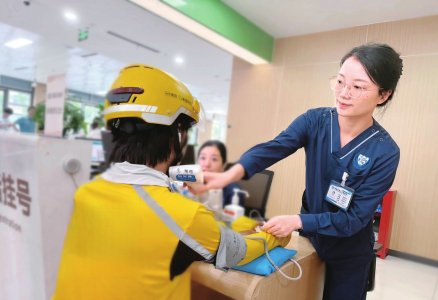
从“民声”到“民生”成都治理转化率有多高?
Xin Lang Cai Jing· 2026-01-26 18:59
Core Viewpoint - Chengdu's approach to urban governance emphasizes addressing the daily needs of citizens, focusing on small but impactful initiatives that enhance overall happiness and quality of life, rather than solely on large-scale infrastructure or economic metrics [7][13]. Group 1: Healthcare Initiatives - Chengdu has introduced a "1 yuan clinic" specifically for new employment groups such as ride-hailing drivers and delivery workers, offering 24-hour service, low fees, and quick consultations to alleviate healthcare access issues [8]. - The city has implemented a system that allows 107 hospitals to recognize 138 types of examinations, benefiting 3.317 million people and saving over 46 million yuan in costs [8]. Group 2: Transportation Management - Despite having over 8 million vehicles, Chengdu has managed to reduce traffic congestion through detailed scheduling and innovative solutions rather than restrictions like road closures [10]. - The city has introduced measures such as "bus-only lanes shared by social vehicles at night" and a "slow vehicle identification system" to enhance traffic flow and efficiency [11]. Group 3: Community and Social Services - Chengdu is expanding its community services to include after-school care programs, housing for talent, and support for elderly care, thereby improving the overall living environment for residents [12]. - The city has broken down its "Ten Major Projects for a Happy Life" into 605 specific initiatives, ensuring that they align with the real needs of citizens [12]. Group 4: Overall Impact on Happiness - Chengdu's focus on small, everyday improvements has resulted in significant benefits, such as 331.7 million fewer hospital visits, 145,000 elderly individuals receiving home care, and 310,000 people finding employment [13]. - The city's governance philosophy prioritizes citizen feedback and needs, reinforcing the idea that urban development should be centered around the people it serves [13].

360个路口车速提升12.9% 上海交通健康指数一线城市居首 “交通治堵大模型”成效显著
Jie Fang Ri Bao· 2026-01-16 01:51
Group 1 - The Shanghai police have optimized the traffic governance system, resulting in a decrease in traffic accidents, fatalities, and injuries by 2.7%, 7%, and 7.3% respectively, with the traffic health index ranking first among major cities in China [1] - The upgraded "Easy PASS" system enables proactive traffic management through a comprehensive model that integrates people, vehicles, roads, enterprises, and events, achieving full network operation awareness [1] - The innovative "Traffic Congestion Control Model" has effectively automated the processes of congestion detection, cause analysis, strategy generation, and color-coded warnings, allowing for self-healing of congestion at 360 deployed intersections [1] Group 2 - The Shanghai police focused on 25 categories of traffic violations, implementing a comprehensive governance approach that led to over 33,000 violations by construction vehicles and a 23.7% increase in the number of non-motor vehicle violations detected [2] - The management of delivery riders has improved, with a three-tier responsibility system established, resulting in a 23.1% decrease in fatal accidents involving responsible riders [2] - A collaborative mechanism for large vehicles has been introduced, leading to over 900 penalties for companies failing to fulfill safety responsibilities, with a 24% decrease in fatal accidents involving large vehicles [2] Group 3 - The Shanghai police completed upgrades at 80 congestion points and implemented over 2,800 traffic organization optimization measures, significantly enhancing road capacity [3] - Eighteen traffic management service reform measures have been successfully implemented, with online traffic management services accounting for 16.1% of the total online services in the city [3] - The establishment of over 80 "Driver's Homes" and 280 restroom facilities addresses the needs of drivers, while the opening of six limited-time pedestrian streets optimizes traffic organization in popular commercial areas [3]
去年广州交警交通治理成绩单发布 建成55.4公里“机非共享车道”
Nan Fang Ri Bao Wang Luo Ban· 2026-01-15 10:09
Core Insights - Guangzhou's traffic management has shown significant improvements in 2025, with a 7.0% decrease in traffic accidents and a 12.2% reduction in fatalities compared to the previous year [1] Group 1: Traffic Safety Achievements - The number of traffic accidents and fatalities in Guangzhou has decreased by 7.0% and 12.2% respectively, indicating a strengthened traffic safety situation [1] - The city has established 529 electronic monitoring devices for electric bicycle violations and improved the proportion of non-motor vehicles using designated lanes by over 50% [1][3] Group 2: Focused Law Enforcement - Guangzhou traffic police are conducting regular special operations targeting key vehicles and serious traffic violations, including drunk driving and illegal street racing [2] - A total of 576 accident risk lists have been issued to promote risk rectification, and nearly 74,100 inspections of construction projects have been conducted [2] Group 3: Infrastructure Improvements - Traffic facilities have been upgraded in five districts, addressing 1,845 hidden dangers and optimizing 2,300 traffic signs [2] - The construction of 55.4 kilometers of shared lanes for motorized and non-motorized vehicles has been completed, significantly enhancing the riding experience [3] Group 4: Electric Bicycle Management - Since May 2025, Guangzhou has intensified enforcement against electric bicycle violations, seizing 163,000 illegally registered bicycles [3] - The city has implemented educational measures for minor violations, with 253,000 instances of drivers participating in awareness programs [3] Group 5: Combating Crime in Electric Bicycle Sector - Guangzhou police have conducted operations against illegal modifications, resulting in the closure of 1,565 shops and the detention of 142 individuals [4] - A total of 1,050 individuals using fake license plates have been penalized, with 320 fake bicycles confiscated [4]
解码机动车超200万辆下“常州治堵”的智慧与温度——常州“交通健康指数”连续七年领跑全国同类城市
Yang Zi Wan Bao Wang· 2026-01-08 15:26
Core Viewpoint - The article highlights how Changzhou has effectively managed urban traffic amidst a surge in vehicle ownership, achieving the top position in the national traffic health index for seven consecutive years through meticulous governance and innovative strategies [1]. Group 1: Traffic Management Strategies - Changzhou adopts a precise "drip irrigation" approach to traffic management, focusing on targeted solutions rather than broad measures, successfully optimizing traffic signal timing over 2,000 times and alleviating 15 key congestion points [2]. - The city has implemented customized traffic improvement plans for all 788 schools, significantly reducing daily private car pickups by 3,850 through initiatives like underground pickup centers and dedicated bus lines [2]. Group 2: Smart Traffic Solutions - The establishment of a traffic signal timing center acts as the "smart brain" of Changzhou's traffic management, allowing for real-time responses and proactive planning, which has led to a 4.5% decrease in congestion index during major events [3]. - The center employs a "holiday mode" for traffic signals and develops tailored solutions for temporary challenges, ensuring smooth operations during significant urban projects [3]. Group 3: Safety and Community Engagement - Changzhou's police department has addressed over 7,000 risk points to enhance safety, integrating traffic safety into community initiatives and promoting awareness through innovative methods like safety-themed dance performances [4]. - The city has streamlined vehicle registration processes, reducing the time from two days to 30 minutes, and has increased public parking spaces by over 10,000, addressing community needs effectively [4].
走出交通治理新路子,山城有通途
Xin Lang Cai Jing· 2025-12-19 12:14
Core Viewpoint - Chongqing is innovating its traffic management through digital solutions to enhance governance and improve transportation efficiency in a complex urban environment [1] Group 1: Traffic Management Innovations - The implementation of a non-site enforcement system in Chongqing allows for real-time monitoring of vehicle weight and compliance, significantly improving regulatory efficiency [2] - The system integrates data from 41 fixed enforcement stations and 149 non-site points, achieving a data upload rate of 96.85% [2] - The establishment of a comprehensive traffic enforcement management information system supports the digital transformation of transportation governance in Chongqing [2] Group 2: Data Sharing and Collaboration - Chongqing has consolidated 209 sensing resources and 30 data types in traffic enforcement, facilitating collaboration across 16 departments [3] - The establishment of mechanisms for transferring illegal activity leads and case handling enhances the city's safety and resilience [3] Group 3: Shift from Management to Service - The introduction of responsive public transport in areas lacking bus coverage addresses community transportation needs and reduces illegal passenger transport [4] - The traffic enforcement department has created service brands like "I Protect Your Travel," providing one-stop services to address public concerns [4] Group 4: Enhanced Traffic Flow Management - The implementation of "tidal" service strategies during peak travel times has reduced congestion and improved traffic flow on major highways [5] - During the 2025 National Day and Mid-Autumn Festival, outbound and inbound traffic at the Wulong service area increased by 35.63% and 6.02%, respectively, demonstrating effective traffic management [5] Group 5: Cross-Regional Cooperation - Collaborative efforts between Sichuan and Chongqing have streamlined cross-regional traffic enforcement, reducing bureaucratic delays and improving operational efficiency [6] - The introduction of unified administrative penalty standards and collaborative enforcement procedures has addressed challenges in cross-border traffic violations [6] Group 6: Future Directions - Ongoing efforts will focus on enhancing enforcement quality, team development, and service capabilities to further integrate traffic enforcement with modern urban governance [9]
善用智能执法提升交通治理效能
Jing Ji Ri Bao· 2025-10-18 22:17
Core Viewpoint - The implementation of police drones in Shanghai's Yangpu District represents a significant advancement in law enforcement technology, enhancing efficiency and public safety through real-time monitoring and evidence collection [1][2]. Group 1: Technological Advancements - The use of drones for law enforcement allows for "zero delay" in capturing and processing violations such as running red lights and riding against traffic, showcasing a technological leap in policing methods [1]. - The integration of various technologies, including drones, electronic police systems, and facial recognition, creates a comprehensive "air-ground-cloud" enforcement system that improves coverage and supports data analysis for smart traffic management [2]. Group 2: Operational Efficiency - The drone-assisted enforcement model reduces the workload on police officers while increasing the detection and handling rates of violations, leading to a more transparent and fair law enforcement process [1]. - The real-time recording and public display of violations serve as a psychological deterrent, encouraging drivers to adhere to traffic regulations and shifting traffic management from reactive to proactive [2]. Group 3: Strategic Development - Local authorities are encouraged to adopt a "technology + system + humanistic" approach to develop smart law enforcement, focusing on deploying resources in high-traffic areas and integrating human oversight with technological monitoring [3]. - Promoting public engagement through initiatives like "open days" and drone experience classes can enhance community acceptance and understanding of smart law enforcement practices [3]. Group 4: Challenges and Considerations - The deployment of smart law enforcement faces challenges such as the need for improved drone capabilities, data security, and legal frameworks to protect citizens' privacy and prevent misuse of information [4]. - There is a call for increased investment in research and development to enhance the adaptability and accuracy of enforcement technologies, alongside establishing clear regulations for data collection and usage [4].
北京城市副中心路网优化 早高峰通行效率最大提升45.8%
Zhong Guo Xin Wen Wang· 2025-09-18 07:59
Core Insights - Beijing's sub-center road network optimization has led to a maximum improvement of 45.8% in morning peak traffic efficiency, with queue lengths decreasing by over 56% [1][2]. Group 1: Traffic Improvement Projects - The Tongyun intersection project was completed in just 72 hours, resulting in a 45.79% increase in morning peak traffic efficiency compared to the previous week, with average speeds reaching 31.5 km/h, a 49.5% increase year-on-year [2]. - The Chunming West Road optimization has improved traffic flow around schools, reducing vehicle and pedestrian conflicts, thereby enhancing safety for students and residents [3]. - The Tonghuai Road widening project aims to complete by the end of October, expanding the road from 2 lanes to 3 lanes and adding a 4-meter-wide separate non-motorized lane, significantly improving traffic safety and capacity [4]. Group 2: Upcoming and Ongoing Projects - The Liuhe Bridge congestion relief project is in the preparation stage, focusing on expanding the existing bridge and widening the road to alleviate traffic bottlenecks in the northern part of the sub-center [5]. - The overall efficiency of the sub-center road network is being enhanced through systematic and refined traffic management measures [5].