
交通管理

Search documents
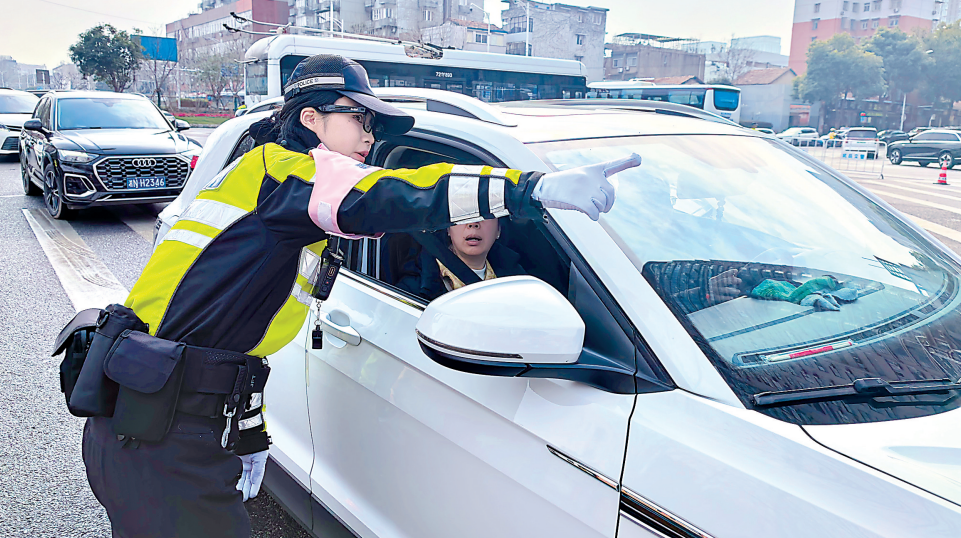
春节返程高峰将遇中到大雨 武汉交警发布出行提醒
Chang Jiang Ri Bao· 2026-02-23 00:41
Core Insights - The article highlights the expected peak in return traffic and passenger flow in Wuhan as the Spring Festival holiday concludes, with significant weather impacts anticipated on February 23 [1][2] Group 1: Traffic Conditions - The Wuhan Meteorological Department forecasts overcast weather transitioning to moderate to heavy rain on February 23, which will lead to slippery road conditions and reduced visibility, increasing traffic safety risks [1] - The Ministry of Public Security's Traffic Management Bureau predicts that over 80% of travel during the 2026 Spring Festival will be by private car, with a notable increase in traffic flow, passenger flow, and logistics during the post-holiday return period [1] Group 2: Congestion Areas - Key congestion points on highways include the entrances and exits of the Jinggang'ao Expressway at Wuhan North, Caidian, and Wuhan West toll stations, as well as the Huyu Expressway and other major interchanges [1] - Urban expressways are expected to experience significant congestion, particularly on sections of Changqing Road and the Second Ring Road, due to the overlapping return traffic [2] Group 3: Traffic Management - The Hubei Provincial Public Security Traffic Management Bureau has issued travel advisories, indicating that major national and provincial roads, such as G316, may experience heavy congestion [1] - Traffic around transportation hubs and commercial areas, including Hankou and Wuchang railway stations, is anticipated to see increased vehicle flow due to the convergence of returning railway passengers and local traffic [2]

“团聚”近尾声,“旅游”模式开启
Chang Jiang Ri Bao· 2026-02-19 23:53
Core Insights - The article discusses the traffic conditions in Wuhan during the Spring Festival, highlighting the increase in travel demand and the expected congestion in various areas as people return to their hometowns and engage in tourism activities [1][2]. Group 1: Traffic Patterns - Traffic flow during the Spring Festival is expected to follow a V-shaped pattern, with low levels from the first to the fourth day and a significant increase starting from the fifth day [1]. - The overall congestion level in the city is anticipated to remain moderate, with the road network being mostly smooth during the holiday period [1]. - High congestion is expected in popular commercial areas and tourist attractions from the fourth to the seventh day of the festival, particularly during peak hours [1]. Group 2: Key Areas of Concern - Major congested areas include Jianghan Road, Guanggu Joy City, and Wuhan Mixc, with peak congestion times identified between 10 AM to 12 PM and 2 PM to 5 PM [1]. - New urban districts such as Xinzhou and Jiangxia are expected to experience significant traffic pressure, especially on key roads during the morning hours [1]. - Specific roads like Jinqiao Avenue and Changqing Road are highlighted for their congestion during the return trip and commuting periods [2]. Group 3: Traffic Management Recommendations - Authorities recommend planning ahead and avoiding peak congestion times by monitoring real-time traffic updates [3]. - Emphasis is placed on safe driving practices, including not driving under the influence and maintaining safe distances on highways [3]. - Drivers are advised to stay informed about weather conditions and to cooperate with traffic management personnel during peak times [3].
C视频丨成都熊猫基地周边车流量倍增,交警佩戴AI神器助力高效指挥
Xin Lang Cai Jing· 2026-02-17 09:07
Core Viewpoint - The Chengdu Research Base of Giant Panda Breeding is experiencing a significant increase in traffic during the Spring Festival, with measures implemented to manage the congestion effectively [1] Group 1: Traffic Data - As of February 17, 2023, by 11:30 AM, the traffic around the Chengdu Giant Panda Breeding Research Base exceeded 30,000 vehicles, surpassing the total traffic of 20,000 vehicles recorded on February 16, 2023 [1] - It is anticipated that the total traffic for the entire day of February 17, 2023, will exceed 50,000 vehicles [1] Group 2: Traffic Management Measures - To address the increased traffic pressure, the Chengdu Traffic Police implemented a reservation traffic management system, continuing a practice from previous years [1] - For the first time, smart glasses were deployed to assist traffic police in quickly identifying and diverting vehicles at key intersections, thereby reducing road congestion [1] Group 3: Technology Utilization - The Chengdu Traffic Police utilized police drones equipped with AI recognition systems to optimize automatic patrol routes, focusing on critical areas such as the panda base, Chengmian Expressway toll station, and major ring roads [1] - This initiative aims to establish a comprehensive aerial governance system characterized by "three-dimensional perception—rapid response—precise law enforcement," enabling early detection, warning, and quick management of traffic congestion and accidents [1]
春节假期,重庆交通出行服务指南请收好
Xin Lang Cai Jing· 2026-02-12 18:30
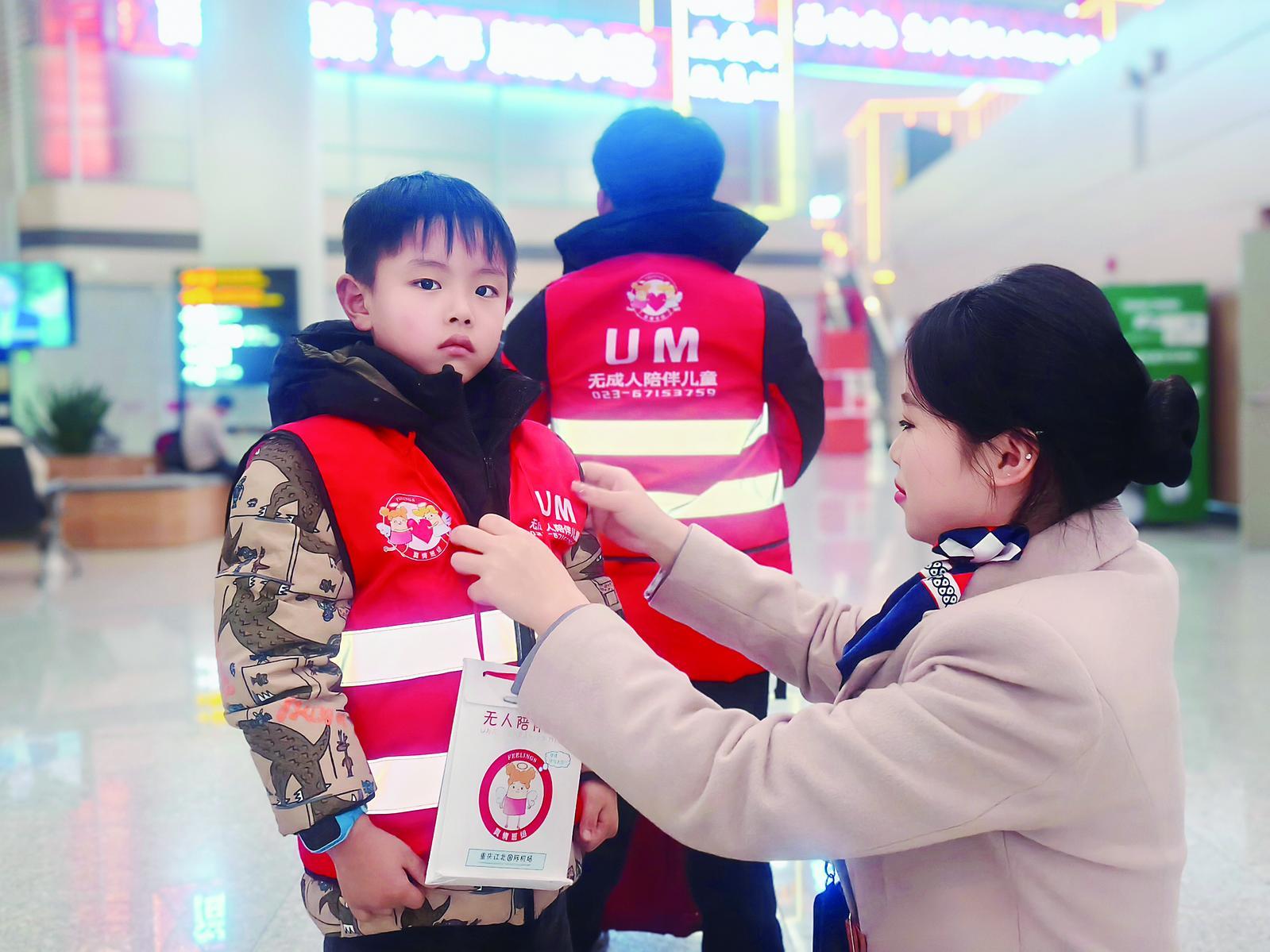
Group 1: Airport Operations - Chongqing Jiangbei International Airport has increased flight capacity in response to rising travel demand, with daily flight departures exceeding 1000 for the first ten days of the Spring Festival travel period, reaching a record high of 1086 on February 7 [2] - During the first ten days of the Spring Festival, the airport handled a total of 10,451 flight departures and welcomed 1.5528 million passengers, representing year-on-year growth of 4.02% and 4.25% respectively [2] - The average passenger load factor for the airport during this period was 86.11%, ranking third among the top ten airports in China, exceeding the national average by 2.52 percentage points [2] Group 2: Train Services - Chongqing Railway Station is experiencing a peak in passenger flow, with an expected 300,000 travelers on February 11 and a cumulative total of 2.423 million passengers sent since the start of the travel period, marking a year-on-year increase of 5.8% [5] - To accommodate the demand, the station has added 91 pairs of trains and will operate 38 additional night high-speed trains from February 12 to 15, enhancing service to various regions [5] - The railway department is also implementing a "one-day-one-map" strategy to optimize train capacity for popular destinations [6] Group 3: Public Transport - The 441 bus route in Chongqing has adjusted its schedule to ensure timely service for passengers connecting to the earliest train arrivals, with the first bus departing at 6:00 AM [7] - The bus service has maintained a strong record of punctuality during the Spring Festival, with drivers committed to ensuring passengers reach their destinations on time [8] - The bus drivers have a collective understanding to operate until the last train arrives, demonstrating a commitment to passenger service during the holiday season [8] Group 4: Travel Trends - Domestic flight routes to major cities and popular winter destinations are in high demand, with international routes to cities like Madrid and Paris also seeing increased interest [4] - Predictions for the 2026 Spring Festival indicate that the airport will handle over 40,000 flight departures and more than 6.25 million passengers, with peak daily passenger throughput expected to exceed 160,000 [4]
我国发布近千项道路交通国家标准
Xin Jing Bao· 2026-02-04 07:33
Core Insights - The article discusses the progress and future plans of China's national standards for road traffic, highlighting the release of 970 national standards to date, with 153 new standards expected by 2025 to enhance road safety and efficiency [1][2] Group 1: Standardization Efforts - As of now, China has released a total of 970 national standards related to road traffic, covering key areas such as automobiles, road infrastructure, and traffic management [1] - In 2025, the automotive ownership in China is projected to reach 366 million vehicles, with an additional 8,000 kilometers of expressways being constructed [1] - The government is implementing a systematic approach to standardization by establishing a cross-departmental coordination mechanism and releasing important documents like the "Automotive Industry Steady Growth Work Plan (2025-2026)" [1] Group 2: Accelerating Standard Supply - By 2025, 108 standards related to road vehicles will be published, including safety requirements for electric vehicles, while 33 standards for road infrastructure and 12 for traffic management will also be introduced [2] - Since the beginning of the 14th Five-Year Plan, over 200 standard promotion events have been organized, training more than 50,000 individuals, and online learning support has been provided through platforms like "Standard Cloud Course" [2] - The implementation of standards such as energy consumption labels for vehicles and mandatory helmet regulations has significantly influenced public travel behavior and consumer choices [2]
今年北京中心城区将挖潜新增机动车停车位2万个
Jin Rong Jie· 2026-02-02 10:36
Core Viewpoint - The "2026 Beijing Traffic Comprehensive Governance Action Plan" has been released, focusing on increasing parking resources and improving traffic management in the city center [1] Group 1: Parking Initiatives - The plan aims to create an additional 20,000 parking spaces in the central urban area this year [1] - It includes the addition of 10,000 paid off-peak shared parking spaces [1] - The initiative will explore limited-time night parking around residential areas through measures such as line marking and signage [1] Group 2: Traffic Management Measures - There will be enhanced enforcement of illegal parking in key areas such as strict management streets, "no parking alleys," and around parking lots [1] - The implementation of "alternating traffic" management measures will be promoted, with a goal to optimize and renovate at least 20 "alternating traffic" points [1]
郑州交警以雪为令保畅通
Zheng Zhou Ri Bao· 2026-01-20 00:34
Group 1 - The core viewpoint of the articles highlights the proactive measures taken by Zhengzhou traffic police in response to the snowfall and low temperatures, ensuring road safety and traffic order during adverse weather conditions [1][2] Group 2 - Zhengzhou traffic police mobilized all personnel and implemented emergency plans to manage the impact of severe weather, focusing on maintaining smooth traffic flow [1] - Prior to the snowfall, traffic police conducted safety inspections in key areas and coordinated with relevant departments to prepare sufficient de-icing materials [1] - During the morning peak on January 19, traffic police enhanced road management and vehicle guidance due to slippery conditions, ensuring timely response to accidents and breakdowns [1][2] Group 3 - Specific measures included "fixed-point duty + dynamic patrol" in areas prone to ice and congestion, along with the placement of warning signs to alert drivers [2] - Real-time information was effectively integrated and disseminated to the public through various media channels, providing updates on road conditions and safety tips for travel during the snow [2] - As of January 19, 16:30, a total of 1,875 police officers and 406 police vehicles were deployed, with no significant traffic congestion reported [2]
交通启动铲冰除雪 交警全员上岗疏导全力保障雪后交通安全顺畅
Xin Lang Cai Jing· 2026-01-17 21:49
Group 1 - The transportation department has activated a snow emergency response, deploying over 4,000 emergency personnel and more than 2,600 snow removal machines to ensure road safety during the snowfall [1] - Traffic management has implemented a comprehensive traffic maintenance and diversion plan, with all traffic police on duty to handle accidents and ensure normal road operations [1][3] - The city is focusing on key areas such as highways and major roads for traffic maintenance, coordinating with emergency response and meteorological departments to monitor weather changes and conduct snow removal [4] Group 2 - For rail transit, a tailored plan for 18 elevated lines has been executed, including the activation of snow-melting devices and adjustments to train operations based on snowfall conditions [2] - Ground public transport is dynamically adjusting operations on 334 mountain bus routes, emphasizing safety measures such as speed reduction on icy roads [2] - The transportation department is coordinating with railway and aviation sectors to manage passenger flow at key stations, ensuring timely responses to delays and cancellations [3]
红灯变短、通行更顺畅 272个路口夜间开启“冬季模式”
Yang Shi Xin Wen Ke Hu Duan· 2026-01-13 08:33
Group 1: Traffic Management in Hefei - Hefei has implemented a "winter mode" for traffic signals at night, resulting in shorter waiting times and smoother traffic flow for drivers [1][2] - The "winter mode" has been activated at 272 intersections, allowing simultaneous green signals for left turns and straight traffic, reducing the signal cycle from approximately 90 seconds to 75 seconds, a 15-second reduction [2][4] - The traffic management department is using big data analysis to adapt signal timings based on real-time traffic conditions, enhancing overall traffic efficiency [4][6] Group 2: Healthcare Services in Zhejiang - Zhejiang has been enhancing grassroots medical services, enabling residents to receive care locally, with initiatives like island visits and village health clinics [7][9] - A team of 20 doctors from Taizhou has been providing on-site medical services to residents of Dachen Island, addressing the challenge of accessibility to healthcare [7][9] - Ningbo has also established village-level medical facilities, with the first community hemodialysis center completed, increasing the number of dialysis beds from 13 to 20 [12][14]

解码机动车超200万辆下“常州治堵”的智慧与温度——常州“交通健康指数”连续七年领跑全国同类城市
Yang Zi Wan Bao Wang· 2026-01-08 15:26
Core Viewpoint - The article highlights how Changzhou has effectively managed urban traffic amidst a surge in vehicle ownership, achieving the top position in the national traffic health index for seven consecutive years through meticulous governance and innovative strategies [1]. Group 1: Traffic Management Strategies - Changzhou adopts a precise "drip irrigation" approach to traffic management, focusing on targeted solutions rather than broad measures, successfully optimizing traffic signal timing over 2,000 times and alleviating 15 key congestion points [2]. - The city has implemented customized traffic improvement plans for all 788 schools, significantly reducing daily private car pickups by 3,850 through initiatives like underground pickup centers and dedicated bus lines [2]. Group 2: Smart Traffic Solutions - The establishment of a traffic signal timing center acts as the "smart brain" of Changzhou's traffic management, allowing for real-time responses and proactive planning, which has led to a 4.5% decrease in congestion index during major events [3]. - The center employs a "holiday mode" for traffic signals and develops tailored solutions for temporary challenges, ensuring smooth operations during significant urban projects [3]. Group 3: Safety and Community Engagement - Changzhou's police department has addressed over 7,000 risk points to enhance safety, integrating traffic safety into community initiatives and promoting awareness through innovative methods like safety-themed dance performances [4]. - The city has streamlined vehicle registration processes, reducing the time from two days to 30 minutes, and has increased public parking spaces by over 10,000, addressing community needs effectively [4].