
产业效率

Search documents
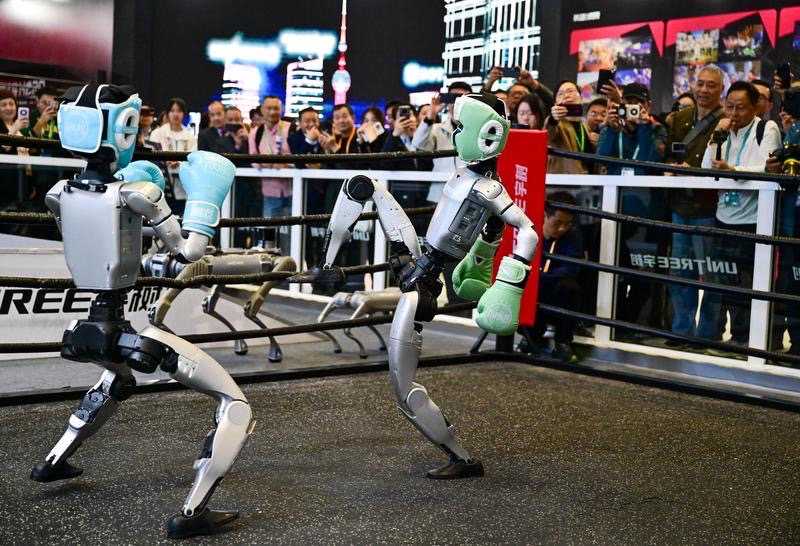
年终盘点|追宇树、“等”上市,人形机器人步入中场战事
Di Yi Cai Jing· 2025-12-19 09:09
Group 1 - The humanoid robot industry is at a significant turning point in 2025, with companies facing pressure to demonstrate operational efficiency and stability in real-world scenarios rather than just complex movements [1][10][15] - The valuation of humanoid robot companies has surpassed 20 billion RMB, with a notable increase in talent acquisition and new entrants in the market [1][3][9] - The competition is intensifying, with many companies striving to replicate the advanced motion control capabilities of leading firms like Yuzhu [2][4][8] Group 2 - The number of job postings in the humanoid robot sector has increased by 409% year-on-year, indicating a surge in demand for talent [3] - Yuzhu has accelerated its commercialization efforts, launching several new robot models and facing increased pressure from both technology and capital [5][12] - The capital market is witnessing significant activity, with numerous companies announcing substantial financing rounds and IPO plans, reflecting the high interest in the humanoid robot sector [8][9] Group 3 - Major tech companies are increasingly entering the humanoid robot space, emphasizing the need for continuous innovation and industrial experience [12][14] - The focus is shifting from merely achieving technological breakthroughs to ensuring reliable and efficient production processes [10][15] - Industry experts highlight the importance of practical applications and the need for humanoid robots to demonstrate real-world utility beyond promotional videos [13][14]


又一家美国明星机器人公司,被中国制造卷死了
3 6 Ke· 2025-12-08 01:00
Core Viewpoint - iRobot, once a leading company in the robotic vacuum industry, is facing severe financial distress, with debts exceeding $350 million and only $24.8 million in cash remaining, putting its survival at risk [1][2][3]. Financial Situation - iRobot's total liabilities have surpassed $350 million, with a significant portion owed to Suntrum, a Chinese company that has become its largest creditor [2]. - As of September 27, 2025, iRobot's cash and cash equivalents have decreased by 40% from $40.6 million to $24.8 million [3]. Market Position and Competition - iRobot was once the dominant player in the robotic vacuum market, achieving over $1 billion in revenue in 2018 and holding more than 70% of the overseas market share [1][6]. - The company has seen a drastic decline in revenue, with Q3 earnings dropping to $146 million, a 24.6% decrease year-over-year, and a net loss of $9.9 million compared to a profit of $15.1 million in the same period last year [4][6]. Technological and Strategic Failures - iRobot's focus on advanced visual navigation technology has hindered its ability to compete effectively, while Chinese competitors have adopted more efficient manufacturing techniques and innovative features [8][10]. - The rapid product iteration cycles of Chinese manufacturers, averaging 6 to 8 months, starkly contrast with iRobot's 2 to 3 years for new product releases, leading to a significant competitive disadvantage [14]. Industry Dynamics - The entry of Chinese companies like Roborock and Ecovacs has transformed the market, offering advanced features such as automatic dust collection and self-cleaning capabilities, which have redefined consumer expectations [10][11]. - The shift in consumer preferences towards multifunctional and high-tech robotic vacuums has left iRobot struggling to maintain its market relevance [16][18]. Conclusion - iRobot's decline can be attributed to a combination of financial mismanagement, technological stagnation, and the aggressive market strategies of Chinese competitors, which have fundamentally altered the landscape of the robotic vacuum industry [18][19].