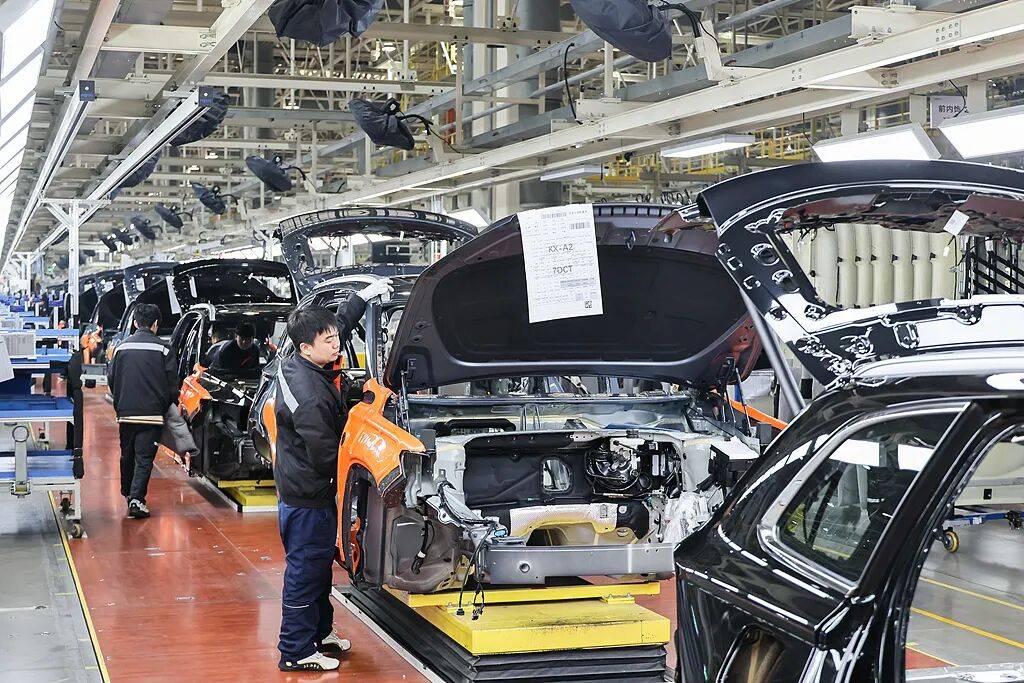
产业链完整度

Search documents
GDP增5.1%,陕西的稳态答案
Sou Hu Cai Jing· 2026-02-03 11:05
Group 1 - The core viewpoint is that Shaanxi's economic growth is transitioning from high-speed to stable mid-speed growth, with a focus on long-term stability rather than rapid expansion [3][4][5] - In 2025, Shaanxi's GDP is projected to grow by 5.1%, slightly above the national average of 5.0%, indicating a stable development trend [6][7] - The industrial sector remains a key stabilizer for Shaanxi's economy, with significant contributions from energy and manufacturing [8][16] Group 2 - Industrial value added in Shaanxi is expected to reach approximately 14,521.16 billion yuan, with a growth rate of 5.6%, and the scale of industrial value added is projected to grow by 7.3% [9][16] - The energy sector continues to play a crucial role, with coal production exceeding 800 million tons and natural gas output increasing by nearly 38% [9][17] - Manufacturing is shifting towards high value-added sectors, with notable growth in automotive and new energy industries [9][22] Group 3 - Shaanxi's fixed asset investment decreased by 2.8%, but industrial investment grew by 9.4%, with manufacturing investment increasing by 13.3% [12] - Private investment in Shaanxi rose by 4.6%, accounting for 42.2% of total investment, indicating confidence in long-term returns [12][35] - R&D intensity in Shaanxi is at 2.61%, the highest in Western China, reflecting a commitment to sustainable technological development [13] Group 4 - The total import and export value in Shaanxi reached a record high of 537.9 billion yuan, growing by 18.5%, which is significant given the global trade environment [28] - High-value products, particularly in the "new three items" (electric vehicles, lithium batteries, solar cells), are driving export growth, with lithium-ion battery exports increasing by 120% [32] - The development of logistics and trade routes, such as the regular operation of the China-Europe Railway Express, is enhancing Shaanxi's position as a trade hub [33]

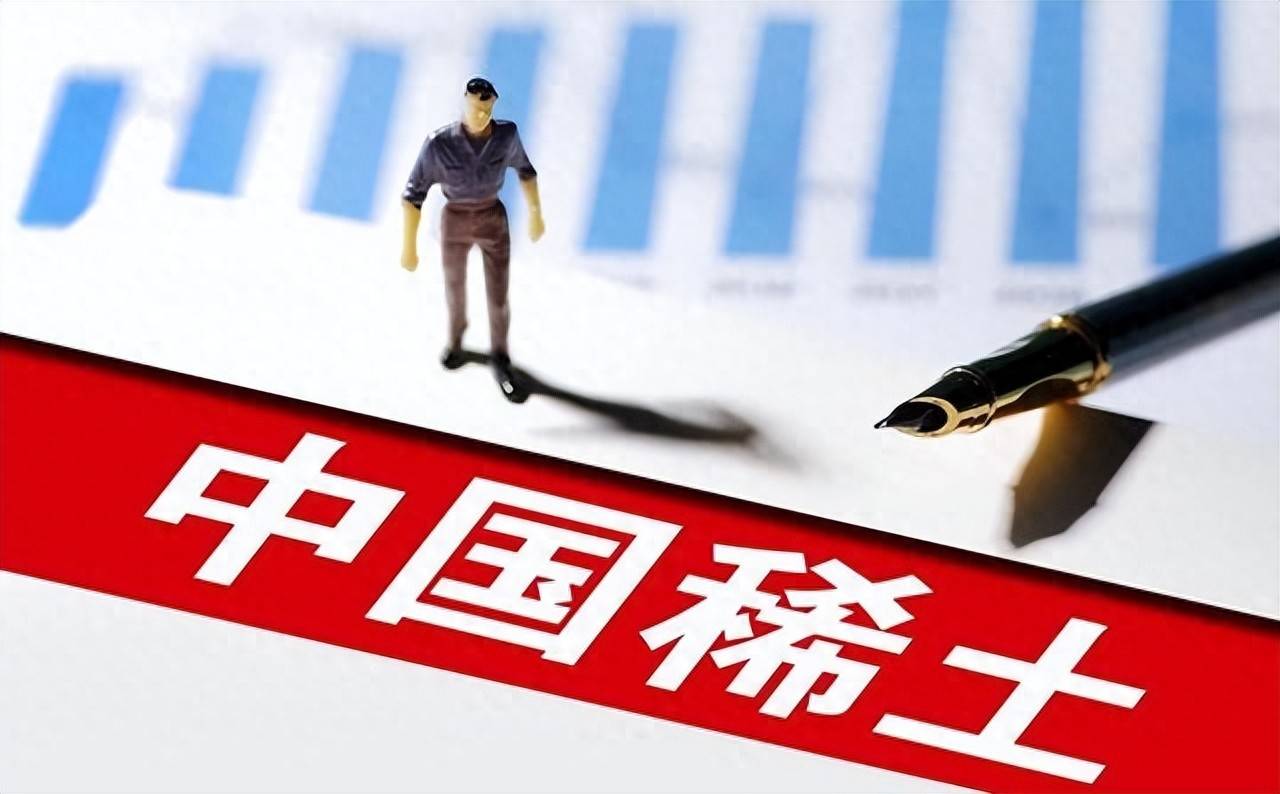
中美俄稀土储量差距断崖:美国180万吨,俄1000万吨,中国多少?
Sou Hu Cai Jing· 2025-11-28 13:28
Core Viewpoint - Rare earth resources play a critical role in global technological competition, with China's significant reserves and advanced technology providing it a dominant position in this sector [2][20]. Group 1: Resource Distribution and Comparison - China holds 44 million tons of rare earth reserves, far exceeding other countries, which enhances its strategic autonomy [2][20]. - The United States has approximately 1.9 million tons of rare earth reserves, accounting for less than 2% of global supply, with mining concentrated in the western regions [4][21]. - Russia's reserves are reported to be over 10 million tons domestically, but only 3.8 million tons by international standards, highlighting discrepancies in exploration methods [4][6]. Group 2: Production and Technological Capabilities - China is projected to produce 270,000 tons of rare earths in 2024, representing 70% of global output, supported by an efficient production system [8][10]. - The U.S. production is around 40,000 tons, heavily reliant on a single mining operation, while Russia's output is less than 20,000 tons due to outdated processing technologies [8][10]. - China leads in separation and purification technologies, achieving over 90% recovery rates, significantly higher than the U.S. and Russia [10][12]. Group 3: Economic and Strategic Implications - China's 44 million tons of reserves support rapid development in sectors like semiconductors and wind power, contributing to stable export growth [14][20]. - The U.S. faces limitations in military autonomy due to its 1.9 million tons of reserves, necessitating imports to meet domestic needs [14][21]. - Russia's potential could enhance its export competitiveness if its reserves are developed effectively, despite current low output levels [14][21]. Group 4: Industry Resilience and Future Outlook - China has established a closed-loop system from ore extraction to end products, covering 98% of global gallium and 60% of germanium production, ensuring supply chain security [16][18]. - The U.S. has a fragmented supply chain with high outsourcing in refining, while Russia is stagnant in basic extraction [16][18]. - Looking ahead, China aims to maintain high production levels by 2030, while the U.S. plans to invest in domestic mines to improve self-sufficiency, facing financial and technical challenges [18][20].
亚洲最惨!印度外资疯狂出逃,中国凭啥成资本避风港?
Sou Hu Cai Jing· 2025-11-19 06:37
Group 1 - The Indian stock market is experiencing a significant capital outflow, with foreign investors withdrawing over $17 billion, marking a new low compared to a net inflow of $20 billion during the same period last year [2][4] - Major funds from the US, Luxembourg, and Japan are leading the withdrawal, indicating a lack of confidence in the Indian market [4][5] - The geopolitical landscape has shifted, diminishing India's appeal as a "balancer" in the US-China rivalry, which previously attracted capital [8][10] Group 2 - India's attempts to balance relations between the US and Russia have backfired, leading to increased tariffs from the US and cautious behavior from China [10][11] - Foreign investors have faced an unfriendly environment in India, with companies like Xiaomi and Vodafone suffering significant financial losses due to changing tax policies and administrative barriers [13][14] - India's ranking in the World Bank's business environment report has consistently been below 130, highlighting the challenges in attracting foreign investment [16] Group 3 - In contrast, China is becoming increasingly attractive to foreign capital due to its market stability and robust economic performance, despite ongoing US pressure [18][21] - The complete industrial chain in China, from raw materials to assembly, provides a competitive advantage that is difficult for other countries to replicate [18] - The easing of US-China relations has further boosted investor confidence in China, leading to increased foreign investments from companies like Tesla and Apple [19][24] Group 4 - India's current situation serves as a warning, emphasizing the need for improvements in the business environment and a clear diplomatic stance to attract foreign investment [26][28] - The global investment landscape will continue to evolve, but stability and strong economic fundamentals will remain crucial for retaining capital [28]