
产业链竞争力

Search documents
【中诚信国际行业展望】中国港口行业(2026年2月)
Xin Lang Cai Jing· 2026-02-05 12:26
Core Viewpoint - The Chinese port industry is expected to experience steady growth in cargo and container throughput, driven by domestic demand and the resilience of foreign trade despite global economic uncertainties and protectionist trends [2][3][12]. Industry Overview - Since 2025, multiple waves of export surges, increased demand from emerging markets, and the export of high-value products have led to significant growth in container throughput. Domestic transportation and stable growth in bulk commodity imports have also contributed to an overall increase in national port cargo throughput, surpassing the growth rate of the previous year [2][4][5]. - The competitive landscape among major ports has remained largely unchanged, with hub ports strengthening their scale advantages and some southern ports showing robust growth [4][5]. Economic and Trade Environment - In the short term, global economic and trade growth is weak, with rising unilateralism, protectionism, and geopolitical conflicts creating uncertainties in the foreign trade environment. However, improvements in China's industrial chain competitiveness and diversified trade layouts provide strong resilience for foreign trade [3][12]. - Domestic fiscal and monetary policies are expected to boost internal trade and import transportation demand, providing solid support for port throughput [3][12]. Investment Trends - Waterway construction investment in China has slightly decreased year-on-year but remains at a high level. The peak of equity investment has passed, but there is still demand for internal integration and overseas investment [22][24]. - Fixed asset investment in water transport for January to November 2025 decreased by 2.2% to 193.54 billion yuan, focusing on strengthening coastal hubs and improving inland waterways [22]. Financial Performance - Port enterprises have maintained good profitability, with a slight increase in financial leverage but strong debt repayment capabilities. Future cargo throughput growth is expected to support profitability, while the pace of terminal construction is slowing [27][33]. - In the first three quarters of 2025, the average operating income of sample port enterprises grew by only 2.44% year-on-year, influenced by adjustments in trade business revenue recognition and a contraction in non-port business scale [27][29]. Port-Specific Performance - Container throughput in major coastal ports has shown good growth, with Shanghai and Ningbo-Zhoushan ports achieving significant increases. For instance, Shanghai's container throughput reached 8.1 million TEUs in the first 11 months of 2025, reflecting a growth rate of 3.4% [11][8]. - Emerging ports have also experienced rapid growth, with the Beibu Gulf Port benefiting from policy incentives, achieving a container throughput increase of 9.0% [8][11]. Conclusion - The Chinese port industry is projected to maintain steady growth in cargo and container throughput, supported by domestic demand and resilient foreign trade, despite global economic challenges and uncertainties [34].


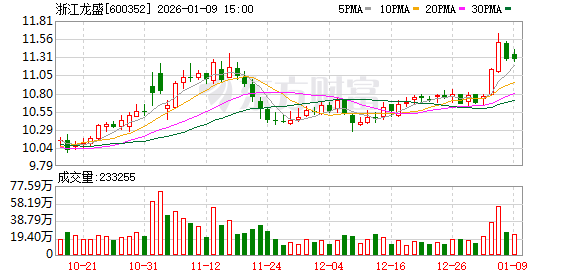
7.02亿美元收购剩余股权 浙江龙盛全资控股德司达
Zhong Guo Jing Ying Bao· 2026-01-10 09:37
Core Viewpoint - Zhejiang Longsheng has completed the acquisition of minority shareholder rights in its subsidiary, Desida Global Holdings (Singapore) Pte Ltd, for a total transaction amount of $702 million, making Desida a wholly-owned subsidiary and integrating its net profit into the consolidated financial statements starting from 2026 [2][3]. Group 1: Acquisition Details - The acquisition involved a combination of directed repurchase and direct acquisition, allowing Zhejiang Longsheng to acquire the remaining 37.57% of Desida's minority shares [3]. - The transaction amount of $702 million (approximately RMB 4.928 billion) was aimed at resolving a long-standing equity litigation that lasted for 10 years [2][3]. - Following the acquisition, Zhejiang Longsheng will hold 100% of Desida through three wholly-owned subsidiaries, and the two directors appointed by KIRI have resigned [3]. Group 2: Financial Performance - In 2024, Desida achieved a revenue of $753 million and a net profit of $116 million, with a net asset value of $1.013 billion [6]. - For the first three quarters of 2025, Desida reported a revenue of approximately $535 million and a net profit of about $62.96 million [6]. - Desida's revenue accounted for approximately 33.33% of Zhejiang Longsheng's total revenue in 2024, which was RMB 15.884 billion [6]. Group 3: Strategic Implications - The acquisition is expected to optimize the equity structure of Zhejiang Longsheng and eliminate litigation interference, enhancing decision-making efficiency [4]. - Desida has been a key player in the high-end dye and chemical solutions market, being one of the largest textile dye suppliers globally [5].

卫星化学:目前公司在产业布局上以打造具有市场竞争力的产品为核心
Zheng Quan Ri Bao Wang· 2025-09-16 12:14
Core Viewpoint - Satellite Chemical aims to become a world-class chemical new materials technology company, focusing on enhancing its industrial chain competitiveness and avoiding "involution" competition [1] Group 1: Company Strategy - The company is centered around creating market-competitive products, emphasizing "management leadership" and "technology leadership" [1] - It leverages its industrial chain advantages, controls core catalyst technologies, and masters proprietary production processes to develop differentiated products tailored to customer needs [1] Group 2: Product Development - In 2023, the company launched new chemical products such as neopentyl glycol and a series of new polymer product models along with domestically produced alternative additives [1] - The company is committed to providing comprehensive solutions centered around customer needs [1]
