
新戊二醇

Search documents
中银国际晨会聚焦20260330-20260330
Bank of China Securities· 2026-03-30 00:08
Group 1: Macro Economic Insights - Industrial enterprises in China achieved a total profit of 10,245.6 billion yuan in January-February 2026, representing a year-on-year growth of 15.2%, significantly accelerating by 14.6 percentage points compared to December 2025 [5][6][8] - The mining industry's profit total increased by 9.9% year-on-year in January-February 2026, contributing 1.5 percentage points to the overall profit growth of industrial enterprises [7] Group 2: Real Estate Sector - Jianfa International Group reported a revenue of 136.79 billion yuan for 2025, a decrease of 4.3% year-on-year, with a net profit of 3.65 billion yuan, down 24.0% year-on-year [12] - The company proposed a cash dividend of 0.9 HKD per share, with a payout ratio of 49% [12] - The company's gross profit margin improved for two consecutive years, reaching 13.9% in 2025, an increase of 0.6 percentage points [12][13] Group 3: Basic Chemical Industry - Satellite Chemical achieved a revenue of 46.068 billion yuan in 2025, a year-on-year increase of 0.92%, while the net profit attributable to shareholders decreased by 12.54% to 5.311 billion yuan [18] - The company maintained a buy rating due to its advantages in light hydrocarbon integration technology [18][19] - The global petrochemical industry is transitioning towards a focus on integration and optimization, enhancing the importance of light hydrocarbon routes [20] Group 4: Investment Recommendations - Jianfa International Group is expected to achieve revenues of 138.1 billion yuan, 141.9 billion yuan, and 146.4 billion yuan from 2026 to 2028, with corresponding net profits of 4.1 billion yuan, 4.7 billion yuan, and 5.4 billion yuan [16] - Satellite Chemical's projected net profits for 2026, 2027, and 2028 are 7.952 billion yuan, 9.355 billion yuan, and 9.740 billion yuan, respectively, with a strong buy rating maintained [22]
巴斯夫一个月内第五次涨价,化学原料板块盘中拉升
2 1 Shi Ji Jing Ji Bao Dao· 2026-03-27 02:17
Group 1 - BASF announced price increases for its basic amine product portfolio in Europe, with increases up to 30%, effective immediately [1][3] - This marks the fifth price increase announcement from BASF since the onset of the conflict in the Middle East [2] - The price hikes are a response to rising raw material, energy, and logistics costs due to the military conflict [3] Group 2 - Other chemical companies, such as Lanxess and Dow Chemical, are also raising prices significantly, with increases up to 50% and doubling previous price hikes for polyethylene, respectively [4] - The chemical industry is facing ongoing price pressures due to uncertainties in oil and gas supply, which are expected to persist [4] - Domestic supply remains stable, providing opportunities for order transfers and improved market share for certain products, particularly in the pharmaceutical and pesticide sectors [4]



卫星化学(002648):2025年报点评:25年扣非净利稳健增长,新增项目逐步推进
Huachuang Securities· 2026-03-26 14:27
Investment Rating - The report maintains a "Strong Buy" rating for the company, with a target price of 33.52 yuan [2][7]. Core Views - The company's revenue for 2025 is reported at 46.068 billion yuan, showing a year-on-year increase of 0.92%. However, the net profit attributable to shareholders decreased by 12.54% to 5.311 billion yuan. The non-recurring net profit increased by 4.02% to 6.292 billion yuan [2][3]. - The company has demonstrated stable profitability with a gross margin of 22.31%, down 1.25 percentage points year-on-year, and a net margin of 11.52%, down 1.76 percentage points year-on-year. The operating expense ratio for 2025 is 6.90%, a decrease of 1.12 percentage points year-on-year [2][3]. - The report highlights that the company is progressing with new projects, including the production of 80,000 tons of neopentyl glycol and 90,000 tons of acrylic acid, which have already been launched. Ongoing projects include a 300,000-ton superabsorbent resin and a 260,000-ton aromatics joint processing facility [2][7]. Financial Summary - Total revenue for 2025 is projected at 46.068 billion yuan, with expected growth rates of 13.5% in 2026, 6.4% in 2027, and 5.7% in 2028 [3][8]. - The net profit attributable to shareholders is forecasted to reach 7.527 billion yuan in 2026, 8.559 billion yuan in 2027, and 9.673 billion yuan in 2028, reflecting growth rates of 41.7%, 13.7%, and 13.0% respectively [3][8]. - The earnings per share (EPS) is expected to increase from 1.58 yuan in 2025 to 2.87 yuan in 2028, with corresponding price-to-earnings (P/E) ratios decreasing from 17 in 2025 to 9 in 2028 [3][8]. Product and Market Performance - The report notes improvements in product price differentials across various chemical segments, contributing to stable profitability. For instance, the price differential for acrylic acid increased by 53.2% year-on-year [2][7]. - The company’s production volume for chemical products and new materials in 2025 is reported at 7.1923 million tons, with sales volume at 7.0034 million tons, maintaining a high production and sales rate [2][7]. - The functional chemicals segment achieved revenue of 25.874 billion yuan, up 19.19% year-on-year, while the high polymer materials segment saw a revenue decline of 26.91% to 8.762 billion yuan [2][7].

卫星化学:四季度业绩显著改善,烯烃行业拐点已至-20260326
Changjiang Securities· 2026-03-26 02:40
Investment Rating - The investment rating for the company is "Buy" and it is maintained [7]. Core Views - The company reported a revenue of 46.068 billion yuan for 2025, a year-on-year increase of 0.92%. However, the net profit attributable to shareholders decreased by 12.54% to 5.311 billion yuan. The non-recurring net profit increased by 4.02% to 6.292 billion yuan [2][4]. - In Q4 2025, the company achieved a revenue of 11.297 billion yuan, down 15.52% year-on-year and 0.12% quarter-on-quarter. The net profit for this quarter was 1.556 billion yuan, a decrease of 34.61% year-on-year but an increase of 53.83% quarter-on-quarter. The non-recurring net profit was 2.054 billion yuan, up 4.80% year-on-year and 53.06% quarter-on-quarter [2][4]. Financial Performance - The company’s total revenue for 2026 is projected to be 58.009 billion yuan, with net profits expected to reach 7.866 billion yuan, corresponding to a PE ratio of 11.0X. For 2027 and 2028, the net profits are forecasted to be 8.896 billion yuan and 9.637 billion yuan, with PE ratios of 9.7X and 9.0X respectively [10][13]. - The company is expected to see significant improvements in profitability due to a recovery in the olefin industry, driven by rising oil prices and a tightening supply of olefin products [10]. Industry Insights - The report indicates that the olefin industry is approaching a turning point, with a notable recovery in Q1 2026. The average price of ethane in Q4 2025 was 195 USD/ton, reflecting a 14% increase from the previous quarter [10]. - The report highlights a trend of high-cost facilities exiting the market, particularly in Europe, Japan, and South Korea, which is expected to accelerate the clearing of global olefin overcapacity [10]. - The company is advancing its strategy to strengthen its C3 industrial chain, with new projects in high-end materials expected to contribute to its growth trajectory [10].
卫星化学(002648):四季度业绩显著改善,烯烃行业拐点已至
Changjiang Securities· 2026-03-25 11:36
Investment Rating - The investment rating for the company is "Buy" and is maintained [8] Core Views - The company reported a significant improvement in Q4 performance, indicating that the olefin industry has reached a turning point [5][12] - In 2025, the company achieved operating revenue of 46.068 billion yuan, a year-on-year increase of 0.92%. However, the net profit attributable to shareholders decreased by 12.54% to 5.311 billion yuan, while the net profit excluding non-recurring items increased by 4.02% to 6.292 billion yuan [5][12] - The fourth quarter of 2025 saw operating revenue of 11.297 billion yuan, a year-on-year decline of 15.52% and a slight quarter-on-quarter decrease of 0.12%. The net profit attributable to shareholders was 1.556 billion yuan, down 34.61% year-on-year but up 53.83% quarter-on-quarter [5][12] Financial Performance Summary - The company expects net profits attributable to shareholders for 2026, 2027, and 2028 to be 7.87 billion yuan, 8.90 billion yuan, and 9.64 billion yuan respectively, corresponding to a price-to-earnings ratio of 11.0X, 9.7X, and 9.0X based on the closing price on March 23, 2026 [12] - The company is advancing its C3 industrial chain strategy, with new projects such as an 80,000-ton neopentyl glycol facility and a 90,000-ton acrylic acid project successfully launched [12] - The report highlights a trend of high-cost overseas facilities exiting the market, which is expected to accelerate the clearing of global olefin overcapacity [12]
卫星化学(002648):扣非归母净利润同比增长4%,高油价带来气头烯烃利润弹性
Guoxin Securities· 2026-03-24 14:43
Investment Rating - The investment rating for the company is "Outperform the Market" [5][17]. Core Views - The company is expected to achieve a revenue of 46.07 billion yuan in 2025, with a year-on-year growth of 0.9%. The net profit attributable to shareholders is projected to be 5.31 billion yuan, a decrease of 12.5% year-on-year, while the non-GAAP net profit is expected to grow by 4.0% year-on-year to 6.29 billion yuan [8][17]. - The company benefits from a cost advantage in ethane, with the average price of ethane in the U.S. expected to be 25.6 cents per gallon in 2025, a year-on-year increase of 34.7%. However, the prices and margins for olefins are under pressure [2][14]. - The exit of overseas production capacity and the widening oil-gas price gap are expected to benefit the company significantly. The global supply-demand dynamics for olefins are anticipated to improve, leading to a potential upturn in market conditions [3][16]. Summary by Sections Financial Performance - In 2025, the company is projected to have a gross margin of 22.3%, down 1.3 percentage points year-on-year, and a non-GAAP net profit margin of 13.7%, up 0.4 percentage points year-on-year [8]. - The company’s R&D expenses are expected to reach 1.66 billion yuan in 2025, with new production facilities coming online, including an 80,000-ton neopentyl glycol unit and a 90,000-ton acrylic acid project [8]. Segment Performance - The functional chemicals segment is expected to generate revenue of 25.87 billion yuan, with a gross margin of 24.8%, up 4.5 percentage points year-on-year. The high polymer materials segment is projected to see revenue of 8.76 billion yuan, down 26.9%, with a gross margin of 28.6%, down 6.5 percentage points year-on-year [2][14]. - The new energy materials segment is expected to generate revenue of 690 million yuan, down 17.8%, with a gross margin of 24.3%, up 2.1 percentage points year-on-year [2]. Market Outlook - The report indicates that since April 2024, several cracking units in Europe have been shut down, reducing ethylene capacity by approximately 4.3 million tons per year, which is about 20% of Europe’s ethylene capacity. This is expected to improve the global olefin supply-demand balance [3][16]. - The company is focusing on developing high-end materials and innovative cooling liquids based on hydrocarbons, which are expected to contribute to long-term growth [3][17].
卫星化学(002648):原料优势突出,乙烷裂解价差走阔
CMS· 2026-03-24 09:32
Investment Rating - The report maintains a "Strong Buy" investment rating for the company [3][6] Core Views - The company reported a revenue of 46.068 billion yuan in 2025, a year-on-year increase of 0.92%, while the net profit attributable to shareholders decreased by 12.54% to 5.311 billion yuan [1] - The fourth quarter of 2025 saw a revenue decline of 15.52% year-on-year, but a significant quarter-on-quarter increase of 53.83% in net profit [1] - The company benefits from a strong raw material advantage and an expanding ethane cracking price spread, which is expected to enhance profitability [6] - The company’s functional chemicals segment achieved a revenue of 25.874 billion yuan, a year-on-year increase of 19.19%, while the high polymer materials segment saw a revenue decline of 26.91% [6] - The report highlights the acceleration of high-cost, outdated petrochemical facilities exiting the market, driven by geopolitical factors, which is expected to widen the ethane cracking ethylene price spread [6] Financial Data and Valuation - The company’s projected revenues for 2026-2028 are 75.65 billion yuan, 86.40 billion yuan, and 92.93 billion yuan respectively, with corresponding EPS of 2.25 yuan, 2.56 yuan, and 2.76 yuan [2][6] - The current PE ratios for 2026, 2027, and 2028 are projected to be 11.4, 10.0, and 9.3 respectively, indicating a favorable valuation [2][6] - The company’s total assets are expected to grow from 69.565 billion yuan in 2025 to 87.183 billion yuan by 2028 [11] Operational Highlights - The company has successfully launched new production facilities, including an 80,000-ton neopentyl glycol plant and a 90,000-ton acrylic acid plant, and is accelerating the construction of several other projects [6] - The light hydrocarbon route adopted by the company is noted for its green advantages, contributing to its competitive edge in the market [6]
A股异动丨巴斯夫宣布涨价,部分化工股走强,兴化股份涨停
Ge Long Hui A P P· 2026-03-19 02:56
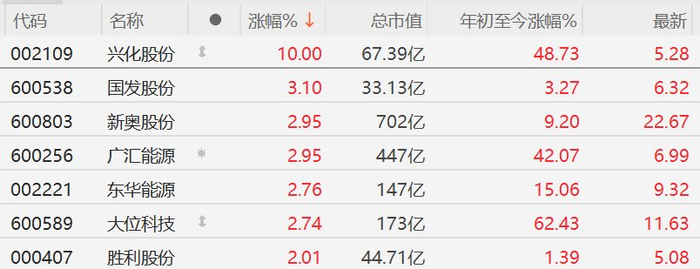
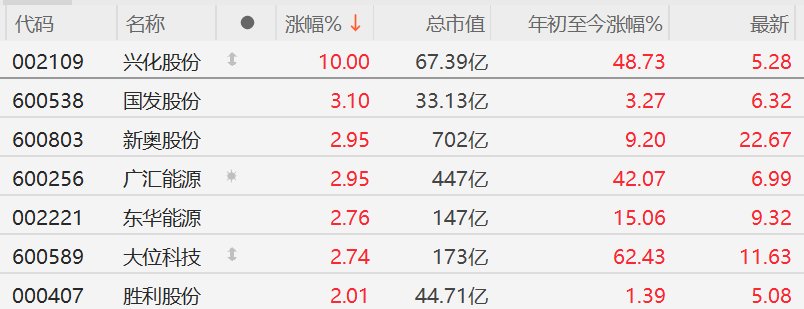
Group 1 - The core viewpoint of the news is that BASF, the world's largest chemical giant, has announced a price increase of 30% or more for all household care, industrial, and institutional cleaning products in Europe starting from March 18, primarily due to significant fluctuations in key raw material prices, rising domestic and cross-continental logistics costs, and soaring packaging and energy costs [1] - BASF will also increase its formic acid sales price in Europe by €250 per ton and the price of neopentyl glycol by €350 per ton, effective immediately or as allowed by existing contracts [1] Group 2 - In the A-share market, several chemical stocks have seen price increases, with Xinghua Co. hitting the daily limit, Guofa Co. rising over 3%, and others like Xin'ao Co., Guanghui Energy, Donghua Energy, Dawi Technology, and Shengli Co. increasing by over 2% [1] - The market capitalization and year-to-date performance of notable companies include: - Xinghua Co. with a market cap of ¥6.739 billion and a year-to-date increase of 48.73% [2] - Guofa Co. with a market cap of ¥3.313 billion and a year-to-date increase of 3.27% [2] - Xin'ao Co. with a market cap of ¥70.2 billion and a year-to-date increase of 9.20% [2] - Guanghui Energy with a market cap of ¥44.7 billion and a year-to-date increase of 42.07% [2] - Donghua Energy with a market cap of ¥14.7 billion and a year-to-date increase of 15.06% [2] - Dawi Technology with a market cap of ¥17.3 billion and a year-to-date increase of 62.43% [2] - Shengli Co. with a market cap of ¥4.471 billion and a year-to-date increase of 1.39% [2]


巴斯夫宣布涨价,部分化工股走强,兴化股份涨停
Ge Long Hui· 2026-03-19 02:54
Group 1 - The A-share market has seen a rise in certain chemical stocks, with Xinghua Co. hitting the daily limit, Guofa Co. increasing by over 3%, and several others like Xin'ao Co., Guanghui Energy, Donghua Energy, Dawi Technology, and Shengli Co. rising by over 2% [1] - BASF, the world's largest chemical giant, announced a price increase of 30% or more for all household care, industrial, and institutional cleaning and industrial formulation products in Europe starting March 18. This decision is in response to significant fluctuations in key raw material prices and supply, rising domestic and cross-continental logistics costs, and soaring packaging and energy costs [1] - BASF also stated that it would increase its formic acid sales price in Europe by €250 per ton and the price of neopentyl glycol by €350 per ton, effective immediately or as allowed by existing contracts [1] Group 2 - Xinghua Co. has a market capitalization of 6.739 billion, with a year-to-date increase of 48.73% [2] - Guofa Co. has a market capitalization of 3.313 billion, with a year-to-date increase of 3.27% [2] - Xin'ao Co. has a market capitalization of 70.2 billion, with a year-to-date increase of 9.20% [2] - Guanghui Energy has a market capitalization of 44.7 billion, with a year-to-date increase of 42.07% [2] - Donghua Energy has a market capitalization of 1.47 billion, with a year-to-date increase of 15.06% [2] - Dawi Technology has a market capitalization of 17.3 billion, with a year-to-date increase of 62.43% [2] - Shengli Co. has a market capitalization of 4.471 billion, with a year-to-date increase of 1.39% [2]
化工巨头巴斯夫上调欧洲新戊二醇及甲酸的价格
Ge Long Hui· 2026-03-18 14:09
Core Viewpoint - BASF, a chemical giant, announced a price increase for formic acid and neopentyl glycol in Europe, reflecting rising production costs and market conditions [1] Group 1: Price Increases - BASF will raise the price of formic acid by €250 per ton [1] - The price of neopentyl glycol will increase by €350 per ton [1] Group 2: Market Context - The price adjustments are effective immediately or as permitted by existing contracts, indicating a strategic response to current market dynamics [1]