产品创新乏力

Search documents
关闭线上渠道 艾格退场
Bei Jing Shang Bao· 2025-12-03 16:01
Core Viewpoint - The closure of Etam's online flagship store on Tmall and other platforms signals potential withdrawal from the Chinese market, raising concerns about the brand's future in a competitive landscape [1][2]. Company Summary - Etam, a French apparel brand, has been in the Chinese market for over 30 years, establishing its first store in Shanghai in 1995 and reaching a peak of 723 stores with annual sales exceeding 900 million yuan [2]. - The brand has faced declining performance due to increased competition from both foreign and domestic brands, leading to frequent reports of losses and store closures [2]. - In 2017, Etam delisted from the Paris stock exchange and sold its ready-to-wear business in China, retaining only its lingerie segment [2]. - The company has made limited moves in the lingerie market since then, with no new physical stores established despite previous announcements [2]. Industry Summary - The lingerie industry is experiencing intensified competition, with brands like Dianfin also closing all physical stores [3]. - New emerging brands focusing on comfort and functionality, such as ubras and NEIWAI, have gained popularity and market share, posing challenges to established brands like Etam [3]. - Research indicates that traditional lingerie companies struggle with outdated brand images, lack of product innovation, and unclear target demographics, making it difficult to adapt to changing consumer demands [3].
关闭线上渠道,艾格退场?
Bei Jing Shang Bao· 2025-12-03 12:56
Core Viewpoint - The lingerie brand Etam announced the closure of its Tmall flagship store due to business adjustments, leading to speculation about its potential exit from the Chinese market [2] Company Summary - Etam has been operating in the Chinese market for over 30 years, entering in 1994 and opening its first store in Shanghai in 1995 [2] - At its peak, Etam had 723 stores in China with annual sales exceeding 900 million yuan [2] - The brand has faced declining performance, frequent reports of losses, and store closures in recent years, leading to its delisting from the Paris stock exchange in 2017 and the sale of its ready-to-wear business in China in 2018 [2] Industry Summary - The closure of Etam's lingerie business is part of a broader trend, as competitors like Dianfin have also announced the closure of all offline stores [4] - The lingerie industry has seen the rise of new brands focusing on comfort and functionality, such as Ubras, which became a sales champion during the "Double 11" shopping festival in 2020 [4] - Established lingerie brands face challenges such as outdated brand images, lack of product innovation, and unclear target demographics, struggling to adapt to changing consumer demands and increased competition [4]

雅诗兰黛业绩下滑 外资巨头面临挑战
Zhong Guo Jing Ying Bao· 2025-08-29 14:46
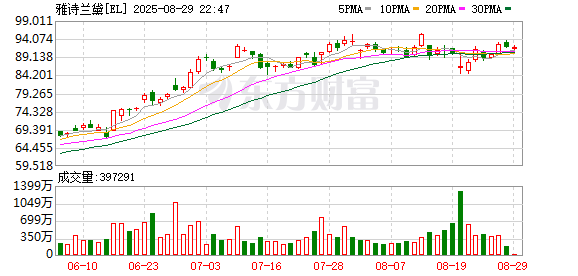
Core Insights - Estée Lauder reported an 8% year-over-year decline in organic net sales for the fiscal year 2025, with a loss of $785 million in operating profit [2][3] - The decline in the Chinese market was 6%, attributed to increased competition from local mid-to-high-end beauty brands and a failure to engage younger consumers [2][4] Financial Performance - For fiscal year 2025, Estée Lauder achieved organic net sales of $14.326 billion, down 8% from the previous year [2] - In mainland China, organic net sales were $2.741 billion, reflecting a 6% decline [3] - The company experienced a significant drop in net sales in previous fiscal years, with a 10.3% decrease in fiscal year 2023 and a 58% drop in net profit [3] Market Dynamics - The decline in sales is largely due to a downturn in global travel retail, which constitutes a significant portion of Estée Lauder's business [3][5] - The high-end beauty market is expected to grow by 2% to 3% in fiscal year 2026, with a recovery in travel retail anticipated [3] Competitive Landscape - Estée Lauder faces challenges from emerging local brands that are innovating in product concepts and marketing strategies, appealing to younger consumers [5][6] - The company has been criticized for its slow product innovation and lower R&D investment compared to competitors like L'Oréal [4][6] Strategic Challenges - Estée Lauder's reliance on travel retail channels and its slower product innovation cycle are seen as weaknesses in a rapidly changing market [6] - The company is also facing difficulties in adapting to the unique characteristics of the Chinese market, where online channels dominate and price competition is fierce [7] Future Outlook - The Chinese market is crucial for Estée Lauder, accounting for about 20% of its business, but the company must evolve its brand image and engage with younger consumers to avoid further declines [7] - Analysts suggest that the golden era for foreign mid-to-high-end brands in China may be over, with local brands increasingly taking the lead [7]

库克怎么能在中国遇到这么多网红?
创业邦· 2025-03-31 02:53
Core Viewpoint - Tim Cook's recent visit to China has transformed into a social media spectacle, raising questions about the effectiveness of Apple's marketing strategy in a changing market landscape [4][36]. Group 1: Tim Cook's Activities in China - Tim Cook has been actively engaging with social media influencers and celebrities during his visit to China, which has led to a perception of him as a "walking photo op" rather than a traditional business leader [6][10]. - His interactions included attending a music sharing event and being photographed with various influencers, which sparked discussions about the authenticity of these encounters [9][15]. - The visit has been characterized by a shift towards leveraging influencer culture to connect with younger consumers, indicating a strategic pivot in Apple's marketing approach [36][39]. Group 2: Financial Performance and Market Challenges - Apple's recent financial report for Q1 of the 2025 fiscal year showed a revenue of $124.3 billion, a 4% year-over-year increase, with a net profit of $36.3 billion, reflecting a 7% growth [43]. - However, the Greater China region reported a revenue decline of 11% year-over-year, amounting to $18.51 billion, which was below market expectations [44]. - The decline in revenue has been attributed to factors such as inventory changes and a lack of new product launches in the region, alongside growing competition from domestic brands [44][45]. Group 3: Marketing Strategy and Consumer Perception - The marketing strategy employed during Cook's visit appears to be an attempt to counteract perceptions of stagnation in Apple's product innovation, particularly in the face of rising competition from local brands [36][44]. - There is a growing sentiment among consumers that Apple's recent hardware updates lack significant innovation, leading to a potential loss of interest in the brand [44][45]. - The effectiveness of using influencer marketing to engage younger audiences remains uncertain, as some commentators suggest that Cook's interactions with influencers may overshadow the company's innovation efforts [45].