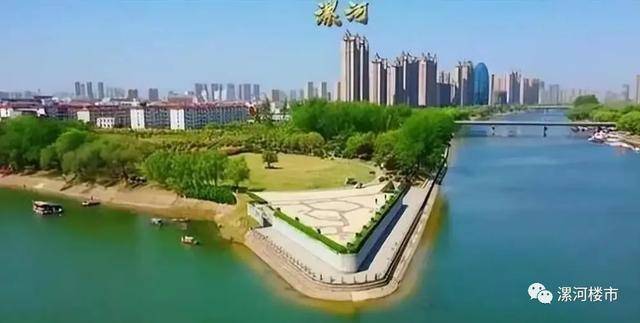
人口流动对房价的影响

Search documents
5年后,现在200万的房子还能值多少钱?3大趋势已暗示结果
Sou Hu Cai Jing· 2025-09-23 01:37
Core Insights - The future of real estate prices is influenced by current policy directions, population shifts, and supply-demand dynamics [1] Group 1: Population Migration - Population flow is a critical indicator affecting housing demand, with major urban areas like Shanghai and Hangzhou experiencing net inflows, while some third and fourth-tier cities face over 1% annual population loss [4] - A property valued at 2 million yuan in a growing city like Suzhou is likely to retain or increase its value, while a similar property in a declining city may only sell for 1.6 million yuan after five years [4] - Rental yields in densely populated cities like Shenzhen are low at 1.85%, while properties in declining areas struggle to cover bank interest, indicating a lack of price support [4] Group 2: Policy Direction - Government policies are increasingly favoring core urban areas, as seen in Shanghai's urban renewal initiatives aimed at improving housing quality [5] - Properties in core areas are expected to appreciate, while those in less desirable locations may face depreciation due to rising holding costs and changing tax policies [5][6] - The era of relying on large-scale demolitions for property value increases is over; property value is now more dependent on quality and regional planning [6] Group 3: Economic Cycle - The economic cycle, including inflation and interest rates, significantly impacts the real estate market, with IMF predicting a global inflation rate of 4.3% in 2025 [7] - A decrease in personal housing loan rates by 60 basis points this year may lower purchasing costs but could also indicate slower economic growth, affecting demand for non-core properties [8] - If property appreciation does not outpace a 3% annual inflation rate, real value may decline, as illustrated by rental yields in certain cities failing to keep up with inflation [10] Group 4: Future Value Projections - In core cities with ongoing population inflows, a property purchased for 2 million yuan could appreciate to between 2.1 million and 2.3 million yuan in five years, outperforming inflation [12] - Conversely, a similar investment in a declining city may only retain a value of 1.5 million to 1.8 million yuan, highlighting a potential value gap of up to 800,000 yuan [12] - Strategic investments in emerging areas supported by government policies may yield unexpected value increases, while investments in poorly planned regions could lead to significant losses [12][13]

专家预测,2025下半年,这些城市房价会大涨,甚至翻倍上涨?
Sou Hu Cai Jing· 2025-05-13 07:25
Core Insights - The article discusses potential cities for significant housing price increases in the second half of 2025, emphasizing the need for caution in predictions due to various influencing factors [1] City-Specific Analysis - **Shanghai**: The recent land auction in Yangpu District saw a premium rate of 26.3%, with floor prices exceeding 80,000 yuan per square meter, leading to expected new home prices above 120,000 yuan per square meter. The supply of new homes in 2025 is projected to be only 70% of 2024 levels, creating upward pressure on prices due to supply-demand imbalance [3][4] - **Chengdu**: The city has seen a significant increase in housing transactions, with new home sales reaching 105,000 units in Q4 2024 and a 32.9% year-on-year increase in second-hand home transactions in Q1 2025. Policy changes, including the cancellation of purchase restrictions and a reduction in down payment requirements, are expected to boost market liquidity [4][5] - **Nanjing**: The city recorded a 0.6% month-on-month increase in new home prices in December 2024, leading the nation in price growth. The land auction in early 2024 had a premium rate of 31.68%, indicating strong developer interest [5][6] - **Hangzhou**: The city led the nation in land auction revenue in Q1 2025, with premium rates between 20%-40% in certain districts. The influx of high-income individuals due to industrial upgrades is driving housing demand [6][7] - **Wuhan**: The city plans to advance urban renewal projects, with significant population growth in key industries. Although there is inventory pressure in suburban areas, core district prices are stabilizing [7] General Market Trends - The article notes that while some cities may see price increases, the notion of prices doubling is exaggerated. Core areas in cities like Shanghai, Beijing, and Shenzhen are expected to see price increases of 5%-8%, while strong second-tier cities like Chengdu and Nanjing may see increases of 10%-15% [8][9] - The article highlights the risk of price declines in the second-hand housing market, with a 0.69% month-on-month drop in April 2025 across 100 cities, and significant declines in third- and fourth-tier cities [9][10] - Overall, cities with strong policy support, population inflow, and solid industrial foundations are likely to experience significant price increases in the latter half of 2025 [10]