人工智能+工业

Search documents
市工信局:锚定新型工业化强市目标,实干笃行启新程
Qi Lu Wan Bao· 2026-01-21 01:49
Core Viewpoint - Jining is prioritizing industrial economic development as its "number one project" for 2025, aiming for a new type of industrialization with a focus on quality and efficiency improvements, supported by a collaborative framework involving various stakeholders [1] Group 1: Industrial Economic Performance - The city's industrial added value for enterprises above designated size increased by 7.9% year-on-year, ranking third in the province and improving by 12 positions since the beginning of the year [1] - A total of 251 projects were included in the provincial technological transformation guidance directory, maintaining the top position in the province for four consecutive years [1] - 189 new provincial-level specialized and innovative enterprises were added, bringing the total to 1,378 [1] - Three industrial clusters in Jining were recognized as provincial-level characteristic industrial clusters, tying for first place in the province [1] Group 2: Strategic Focus Areas - The city will focus on building a modern industrial system, implementing a "chain leader system" to enhance cooperation across the industrial chain and promote technological upgrades through approximately 1,000 new industrial and technological transformation projects [2] - Emphasis will be placed on integrating traditional, emerging, and future industries, with a commitment to smart, green, and integrated development [2] Group 3: Innovation and Digital Integration - The city aims to deepen the integration of technological and industrial innovation, with plans to implement over 100 technology innovation projects and enhance the cultivation of leading talents in industrial innovation [3] - There will be a strong push for the integration of the real economy with the digital economy, including the development of a robotics industry plan and support for small and medium-sized enterprises in digital transformation [3] Group 4: Industrial Park Development - Industrial parks will be positioned as the main battleground for the city's industrial economic growth, with a focus on planning, tiered cultivation, and innovative operational mechanisms to create a complementary and collaborative development pattern [4]
容知日新:将继续深化“人工智能+工业”融合创新
Zhong Guo Zheng Quan Bao· 2026-01-16 13:59
Core Viewpoint - The Ministry of Industry and Information Technology has issued an action plan for the high-quality development of industrial internet platforms from 2026 to 2028, indicating a strong governmental push towards the integration of AI and industry, which will benefit companies like Rongzhi Rixin in their digital transformation efforts [1] Group 1: Company Overview - Rongzhi Rixin is a pioneer in the field of intelligent operation and maintenance of industrial equipment, focusing on state monitoring and fault diagnosis systems [1] - The company's "Lingzhi SuperCare Intelligent Operation and Maintenance Platform" was selected as a national-level specialized industrial internet platform in 2023, demonstrating its recognition and credibility in the industry [1] Group 2: Industry Impact - The platform has connected over 200,000 devices, showcasing its extensive reach and application across various sectors including power, metallurgy, petrochemicals, and coal [1] - The accumulation of over 37,000 closed-loop cases of equipment faults has significantly enhanced the platform's data value, model accumulation, and AI development capabilities [1]

中控技术:截至目前,公司已打造新一代“Plantbot”AI+机器人智能运行架构
Zheng Quan Ri Bao Wang· 2025-10-20 12:13
Core Viewpoint - The company has developed a new generation of "Plantbot" AI+ robotic intelligent operation architecture, which includes four types of robots: inspection and operation robots, collaborative equipment robots, supply chain logistics robots, and humanoid robots for industrial applications [1] Group 1: Product Development - The humanoid robots designed for industrial applications are a cutting-edge exploration under the Plantbot AI architecture, featuring humanoid forms and versatile operational capabilities [1] - These robots can adapt to existing factory human-machine environments and perform complex tasks across multiple scenarios [1] - The future deployment of these robots aims to achieve "one machine with multiple functions," providing solutions for extreme environment operations, skill shortage replacements, and the intelligent transformation of factories [1] Group 2: Industry Context - The State Council recently issued the "Opinions on Deepening the Implementation of Artificial Intelligence + Action," emphasizing the need to accelerate the deep integration of artificial intelligence with industrial development [1] - The company's latest achievement in the "Artificial Intelligence + Industry" sector is the time series large model TPT2, which addresses long-standing core issues in process industries such as safety production, quality optimization, and energy consumption control [1] - This model aims to deliver quantifiable economic benefits to enterprises, reducing costs and enhancing efficiency while mitigating risks, marking a significant milestone in the industrial intelligence process both in China and globally [1]

中控技术:已打造新一代“Plantbot”AI+机器人智能运行架构
Ge Long Hui· 2025-10-20 08:00
Core Viewpoint - Zhongkong Technology (688777.SH) has developed a new generation of "Plantbot" AI+robot intelligent operation architecture, which includes four types of robots: inspection and operation robots, collaborative equipment robots, supply chain logistics robots, and humanoid robots for industrial applications [1] Group 1: Product Development - The humanoid robots designed for industrial applications are a cutting-edge exploration under the Plantbot AI architecture, featuring humanoid forms and versatile operational capabilities [1] - These robots can adapt to existing factory human-machine environments and perform complex tasks across multiple scenarios [1] Group 2: Technological Advancements - The future deployment of these robots will achieve "one machine with multiple functions," providing solutions for extreme environment operations, skill shortage job replacements, and the intelligent transformation of factories [1] - The time series large model TPT 2, a recent achievement in the "AI + industrial" field, aims to address long-standing core issues in process industries such as safety production, quality optimization, and energy consumption control [1] Group 3: Industry Impact - The development aligns with the State Council's recent issuance of the "Opinions on Deepening the Implementation of AI + Action," which emphasizes accelerating the deep integration of AI with industrial development [1] - The economic benefits of the TPT 2 model are expected to help enterprises reduce costs, increase efficiency, and mitigate risks, marking a significant achievement in the industrial intelligence process both in China and globally [1]
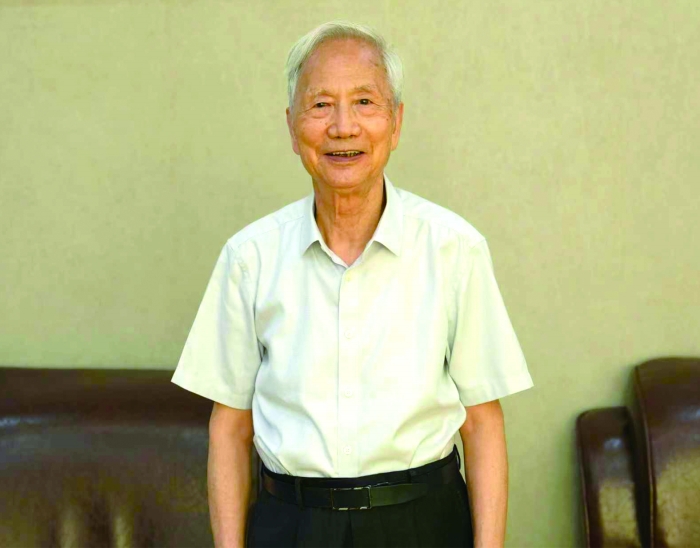
中国科学院院士、清华大学人工智能研究院名誉院长张钹:要走出符合自己特色的人工智能发展路径
Shang Hai Zheng Quan Bao· 2025-07-22 18:16
Core Insights - Zhang Bo emphasizes the need for China to develop an artificial intelligence (AI) path that aligns with its unique characteristics and national conditions [2][7] - The current state of General Artificial Intelligence (AGI) is debated, with differing opinions on its timeline for realization, primarily due to varying definitions of AGI [3][4] AGI Development - AGI is defined by three standards: domain generality, task generality, and a unified theoretical framework [4][5] - Current AI models, while significant, are still in the early stages of AGI development and require integration with hardware and robotics for practical applications [5][6] AI Applications in Healthcare - The application of AI in healthcare varies significantly by task complexity, with diagnostic systems facing high demands for reliability and interpretability [5][6] - AI can enhance efficiency in lower-risk tasks like triage, but high-stakes areas like diagnostics require thorough understanding and validation by medical professionals [5] AI and Robotics - The robotics sector faces challenges related to reliability and cost, hindering widespread adoption [6] - Current humanoid robots are largely in the prototype stage, and their practical application is limited by high costs and reliability concerns [6] China's AI Development Path - China's AI development should avoid blindly following Western models and instead focus on solutions that meet local needs, such as favoring wheeled robots over humanoid ones in urban settings [7] - The high costs associated with AI in industrial applications are a significant barrier, but there is potential for cost reduction through engineering and algorithm optimization [7][8] Industry Insights - The prevalence of Tsinghua University-affiliated AI companies is attributed to decades of research and development, creating a robust ecosystem for AI innovation [7] - Identifying promising AI companies should focus on the capabilities of their leadership and the alignment of technology with business needs [7][8]