人工智能与自动化

Search documents
Dow (NYSE:DOW) 2026 Conference Transcript
2026-03-18 13:47
Summary of Dow Chemical's 2026 Conference Call Company Overview - **Company**: Dow Chemical (NYSE: DOW) - **CEO**: Jim Fitterling, CEO since 2018, with a long tenure at Dow since 1984 Key Industry Insights - **Market Dynamics**: The underlying demand conditions remain largely unchanged, but supply situations are evolving positively, impacting order books favorably [3][4] - **Polyethylene Pricing**: A $0.10 per pound price increase for polyethylene was announced globally in March, with an additional increase planned for April [4] - **Inventory Levels**: Industry inventory is below the five-year average, indicating strong working capital discipline and three years of destocking [4][21] - **Global Logistics**: Up to 50% of polyethylene supply is offline or constrained due to the Middle East conflict, leading to historically low inventory levels across the value chain [5] Financial Performance and Projections - **EBITDA Improvement**: Targeting approximately $3 billion of EBITDA uplift over the next few years, with $500 million in cost savings expected by the end of the year [8][9] - **Transform to Outperform Initiative**: Expected to deliver at least $2 billion in near-term EBITDA improvements, with $500 million anticipated this year [9][10] - **Cost Structure**: The completion of cost efforts and asset actions is projected to provide a $1 billion EBITDA improvement in 2026 [9] Strategic Actions - **Self-Help Measures**: Ongoing self-help actions are progressing well, focusing on cost structure and growth strategies [2][3] - **Operational Efficiency**: Plans to shut down high-cost upstream assets to strengthen competitive positioning [9] - **AI and Automation**: Implementing AI and automation to redesign workflows and improve operational efficiency [10][11] Customer and Market Engagement - **Customer Demand**: Strong demand from Asian customers, with Dow's order books booked out as much as possible [46][55] - **Regional Dynamics**: The company is monitoring demand post-Lunar New Year in Asia, which typically sees strong demand [57] Challenges and Risks - **Middle East Conflict**: The ongoing conflict has created significant supply chain pressures, with potential long-term impacts on operations and pricing [14][28] - **Naphtha Pricing**: Rising naphtha prices are affecting high-cost producers, which could lead to margin restoration in Europe [35][42] Future Outlook - **Volume Growth**: Limited volume growth expected in specialty plastics due to slower housing demand, but strong demand in electrical infrastructure and telecommunications is anticipated [81][87] - **Cash Flow Management**: Aiming for $5 billion in EBITDA generation, with a conservative estimate of 50% translating to cash flows [127] Conclusion - Dow Chemical is focused on navigating current market challenges while implementing strategic initiatives to enhance operational efficiency and financial performance. The company remains optimistic about future demand and pricing dynamics, particularly in the context of ongoing geopolitical tensions and evolving supply chain conditions.

全球第一零售巨头沃尔玛正式转板纳斯达克
Xin Lang Cai Jing· 2025-12-04 03:47
Group 1 - Walmart will officially transfer its listing to Nasdaq on December 9, 2025, maintaining its stock code "WMT" [1] - This transfer marks the largest single migration in history, with Walmart's market capitalization around $800 billion, setting a record for the highest market value in a single exchange transfer [1] - The transfer will contribute to Nasdaq's annual transfer market value exceeding $1 trillion for the first time in 2025 [1] Group 2 - The easing of regulations since 2003 has significantly reduced barriers for companies transferring exchanges, with 500 companies having moved from the NYSE to Nasdaq, totaling a transfer market value of $3 trillion [2] - Among the transferred companies, 40 are part of the S&P 500, with 24 successfully included in the Nasdaq 100 index, which attracts significant passive investment [2] - Walmart's decision aligns with its long-term strategy of being people-centric and technology-driven, focusing on enhancing retail experiences through AI and automation [2]

78.2亿美元市场在望!并购网络安全尽职调查年复合增长率达6.2%
Sou Hu Cai Jing· 2025-11-28 12:41
Core Insights - The article discusses the importance of cybersecurity due diligence in mergers and acquisitions, emphasizing the need for thorough assessments of a target company's cybersecurity status, risks, and vulnerabilities before finalizing a deal [1][3]. Market Overview - According to QYResearch, the global cybersecurity due diligence market for mergers and acquisitions is projected to reach $7.82 billion by 2031, with a compound annual growth rate (CAGR) of 6.2% over the coming years [3]. Industry Players - Major players in the global cybersecurity due diligence market include Kroll, Charles River Associates, CybelAngel, Palo Alto Networks, Sygnia, Ernst & Young Global Limited, Alliant Insurance Services, PacketWatch, Blaze, and ProCircular [8]. Regulatory Environment - The article outlines various regulatory requirements for cybersecurity due diligence across different regions, including: - The U.S. Federal Trade Commission's 2025 merger cybersecurity disclosure rule, which mandates formal cybersecurity due diligence for companies holding over 50,000 consumer data records [16]. - The EU's NIS2 directive, requiring cybersecurity assessments for critical infrastructure mergers [17]. - China's 2025 cybersecurity review measures for mergers involving core data [18]. - Australia's 2024 critical infrastructure cybersecurity legislation [19]. Industry Trends - Key trends in the cybersecurity due diligence industry include: - The integration of artificial intelligence and automation to enhance due diligence efficiency, reducing manual review time by 40-50% [18]. - Expansion of due diligence to cover third-party suppliers and vendors to address cascading cybersecurity risks [19]. - Adoption of standardized global due diligence frameworks to simplify compliance processes across jurisdictions [20]. - Quantification of cybersecurity risks in merger valuations, linking risk mitigation progress to purchase price retention mechanisms [22]. Opportunities - The article identifies several growth opportunities in the cybersecurity due diligence sector: - Increased demand for cross-border compliance due diligence services due to fragmented global regulatory frameworks [23]. - Development of scalable due diligence solutions for small and medium-sized enterprises (SMEs) through SaaS platforms [24]. - Integration of cybersecurity risk assessments with ESG (Environmental, Social, and Governance) due diligence services [25]. - Extension of due diligence services to post-merger integration support [26]. Challenges - The industry faces several challenges, including: - Incomplete and opaque disclosures of cybersecurity risks by target entities, leading to information asymmetry [24]. - Inconsistent global regulatory requirements complicating cross-border transactions [24]. - Shortage of interdisciplinary professionals skilled in both cybersecurity and merger dynamics [24]. - Lack of standardized frameworks for quantifying the financial impact of cybersecurity risks [24].


Vicarious Surgical (NYSE:RBOT) FY Conference Transcript
2025-09-10 14:02
Summary of Vicarious Surgical FY Conference Call Company Overview - **Company**: Vicarious Surgical (NYSE: RBOT) - **Industry**: Medical Device, Robotic Surgery - **Focus**: Development of a robotic surgical system aimed at minimally invasive surgery [1][2] Core Points and Arguments - **Purpose of Vicarious Surgical**: To create a robotic surgical system that is easier for surgeons to use and provides better vision and accessibility compared to existing platforms [2][3] - **Current Market Limitations**: Existing robotic systems are primarily adopted for prostatectomy, which was not their intended design. Adoption drops significantly for other procedures due to limitations in flexibility and visual access [3][4][10] - **First Indication**: The company is seeking approval for ventral hernia repair as its first surgical indication, which is strategically chosen to demonstrate the system's capabilities [4][8][22] - **Market Size**: In the U.S., over 5.5 million surgical procedures are performed annually, with 82% being non-robotic. This presents a significant opportunity for Vicarious Surgical to capture market share [10][12] - **Differentiation**: Vicarious Surgical aims to differentiate itself from competitors like Intuitive Surgical and Medtronic by targeting the 82% of procedures that are currently non-robotic, rather than competing directly in the existing robotic market [12][13][24] Important but Overlooked Content - **Technological Advantages**: The robotic system features nine degrees of freedom, full anatomical reach, and a self-cleaning camera, which enhances usability and reduces the need for manual cleaning [7][8][14] - **Development Progress**: The company has transitioned from an engineering project to a commercial entity, achieving significant milestones in quality management and system builds [15][16][19] - **Adoption Challenges**: The main risk for the company lies in adoption and commercialization rather than clinical trials, as the latter are less complex for robotic systems compared to pharmaceuticals [19][20] - **Future Goals**: The company aims to achieve design lock by the end of next year, which will enable them to start regulatory verification and validation processes [19][20] Market Strategy - **Targeting White Space**: The company plans to capture just 1% of the total addressable market (TAM) of non-robotic procedures, which could equate to approximately $77 million in revenue [25] - **Single-Arm Design**: The single-arm design of their robot is intended to provide flexibility and ease of use, avoiding the complications associated with multiple arms in other systems [26][27][28] Conclusion Vicarious Surgical is positioning itself to fill a significant gap in the robotic surgery market by focusing on procedures that are currently underserved by existing technologies. The company's innovative design and strategic market approach could lead to substantial growth opportunities in the coming years.

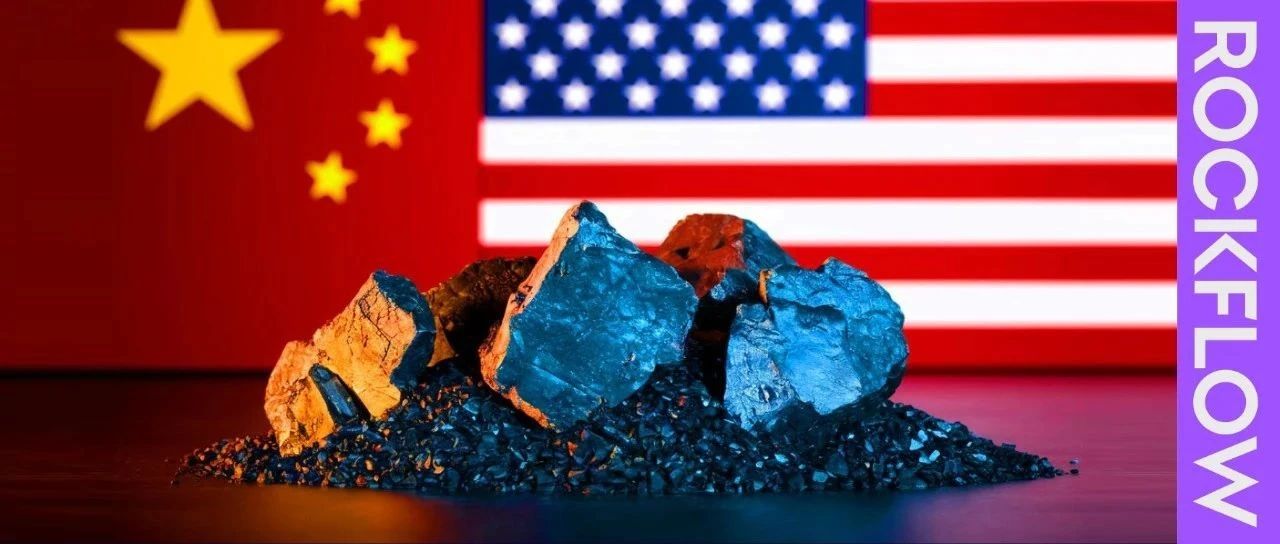
隐秘的“资源战争”:稀土巨头MP半年涨3倍及背后万亿产业变局
RockFlow Universe· 2025-08-21 10:32
Core Viewpoints - Rare earths play a critical role in the global economy and security, driving the clean energy revolution, advancements in artificial intelligence and automation, and increasing national security and defense demands [3][4] - China's dominance in the rare earth industry extends beyond mining to refining and processing capabilities, controlling the majority of global rare earth processing facilities [3][16] - The RockFlow research team identifies MP Materials as a leading rare earth mining company in the U.S. with significant growth potential, supported by government initiatives, alongside other companies like USAR and Ucore Rare Metals [3][30] Group 1: Importance of Rare Earths - Rare earths are essential for modern life, found in various technologies from smartphones to military applications [8] - They are crucial for driving the clean energy revolution, being integral to the transition to cleaner and more resilient energy systems [8][9] - The rise of robotics and AI further enhances the strategic importance of rare earths, which are vital for advanced motor components and sensor systems [9][10] - Rare earths are critical for national security and defense, used in advanced weapon systems and communication devices [10][12] Group 2: Supply Chain Dynamics - Despite their name, rare earths are not geologically scarce, but the refining and processing technologies are rare and complex [13][16] - China controls approximately 60% of global rare earth production and nearly 90% of processing capacity, leading to a significant supply chain imbalance [16][17] - The geopolitical landscape has prompted Western nations to diversify their supply chains to mitigate reliance on China [3][18] Group 3: MP Materials and Market Opportunities - MP Materials, the largest rare earth producer in North America, has seen its stock price surge due to government support and strategic partnerships [21][26] - The company is expanding its refining capabilities and has received significant investment from the U.S. Department of Defense [24][32] - Other companies like USAR and Ucore Rare Metals are also positioned for growth, focusing on domestic supply chain development [30][36] Group 4: Investment Considerations - The rare earth sector is emerging as a strategic pillar for the global economy, with technological barriers being more significant than resource availability [37] - Companies like MP Materials are seen as key players, while USAR and Ucore face higher execution risks due to their early-stage development [36][37] - The REMX ETF offers a diversified investment opportunity in the rare earth and strategic metals space, benefiting from the growing demand in clean energy and defense sectors [30][31]