人工智能使用规范

Search documents
直播电商新规2月施行,酒类直播生态将面临全面调整?
Sou Hu Cai Jing· 2026-01-09 20:42
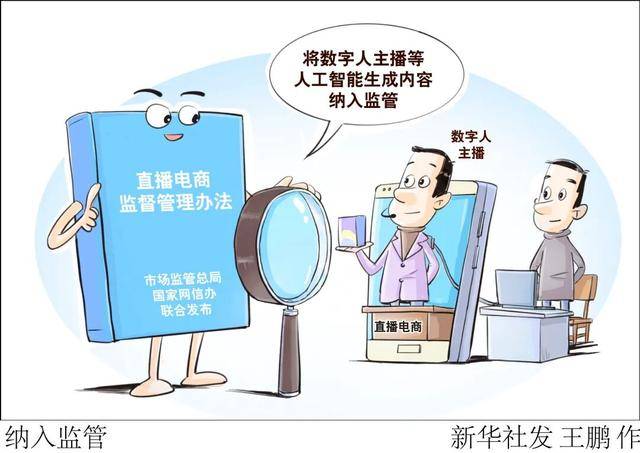
Core Viewpoint - The newly issued "Live E-commerce Supervision Management Measures" aims to regulate the live e-commerce industry, particularly focusing on the wine sector, addressing issues like counterfeit products and false marketing while clarifying the legal responsibilities of various stakeholders in the industry [1][2]. Group 1: Regulatory Framework - The new regulations will take effect on February 1, 2024, and will define the responsibilities of four main entities: platform operators, live room operators, live marketing personnel, and service institutions (MCNs) [1]. - The regulations impose strict requirements on the use of artificial intelligence in live broadcasts, mandating that any AI-generated content must be clearly labeled to inform consumers [2][3]. - The selection responsibility for products has been significantly strengthened, requiring service institutions to verify the credentials of sellers and maintain records for at least three years [2]. Group 2: Industry Transformation - The regulations will lead to a profound transformation in the wine live e-commerce sector, moving from a phase of "wild growth" to one of "compliance competition" [7]. - Visual marketing strategies in wine live broadcasts will need to change, as AI-generated environments and virtual sommeliers must now be transparently labeled, reducing potential consumer deception [8]. - Supply chain transparency will become a core competitive advantage, as live broadcasts will need to ensure traceability from production to sale, putting pressure on those claiming "direct sales from the winery" [10]. Group 3: Impact on Market Players - Small and emerging brands may face higher compliance costs due to the new regulations, potentially leading to market exits for those unable to meet these requirements [12][13]. - The consumer protection environment will improve significantly, as the requirement for address authenticity will help resolve issues related to after-sales service and enhance consumer trust in live e-commerce [14]. - The detailed recognition of commercial advertising will compel live hosts to enhance their professional knowledge, shifting the focus from exaggerated marketing to genuine product understanding [15]. Group 4: Industry Challenges - Despite the new regulations, some live broadcasts still engage in non-compliant practices, such as operating under false identities or misleading marketing tactics [16]. - The regulations clarify the responsibilities of live room operators regarding information disclosure and identity verification, which is expected to foster a healthier market environment [16].

线上考试疑用AI 韩国高校再曝集体作弊丑闻
Xin Hua She· 2025-12-22 06:21
Group 1 - The core issue is the rising trend of academic dishonesty in South Korean universities, particularly through the use of artificial intelligence (AI) tools during online examinations [1][3]. - Seoul National University has declared the results of a course exam invalid due to widespread cheating, with nearly half of the 36 students involved suspected of opening unauthorized windows during the exam [2]. - The university is planning to implement comprehensive measures to address the cheating phenomenon, including a shift to in-person exams as the default mode and the introduction of guidelines for AI tool usage [2][4]. Group 2 - Yonsei University and Korea University have also reported similar cheating incidents, highlighting a systemic issue in managing online examinations and establishing clear guidelines for AI tool usage among students [3][4]. - A survey indicated that 91.7% of students from four-year and six-year universities in South Korea have used AI tools for assignments or research, yet many institutions lack formal policies regarding generative AI [4]. - Critics argue that temporary measures, such as invalidating exams, do not address the root causes of academic dishonesty and may increase distrust between students and faculty [4].