
人文素养

Search documents
构建高质量科技教育与人文教育协同育人体系
Xin Hua Ri Bao· 2026-01-14 04:11
Core Viewpoint - The "Outline for the Construction of a Strong Education Nation (2024-2035)" emphasizes the need to strengthen the synergy between science and technology education and humanities education, indicating a clear direction for educational modernization [1] Group 1: Significance of Synergy - For individuals, the synergy between science and humanities education is essential for achieving "comprehensive human development," aiming to cultivate well-rounded socialist builders and successors [2] - For education, this synergy is a necessary choice to address contemporary challenges and achieve intrinsic development, as interdisciplinary integration has become a primary paradigm for scientific research and knowledge innovation [2] - For the nation, this synergy serves as a powerful driver for sustainable development and civilizational progress, ensuring that technological advancements are guided by humanistic values [3] Group 2: Current Challenges - The internal drive to enhance humanistic literacy is weakening, with some STEM students viewing humanities courses merely as a means to fulfill credit requirements rather than as essential components of their core competencies [4] - Clear disciplinary boundaries and the need for innovation in curriculum systems and teaching models are evident, as current approaches often lack deep integration between humanities and STEM education [4] - Insufficient support for implementation platforms and evaluation mechanisms hinders the advancement of synergistic education, with existing evaluation systems focusing too heavily on traditional academic outputs [5] Group 3: Pathways to Constructing a Synergistic System - Promoting deep integration of curricula and innovative teaching methods is crucial, requiring the development of interdisciplinary core courses that embed historical reflection and social context into STEM education [6] - Building a cross-disciplinary teaching team is essential, with a focus on transforming educators into architects of cognitive ecosystems and enhancing their interdisciplinary literacy [7] - Expanding practical, multi-dimensional educational scenarios beyond campus boundaries is necessary, involving collaboration with museums, communities, and enterprises to create interdisciplinary practice bases [8]
在技术浪潮中坚守教育的人文根基
Huan Qiu Wang Zi Xun· 2026-01-06 10:22
Group 1 - The rapid development of artificial intelligence (AI) presents unprecedented opportunities and challenges in the education sector, emphasizing the need to cultivate "non-automatable" skills such as critical thinking, emotional cognition, and value judgment [1] - In the AI era, the way knowledge is acquired is undergoing profound changes, making the efficient learning and internalization of knowledge a key educational challenge [2] - Solid foundational knowledge is essential for developing higher-order cognitive abilities, as it supports memory and innovation, which are crucial for problem-solving [2] Group 2 - The decline in language skills among students indicates a deterioration in deep thinking abilities, which is exacerbated by the dominance of algorithms in information environments [3] - Classic literature and traditional reading are vital for enhancing critical thinking and maintaining cultural understanding, serving as a mental exercise that refines logic and expression [4] - Humanistic literacy is increasingly important in the digital age, acting as a barrier against technological alienation and preserving unique human thought [4] Group 3 - The key to addressing technological challenges in education lies in creating a symbiotic relationship between technology and education, focusing on cultural transmission and cognitive development [5] - AI can serve as a powerful tool for personalized practice and resource expansion, but the core mission of education requires professional guidance from teachers and a nurturing school environment [6] - Education should adhere to the principle of "human-centered, technology-enabled," emphasizing systematic mastery of core concepts and the cultivation of critical thinking and moral judgment [6] Group 4 - The innovation in education must awaken individual consciousness and expand cognitive boundaries through technology, aiming to develop core competencies that define humanity [7] - Adhering to the principle of "humanism as the foundation, technology as the tool" is essential for nurturing a generation that possesses both technological literacy and humanistic values, thereby laying a solid talent foundation for national rejuvenation [7]
“明师讲堂”再续精彩:探寻文化根脉,共话教子之道
Nan Fang Nong Cun Bao· 2025-08-20 02:34
Core Viewpoint - The "Ming Shi Lecture Hall" event emphasizes the integration of cultural heritage and educational wisdom, focusing on the beauty of mathematics and the cultivation of humanistic spirit in children [3][21]. Group 1: Event Overview - The event took place on August 17 in Meizhou City, highlighting the theme "Pursuing the Beauty of Mathematics and Cultivating Humanistic Spirit" [3][21]. - Participants included officials from various cultural and educational institutions, as well as children from the "Beauty of Mathematics" summer camp [6][7]. Group 2: Educational Insights - The event featured a lecture by Shao Yazhong, who discussed "Teaching Children Well and Being Unworried Parents," combining Confucian wisdom with modern educational principles [14][15]. - The lecture addressed key parental concerns such as "parent-child communication" and "growth rhythm," promoting the idea that education is a gradual art [16][18]. Group 3: Cultural Significance - The event included visits to significant cultural sites, such as the ancestral home of mathematician Qiu Chengdong, fostering a connection between children and their cultural roots [9][10]. - The activities aimed to inspire children through the exploration of poetry and local cultural heritage, facilitating a natural awakening to the concept of beauty [11][12]. Group 4: Broader Impact - The "Ming Shi Lecture Hall" transcends traditional educational boundaries, representing a convergence of scientific spirit and humanistic cultivation [20][21]. - The initiative aims to empower rural areas through cultural enrichment and educational resources, instilling positive values in families [22][23].


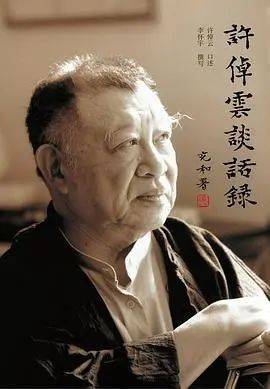
历史学家许倬云:一生只做旁观者
Hu Xiu· 2025-08-04 08:44
Group 1 - Core viewpoint: Xu Zhuoyun, a prominent historian, passed away at the age of 95, leaving behind a legacy of historical research focused on ordinary people's lives and experiences [1] Group 2 - Early life: Xu was born in 1930 in Wuxi, Jiangsu, and faced physical challenges due to congenital muscular atrophy, which influenced his perspective as a historian [2][3] - Impact of war: His childhood was marked by the Second Sino-Japanese War, which shaped his understanding of suffering and the human condition, leading to a focus on the experiences of ordinary people in his historical studies [3][6] Group 3 - Academic journey: After moving to Taiwan in 1948, Xu studied history at National Taiwan University and later pursued further studies in the United States, where he was influenced by civil rights movements [5][6] - Shift in historical focus: Xu's work emphasized social and cultural history, challenging traditional narratives that centered on prominent figures, which garnered both criticism and recognition [6][9] Group 4 - Later years: In his later life, Xu aimed to guide younger generations in finding personal meaning amidst societal changes, sharing insights through various media [10][11] - Engagement with contemporary issues: He actively discussed modern societal challenges, including the impact of the pandemic and the role of technology, emphasizing the importance of humanistic values [11][12]
围观“韦神” 一场与韦东奕无关的造神运动 | 新京报专栏
Xin Jing Bao· 2025-06-12 00:05
Group 1 - Wei Dongyi, known as "Wei Shen," has set a world record for gaining the most followers in the academic field on Douyin within 72 hours, reaching over 24 million followers [1] - Despite the record, Wei Dongyi is reportedly indifferent to this honor and has refused media interviews, indicating that the public attention has affected him [1][3] - The short video account attributed to Wei Dongyi is managed by relatives, and his personal involvement is minimal, consisting of only a brief 4-second video with three sentences [1][3] Group 2 - The phenomenon surrounding Wei Dongyi has sparked a "cult of personality," with followers attributing various mythical qualities to him, despite his lack of participation in the college entrance examination [3][4] - This movement has led to commercial exploitation, with dental clinics using his image to promote their services, and criticisms directed at his employer, Peking University, regarding his health [3][4] - The public's reaction reflects a broader societal trend of idolizing scientists, which can lead to unrealistic expectations and pressures on individuals like Wei Dongyi [6][7] Group 3 - The idolization of scientists, while increasing public interest in science, can also result in detrimental effects on the scientific community, as seen in the historical context of figures like Chen Jingrun [7][8] - The article emphasizes the need for a balance between scientific admiration and respect for individual boundaries, advocating for improved cultural literacy to prevent fanaticism [9][10] - The case of Wei Dongyi serves as a cautionary tale about the consequences of elevating individuals to a status they do not seek, highlighting the importance of respecting personal choices in the public sphere [10]