人民币中间价调控

Search documents
人民币汇率持续大涨,下一步怎么走?
Sou Hu Cai Jing· 2025-12-16 02:53
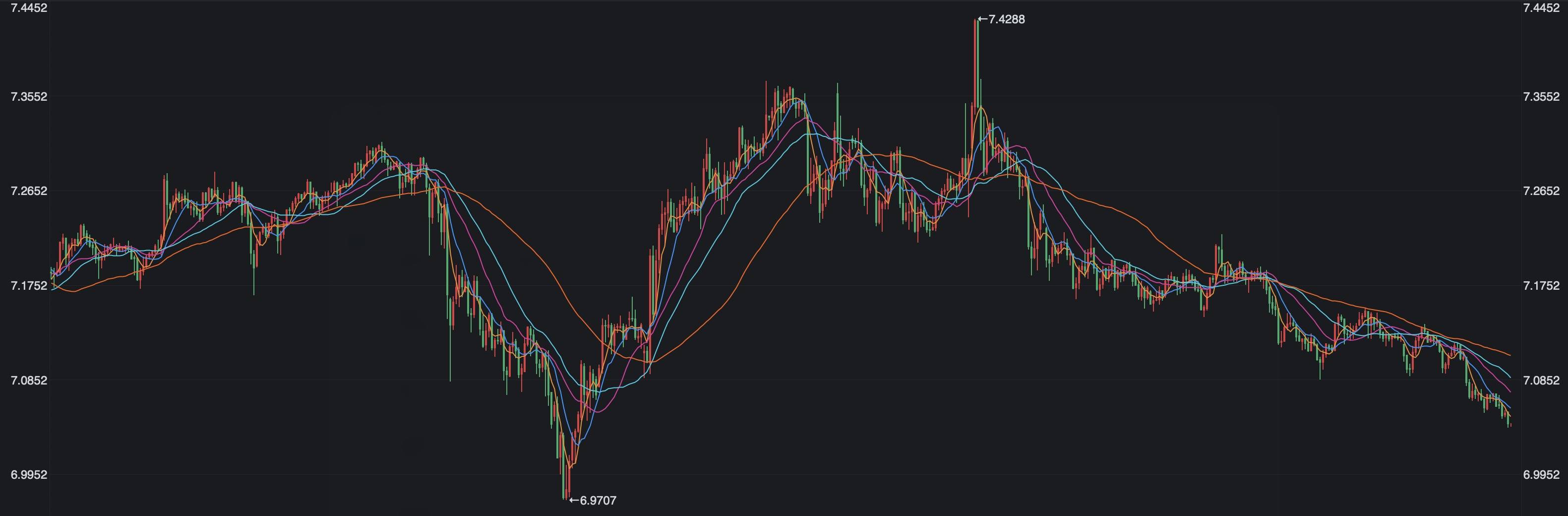
Core Viewpoint - The offshore RMB has been appreciating significantly, currently at 7.04, approaching the previous high of 6.97 from September last year, influenced by a declining US dollar index from 100 to around 98, primarily due to expectations of interest rate cuts by the Federal Reserve [1][3] Group 1 - The RMB's appreciation is linked to the weakening of the US dollar, which is expected to continue as the market anticipates accelerated rate cuts by the Federal Reserve [1] - The central bank aims to maintain the RMB within a reasonable fluctuation range, avoiding significant appreciation or depreciation to support a stable environment for foreign trade enterprises [3] - Recent adjustments in the RMB's central parity rate indicate a controlled approach, with the rate set at 7.0656 per USD on December 15, reflecting a downward adjustment of 18 basis points over ten consecutive trading days [3] Group 2 - Short-term outlook for the RMB remains bullish, but medium-term upward potential appears limited due to the central bank's policy stance [3]

在岸、离岸人民币对美元汇率破7.05关口,创14个月新高
Sou Hu Cai Jing· 2025-12-15 08:55
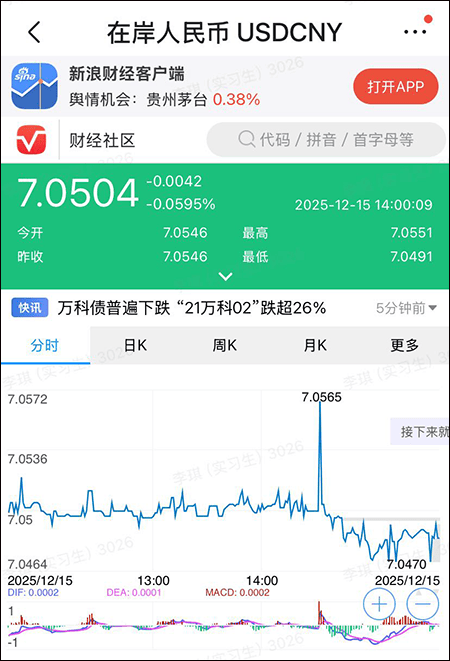
Core Viewpoint - The onshore and offshore RMB exchange rates have both surpassed the 7.05 mark, reaching a new high not seen in nearly 14 months, indicating a strengthening of the Chinese currency against the US dollar [1][2]. Group 1: Exchange Rate Movements - As of December 15, the onshore RMB to USD exchange rate peaked at 7.047, marking the first time it has crossed the 7.05 threshold since October 9, 2024 [1][3]. - In the offshore market, the RMB to USD exchange rate also reached 7.05 around the same time, reflecting a similar trend [2]. Group 2: Market Implications - The People's Bank of China announced that the central parity rate for the RMB against the USD was set at 7.0656, a depreciation of 18 basis points from the previous trading day [5]. - Analysts suggest that a stronger RMB could boost confidence in the capital markets and attract more foreign investment into the domestic capital market, creating a positive feedback loop with the currency's strength [5]. - Short-term forecasts indicate that the RMB is likely to remain strong, with attention needed on the USD's performance, the central bank's control over the RMB's midpoint, and domestic growth policies [5]. Group 3: Future Projections - Foreign institutions generally expect the RMB to continue appreciating, albeit at a varied pace. ANZ's Asia Research Head Khoon Goh predicts a moderate appreciation to around 6.95 by the end of 2026 [5]. - Deutsche Bank forecasts that the RMB will appreciate to 6.7 by the end of 2026 and further to 6.5 by the end of 2027 [5].
在岸、离岸人民币对美元汇率盘中一度续创13个月新高
Sou Hu Cai Jing· 2025-11-27 07:44
Group 1 - The core viewpoint is that the Chinese yuan is strengthening against the US dollar, with the onshore exchange rate reaching a high of 7.0738, marking a new high since mid-October of the previous year [1] - The offshore yuan also strengthened, reaching a peak of 7.06527, indicating positive investor sentiment [1] - Short-term analysis suggests that if the yuan breaks through 7.10, the next key support level will be 7.05, with market dynamics influenced by stock market performance [1] Group 2 - The chief macro analyst from Dongfang Jincheng indicates that a strong yuan will boost confidence in the capital markets and attract more foreign investment [2] - It is expected that the yuan will remain strong in the short term, with key factors to monitor including the US dollar's performance and domestic growth policies [2] - The potential for further interest rate cuts by the Federal Reserve and the impact of US tariff policies are expected to limit the upward movement of the US dollar index [2]
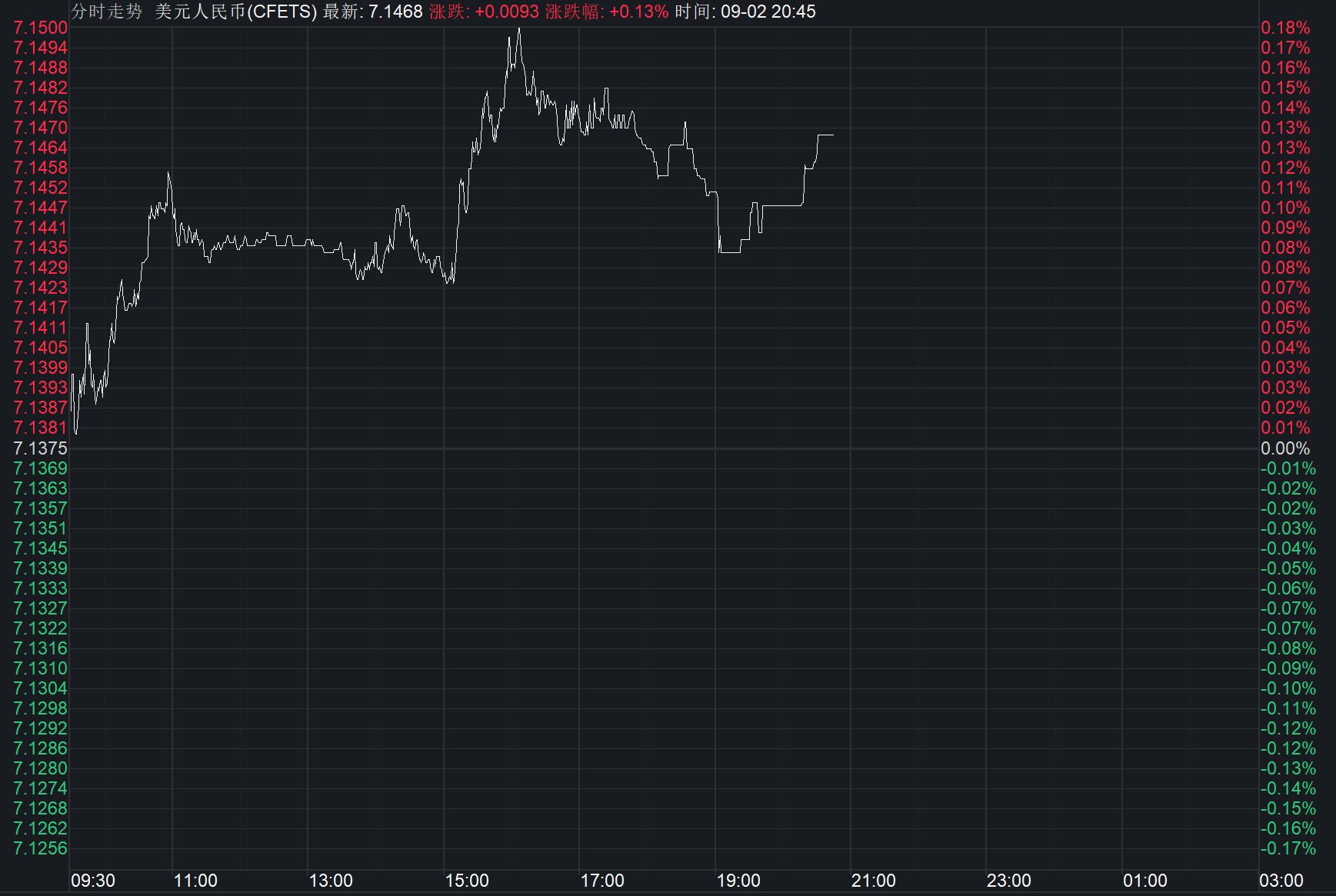
人民币对美元汇率急升后小幅回调,未来会继续涨吗?业内:将以稳为主
Mei Ri Jing Ji Xin Wen· 2025-09-02 13:57
Core Viewpoint - The recent appreciation of the Chinese yuan against the US dollar is influenced by multiple factors, including signals from the Federal Reserve regarding potential interest rate cuts and strong performance in the domestic stock market, which has led to increased foreign capital inflow [2][5]. Group 1: Factors Influencing Yuan Appreciation - The rapid appreciation of the yuan began on August 22, coinciding with Federal Reserve Chairman Jerome Powell's speech at the Jackson Hole Economic Symposium, where he hinted at possible interest rate cuts [4][5]. - The yuan's exchange rate against the dollar reached a yearly high of 7.126 on August 29, following a period of low volatility in June and July [4]. - Key drivers of the yuan's appreciation include Powell's dovish signals, a strong domestic stock market attracting foreign investment, and the central bank's management of the yuan's midpoint rate [5][6]. Group 2: Future Outlook for Yuan Exchange Rate - Analysts suggest that the yuan will likely maintain a stable and strong position in the short term, with discussions about whether it can break the "7" level becoming more frequent [5][6]. - The central bank's focus is on stabilizing the yuan at a reasonable level, avoiding extreme fluctuations, and adapting to economic fundamentals [6][7]. - The outlook indicates that while the yuan may appreciate, significant catalysts will be needed for it to break the "7" threshold, with external factors and domestic economic policies playing crucial roles [5][6].