人民币外汇衍生品

Search documents
2025年人民币外汇衍生品市场回顾与展望
Sou Hu Cai Jing· 2026-01-05 02:50
Group 1 - The core viewpoint of the article indicates that the RMB foreign exchange derivatives market in 2025 exhibited different phase characteristics, with the foreign exchange swap showing an overall upward trend and the volatility of foreign exchange options experiencing phase increases but remaining stable overall [1][3] - In 2025, the RMB foreign exchange swap market showed an overall upward trend, influenced by domestic and international economic fundamentals, the evolution of China-US trade friction, and the anticipated interest rate cuts by the Federal Reserve [3][19] - The one-year RMB/USD swap points rose from -2400 pips at the beginning of the year to around -1200 pips by year-end, reflecting different phase characteristics throughout the year [3][19] Group 2 - The first phase from the beginning of the year to mid-March saw the one-year swap points rise from -2400 pips to around -1900 pips, driven by market expectations of inflation due to tariff threats [6] - The second phase from mid-March to mid-May experienced a fluctuation in swap points between -2200 pips and -1950 pips, influenced by the tightening of RMB liquidity and the announcement of tariffs by the Trump administration [7] - The third phase from mid-May to mid-October saw swap points rise from around -2200 pips to about -1250 pips, as initial agreements on tariffs were reached and economic data from the US began to show weakness [8] - The fourth phase from mid-October to year-end saw a further easing of tariffs, with swap points adjusting to around -1330 pips, reflecting a temporary reversal in the market's pricing of interest rate cuts by the Federal Reserve [11] Group 3 - The RMB foreign exchange options market in 2025 experienced significant volatility increases in early January and from mid-March to mid-April, while other periods showed a steady decline [12][21] - The first phase at the beginning of the year saw implied volatility for short-term and long-term options remain high, with 1M and 1Y ATM implied volatilities fluctuating between 4.5%-4.7% and 5.7%-5.9% respectively [15] - The second phase from early February to mid-March saw a decline in implied volatility as market sentiment stabilized, with 1M ATM volatility dropping from 4.8% to about 3.7% [16] - The third phase from mid-March to mid-April saw a spike in implied volatility due to heightened market fears, with 1M ATM volatility reaching around 6.5% [17] - The fourth phase from mid-April to year-end saw a steady decline in implied volatility, with 1M ATM volatility dropping to around 2% and 1Y ATM volatility to about 3.4% [18] Group 4 - Looking ahead to 2026, the RMB foreign exchange swap market is expected to continue its upward trend in the first half, supported by anticipated economic policies and a stable monetary policy environment [19] - The foreign exchange options market in 2026 is expected to experience lower overall implied volatility compared to 2025, with potential spikes during specific political and economic events [21]

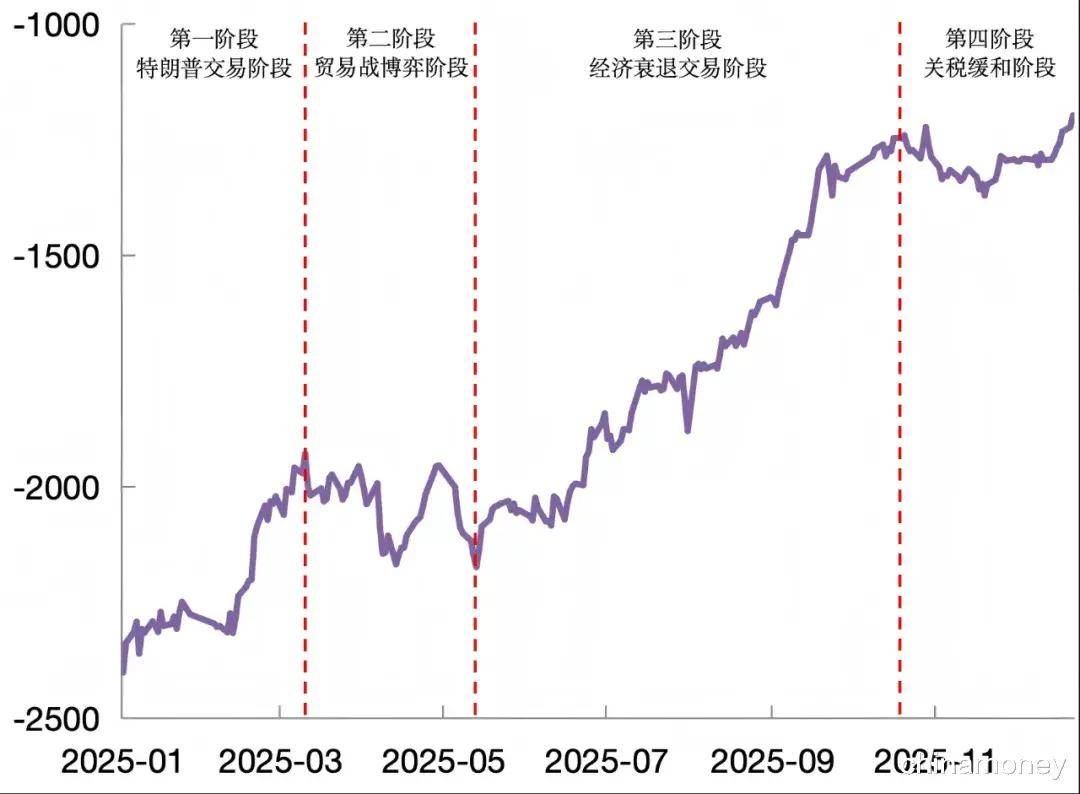
2025年上半年人民币外汇衍生品市场回顾与展望
Sou Hu Cai Jing· 2025-07-17 02:34
Core Viewpoint - The overall operation characteristics of the RMB foreign exchange swap and options market in the first half of 2025 show a rising trend followed by a range-bound fluctuation, with the one-year swap price fluctuating between -2400 to -1900 pips. The actual volatility of the RMB exchange rate has increased, while the implied volatility of at-the-money options has shown a phased trend but remained stable in trading center. In the second half of 2025, the narrowing of the China-US interest rate spread is expected to drive a rebound in the swap curve, while the implied volatility in the RMB options market is likely to remain low [1]. RMB Foreign Exchange Derivatives Market Review RMB Swap Market Review - In the first half of 2025, the RMB foreign exchange swap market experienced an initial upward trend followed by a range-bound fluctuation, with the one-year swap points trading between -2400 to -1900 pips [2]. - The first phase from the beginning of the year to mid-March saw a rapid rise in one-year swap points from -2400 pips to -1900 pips, driven by bearish sentiment towards the US dollar and US Treasury yields, alongside improved international balance of payments and positive expectations for China's economic recovery [3]. - The second phase from late March to the present has seen a gradual decline in upward momentum, with one-year swap points oscillating around -2050 pips, influenced by the US's unexpected tariff and fiscal policy developments [4]. RMB Options Market Review - In the first half of 2025, the actual volatility of the RMB exchange rate increased, with the implied volatility in the RMB options market showing a "pulse" trend but maintaining stability in trading center [5]. - The first quarter saw a moderate trend in implied volatility, with the USD/CNY spot exchange rate fluctuating between 7.17 and 7.35, reflecting a significant appreciation of the RMB [6]. - The second quarter experienced a sharp rise in implied volatility due to increased tariff pressures, with the RMB reaching a historical high of 7.35 against the USD, followed by a decline in volatility as the market stabilized [6]. Outlook for the RMB Foreign Exchange Derivatives Market in the Second Half of 2025 RMB Swap Market Outlook - The RMB swap market is expected to see a narrowing of the China-US interest rate spread, driven by improved economic data and a stable domestic interest rate environment [7]. - The anticipated narrowing of the interest rate spread could lead to a rebound in the swap curve, with theoretical swap points around -1700 pips based on current short-term rates [8]. RMB Options Market Outlook - The RMB is expected to maintain low implied volatility in the second half of 2025, with external factors such as tariff disputes being the primary source of pressure [9]. - The overall improvement in the domestic economic environment is likely to support the RMB, with foreign investment in RMB assets increasing, contributing to a stable exchange rate [10].