
人民币外汇期权

Search documents
2026年1月银行间外汇市场运行报告
Sou Hu Cai Jing· 2026-02-27 02:46
Group 1 - The interbank foreign exchange market is active, with a daily average trading volume of $217.54 billion in January, representing a year-on-year increase of 16.5% and a month-on-month increase of 16.77% [2] - The daily average trading volume in the RMB foreign exchange market reached $163.74 billion, showing a year-on-year growth of 15.63% and a month-on-month growth of 13.67% [2] Group 2 - The US dollar index experienced fluctuations, starting strong but ultimately declining, closing at 96.99 at the end of the month, a depreciation of 1.35% from the previous month [3] - The RMB/USD exchange rate rose to 6.95, with the onshore RMB appreciating by 0.58% compared to the previous month [4] Group 3 - The domestic foreign exchange spread remained positive, narrowing slightly from 47 basis points to 29 basis points [5] - The average daily net selling of foreign exchange by market institutions was $23.89 billion, a decrease of $9.40 billion from December [5] Group 4 - The implied volatility of RMB foreign exchange options showed a slight decline, with the 1-month ATM implied volatility decreasing from 2.4% to 1.9% before rising to 2.25% by the end of the month [6] - The offshore RMB implied volatility for various maturities increased, with the 1-month ATM implied volatility reaching 2.78% [6] Group 5 - The interest rate differential between China and the US widened, leading to a decrease in swap points across all maturities, with the 1-year swap point declining by 97 basis points to -1222 basis points [7] - The 10-year US Treasury yield rose to around 4.30%, contributing to the widening of the US-China bond yield spread [7] Group 6 - The offshore dollar liquidity tightened towards the end of the month, with the domestic and foreign dollar interest rate spread remaining negative [9] - The overnight dollar interest rate spread narrowed from -10 basis points to -2 basis points during the month [9]


2025年人民币外汇衍生品市场回顾与展望
Sou Hu Cai Jing· 2026-01-05 02:50
Group 1 - The core viewpoint of the article indicates that the RMB foreign exchange derivatives market in 2025 exhibited different phase characteristics, with the foreign exchange swap showing an overall upward trend and the volatility of foreign exchange options experiencing phase increases but remaining stable overall [1][3] - In 2025, the RMB foreign exchange swap market showed an overall upward trend, influenced by domestic and international economic fundamentals, the evolution of China-US trade friction, and the anticipated interest rate cuts by the Federal Reserve [3][19] - The one-year RMB/USD swap points rose from -2400 pips at the beginning of the year to around -1200 pips by year-end, reflecting different phase characteristics throughout the year [3][19] Group 2 - The first phase from the beginning of the year to mid-March saw the one-year swap points rise from -2400 pips to around -1900 pips, driven by market expectations of inflation due to tariff threats [6] - The second phase from mid-March to mid-May experienced a fluctuation in swap points between -2200 pips and -1950 pips, influenced by the tightening of RMB liquidity and the announcement of tariffs by the Trump administration [7] - The third phase from mid-May to mid-October saw swap points rise from around -2200 pips to about -1250 pips, as initial agreements on tariffs were reached and economic data from the US began to show weakness [8] - The fourth phase from mid-October to year-end saw a further easing of tariffs, with swap points adjusting to around -1330 pips, reflecting a temporary reversal in the market's pricing of interest rate cuts by the Federal Reserve [11] Group 3 - The RMB foreign exchange options market in 2025 experienced significant volatility increases in early January and from mid-March to mid-April, while other periods showed a steady decline [12][21] - The first phase at the beginning of the year saw implied volatility for short-term and long-term options remain high, with 1M and 1Y ATM implied volatilities fluctuating between 4.5%-4.7% and 5.7%-5.9% respectively [15] - The second phase from early February to mid-March saw a decline in implied volatility as market sentiment stabilized, with 1M ATM volatility dropping from 4.8% to about 3.7% [16] - The third phase from mid-March to mid-April saw a spike in implied volatility due to heightened market fears, with 1M ATM volatility reaching around 6.5% [17] - The fourth phase from mid-April to year-end saw a steady decline in implied volatility, with 1M ATM volatility dropping to around 2% and 1Y ATM volatility to about 3.4% [18] Group 4 - Looking ahead to 2026, the RMB foreign exchange swap market is expected to continue its upward trend in the first half, supported by anticipated economic policies and a stable monetary policy environment [19] - The foreign exchange options market in 2026 is expected to experience lower overall implied volatility compared to 2025, with potential spikes during specific political and economic events [21]
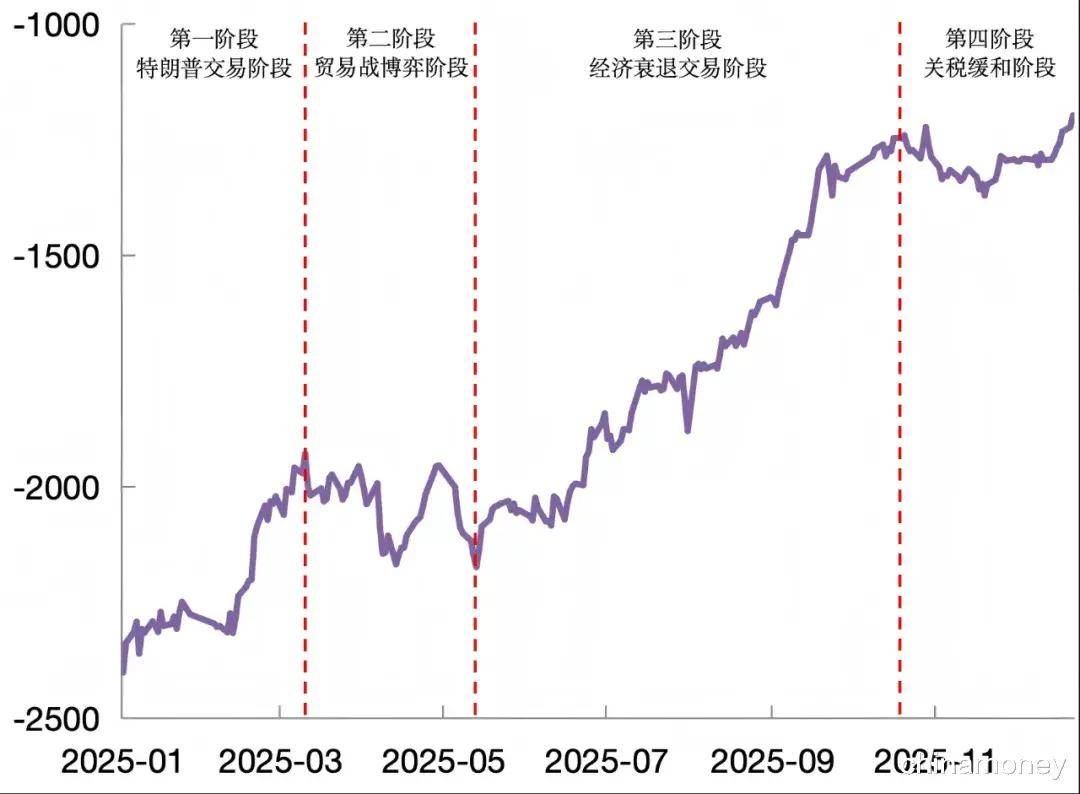
2025年11月银行间外汇市场运行报告
Sou Hu Cai Jing· 2025-12-31 04:38
Summary of Key Points Core Viewpoint The foreign exchange market in November 2025 experienced a decline in overall trading volume, with the average daily trading volume decreasing month-on-month. The US dollar index fluctuated and depreciated, while the Chinese yuan continued to appreciate, reaching a new high for the year. The market shifted from a net buying to a net selling position, and the volatility of options decreased, indicating short-term appreciation pressure on the yuan. Group 1: Foreign Exchange Market Activity - The average daily trading volume in the interbank foreign exchange market was $191.46 billion, a year-on-year decrease of 2.57% and a month-on-month decrease of 6.69% [2] - The average daily trading volume for the yuan was $146.23 billion, with a slight year-on-year decrease of 5.11% [2] - The foreign currency market showed significant increases in trading activity, while the foreign currency interest rate market saw a decline of over 20% due to external holiday impacts [2] Group 2: Currency Exchange Rates - The US dollar index fluctuated and depreciated, closing at 99.45, down 0.35% from the previous month [3] - The yuan to US dollar exchange rate appreciated, breaking through the 7.12 to 7.08 levels, with the onshore yuan closing at 7.0794, appreciating 0.48% from the previous month [4] - The CFETS index for the yuan against a basket of currencies rose to 97.92, an increase of 0.32% [4] Group 3: Market Positioning and Sentiment - The domestic foreign exchange differential shifted from negative to positive, with an average daily differential of 10.50 basis points by month-end [5] - The average daily net buying of foreign exchange decreased to $7.86 billion, down $3.94 billion from October [5] - The market's herd effect index was 60.77, a decrease of 1.12 points from October, below the historical average of 62.62 [5] Group 4: Options and Volatility - The average daily trading volume of yuan foreign exchange options was $5.44 billion, a month-on-month increase of 3.93% [6] - The implied volatility for the yuan against the US dollar showed a downward trend, with the 1-month ATM implied volatility dropping to 1.68% before rebounding to 2.1% [6] - The 1-year ATM implied volatility decreased from 3.6% to 3.4%, indicating a general decline in market expectations for yuan appreciation [6] Group 5: Interest Rates and Swap Points - The domestic and foreign interest rate differentials remained negative, with the 10-year US Treasury yield fluctuating around 4.0% [7][9] - The 1-year swap points decreased by 9 basis points to -1296 basis points, reflecting a slight downward trend in market pressure [8] - The offshore swap points continued to rise, but the spread between onshore and offshore 1-year swap points narrowed to around 50 basis points, the lowest in three months [8]
外汇市场成交量整体下降 人民币汇率创年内新高
Jin Rong Shi Bao· 2025-12-25 03:11
Group 1: Foreign Exchange Market Overview - In November, the average daily trading volume in the interbank foreign exchange market decreased to $191.46 billion, a year-on-year decline of 2.57% and a month-on-month decline of 6.69% [1] - The average daily trading volume for the RMB foreign exchange market was $146.23 billion, down 5.11% year-on-year [1] - The RMB to USD exchange rate strengthened, breaking through the 7.12 to 7.08 levels, reaching a year-to-date high of 7.0794 by the end of November [1][3] Group 2: USD Index and Interest Rate Expectations - The USD index experienced fluctuations, initially maintaining a narrow range due to cautious Fed rate cut expectations, but later fell to 99.45 by the end of November, a decrease of 0.35% from the previous month [2] - The market's risk aversion increased mid-month, leading to a temporary rise in the USD index above 100 points, but it subsequently declined as Fed officials indicated support for rate cuts [2][3] Group 3: RMB Exchange Rate Dynamics - The RMB to USD exchange rate showed a strong upward trend, with the onshore RMB closing at 7.0794, appreciating 0.48% from the previous month, while the offshore RMB was at 7.0754, appreciating 0.58% [3] - The CFETS RMB exchange rate index rose to 97.92, reflecting a 0.32% appreciation from the previous month [3] Group 4: Derivatives Market Activity - In November, the average daily trading volume of RMB foreign exchange options was $5.44 billion, an increase of 3.93% month-on-month [4] - The implied volatility of RMB to USD options showed a downward trend initially, followed by an increase, indicating a rise in short-term appreciation expectations for the RMB [4] Group 5: Swap Market Trends - The one-year swap points decreased by 9 basis points to -1296 basis points by the end of November, influenced by market supply and demand factors [5] - The spread between onshore and offshore one-year swap points narrowed to around 50 basis points, the lowest in three months [6] Group 6: Dollar Liquidity Conditions - Domestic dollar liquidity tightened slightly in November, while offshore dollar liquidity remained tight, with the SOFR rate fluctuating between 3.91% and 4.12% [7] - The overnight dollar borrowing rate in the domestic market rose to 3.87% by the end of November, reflecting a tightening trend [7] Group 7: Market Sentiment - The sentiment index for dollar borrowing funds showed increased volatility, rising from 54 points to 57 points in the first half of the month, before falling back to 46 points by the end of November [8]
银行间外汇市场交投总量平稳 日均成交量环比持续上升
Jin Rong Shi Bao· 2025-11-27 03:33
Group 1: Market Overview - In October, global financial markets experienced increased volatility due to multiple uncertainties, leading to heightened risk aversion among investors [1] - The average daily trading volume in China's interbank foreign exchange market reached $205.18 billion, showing a month-on-month increase of 6.72% and a year-on-year slight decline of 0.30% [2][3] Group 2: RMB Exchange Rate Trends - The RMB exchange rate rose to a new high for the year in early October but subsequently experienced fluctuations, with the lowest point reaching 7.1433 against the USD [2] - By the end of October, the onshore RMB exchange rate closed at 7.1135, appreciating by 0.07% compared to September [2] Group 3: Foreign Exchange Market Activity - The average daily trading volume for RMB in the foreign exchange market was $152.54 billion, reflecting a year-on-year decline of 5.72% but a month-on-month increase of 6.30% [2] - The foreign exchange market showed active trading in foreign currencies and foreign currency lending, with month-on-month increases exceeding 6% [2] Group 4: RMB Options Trading - RMB foreign exchange options trading remained stable in October, with an average daily transaction volume of $5.23 billion, marking a month-on-month decrease of 9.07% [3] - The implied volatility for RMB/USD options remained low, indicating stable market expectations for short-term RMB exchange rate movements [3] Group 5: Domestic and Offshore Exchange Rate Differences - The domestic foreign exchange differential gradually converged and turned positive by the end of October, with the average daily differential being -29 basis points [4] - As of October 20, the average daily net purchase of foreign exchange by institutions was $1.18 billion, indicating a shift in market sentiment towards net selling by the end of the month [4] Group 6: Market Sentiment and Behavior - The market's herd effect index in October was 61.89, slightly down from September, indicating a weaker herd effect compared to the historical average [5] Group 7: Swap Points and Interest Rate Differentials - Long-term swap points reached a nearly three-year high in October, driven by strong market buying pressure [6][7] - The one-year swap points at the end of October were -1287 basis points, an increase of 35 basis points from September, reflecting ongoing strong buying pressure in the swap market [7]
银行间外汇市场交投总量平稳
Jin Rong Shi Bao· 2025-11-27 03:05
Core Insights - In October, global financial markets experienced increased volatility due to multiple uncertainties, while China's interbank foreign exchange market maintained stable trading volumes with a daily average trading volume of $205.18 billion, a slight year-on-year decrease of 0.30% but a month-on-month increase of 6.72% [1][2] Group 1: Currency Exchange Trends - The RMB exchange rate rose to a yearly high in October before experiencing fluctuations, with the exchange rate against the USD reaching a low of 7.1433 and later stabilizing around 7.11 to 7.12 [2] - By the end of October, the onshore RMB exchange rate closed at 7.1135, appreciating 0.07% compared to September, while the CFETS RMB index against a basket of currencies reported a 0.87% appreciation [2] Group 2: Foreign Exchange Market Activity - The average daily trading volume in the interbank foreign exchange market was $205.18 billion in October, with a year-on-year decrease of 0.30% but a month-on-month increase of 6.72%, marking two consecutive months of growth [2] - The average daily trading volume for RMB in the foreign exchange market was $152.54 billion, showing a year-on-year decline of 5.72% but a month-on-month increase of 6.30% [2] Group 3: Options and Volatility - RMB foreign exchange options trading remained stable in October, with an average daily transaction of $5.23 billion, reflecting a month-on-month decrease of 9.07% [3] - The implied volatility for RMB/USD options remained low, indicating stable market expectations for short-term RMB exchange rate movements [3] Group 4: Domestic and Offshore Exchange Rate Differences - The domestic foreign exchange differential gradually converged and turned positive by the end of October, with the average daily differential being -29 basis points, an increase of 25 basis points from September [4] - As of October 28, the offshore RMB (CNH) appreciated by 0.15% to 7.1164, with market participants shifting from net buying to net selling of foreign exchange by the end of the month [4] Group 5: Market Sentiment and Behavior - The market's herd effect index in October was 61.89, a decrease of 1.01 points from September, indicating a weaker herd effect compared to the historical average [5] Group 6: Swap Points and Interest Rate Dynamics - Long-term swap points reached a three-year high in October, driven by strong market buying pressure, with the one-year swap point closing at -1287 basis points, an increase of 35 basis points from September [6][7] - The one-year swap point's increase was primarily influenced by market supply and demand factors, despite a slight decrease in interest rate factors [7]
人民币汇率升至年内新高后小幅回调
Jin Rong Shi Bao· 2025-10-22 02:38
Core Insights - The interbank foreign exchange market in China showed a mixed performance in September, with the US employment data falling short of expectations and the Federal Reserve lowering interest rates by 25 basis points, leading to a rebound in the US dollar index [1][6] - The Chinese yuan reached a new high for the year in September, but experienced slight fluctuations towards the end of the month [2][3] - The offshore yuan weakened against the onshore yuan, resulting in a shift from a positive to a negative exchange rate differential [3] Exchange Rate Performance - The yuan appreciated to a high of 7.1019 against the US dollar in early September, driven by a weaker dollar index and positive sentiment from US-China trade talks [2] - By the end of September, the yuan was trading at 7.1186, reflecting a monthly appreciation of 0.17% [2] - The CFETS index for the yuan against a basket of currencies rose by 0.21% to 96.77 [2] Exchange Rate Differential - The exchange rate differential between onshore and offshore yuan shifted from positive to negative, with the average differential for the month being -4 basis points [3] - The maximum differential recorded was -97 basis points on September 26 [3] Foreign Exchange Options Market - The trading volume for yuan foreign exchange options was stable, with an average daily transaction of 63.18 billion USD, up 8.37% month-on-month [4] - Implied volatility for yuan options continued to decline, with the 1-month ATM implied volatility dropping to 2.3%, the lowest since August 2024 [4] Swap Market Activity - The yuan foreign exchange swap market saw active trading, with an average daily volume of 931.95 billion USD, an increase of 8.90% month-on-month [5] - Short to medium-term transactions dominated, accounting for nearly 70% of the trading volume [5] Interest Rate Differentials - The interest rate differential between Chinese and US bonds fluctuated, with the 10-year US Treasury yield dropping to a year-low of 4.01% before rebounding to around 4.2% [6] - The 10-year US-China bond yield spread ended the month at -230 basis points, an increase of 9 basis points from the previous month [6] - The 1-year swap points rose significantly, reaching -1322 basis points, the highest in nearly two and a half years [6]
2025年6月银行间外汇市场运行报告
Sou Hu Cai Jing· 2025-07-25 02:45
Group 1 - The interbank foreign exchange market showed stable trading with an average daily transaction volume of $208.2 billion in June, a year-on-year increase of 15.7% [2] - The average daily trading volume of the RMB foreign exchange market was $152.4 billion, up 8.9% year-on-year, while foreign currency trading grew over 30% [2] - The US dollar index experienced fluctuations, initially rising and then declining, ending the month at 96.77, a depreciation of 2.68% [3] Group 2 - The RMB exchange rate showed a steady increase, fluctuating between 7.17 and 7.19, with a month-end value of 7.1656, appreciating by 0.94% [4] - The CFETS RMB exchange rate index fell to its lowest level since 2021, closing at 95.35, a cumulative depreciation of 0.64% for the month [4] - The offshore and onshore exchange rates continued to align closely, with the average daily deviation being minimal [5] Group 3 - The foreign exchange market saw a shift towards net selling, with an average daily net selling of $8.51 million, an increase of $5.84 million from May [6] - The market sentiment index rose to 62.78, slightly above the historical average, indicating a stable trading environment [6] Group 4 - The implied volatility of foreign exchange options decreased, with the average daily transaction volume reaching $8.28 billion, a 6.12% increase from the previous month [7] - The short-term implied volatility for the RMB against the USD fell from 3.8% to around 3.5% [7] Group 5 - The interest rate differential between China and the US continued to narrow, with the 10-year US Treasury yield dropping to 4.23% by month-end [8] - The 1-year swap points increased to -1866 basis points, the highest in nearly eight months, indicating a shift in market dynamics [8][9] Group 6 - The US dollar liquidity remained loose, with the domestic dollar financing costs showing a clear advantage [10] - The overnight interest rate differential between domestic and foreign markets remained negative, reaching a new high of -18 basis points by month-end [11]

2025年上半年人民币外汇衍生品市场回顾与展望
Sou Hu Cai Jing· 2025-07-17 02:34
Core Viewpoint - The overall operation characteristics of the RMB foreign exchange swap and options market in the first half of 2025 show a rising trend followed by a range-bound fluctuation, with the one-year swap price fluctuating between -2400 to -1900 pips. The actual volatility of the RMB exchange rate has increased, while the implied volatility of at-the-money options has shown a phased trend but remained stable in trading center. In the second half of 2025, the narrowing of the China-US interest rate spread is expected to drive a rebound in the swap curve, while the implied volatility in the RMB options market is likely to remain low [1]. RMB Foreign Exchange Derivatives Market Review RMB Swap Market Review - In the first half of 2025, the RMB foreign exchange swap market experienced an initial upward trend followed by a range-bound fluctuation, with the one-year swap points trading between -2400 to -1900 pips [2]. - The first phase from the beginning of the year to mid-March saw a rapid rise in one-year swap points from -2400 pips to -1900 pips, driven by bearish sentiment towards the US dollar and US Treasury yields, alongside improved international balance of payments and positive expectations for China's economic recovery [3]. - The second phase from late March to the present has seen a gradual decline in upward momentum, with one-year swap points oscillating around -2050 pips, influenced by the US's unexpected tariff and fiscal policy developments [4]. RMB Options Market Review - In the first half of 2025, the actual volatility of the RMB exchange rate increased, with the implied volatility in the RMB options market showing a "pulse" trend but maintaining stability in trading center [5]. - The first quarter saw a moderate trend in implied volatility, with the USD/CNY spot exchange rate fluctuating between 7.17 and 7.35, reflecting a significant appreciation of the RMB [6]. - The second quarter experienced a sharp rise in implied volatility due to increased tariff pressures, with the RMB reaching a historical high of 7.35 against the USD, followed by a decline in volatility as the market stabilized [6]. Outlook for the RMB Foreign Exchange Derivatives Market in the Second Half of 2025 RMB Swap Market Outlook - The RMB swap market is expected to see a narrowing of the China-US interest rate spread, driven by improved economic data and a stable domestic interest rate environment [7]. - The anticipated narrowing of the interest rate spread could lead to a rebound in the swap curve, with theoretical swap points around -1700 pips based on current short-term rates [8]. RMB Options Market Outlook - The RMB is expected to maintain low implied volatility in the second half of 2025, with external factors such as tariff disputes being the primary source of pressure [9]. - The overall improvement in the domestic economic environment is likely to support the RMB, with foreign investment in RMB assets increasing, contributing to a stable exchange rate [10].

2025年5月银行间外汇市场运行报告
Sou Hu Cai Jing· 2025-06-25 02:56
Group 1 - The interbank foreign exchange market showed stable trading, with the average daily trading volume of the RMB foreign exchange market increasing by 12.59% year-on-year to $1580.99 billion in May, despite a 2.73% month-on-month decline [2] - The US dollar index experienced a slight depreciation, closing at 99.44 at the end of the month, reflecting a 0.2% decline for the month, influenced by weakening US inflation and trade policy uncertainties [3][4] - The People's Bank of China implemented a reserve requirement ratio cut and interest rate reduction, contributing to a strengthening of the RMB against the USD, with the RMB closing at 7.1953, appreciating by 0.94% for the month [4] Group 2 - The offshore and onshore RMB exchange rates began to converge, with the average daily onshore-offshore exchange rate difference being positive at 22 basis points, indicating a market expectation of RMB appreciation [5] - The implied volatility of RMB foreign exchange options showed a decline, with the average daily trading volume reaching $77.99 billion, indicating a stabilization of market sentiment [6] - The interest rate differential between China and the US widened slightly, with the 10-year US Treasury yield reaching a three-month high of 4.58% before retreating to 4.41% by month-end [7] Group 3 - The overall liquidity of the US dollar market remained loose, with the overnight interest rate in the domestic market declining to 4.30%, while the SOFR fluctuated around 4.35% towards the end of the month [8][9] - The domestic and foreign dollar overnight interest rate differential turned negative by month-end, reflecting a shift in market dynamics [9]