人民币汇率政策

Search documents
管涛:从兼顾内外均衡角度理解人民币汇率政策
Sou Hu Cai Jing· 2026-02-18 02:50
Core Viewpoint - The Central Economic Work Conference emphasizes the continuation of proactive macro policies in China, aiming for effective economic growth and stability in employment, enterprises, markets, and expectations, while maintaining the stability of the RMB exchange rate at a reasonable level [1] Group 1: Economic Performance - China's current account surplus reached a record $734.9 billion last year, a 73.4% increase year-on-year, with a ratio to nominal GDP of 3.5%, up 1.3 percentage points from the previous year [1] - In the last two quarters of the previous year, the current account surplus was $198.7 billion and $242.1 billion, respectively, both setting new quarterly records [1] - Exports grew by 5.5% last year, while imports remained stable, resulting in a trade surplus of $1.19 trillion, despite a 20% decline in exports to the U.S. [2] Group 2: Trade Dynamics - The increase in the trade surplus indicates a potential for RMB appreciation, but domestic demand remains weak, necessitating continued active fiscal and moderate monetary policies [2] - China's export market share fell to 14.36% in the first three quarters of last year, a decrease of 0.03 percentage points year-on-year, with a more significant drop in global import market share of 9.69%, down 0.76 percentage points [2] Group 3: Policy Recommendations - The macroeconomic policy should adhere to the Tinbergen Rule, ensuring that policy tools match the number of objectives, with exchange rate policy focusing on external balance and fiscal/monetary policy on internal balance [3] - The report suggests a need for careful management of exchange rate expectations to avoid excessive appreciation or depreciation, emphasizing the importance of market-driven exchange rate formation [4][5] - It is recommended to enhance the resilience of the foreign exchange market and stabilize market expectations while promoting domestic demand and structural adjustments to achieve a more balanced economic growth model [5]
管涛:从兼顾内外均衡角度理解人民币汇率政策 | 马年大咖谈
Di Yi Cai Jing· 2026-02-18 00:23
Core Viewpoint - The appreciation of the RMB has significant tightening effects on the macro economy, especially in the context of a large trade surplus and net external debt position of the private sector in China [1][5]. Group 1: Economic Policy and Macro Environment - The Central Economic Work Conference emphasizes the continuation of proactive macro policies to stabilize employment, enterprises, markets, and expectations, aiming for qualitative and effective economic growth [1]. - The meeting highlights the need to maintain the RMB exchange rate at a reasonable and balanced level for the fourth consecutive year, indicating the importance of external and internal economic balance [1][2]. Group 2: Trade Surplus and External Balance - China's current account surplus reached a record $734.9 billion last year, a 73.4% increase year-on-year, with a surplus-to-GDP ratio of 3.5%, up 1.3 percentage points from the previous year [1]. - The trade surplus is driven by strong export competitiveness and a stable position in global supply chains, despite a significant drop in exports to the U.S. by 20% [2][3]. Group 3: Market Dynamics and Exchange Rate Management - The decline in China's export market share to 14.36% and a drop in global import market share to 9.69% indicate challenges in maintaining external competitiveness [3]. - The shift from net external debt to net external assets in the private sector means that RMB appreciation could lead to a reduction in private sector foreign exchange income and assets, complicating exchange rate management [4][5]. Group 4: Policy Recommendations - The report suggests a multi-faceted approach to manage exchange rates, including deepening market-oriented reforms and enhancing monitoring of cross-border capital flows to prevent excessive appreciation of the RMB [5]. - It advocates for targeted fiscal and monetary policies to stimulate domestic demand and promote a consumption-driven economic model, aiming to balance savings and investments [5].
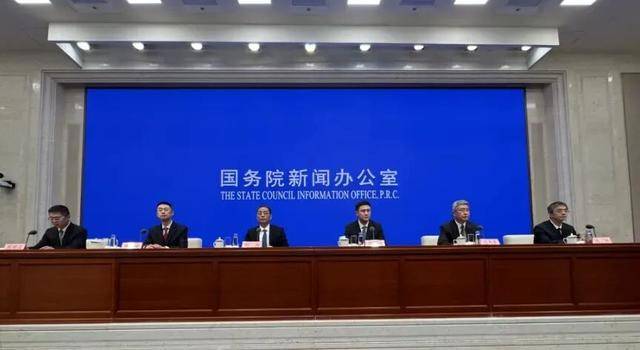
将近10分钟!人民银行副行长邹澜解读物价走势与人民币汇率政策
Sou Hu Cai Jing· 2026-01-15 16:55
Core Viewpoint - The People's Bank of China (PBOC) is focused on supporting economic stability and promoting a reasonable recovery in prices through a supportive monetary policy, while maintaining the stability of the RMB exchange rate against the backdrop of complex global economic conditions [3][4][5]. Economic Indicators - As of December 2025, China's CPI increased by 0.8% year-on-year, reaching the highest level since March 2023, while the core CPI (excluding food and energy) rose by 1.2% [3]. - The Producer Price Index (PPI) saw a reduction in its year-on-year decline, narrowing by 1.7 percentage points from the low in July, with a month-on-month increase for three consecutive months [3]. - Notable price declines were observed in pork (down 30%) and transportation tools (down 11.7%), influenced by cyclical factors and market supply-demand dynamics [3]. Monetary Policy - The PBOC has maintained a supportive monetary policy stance, ensuring ample liquidity and a significant growth in financial totals that outpace nominal GDP growth [4]. - The central bank plans to implement a moderately loose monetary policy to create a conducive financial environment for price recovery [4]. Exchange Rate Management - The PBOC emphasizes a clear and consistent exchange rate policy, allowing market forces to play a decisive role in the formation of the RMB exchange rate, aiming for basic stability at a reasonable and balanced level [4][7]. - Since 2020, the RMB faced depreciation pressure, but the PBOC and the State Administration of Foreign Exchange have strengthened expectation management to mitigate risks of excessive exchange rate fluctuations [5][6]. Future Outlook - The RMB is expected to continue fluctuating within a flexible range, influenced by various factors including economic growth, monetary policy, and geopolitical events [7]. - Approximately 30% of cross-border trade is conducted in RMB, which minimizes the impact of exchange rate fluctuations on foreign trade enterprises [7].