以牙还牙策略

Search documents
谈判可能在进行,但至今依然难言乐观
Hu Xiu· 2025-10-15 00:03
Core Insights - The meeting between the two national leaders is still "on the schedule," but significant differences between the U.S. and China have been exposed, making the outcome uncertain [1] - The U.S. officials' views reflect a fundamental misunderstanding of China's position, particularly regarding technology sanctions and retaliatory measures [2][3] - The differing perspectives on the rare earth agreement indicate a lack of alignment in negotiations, with U.S. officials possibly underestimating the implications of China's policies [4] Group 1: U.S.-China Relations - The U.S. officials believe that China's economic issues will limit its negotiation power, a premise that is increasingly being challenged [5] - The concept of "tit for tat" is evident in China's response to U.S. sanctions, showcasing a more assertive trade negotiation strategy [7][8] - China's recent actions, such as imposing port fees on U.S. ships, reflect a calculated approach to maintain its long-term competitive advantage while avoiding excessive damage to the global economy [11][12] Group 2: Strategic Implications - China's strategy appears to focus on long-term risks rather than short-term uncertainties, indicating a shift in its negotiation tactics [14] - The use of supply chain advantages as a countermeasure against U.S. actions signifies a strategic evolution in China's approach to trade disputes [14] - The ongoing negotiations are characterized by significant distributive issues, where both sides have core demands that are difficult to reconcile, potentially complicating future discussions [17]
以牙还牙:一个思考后续贸易政策的思路
Hu Xiu· 2025-05-15 06:48
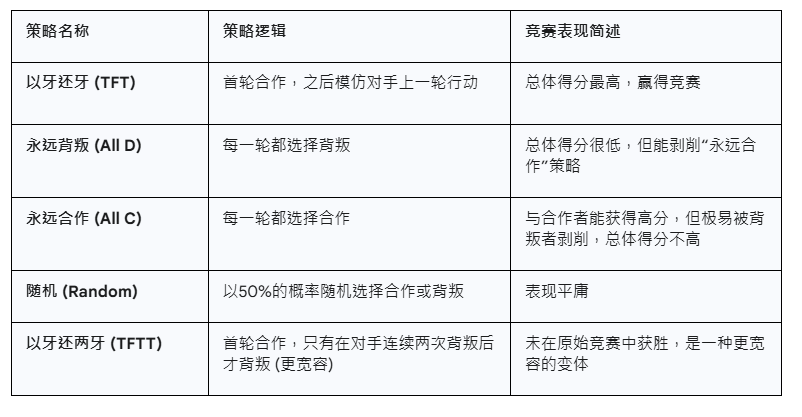
Group 1 - The article discusses the differences between the current tariff situation and the one in 2018, emphasizing that China's structural reforms are lagging behind [1][14] - It highlights that Europe and Japan are facing tariffs for the first time, while China has been involved in tariff negotiations multiple times, leading to different strategic responses [2][8] - The article introduces the "Tit-for-Tat" strategy as the most effective approach in repeated games, where cooperation is initially chosen, followed by mimicking the opponent's previous actions [3][4][5] Group 2 - The article outlines the four essential elements of a successful Tit-for-Tat strategy, which include being nice, retaliatory, forgiving, and clear [8][9] - It suggests that the U.S. has recognized China's Tit-for-Tat strategy, which is a prerequisite for establishing negotiation mechanisms [9] - The article posits that future tariff changes between the U.S. and China are likely to be reciprocal, with either both sides lowering or raising tariffs, rather than maintaining the status quo [10][12] Group 3 - The article reflects on historical examples of structural reforms following economic crises, noting that countries like Japan, Germany, and the UK implemented significant changes post-Great Depression [15][20][21] - It warns against the potential pitfalls of rapid devaluation and fiscal stimulus, which can lead to long-term negative consequences [22][24] - The conclusion emphasizes that measures such as devaluation, interest rate cuts, and fiscal stimulus are effective methods to overcome structural downturns, suggesting a deeper complexity in these economic strategies [24]