以终为始

Search documents
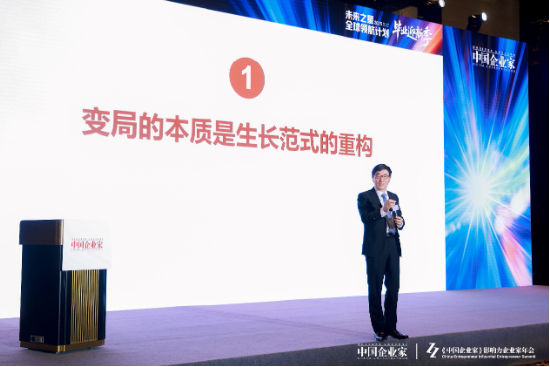
高途创始人陈向东:以“韧性生长”穿越周期,盈利成新战略核心
Xin Lang Cai Jing· 2025-12-10 08:43
Core Insights - The core theme of the speech by Chen Xiangdong, founder and CEO of Gaotu, is "resilient growth," emphasizing the importance of sustainable growth through understanding market trends and adapting to changes [1][10] - Gaotu has shifted its strategic focus to prioritize profitability as the core goal for the fiscal year 2026, moving from rapid growth to high-quality development [1][8] Strategic Insights - Resilience is defined not only as the ability to persevere through adversity but also as maintaining recovery and inner joy during favorable conditions [3][11] - Chen reflects on the entrepreneurial saying "seeing is believing," proposing instead that "believing comes from seeing," which underscores the need for clear insights into trends and market changes [3][11] - The current era is characterized by significant changes, particularly with AI technology reshaping industries, necessitating a reevaluation of traditional growth models that relied on scale and traffic [4][12] Six Pillars of High-Quality Growth - Companies must acknowledge the obsolescence of old growth models and embrace new paradigms, particularly in light of AI as a structural transformation rather than just a tool [4][12] - Insight is built on continuous learning and understanding trends, technology, and user needs, which is crucial for strategic decision-making [5][14] - The philosophy of "winning before the battle" emphasizes the importance of strategic planning and differentiation in product and channel development [5][14] - Leadership is defined by sincerity, service to others, and a desire for learning, which fosters trust and enables organizations to navigate uncertainties [5][14] - All strategies must translate into measurable results, with a focus on financial accountability and sustainable profitability [6][15] - These six elements are interconnected and form the methodology for Gaotu's transition from survival to prosperity [7][16] Financial Performance - Gaotu's recent financial report for Q3 of fiscal year 2025 shows a quarterly revenue of 1.58 billion yuan, a year-on-year increase of 30.7%, and a cumulative revenue of 4.46 billion yuan for the first three quarters, up 41% [8][17] - The company has successfully transitioned from a single K12 business model to a diversified educational ecosystem, with over 95% of revenue coming from learning services, particularly non-academic courses [8][17] - The online non-academic segment achieved its first quarterly profit, with expectations for meaningful profit margins for the year [8][17] - The university and adult education segments also showed strong performance, with quarterly revenue exceeding 237 million yuan and significant growth in net profit [8][17] - Offline learning services have made substantial progress, contributing over 10% of total revenue, driven by improved local course offerings and AI-enhanced teaching [8][17] Future Outlook - Gaotu aims to focus on a healthy unit economic model rather than blind scale pursuit, with a target revenue growth of approximately 15% for fiscal year 2026 [9][18] - The company is committed to enhancing product quality, teacher training, and user experience for early-stage businesses while scaling mature operations for profitability [9][18] - Chen emphasizes that the coming years will reveal a transformed Gaotu, highlighting the importance of rationality, sincerity, and systematic capabilities in achieving resilient growth [9][18]


判断一家企业的经营水平怎么样,关键就在这“四看”
3 6 Ke· 2025-10-20 02:47
Group 1 - The core idea emphasizes that effective management is crucial for business success, and it introduces the concept of "Four Views" for better business operations [1][22] Group 2 - "Horizontal View": Benchmarking against industry peers is essential to avoid insular thinking and to identify gaps in performance [3][5][7] - "Vertical View": Long-term thinking is necessary to prevent short-sightedness, as businesses must consider the future value of their actions [9][11][13] Group 3 - "Backward View": Starting with the end goal in mind helps in defining clear paths and milestones, ensuring that resources are allocated effectively [14][15][17] Group 4 - "Perspective Shift": Understanding the needs of employees, customers, and partners through empathy can enhance engagement and operational efficiency [18][19][20][21]
“创新药一级市场不能再冷下去了”
Hu Xiu· 2025-09-20 08:14
Group 1 - The core viewpoint of the article highlights the contrasting dynamics in the innovative drug market, where while there is a resurgence in public market interest, the primary market remains challenging for fundraising [1][4][22] - In 2025, over 60 innovative drug companies saw their stock prices double, driven by numerous business development (BD) transactions, yet the primary market for innovative drugs is still experiencing a downturn, with a 7.4% decrease in financing events and a 24.5% drop in total financing amount compared to the previous year [3][4] - A survey indicated that 60% of biotech leaders believe the primary market has emerged from its lowest point, but 33% feel it remains stagnant, reflecting ongoing difficulties in fundraising [4][13] Group 2 - Founders of innovative drug companies report significant challenges in securing funding, with one entrepreneur stating that it often requires discussions with over 100 institutions to secure investment [2][14] - The investment landscape has shifted, with investors now focusing more on the commercialization capabilities of companies rather than just scientific concepts, indicating a more cautious approach to funding [15][16] - The current investment environment is characterized by a preference for later-stage assets, with investors seeking clear milestones and clinical data to support funding decisions [15][17] Group 3 - The exit environment remains pressured, with 74% of biotech respondents indicating that the lack of exit channels is a major factor affecting investment enthusiasm [23][24] - Despite some improvements in the IPO landscape, many companies still face difficulties in finding buyers for their shares, leading to a stagnation in the cash flow cycle of equity investments [25][26] - The pressure for exits is compounded by the reluctance of state-owned capital to take on high-risk, non-profitable assets, further complicating the fundraising landscape [26][31] Group 4 - There is a concern that the current wave of BD transactions may lead to a gap in investment opportunities in the future, as the influx of capital has not kept pace with the needs of emerging technologies [33][34] - Data shows a stark contrast in financing amounts between domestic and international markets, particularly in gene therapy, indicating a potential lag in innovation if funding does not improve [34] - Investors express cautious optimism about the future, suggesting that a stable policy environment and successful public market performance could stimulate renewed interest in the primary market [34][35]
35岁之后,互赖而非依赖,强大而非强势
3 6 Ke· 2025-07-11 01:46
Group 1 - The article emphasizes the importance of self-love and self-awareness as essential assets for personal happiness and fulfillment [1] - It discusses the journey of self-discovery and the need to recognize and appreciate oneself, even amidst challenges [1] - The author reflects on the pressures of societal expectations and the importance of self-acceptance [1] Group 2 - The article outlines seven habits that contribute to personal effectiveness and growth, emphasizing a sequential approach [2] - The first three habits focus on self-management and personal victories, while the next three emphasize collaboration and public victories [2] - The final habit encourages continuous self-renewal and improvement across various aspects of life [2] Group 3 - Habit one, "Be Proactive," distinguishes between passive and proactive mindsets, highlighting the importance of personal choice in responses to external stimuli [10][4] - Habit two, "Begin with the End in Mind," stresses the necessity of having clear goals to avoid distractions and misdirection [13] - Habit three, "Put First Things First," emphasizes prioritizing important tasks over urgent ones to achieve long-term benefits [29][31] Group 4 - Habit four, "Think Win-Win," introduces the concept of emotional bank accounts in relationships, advocating for mutual benefit in interactions [40] - Habit five, "Seek First to Understand, Then to Be Understood," focuses on empathetic listening and understanding others' perspectives [45] - Habit six, "Synergize," encourages leveraging differences to create greater outcomes than individual efforts [60] Group 5 - Habit seven, "Sharpen the Saw," emphasizes the importance of self-renewal in physical, mental, emotional, and social aspects to maintain effectiveness [63] - The article concludes by reiterating the significance of these habits in achieving a fulfilling and balanced life [66][74]