
价值融合

Search documents
荣耀联姻泡泡玛特:一部潮玩手机背后的商业突围战
Xin Lang Cai Jing· 2026-01-16 07:31
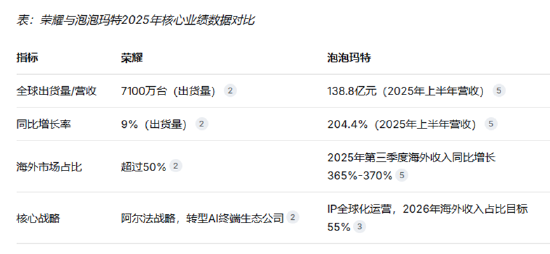
Core Insights - Honor will launch the industry's first trendy toy smartphone in collaboration with Pop Mart on January 19, 2026, reflecting both companies' ambitions for differentiation and new commercial strategies [1][9] - The global smartphone market has seen a decline in shipment volumes for several consecutive quarters, making collaborative partnerships a strategic choice rather than just a marketing gimmick [10][12] Group 1: Market Context - In Q3 2025, China's smartphone market shipped approximately 68.4 million units, a slight year-on-year decrease of 0.5%, with Honor and OPPO tied for fifth place with 9.9 million units each [12] - The smartphone industry's cost structure is rising, putting significant operational pressure on global manufacturers, while high-end market consumers remain less price-sensitive if products demonstrate sufficient technological innovation [12] - Honor's collaboration with Pop Mart aims to achieve product differentiation through trendy toy IPs, breaking through the homogenization of competition [12] Group 2: Company Performance - Honor's global shipment volume reached 71 million units in 2025, with a 9% year-on-year increase, and overseas sales grew by 47%, marking the first time overseas sales accounted for over half of total sales [10][13] - Pop Mart reported a revenue of 13.88 billion yuan in the first half of 2025, a year-on-year increase of 204.4%, with significant growth in both domestic and overseas markets [10][13] Group 3: IP Value and Business Logic - Pop Mart's IP empire is expanding rapidly, with the LABUBU series generating 4.81 billion yuan in revenue in the first half of 2025, a staggering year-on-year growth of 668% [14][16] - The collaboration with Honor allows Pop Mart to extend its IP value into the 3C digital field, reaching a broader audience beyond its core fan base [14] - Analysts categorize IP collaborations into lightweight partnerships focusing on branding and deep customizations that integrate IP culture throughout the product lifecycle [14][15] Group 4: Future Outlook - The collaboration between Honor and Pop Mart has the potential to create genuine value integration, moving beyond superficial marketing tactics [17] - Pop Mart's global strategy aims for overseas revenue to account for 55% by 2026, with significant growth in international markets already observed [17][18] - Recent trends in Pop Mart's blind box business show a divergence between online sales and secondary market performance, indicating a more rational development phase in the trendy toy market [18]


培优塑强推动服务型制造跃升
Xin Lang Cai Jing· 2025-12-26 23:07
Core Viewpoint - The recent implementation plan by seven departments, including the Ministry of Industry and Information Technology, aims to develop an upgraded version of service-oriented manufacturing by 2028, marking a new phase in China's service-oriented manufacturing development [1]. Group 1: Current State and Challenges - China's service-oriented manufacturing has transitioned from concept to practical implementation, with continuous innovation in models and an extension of service components [1]. - Current challenges include insufficient depth in service transformation for some enterprises, which remain at the basic service level, and the underutilization of collaborative efficiency across the industrial chain [1]. Group 2: Strategic Directions for Improvement - To enhance service-oriented manufacturing, the focus should be on deepening integration, shifting from single product offerings to "product + service" solutions, and moving from transactional to relational manufacturing [1]. - Emphasis on digital and intelligent integration is crucial, accelerating the fusion of technologies like industrial internet and artificial intelligence with the entire manufacturing process [2]. - Promoting value integration through service elements embedded in the lifecycle of products is essential for transitioning from "selling products" to "selling value" [1][2]. Group 3: Innovation and Systematic Approaches - The essence of service-oriented manufacturing lies in innovation, which is vital for reshaping industrial competitiveness [2]. - The "14th Five-Year Plan" suggests promoting technological upgrades and digital transformation in manufacturing, focusing on smart, green, and service-oriented manufacturing [2]. - A systematic approach is necessary for quality upgrades in service-oriented manufacturing, requiring multi-party collaboration and comprehensive strategies [2]. Group 4: Local Adaptation and Implementation - Strengthening service-oriented manufacturing is a systematic project that relates to high-quality development in manufacturing [3]. - Localities should explore transformation paths based on their industrial foundations, aiming for a leap from quantitative to qualitative changes in service-oriented manufacturing [3].