价值银保

Search documents
银保渠道,挥别“代销”?
2 1 Shi Ji Jing Ji Bao Dao· 2025-09-12 02:09
Core Insights - The insurance channel through banks is showing signs of recovery after a period of transformation, with its revenue share returning to 50% for the first time in 15 years [1][2] - The recovery is driven by multiple factors including policy changes, market dynamics, and a shift towards deeper strategic cooperation between banks and insurance companies [1][4][11] Policy Changes - The "reporting and banking integration" policy has been a significant catalyst for the transformation of the bank-insurance channel, aiming to standardize fee structures and reduce costs [4][5] - The cancellation of the "one-to-three" restriction allows banks to collaborate with more insurance companies, further enhancing cooperation opportunities [6][7] Market Dynamics - The bank-insurance channel is becoming a strategic alternative for insurance companies as individual insurance channels face growth challenges [11][12] - Banks are increasingly viewing bank-insurance business as a key driver for non-interest income, especially in a low-interest-rate environment [12][13] Performance Metrics - In the first half of the year, the bank-insurance channel's premium income growth outpaced individual insurance channels, with major insurance companies reporting significant year-on-year growth [2][3] - Key performance indicators show that the new business value from bank-insurance channels has increased significantly, with some companies reporting over 100% growth [3][9] Strategic Cooperation - The bank-insurance collaboration is evolving from a simple product distribution model to a deeper strategic alliance focused on customer needs [15][17] - Insurance companies are enhancing their strategies by improving product offerings, expanding distribution networks, and leveraging digital tools to increase efficiency [16][17] Customer Demand - There is a notable shift in customer preferences towards long-term, stable insurance products, driven by demographic changes and economic conditions [13][14] - The current market indicates that a small percentage of bank customers are utilizing insurance products, highlighting significant potential for growth in this area [14]

去年头部险企银保收入同比上涨 上市银行代销保险收入同比普降
Zheng Quan Ri Bao· 2025-08-08 07:26
Core Viewpoint - The insurance industry is experiencing a paradox where insurance companies report increased income from bank insurance sales, while banks see a decline in their commission income from selling insurance products. This is attributed to the implementation of the "bank-insurance integration" policy and the transformation of bank insurance business models [1][2]. Group 1: Bank-Insurance Channel Performance - In 2024, major listed insurance companies reported significant growth in bank insurance channel premium income, with New China Life Insurance achieving 51.674 billion yuan, up 8.1% year-on-year, and China Life Insurance reporting a slight decline in total premium income from this channel [2]. - Conversely, several listed banks reported a general decline in their commission income from insurance sales, with Agricultural Bank's net commission income dropping by 5.7% to 75.567 billion yuan, primarily due to reduced insurance-related fees [3][4]. Group 2: Impact of "Bank-Insurance Integration" Policy - The "bank-insurance integration" policy has led to a significant reduction in commission rates for bank insurance sales, averaging a decrease of about 30%, which explains the contrasting trends in premium income for insurers and commission income for banks [3][4]. - The policy imposes stricter controls on commissions, resulting in lower intermediary income for banks, while insurance companies are optimizing their business structures to focus on high-value, long-term products [4][6]. Group 3: Future Development of Bank-Insurance Collaboration - Insurance companies are shifting their focus towards "value bank insurance," aiming to enhance the business value of this channel. For instance, Ping An Life reported a 62.7% increase in new business value from its bank insurance channel [5][6]. - The industry is moving towards a model that balances premium scale and value, with an emphasis on long-term customer needs and a collaborative approach between banks and insurers to improve customer loyalty and reduce sales costs [6].



新单规模萎缩 转型产品出单难 银行卖保险“卖不动了”?
Zhong Guo Zheng Quan Bao· 2025-08-08 07:26
Core Viewpoint - The insurance industry is facing significant challenges in the bancassurance channel, with a notable decline in new premium sales expected in 2024 due to various factors including reduced sales incentives and market demand exhaustion [1][2]. Summary by Sections Bancassurance Channel Performance - In 2024, new premium sales through the bancassurance channel are projected to be approximately 660 billion yuan, reflecting a year-on-year decline of about 14% [2]. - The decline in new premium sales indicates a decrease in the ability of insurance companies to expand their business in the current year [2]. Factors Influencing Sales - The drop in new premium sales is attributed to a combination of factors including a sharp decline in preset interest rates and sales expenses, which dampens customer purchasing enthusiasm [2]. - Previous market demand was overstretched due to multiple waves of "buying before the stop" leading to a lack of new policy motivation [2]. Impact of Regulatory Changes - The implementation of the "reporting and banking integration" policy in August 2023 is expected to have significant effects in 2024, reducing operational costs for insurance companies and mitigating fee loss risks [2][3]. Product Transition Challenges - The shift towards "fixed income + floating dividend" products has increased the proportion of dividend insurance in the market, but sales difficulties have also risen due to the uncertainty associated with these products [4][5]. - Many bank sales personnel find it challenging to sell dividend insurance, as customers are often risk-averse and prefer guaranteed returns [4][5]. Need for Business Repositioning - The changes in the bancassurance channel are prompting a re-evaluation of business strategies, emphasizing the need for a balance between scale and value [6]. - Insurance companies are increasingly tolerant of negative growth in new premiums, focusing on deeper integration with banking operations to create a more collaborative business environment [6]. Future Collaboration Opportunities - There is potential for insurance companies and banks to explore long-term win-win cooperation models that prioritize customer needs and long-term business relationships [7]. - The transformation of retail banking into wealth management creates opportunities for deeper collaboration with insurance companies, enhancing both premium contributions and business value [7]. Strategic Initiatives - Companies are planning to enhance the professionalism of their teams and optimize customer management models to promote long-term business development [8]. - Efforts will be made to control costs effectively and create a diversified product service system to meet the varying needs of different customer segments [9].
“报行合一”阵痛拆解:“价值银保”成新驱动力,新华保险2024年新业务价值增速达516%
2 1 Shi Ji Jing Ji Bao Dao· 2025-04-25 09:45
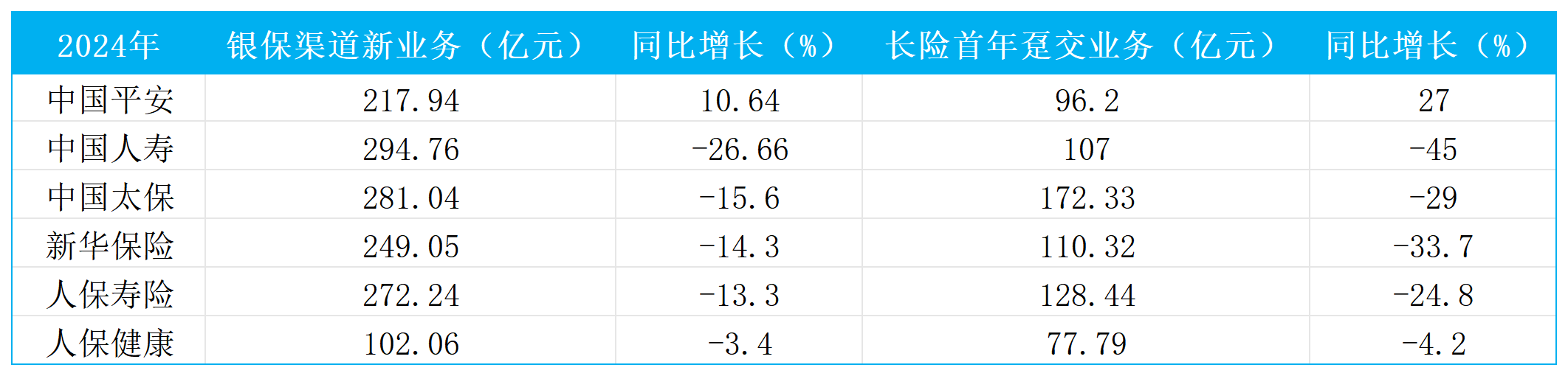
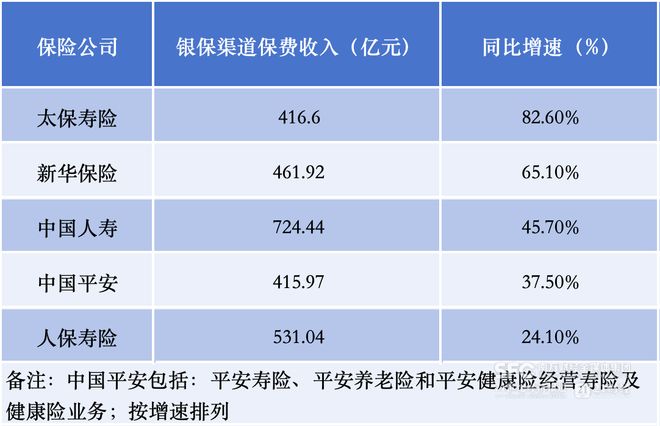
Core Insights - The "Report and Action Integration" policy has significantly impacted the insurance and banking sectors, with 2024 being the first full operational year under this policy. The annual reports reveal the development status of major listed insurance companies and banks under this policy's influence [1] Group 1: Insurance Premiums and Business Performance - The total premium income from the bancassurance channel of the five major listed insurance companies reached 280.8 billion yuan, with individual contributions from China Ping An (47.59 billion yuan), China Life (76.20 billion yuan), China Pacific Insurance (40.90 billion yuan), New China Life (51.67 billion yuan), and China Re (64.44 billion yuan). All but China Life experienced varying degrees of year-on-year growth [1] - Despite a significant contraction in new policies, the new business value from the bancassurance channel has shown a notable upward trend under the "Report and Action Integration" policy, indicating a shift towards "value bancassurance" [1][2] Group 2: New Business Trends - The new business scale in the bancassurance channel has seen a substantial decline, with an estimated 730 billion yuan in new premiums for 2024, representing a year-on-year decrease of approximately 21%. Among the five major insurance companies, only China Ping An reported growth, while the others experienced declines of over 10% [3] - The decline in new business is primarily attributed to a drop in first-year lump-sum payments for long-term insurance, with decreases exceeding 20% across several companies. For instance, China Life's first-year lump-sum premium was 10.7 billion yuan, down 45% [4] Group 3: Business Value and Sustainability - The new business value from the bancassurance channel has significantly increased, with New China Life reporting a 516% growth, while China Ping An's new business value grew by 62.7%. Other companies also reported increases, indicating a shift towards sustainable development and a focus on "value bancassurance" [6][9] - The increase in renewal business and long-term premium payments suggests that insurance companies are moving towards sustainable growth, with various indicators showing positive trends [8] Group 4: Strategic Responses and Market Dynamics - The "Report and Action Integration" policy has led to increased transparency in costs and a reduction in channel expenses, with average reductions around 30%. This has shifted the competitive landscape, emphasizing product design and service quality over commission-based competition [11] - Different companies are adopting varied strategies in response to the regulatory environment. For example, China Ping An is deepening cooperation with major banks, while New China Life is optimizing its channel layout with a differentiated approach [12]