企业价值提升计划

Search documents
太残暴了!韩国股市涨得爹妈不认,人类已经无法阻挡!
Sou Hu Cai Jing· 2026-02-27 15:50
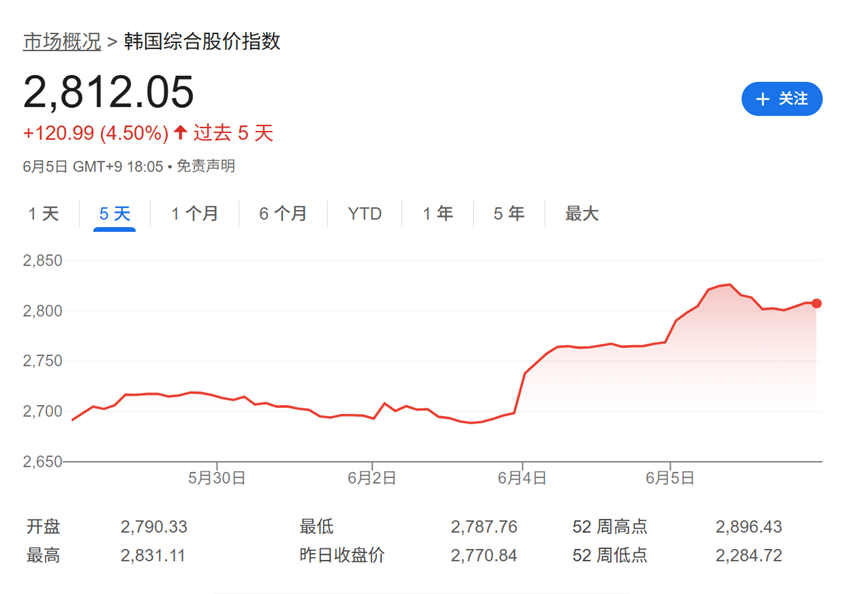
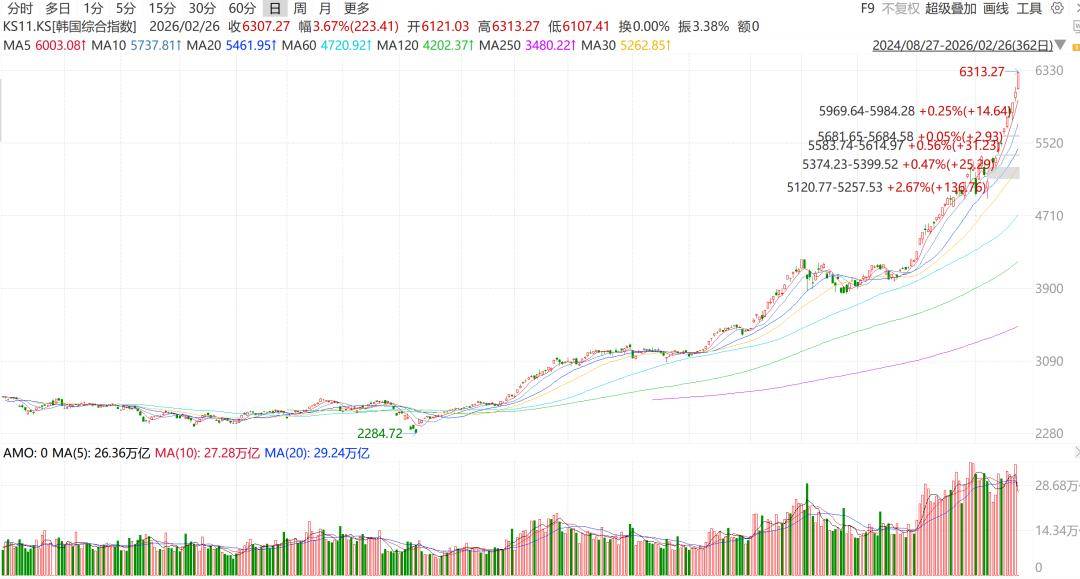
昨天看到一则有意思的新闻: "韩国政府数据显示,2025年总和生育率升至0.80%,较2024年的0.75%回升,连续第二年增长;2025年韩国新生儿人数为25.45万名,同比增加6.8%,增量 约1.61万名,这是15年来最大年度增幅。" 要知道,韩国的年轻人是出了名的不爱生娃,整个国家的总和生育率常年盘踞全球倒数第一,甚至有专家预言,韩国有可能成为"地球上第一个自然消失 的国家"。然而过去两年,韩国长期面临的人口危机居然出现了明显的缓解迹象,不得不说是有些过于反常。 背后的原因当然是错综复杂的,其中很重要的一点,可能在于过去两年韩国股市的大涨。 诚然,近两年韩国股市以其惊人的涨幅成为全球资本市场瞩目的焦点。从2025年全年逾75%的涨幅,到2026年初一举突破6000点大关、市值超越法国跃居 全球第九,韩国综合股价指数(KOSPI)录得了1999年以来最强劲的表现。而韩国老百姓从股市中获得了不菲的收益,家庭财富的攀升使得他们对未来的 信心得到极大提振,生娃的意愿当然也会随之改善,确实合情合理。 那么问题来了:韩国这一轮超级大牛市,背后的驱动因素有哪些呢?本文将尝试给出解答。 一、韩国股市暴涨的三重硬核逻辑 ...

投资者押注AI和治理改革,韩国股市创历史新高
Hua Er Jie Jian Wen· 2025-10-30 07:27
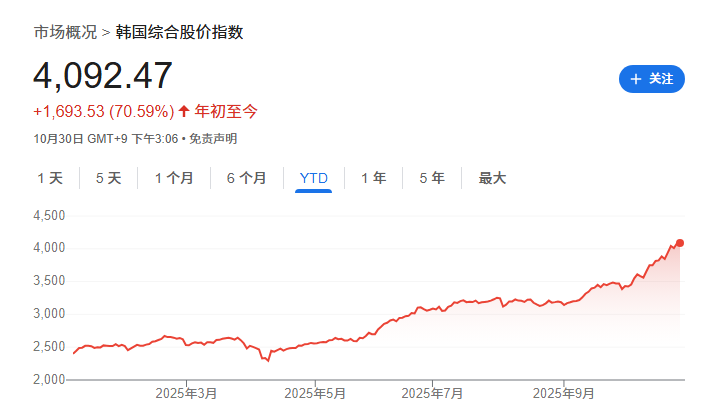
Core Insights - The KOSPI index has reached new historical highs driven by the AI chip sector and corporate governance reforms, with a year-to-date increase of 72% [1][2] Group 1: Market Performance - The KOSPI index has set 16 intraday records in October alone, with a monthly increase of nearly 21%, surpassing the 4000-point mark [1] - The index's year-to-date performance significantly outpaces Japan's Nikkei 225, which has risen by 26% [2] - Despite foreign investors selling 1.37 trillion KRW worth of Korean stocks last week, local investors' buying activity has sustained the KOSPI's upward momentum [2][6] Group 2: AI Chip Sector - The resurgence of the semiconductor industry, particularly driven by AI, is the core factor behind the current market rally [3] - SK Hynix reported record quarterly revenue and profit, benefiting from strong demand for high-bandwidth memory used in generative AI chips, with its stock price increasing over twofold this year [3] - Samsung Electronics also reported a significant increase in operating profit, with its stock price rising by over 96% this year [3][4] Group 3: Corporate Governance Reforms - Structural reforms aimed at eliminating the "Korean discount" are progressing, enhancing the investment appeal of Korean stocks [2][5] - The "Corporate Value Enhancement Plan" set to launch in 2024 is expected to encourage companies to improve shareholder returns and governance, similar to Japan's corporate governance reforms [5] - Analysts believe that these governance reforms will support the market's upward trend if regulatory bodies continue to push for value-enhancing measures [5] Group 4: Valuation and Investor Sentiment - Despite significant gains, analysts assert that the valuation of the Korean stock market remains attractive, with a KOSPI P/E ratio of 17.65, lower than the Nikkei 225's 25.86 [2][7] - Local investors have taken over from foreign investors, contributing to market stability and reducing reliance on foreign capital [6] - The valuation of leading semiconductor firms like Samsung and SK Hynix is still considered low compared to global peers, indicating potential for further growth [7][8]
李在明誓言推动韩股回报翻倍!全球资管巨头纷纷加仓
Jin Shi Shu Ju· 2025-06-09 04:23
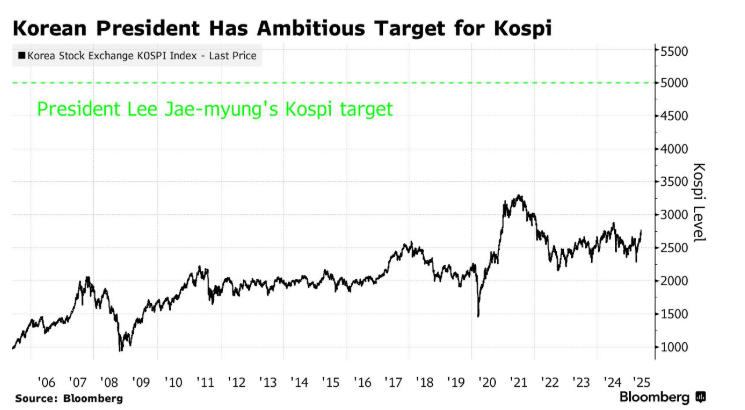
Core Viewpoint - Investors are increasingly optimistic about the South Korean stock market due to the new president's "shareholder-friendly" policies, which are expected to enhance returns significantly [1][4]. Group 1: Market Sentiment and Foreign Investment - Major global asset management firms, including Aberdeen Investments, Pictet Wealth Management, and Franklin Templeton, have recently increased their holdings in South Korean stocks or upgraded their outlook for the Korean market [1]. - On the first day of Lee Jae-myung's presidency, foreign capital returned to the South Korean stock market, pushing the KOSPI index into a bull market, indicating investor confidence in the new administration's ability to enhance shareholder returns [4]. Group 2: Corporate Governance Reforms - Lee Jae-myung's administration aims to strengthen corporate governance and improve market returns, with a focus on amending commercial laws to enhance the responsibilities of boards towards shareholders [4][6]. - The proposed reforms include improving the nomination process for audit committee members and implementing electronic voting systems, targeting the chaebols and their founding families who have significant influence over the economy and corporate management [6]. Group 3: Shareholder Activism and Corporate Value Enhancement - There has been a sevenfold increase in shareholder activism targeting South Korean companies from 2020 to 2024, reflecting growing investor dissatisfaction with the disconnect between corporate profits and returns to minority shareholders [6]. - The government is expected to deepen the "Corporate Value-up" initiative, which encourages companies to adopt measures to enhance shareholder returns, similar to Japan's "pointing out" mechanism [6]. Group 4: Positive Market Indicators - The total dividend payout of companies in the KOSPI index is projected to increase by 12% year-on-year in 2024, reaching 44 trillion KRW (approximately 32.4 billion USD), while stock buybacks are expected to double to 18.7 trillion KRW [6].
新政府上台,韩国股市强劲,外资对“韩特估”热情重燃
Hua Er Jie Jian Wen· 2025-06-08 01:20
Core Viewpoint - Investors are betting on the new shareholder-friendly policies of South Korea's President Lee Jae-myung to drive the Korean stock market upward after years of underperformance [1][2] Group 1: Market Sentiment and Investment Actions - Global asset management firms like Aberdeen Investments, Pictet Wealth Management, and Franklin Templeton have recently increased their holdings in Korean stocks or upgraded their outlooks [1] - Aberdeen Investments has raised its allocation to Korean stocks to overweight in its $1.2 billion Asia ex-Japan fund [1] - Since President Lee's inauguration, the KOSPI index has risen over 4%, rebounding more than 20% from its April low, approaching a bull market [2] Group 2: Legislative Reforms and Corporate Governance - Legislative reforms are aimed at addressing the "Korean discount," a phenomenon where local stocks are priced below their book value and lower than overseas competitors [4] - The new administration is expected to enhance shareholder rights by revising commercial laws to expand board responsibilities to shareholders [4][5] - There has been a sevenfold increase in activist campaigns targeting companies from 2020 to 2024, indicating growing shareholder impatience [4] Group 3: Corporate Actions and Future Outlook - A total of 160 companies have announced value enhancement plans, although many lack details [6] - KOSPI component companies are projected to increase total dividend payments by 12% in 2024, reaching 44 trillion won ($32.4 billion) [6] - Stock buybacks are expected to more than double in 2024, reaching 18.7 trillion won [6] - Despite challenges, including potential U.S. tariff increases and economic contraction, there is optimism about a cultural shift in corporate governance in South Korea [6]