企业结汇需求增加

Search documents
离岸人民币“破7”的背后
Sou Hu Cai Jing· 2025-12-30 01:43
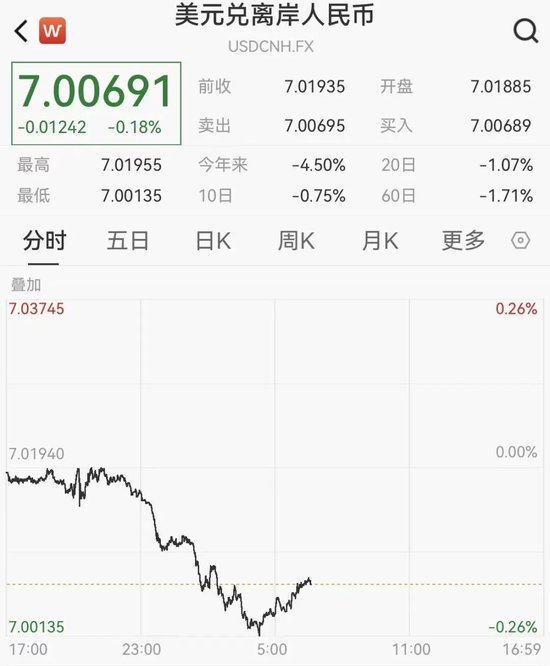
Core Viewpoint - The offshore RMB has recently surpassed the 7.0 mark against the USD, reaching a 15-month high, driven by a weaker USD and strong domestic equity market performance attracting foreign capital inflows [1][2]. Group 1: Reasons for RMB Appreciation - The current appreciation of the RMB is largely seen as passive, influenced by a nearly 10% decline in the USD index and strong performance in the domestic equity market [2]. - Since May 2023, the offshore RMB has depreciated by 4.5% against the USD, while the onshore RMB has seen a 3.83% decline [2]. - Increased corporate demand for currency settlement towards the year-end has contributed to the RMB's seasonal strength, with historical data indicating that the settlement surplus often peaks before the Spring Festival [2][3]. Group 2: Impact on Capital Markets - The appreciation of the offshore RMB against the USD is expected to positively impact the capital markets, enhancing the overall risk appetite for Chinese equities [4]. - Foreign capital is likely to increase its allocation to RMB-denominated assets, which may lead to sustained inflows into the A-share market [4]. - The performance of futures markets may vary, with import-dependent commodities potentially benefiting from lower procurement costs, while export-oriented commodities may face pressure due to reduced competitiveness [5]. Group 3: Economic and Policy Context - The resilience of the domestic economy is providing support for the RMB, with recent economic data indicating stable growth [3]. - International financial institutions have raised their growth forecasts for China, reflecting increased foreign interest in the Chinese market [3]. - The People's Bank of China is focusing on maintaining liquidity and ensuring that monetary policy aligns with economic growth and price stability, which is crucial for stabilizing the RMB exchange rate [6].
人民币盘中触及7.01,明年或温和升值
Xin Lang Cai Jing· 2025-12-24 12:45
Core Viewpoint - The recent appreciation of the Renminbi (RMB) is primarily attributed to a weaker US dollar and strong domestic equity market performance attracting foreign capital inflows, with expectations for continued strength in the RMB against the USD in the near term and moderate appreciation by 2026 [4][15]. Group 1: Factors Contributing to RMB Strength - The RMB has shown a trend of moderate appreciation throughout the year, with the offshore RMB starting the year at 7.27 against the USD and reaching a low of 7.42879 on April 8 before strengthening to around 7.02 by December [5][16]. - As of December 24, the offshore RMB surpassed 7.01, with a minimum of 7.00621, while the USD index fell to around 97.8, indicating a significant decline of nearly 10% for the USD index this year [6][16]. - Increased corporate demand for currency settlement towards the year-end has contributed to the RMB's seasonal strength, with historical data showing that the settlement surplus typically peaks before the Spring Festival [6][17]. Group 2: Economic Resilience and Foreign Investment - The resilience of the domestic economy supports the RMB, with recent economic data indicating stable growth and increased foreign capital inflows, as recognized by institutions like the IMF and World Bank [7][18]. - The positive outlook for the Chinese economy has led to a resurgence of interest from overseas investors, further bolstering the RMB's position [7][18]. Group 3: Future Outlook and Market Impact - Analysts predict that the RMB will maintain a strong position in the short term, with expectations for the exchange rate to reach 6.7 against the USD by the end of 2026 and further to 6.5 by 2027 [10][21]. - The appreciation of the RMB is expected to positively impact the capital markets, potentially boosting stock valuations, as historical data suggests a 0.1% increase in exchange rates can lead to a 3% to 5% rise in stock valuations [10][21]. - However, the appreciation may also increase the costs of cross-border investments, affecting returns for investors engaged in cross-border financial activities [11][22].