
私人信贷风险

Search documents
95岁巴菲特,最新发声!现在的波动“不值一提”,卖苹果卖早了!携手库里重启“慈善午餐”
券商中国· 2026-03-31 15:07
Market Insights - Warren Buffett believes current market valuations lack attractiveness, stating that recent market declines are insignificant compared to historical downturns [4] - Berkshire Hathaway has not found many large-scale investment opportunities during this year's market downturn, but Buffett hinted at a potential small-scale new investment [4] - Berkshire Hathaway purchased $17 billion in government bonds this week, with cash equivalents exceeding $370 billion, primarily in government bonds [5] Leadership Transition - Buffett will hand over the CEO position to Greg Abel in early 2026 but continues to work daily and maintain high market sensitivity [6] - He emphasizes that he will remain involved in investment decisions and will not make any investments that Abel disagrees with [6] Apple Investment - Buffett's investment in Apple has yielded over $100 billion in profits, and he considers it Berkshire's largest holding [6] - He expressed regret about selling Apple shares too early and indicated a willingness to buy more if the stock price becomes attractive [6][7] - Despite a recent decline of over 14% from its peak, Buffett does not find Apple stock attractive at the moment [7] Personal Relationships - Buffett has distanced himself from Bill Gates since the Jeffrey Epstein incident, stating he does not want to be involved in any potential legal issues [8] - He acknowledged their past friendship and charitable collaborations but prefers to refrain from further comments until the situation is clarified [9] Charity Initiative - Buffett announced the relaunch of a charity lunch auction in collaboration with NBA star Stephen Curry, with proceeds supporting vulnerable groups and children's development projects [10] - The auction will take place on eBay starting May 7, with the winning bidder joining Buffett and the Currys for lunch on June 24 [11] - This charity initiative has raised over $50 million in its 20-year history, with a record single bid of $19 million in 2022 [11]



新债王:进入“保全资本”模式,风险仓位已砍到“历史最低”,“美联储加息、美国衰退、美债软违约”都有可能
美股IPO· 2026-03-29 01:47
Core Viewpoint - The long-term decline in U.S. Treasury yields that has lasted for 40 years has ended, and the massive debt burden is pushing the economy towards an unsustainable edge, with risks of a liquidity disaster similar to the 2006 subprime crisis [1][4][5] Group 1: Economic Environment and Interest Rates - The current financial environment is accumulating significant risks, with a warning against the consensus expectation of imminent interest rate cuts by the Federal Reserve [4][7] - Gundlach argues that the Federal Reserve is a follower of the two-year Treasury yield rather than a leader, suggesting that interest rates will not decrease as long as the two-year yield remains high [7][42] - The prediction is that if oil prices remain high, the Federal Reserve will likely raise interest rates instead of cutting them [8] Group 2: Private Credit Market Risks - Gundlach draws parallels between the current private credit market, estimated at $2-3 trillion, and the subprime mortgage market before the 2008 financial crisis, indicating a potential liquidity disaster [9][30] - He highlights the opacity in valuations within the private credit market, where different managers may hold identical positions but report vastly different valuations [9][30] - The fundamental mismatch in private credit, where illiquid assets are packaged for investors needing regular redemptions, is expected to lead to significant market turmoil [9][30] Group 3: Investment Strategy Recommendations - Gundlach recommends a radical shift in asset allocation, advising investors to completely divest from U.S. stocks and instead invest 40% in non-U.S. equities, particularly emerging markets [10][29] - He suggests allocating 25% to short-term fixed income, 15% to commodities (10% in a commodity index and 5% in gold), and holding 20% in cash to wait for better entry points in the market [11][12][29] - The emphasis is on capital preservation in a changing investment landscape, moving away from speculative assets [10][29] Group 4: U.S. Debt Concerns - The U.S. national debt has reached $39 trillion, with Gundlach warning that crossing the $40 trillion mark could trigger a psychological threshold for investors [13][24] - He predicts that in the next recession, long-term Treasury yields will rise rather than fall due to expanding deficits, contradicting traditional expectations [14][24] - Gundlach raises the possibility of a "soft default" or restructuring of U.S. Treasury securities, where the government may forcibly modify bond terms to reduce interest payments [15][25][26]

新债王:进入“保全资本”模式,风险仓位已砍到“历史最低”,“美联储加息、美国衰退、美债软违约”都有可能
华尔街见闻· 2026-03-28 13:14
Core Viewpoint - The 40-year decline in interest rates has ended, and the massive debt burden is pushing the economy towards an unsustainable edge, with the private credit market resembling the subprime crisis of 2006, potentially leading to a liquidity disaster [2][3]. Federal Reserve Policy - Gundlach warns against the prevailing market expectation of interest rate cuts by the Federal Reserve, asserting that the Fed is a follower of the two-year Treasury yield rather than a leader [5][6]. - He predicts that if oil prices remain high, the Fed will likely raise interest rates instead of cutting them [6]. Private Credit Market - Gundlach draws parallels between the current private credit market, estimated at $2-3 trillion, and the subprime mortgage market before the 2008 financial crisis, indicating a significant risk of a similar disaster [6][7]. - He highlights the fundamental mismatch in private credit, where illiquid assets are packaged for investors needing regular redemptions, warning of a potential major shakeout in this sector [7]. Investment Strategy - In response to rising long-term interest rates and credit crisis concerns, DoubleLine Capital has reduced its risk exposure to the lowest level in its 17-year history, prioritizing capital preservation [8][26]. - Gundlach recommends a radical asset allocation strategy: 40% in non-U.S. stocks, 25% in short-term high-quality bonds, 15% in commodities (10% in the Bloomberg Commodity Index and 5% in gold), and 20% in cash [9][10][11]. Debt Concerns - Gundlach expresses deep concern over the U.S. national debt, which has reached $39 trillion, warning that once it hits $40 trillion, it could become a psychological tipping point [13][27]. - He argues that in the next recession, long-term Treasury yields are likely to rise rather than fall due to increasing interest payments, which could reach $2 trillion annually [13][14]. Potential Outcomes - Gundlach suggests two possible outcomes for addressing the debt crisis: inflation devaluation or soft default (debt restructuring), with a significant chance of the government directly lowering Treasury yields [14][15]. - He emphasizes the need for investors to consider the potential deterioration of U.S. Treasury creditworthiness, which he believes is more likely than many are willing to accept [30][31]. Market Dynamics - Gundlach notes that the current financial environment is tightening, with credit spreads widening, indicating increasing risk in financial assets [26][35]. - He anticipates a surge in redemption requests from private credit investors, predicting that by June 2026, there will be significant pressure for redemptions [53].

阿波罗全球管理近7日股价累计下跌7.81%,受私人信贷风险拖累
Xin Lang Cai Jing· 2026-02-24 19:18
Core Viewpoint - Apollo Global Management's stock price has been significantly affected by recent risks in the private credit industry, particularly following Blue Owl Capital's announcement to suspend redemptions from its private credit fund, raising liquidity concerns in the market [1] Stock Performance - Apollo's stock price experienced notable volatility over the week, with a cumulative decline of 7.81% from $124.85 on February 18 to $114.91 on February 24, with a trading range fluctuation of 11.93% [1] - Key trading days included February 19, where the stock fell by 5.21% with a trading volume of $1.12 billion, reflecting the impact of private credit risks, and February 23, where it dropped another 5.00% amid broader market risk aversion, with a trading volume of $1.07 billion [1] Recent Market Activity - On February 24, Apollo's stock rebounded slightly by 1.04% to close at $114.91, with a daily trading range of 4.00%, while the asset management sector overall rose by 1.81% [2] - Despite the slight rebound, Apollo underperformed compared to the S&P 500 index, which increased by 0.73%, leading to a year-to-date decline of 20.29% for Apollo [2] Institutional Perspectives - Recent ratings on Apollo have shown divergence among institutions: - UBS maintained a "Buy" rating but lowered the target price from $182 to $152, citing stable demand for its retirement services but cautioning about valuation pressures in the industry [3] - CIBC initiated a "Hold" rating with a target price of $142, noting that while Apollo's private credit business is leading in scale, it faces short-term liquidity risk disturbances [3] - The market average target price stands at approximately $163.75, indicating potential upside from the current price, although institutions have raised concerns about the risks associated with high software investment exposure among peers [3]
美股齐跌!金融股、软件股跌惨了!标普500抹去年内涨幅!
Di Yi Cai Jing· 2026-02-20 01:27
Market Overview - The U.S. stock market experienced a decline, with all three major indices falling. The Dow Jones dropped by 267.50 points (0.54%) to close at 49,395.16, the Nasdaq fell by 70.91 points (0.31%) to 22,682.73, and the S&P 500 decreased by 19.42 points (0.28%) to 6,861.89. The S&P 500 index nearly erased all its gains for the year, while the Nasdaq has seen a year-to-date decline of 2.41% [1]. Financial Sector - Investors withdrew from the financial sector due to concerns over risks associated with private credit. Blue Owl Capital announced the sale of $1.4 billion in loan assets and tightened liquidity arrangements for investors, leading to a sell-off in private credit stocks. Blue Owl Capital's stock fell by 5.93%, Blackstone dropped by 5.37%, and Apollo Global Management decreased by 5.21% [5]. - The tightening of liquidity arrangements means that investors can no longer redeem funds as frequently, raising concerns about liquidity risks in private credit funds [5]. Technology Sector - Major technology stocks showed weak performance, with Apple down 1.43%, Netflix down 1.27%, Microsoft down 0.29%, Alphabet down 0.16%, and Nvidia down 0.04%. In contrast, Meta rose by 0.24% and Tesla increased by 0.12% [1]. - The software sector also faced pressure, with Salesforce down 1.30%, Intuit down 2.06%, and Cadence Design Systems down 2.76%. Concerns about artificial intelligence potentially disrupting the industry have contributed to this downturn [6]. Oil Market - Oil prices continued to rise, with WTI crude oil futures increasing by 1.90% to $66.43 per barrel and Brent crude oil futures rising by 1.86% to $71.66 per barrel. The geopolitical risks in the Middle East, particularly the tensions between the U.S. and Iran, are driving these price increases [7]. - Additionally, the U.S. Energy Information Administration reported an unexpected decline in weekly crude oil inventories, further supporting the rise in oil prices [8]. Gold Market - Gold prices saw a slight increase, with spot gold rising by 0.42% to $4,998.50 per ounce and COMEX gold futures up by 0.09% to $5,014 per ounce [9].

美股为何巨震暴跌?高盛给出九大理由
华尔街见闻· 2025-11-21 11:19
Core Viewpoint - The recent volatility in the U.S. stock market, triggered by Nvidia's earnings report and a mixed non-farm payroll report, highlights the fragility of market sentiment and the interconnectedness of various risk factors [1][2][3]. Group 1: Market Reaction - Following Nvidia's earnings report, which exceeded expectations, the S&P 500 initially surged by 1.9% but ultimately closed down by 1.5%, resulting in a market value loss exceeding $2 trillion from peak to trough [1]. - The volatility observed was the largest since April, with the VIX index spiking above 26, indicating heightened market fear [2]. Group 2: Contributing Factors - High volatility was attributed to nine interrelated factors identified by Goldman Sachs, including Nvidia's inability to sustain its initial gains, leading to increased hedging among investors [5][6]. - The cryptocurrency market also faced significant pressure, with Bitcoin dropping below the psychological threshold of $90,000, contributing to broader risk asset sell-offs [8]. - Concerns regarding private credit were raised by Federal Reserve Governor Lisa Cook, warning of potential vulnerabilities in asset valuations and their implications for the financial system [9]. - The non-farm payroll report, while stable, did not provide clear guidance for the Federal Reserve's December interest rate decision, with the probability of a rate cut only slightly increasing to 35% [10]. Group 3: Technical and Market Structure - Technical analysis revealed a fragile market structure, exacerbated by systematic selling pressure from Commodity Trading Advisors (CTAs), which are expected to remain net sellers regardless of market movements [12][13]. - The liquidity in the S&P 500 has significantly deteriorated, with top buy-sell liquidity dropping to approximately $500,000, well below the average of $1.1 million for the year, making the market more susceptible to large trades [15]. - The increasing dominance of ETF trading, which accounted for 41% of total market volume, indicates a shift towards macro-driven trading rather than individual stock fundamentals [15]. Group 4: Market Sentiment and Future Outlook - The overall market sentiment is fragile, with a broad sell-off affecting major tech stocks and meme stocks, leading to their worst single-day performance since the "Tariff Liberation Day" [20]. - The upcoming expiration of a massive $3.1 trillion in options, including $1.7 trillion in SPX index options, is expected to further increase market volatility [23][26]. - The cryptocurrency market's decline appeared to precede the stock market's downturn, suggesting a potential transmission of risk sentiment from high-risk assets to broader markets [24].



美股从惊喜变惊吓,原因何在?
Sou Hu Cai Jing· 2025-11-21 08:12
Core Viewpoint - The U.S. stock market experienced a dramatic reversal on November 20, 2025, influenced by Nvidia's strong earnings report and subsequent investor concerns about tech stock valuations and interest rate expectations [1][4][15]. Group 1: Market Performance - The Nasdaq index opened high, rising 2.18% to a peak of 23,147.33 points, but ultimately closed down 2.15%, a drop of 486.18 points, ending at 22,087.05 points [1]. - The Dow Jones Industrial Average and S&P 500 exhibited similar single-day movements, reflecting overall market sentiment [3]. - The VIX index, a measure of market volatility, surged 11.67% to 26.42 points, marking a 32.10% increase over the past five days [3]. Group 2: Factors Influencing Market Reversal - Concerns over tech stock valuations arose after Nvidia's third-quarter revenue and profit exceeded expectations, leading to fears that the positive news was fully priced in and that growth may have peaked [6]. - The release of mixed U.S. non-farm payroll data showed an increase of 119,000 jobs, significantly above the forecast of 52,000, but the unemployment rate rose to 4.4%, higher than the expected 4.3% [7]. - The market's expectations for interest rate cuts diminished, with the probability of a 25 basis point cut in December dropping from 50.1% to 35.5% [7]. Group 3: Impact on Tech Stocks - The decline in interest rate expectations negatively affected tech stocks reliant on cheap capital, leading to significant sell-offs, including Oracle's stock, which fell 6.58% [9]. - Concerns about private credit risks and potential asset valuation vulnerabilities in the financial system contributed to a broader market sell-off [10]. - Bitcoin prices continued to decline, further correlating with tech stock performance, as leveraged trading in Bitcoin exacerbated selling pressure on high-valuation tech stocks [11]. Group 4: Trading Dynamics - Programmatic trading strategies, particularly from CTA funds, amplified market volatility as they triggered further sell-offs when market thresholds were breached [12]. - The options market, particularly zero-day-to-expiration options, played a role in exacerbating market movements, as market makers adjusted positions to hedge risks, leading to concentrated selling pressure [13]. - The "iron condor" strategy in options trading was identified as a factor suppressing market rebounds, as it required market makers to sell stocks to manage risk exposure [13]. Group 5: Future Outlook - The uncertainty surrounding Federal Reserve monetary policy and reduced investor interest in high-risk assets suggest that global markets, particularly U.S. stocks, may continue to face downward pressure [15]. - This environment may present opportunities for long-term investors to identify value amidst market volatility [15].

美股巨震暴跌!高盛给出9大理由
Ge Long Hui A P P· 2025-11-21 02:12
Core Viewpoint - The U.S. stock market experienced a dramatic intraday reversal, dropping 1.5% after initially rising 1.9%, with over $2 trillion in market value evaporating during the session, driven by Nvidia's earnings report and a mixed non-farm payroll report [1] Group 1: Market Reactions - Nvidia's strong earnings report failed to sustain market optimism, leading to a 3% decline in its stock price after an initial 5% rise, indicating that good news not being rewarded can signal bad omens [1] - The cryptocurrency market faced significant pressure, with Bitcoin dropping below $90,000, contributing to a broader sell-off in risk assets [3] Group 2: Economic Indicators - Concerns were raised regarding private credit vulnerabilities, as Federal Reserve Governor Lisa Cook warned about potential asset valuation weaknesses, which led to widening spreads in investment-grade and high-yield bonds [2] - The September non-farm payroll report, while stable, did not provide clear guidance for the Federal Reserve's December interest rate decision, with the probability of a rate cut only slightly increasing to 35% [2] Group 3: Market Dynamics - Commodity Trading Advisors (CTAs) accelerated their selling as the market broke through short-term technical thresholds, with a key mid-term level at 6456 points being closely monitored [3] - The re-emergence of short positions occurred as market momentum reversed, indicating a shift in trader sentiment [4] - Poor performance in key Asian tech stocks, such as SK Hynix and SoftBank, failed to provide a positive external environment for U.S. markets [4] - Market liquidity significantly deteriorated, with the liquidity size of top buy-sell orders in the S&P 500 dropping to approximately $5 million, well below the average of $11 million for the year, making the market more susceptible to large trades [4] - The trading volume of exchange-traded funds (ETFs) surged to 41% of total market volume, indicating that market movements are increasingly driven by macro factors rather than individual stock fundamentals [4]
三大指数巨震后大幅收跌 比特币一度跌至8.61万美元
Zhi Tong Cai Jing· 2025-11-21 01:19
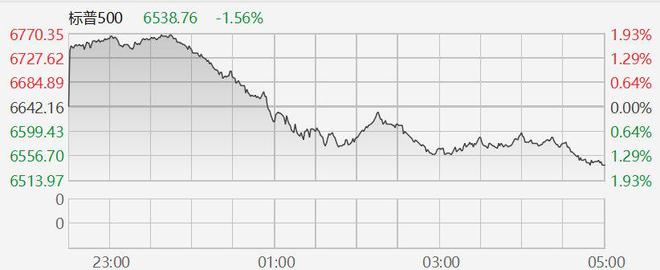
Market Overview - Major indices experienced significant volatility, with the Dow Jones Industrial Average initially rising over 700 points before closing down 386.51 points, a decline of 0.84% to 45752.26 points [1] - The Nasdaq Composite fell 486.18 points, down 2.15% to 22078.05 points, while the S&P 500 dropped 103.40 points, a decrease of 1.56% to 6538.76 points [1] - Nvidia (NVDA.US) reported explosive earnings, but concerns about AI profitability and a drop in cryptocurrency values contributed to the market's downturn [1] Cryptocurrency Market - Bitcoin fell over 4.5% to $87373.5, with a low of $86100 during the day, while Ethereum dropped 4.6% to $2883.66 [2] Employment Data - The U.S. non-farm payrolls increased by 119,000 in September, but the unemployment rate rose to 4.4%, indicating a still-weak labor market [6][7] - The previous month's employment data was revised down to a loss of 4,000 jobs, highlighting ongoing labor market challenges [6] Federal Reserve Insights - Federal Reserve officials expressed concerns about the potential for further interest rate cuts in December, citing persistent inflation and economic strength [7] - Fed Governor Cook warned about risks in private credit markets and the interconnectedness of financial entities, emphasizing the need for monitoring systemic vulnerabilities [7] Stock Market Predictions - Goldman Sachs projected that stock sell-offs could reach $40 billion in the coming week, as the S&P 500 index fell below a critical level [7] - Trend-following hedge funds may trigger additional selling if market conditions continue to decline [7] Company Developments - Google (GOOG.US, GOOGL.US) has developed a feature for its Pixel smartphones that allows file sharing with Apple devices using the AirDrop protocol, enhancing cross-ecosystem compatibility [8] - Melius Research raised Nvidia's target price from $300 to $320, reflecting positive sentiment despite recent market volatility [9]

商品期货早班车-20251121
Zhao Shang Qi Huo· 2025-11-21 01:07
Report Industry Investment Rating No relevant information provided. Core Viewpoints of the Report The report provides a comprehensive analysis of various commodity futures markets, including precious metals, base metals, black industries, agricultural products, and energy chemicals. It assesses the market performance, fundamentals, and offers corresponding trading strategies for each sector [2][3][4][5][6][7][8][9][10]. Summary by Relevant Catalogs Precious Metals - **Gold Market**: On Thursday, precious metals fluctuated, with London gold constrained below $4,100. The US September non - farm payrolls data was mixed, and Fed officials had different views on interest rate cuts. Domestic gold ETFs continued to see inflows. The recommended trading strategy is to buy at the lower support level [2]. - **Silver Market**: The tight supply situation is gradually easing. It is recommended to gradually reduce long positions [2]. Base Metals - **Copper**: The copper price fluctuated downward. The supply of copper ore remains tight, and the market anticipates a tight supply - demand situation for electrolytic copper next year. With unclear macro - drivers, the recommended strategy is to wait and see [3]. - **Aluminum**: The price of the electrolytic aluminum main contract decreased slightly. The smelters are operating at high loads, and the weekly aluminum product operating rate increased slightly. The price is expected to fluctuate and adjust [3]. - **Alumina**: The price of the alumina main contract decreased slightly. Some alumina plants are undergoing early maintenance or reducing production. The supply - demand surplus pattern is difficult to change, and the price is expected to fluctuate weakly [3][4]. - **Zinc**: The price of the Shanghai zinc contract decreased slightly. Supply is differentiated between domestic and overseas markets, and demand is weak. The recommended strategy is to short at high prices [4]. - **Lead**: The price of the Shanghai lead contract decreased slightly. The supply of lead concentrate is in short supply, and demand is affected by high prices. It is recommended to wait and see [4]. - **Industrial Silicon**: The price of the main contract decreased significantly. Supply decreased, and demand is supported by the polysilicon industry. With the planned production cut, the price has strong support at the bottom. It is recommended to gradually take profits on long positions and be cautious about short - selling [4]. - **Lithium Carbonate**: The price of the main contract decreased. Supply is expected to increase, and the inventory reduction speed has slowed down. It is recommended to try long positions at low prices during the callback [4]. - **Polysilicon**: The price of the main contract decreased. Supply decreased slightly, and downstream production decreased. The price is expected to fluctuate widely in the short term [5]. Black Industry - **Rebar**: The price of the main contract increased slightly. The supply - demand situation of steel is weak, with significant structural differentiation. It is recommended to hold short positions in the hot - rolled coil 2605 contract, and the reference range for RB01 is 3040 - 3090 [6]. - **Iron Ore**: The price of the main contract increased slightly. The supply - demand situation is weakening marginally. It is recommended to hold short positions in the iron ore 2605 contract, and the reference range for I01 is 760 - 795 [6]. - **Coking Coal**: The price of the main contract decreased slightly. The supply - demand situation is weakening, and the futures valuation is high. It is recommended to hold short positions in the coking coal 2605 contract, and the reference range for JM01 is 1100 - 1140 [6]. Agricultural Products - **Soybean Meal**: The short - term CBOT soybean price is weak. The global supply - demand situation is gradually improving. The US soybean price is expected to fluctuate, and the domestic price may weaken in the short term [7]. - **Corn**: The corn futures price is running weakly. The short - term supply is tight, but the long - term price is expected to decline. It is recommended to hold short positions [7]. - **Edible Oils**: The Malaysian palm oil price decreased. The near - term supply is high, and the long - term supply is expected to decrease seasonally. The P contract is in a contango structure, and it is difficult to determine the unilateral price [7]. - **Sugar**: The price of the Zhengzhou sugar 01 contract decreased slightly. Internationally, the Indian export quota affects the price, and the long - term global production is expected to increase. Domestically, the price is expected to follow the international trend. It is recommended to short in the futures market and sell call options [7]. - **Cotton**: The international cotton price fluctuates weakly, and the domestic cotton price fluctuates narrowly. It is recommended to wait and see, with a range - trading strategy between 13400 - 13600 yuan/ton [7]. - **Eggs**: The egg futures price rebounded, and the spot price decreased. The supply pressure decreased, and the demand weakened. The futures price is expected to fluctuate weakly [7][8]. - **Hogs**: The hog futures price is running weakly, and the spot price increased in most areas. The supply is still abundant, and the demand is expected to increase seasonally. The futures price is expected to fluctuate weakly [8]. Energy Chemicals - **LLDPE**: The main contract fluctuated slightly. The supply pressure is rising but at a slower pace, and the demand has weakened. In the short term, it is expected to fluctuate, and in the long term, it is recommended to short at high prices or conduct a bear - spread [9]. - **PTA**: The PX supply is balanced and loose, and the PTA is in inventory accumulation. It is recommended to take profits on PX long positions and short the PTA processing margin in the far - month contracts [9]. - **PP**: The main contract decreased slightly. The supply pressure is rising, and the demand is weak. In the short term, it is expected to fluctuate weakly, and in the long term, it is recommended to short at high prices or conduct a bear - spread [9]. - **MEG**: The supply may decrease in the short term but increase in the long term. The demand is in the off - season. It is recommended to short at high prices above the 01 contract [10]. - **Crude Oil**: The oil price weakened. The supply pressure is high, and the demand is in the off - season. The price is expected to fluctuate in the short term, and it can be shorted at high prices if the Russian oil production cut is less than 500,000 barrels per day [10]. - **Styrene**: The main contract rebounded slightly. The short - term supply - demand situation has improved, but the long - term situation is still weak. It is expected to fluctuate in the short term, with the upside limited by the import window [10].