低价咖啡

Search documents
北京号最精彩 | 金色瀑布!京城这些千年古银杏已达最佳观赏期
Bei Jing Ri Bao Ke Hu Duan· 2025-11-05 09:41
Group 1 - The article highlights the best viewing period for ancient ginkgo trees in Beijing, emphasizing their beauty during autumn [6][21] - It mentions specific locations in Beijing where these ancient ginkgo trees can be observed, enhancing the cultural and aesthetic experience of the city [4][6] - The article encourages readers to explore these sites and enjoy the seasonal changes, promoting local tourism and appreciation of natural beauty [10][14] Group 2 - The article discusses the completion timeline for the Apple Garden Comprehensive Transportation Hub, aiming for completion by the end of 2025 [10] - It outlines the project's goal to integrate transportation, commercial services, and industrial collaboration, transforming the urban space in western Beijing [10] - The hub is expected to serve as a large-scale urban complex, enhancing connectivity and urban development in the area [10]


最低2.9元/杯,又一咖啡品牌在上海“自杀式开店”?
东京烘焙职业人· 2025-10-26 08:32
Core Viewpoint - The article discusses the emergence of a low-priced coffee brand, TAIJUAN COFFEE, in major Chinese cities, highlighting its unique pricing strategy and market performance despite skepticism about its sustainability in a high-rent environment [4][12][39]. Pricing Strategy - TAIJUAN COFFEE offers extremely low prices, with items like lemon water at 2.9 yuan, Americano at 3.9 yuan, and lattes at 6.9 yuan, which has raised questions about the viability of such a pricing model in high-rent areas like Shanghai and Beijing [5][10]. - The brand employs a "price for volume" strategy, selling large quantities of coffee at low prices, with a daily sales volume exceeding 400 cups in some locations [17][20]. Market Performance - Despite initial skepticism, TAIJUAN COFFEE has successfully opened 8 stores in cities like Beijing and Hangzhou over two years, indicating a strong market presence [12][38]. - The brand's sales figures are impressive, with one store reportedly selling over 7000 cups monthly on delivery platforms [17]. Operational Efficiency - The brand utilizes cost-effective operational methods, such as using second-hand equipment and pre-brewing coffee to reduce wait times and costs [25][26]. - The coffee is made from a blend of Robusta beans, which, while having some flavor imperfections, provides a high caffeine content that appeals to consumers [29]. Creative Offerings - TAIJUAN COFFEE has introduced innovative coffee flavors, such as green pepper latte and spicy sour soup Americano, which have gained significant attention on social media [30][35]. - These unique offerings serve as a marketing tool, attracting customers and generating buzz, while maintaining low prices [35]. Market Trends - The article notes that the low-priced coffee segment has potential for growth, as seen with other brands like Manner and Luckin Coffee, which have successfully disrupted the market [40][44]. - The increasing global coffee bean prices, particularly for Arabica, may lead to a shift towards Robusta beans, potentially impacting future pricing strategies in the coffee industry [42][43].

东北版Manner火了,最高日出千杯,主打“不骗穷人”
3 6 Ke· 2025-09-16 02:10
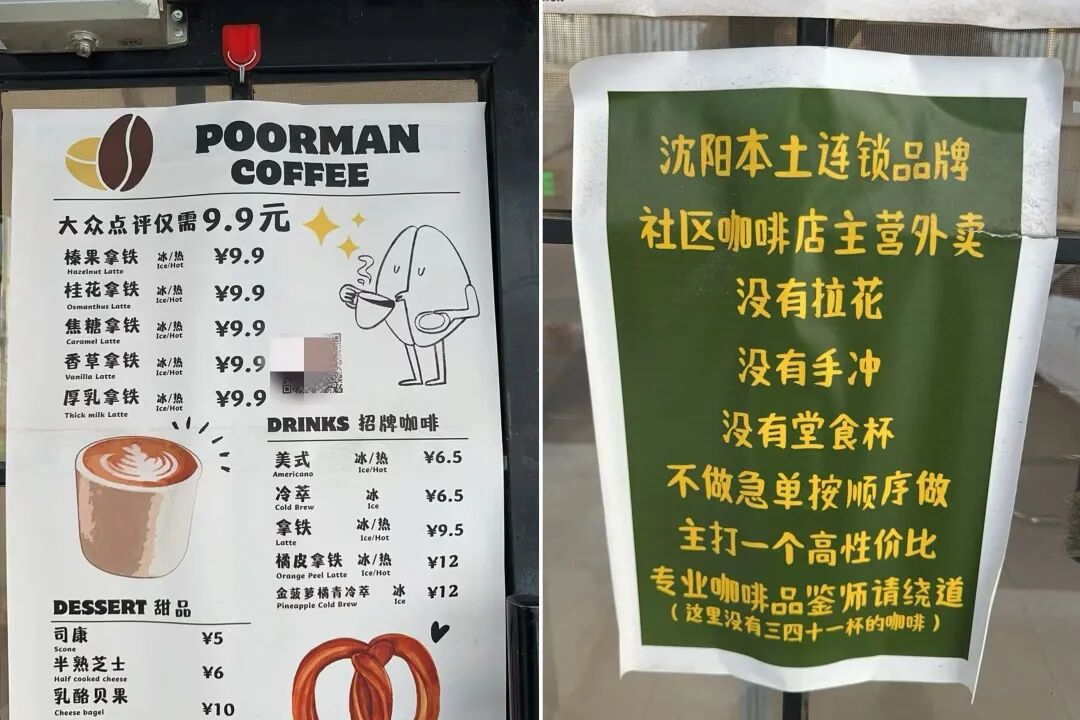
Core Insights - The article discusses the emergence of low-priced coffee brands in China, particularly focusing on "Poor Man Coffee" in Shenyang and "W Coffee" in Zhanjiang, which have gained popularity for their affordability and high sales volume [1][2][8]. Group 1: Business Model and Strategy - "Poor Man Coffee" offers coffee at an average price below 10 yuan, with a daily sales volume exceeding 500 cups and a repurchase rate close to 50% [1][6]. - The brand emphasizes simplicity, avoiding complex coffee-making techniques and targeting cost-conscious consumers, as indicated by their slogan "good coffee, not expensive" [4][2]. - The menu includes over 60 products, with the lowest-priced Americano at 6.5 yuan per cup, allowing customers to enjoy a meal and drink for under 10 yuan [4][6]. Group 2: Market Position and Performance - "Poor Man Coffee" has opened 21 stores, with daily revenues ranging from 2,000 to 8,000 yuan, and all locations are profitable due to low rent and renovation costs [6][19]. - The brand's founder noted that over 70% of orders come from delivery services, highlighting the importance of this channel in their business model [6][19]. - "W Coffee" in Zhanjiang, despite its humble appearance, has also achieved high customer traffic, demonstrating the viability of low-cost coffee shops in less affluent areas [8][12]. Group 3: Industry Trends - The coffee market in China is experiencing a price war, with prices dropping below 10 yuan, which is attracting a broader consumer base and increasing purchase frequency [17][15]. - The success of low-priced coffee brands indicates a shift in consumer preferences towards value and taste over brand prestige, suggesting a potential for new entrants in the market [17][19]. - The article suggests that the current environment is favorable for individual entrepreneurs looking to establish small coffee shops, as demonstrated by the success of "Poor Man Coffee" and similar brands [19].