体验经营

Search documents
解码GCC5G-A商业成功:从技术部署到价值变现的“破壁”
Xin Lang Cai Jing· 2025-12-18 14:30
Core Insights - The GCC region has established itself as a pioneer in the global 5G-Advanced connectivity field, supported by early strategic investments and a strong foundation for smart networks and AI-driven operations [1][13] - The region has over 10,000 deployed 5G-A sites and a commercial user base in the millions, positioning it as a testing ground for 5G-A commercialization [1][13] Group 1: GCC 5G-A Development - The GCC region is leveraging its high-net-worth market and commitment to digital transformation to become a global leader in 5G-A commercialization [1][13] - The region's operators, particularly du and e&, are driving the 5G-A commercial process through innovative technology and scenario development [2][14] Group 2: du's Strategy - Du is transitioning its "5G+ network" focus from customer experience to a vertical-centric approach, targeting industry ecosystem partners rather than end-users [3][15] - The company has completed the deployment of a 3CC indoor network in the Middle East, achieving high bandwidth and low latency through multi-band collaboration [3][15] - Du's monetization strategy includes offering differentiated experience packages tailored to specific customer needs [3][15] Group 3: e&'s Focus - e& is building a "cloud-native + all-scenario" foundation based on 5G-A, achieving a 100Gbps aggregation rate through multi-carrier technology [4][16] - The integration of 5G-A antennas into building facades has enabled seamless coverage and zero roaming switching in urban core areas [4][16] Group 4: Policy and Strategy - GCC countries are prioritizing 5G-A as a key element in their economic diversification strategies, with regulatory bodies acting as ecosystem catalysts [5][17] - The shift from a "traffic pipeline" to an "experience-driven" business model is evident, with operators offering customized experience packages for vertical industries [5][17] Group 5: Ecosystem Collaboration - The commercial boundaries of 5G-A extend beyond telecommunications, integrating deeply into sectors like transportation, healthcare, and manufacturing [5][17] - Operators are breaking down barriers by combining industry knowledge with telecommunications technology, as seen in du's involvement in smart energy projects [5][17] Group 6: Global Comparisons - China has achieved full 5G-A network coverage across 31 provinces within a year, with a user base exceeding 60 million, creating a complete ecosystem [6][18] - Operators in Europe and other Asian markets are adopting similar models to enhance average revenue per user through rate-based packages and scenario services [6][18] Group 7: Huawei's Contributions - Huawei emphasizes the importance of the "3A" infrastructure (5G-A, Always-Online, AI-Driven) to support operators in their transition from Telco to Techco [7][20] - The company aims to facilitate the deployment of 10Gbps networks in the GCC by 2026, enhancing network capabilities for vertical industry scenarios [7][19] Group 8: Value Creation - Experience-driven business models are crucial, as the GCC's practices show that transforming intangible experiences into tangible services is key to breaking the "increase traffic without increasing revenue" dilemma [9][21] - The importance of ecosystem collaboration is highlighted, with successful integration requiring all participants in the value chain to find their place [11][22] - Cost-sharing mechanisms are essential for sustainable development, with GCC countries utilizing national subsidies and industry collaboration to alleviate operator pressures [11][22]
解码GCC 5G-A商业成功:从技术部署到价值变现的“破壁”
Sou Hu Cai Jing· 2025-12-17 11:44
Core Insights - The GCC region has emerged as a pioneer in the 5G-Advanced (5G-A) connectivity field due to early strategic investments, establishing a solid foundation for smart networks, AI-driven operations, and new monetization experiences [1] - The UAE operators, du and e&, are key drivers in the commercialization of 5G-A, showcasing a dual approach in technology implementation and scenario innovation [2] Group 1: 5G-A Network Development - The GCC region has deployed over 10,000 5G-A sites and has a commercial user base in the millions, providing a first-mover advantage [1] - du's transformation focuses on a "vertical-centric" approach, targeting vertical industry ecosystem partners rather than just end-users, and has completed the first 3CC indoor network deployment in the Middle East [3] - e& is building a "cloud-native + all-scenario" foundation, achieving 100Gbps aggregation rates and seamless coverage in high-density areas [4] Group 2: Policy and Strategic Framework - Multiple Middle Eastern countries view 5G-A as a key strategy for economic diversification, with initiatives like Saudi Arabia's "Vision 2030" and the UAE's "Digital Economy Strategy" emphasizing 5G-A as a core component of new infrastructure [4] - Regulatory bodies are shifting from rule-makers to ecosystem catalysts, with the UAE's TDRA working on cross-industry data interaction standards for 5G-A [4] Group 3: Business Model Innovation - The business model is evolving from a "traffic pipeline" to "experience management," with operators like du and e& offering customized experience packages for vertical industries [4] - Saudi Arabia's Zain has introduced a "5G-A ultra-fast package" that focuses on service offerings rather than just speed [4] Group 4: Ecosystem Collaboration - The commercial boundaries of 5G-A extend beyond telecommunications, integrating deeply into sectors like transportation, healthcare, and manufacturing [4] - Operators are leveraging industry knowledge and telecom technology to break down barriers, as seen with du's involvement in smart energy projects [4] Group 5: Global Context and Future Outlook - China has achieved full 5G-A network coverage across 31 provinces within a year, with over 60 million users, creating a complete ecosystem [5] - Huawei emphasizes the importance of commercial network interaction and has set a target for GCC to enter the 10Gbps era by 2026, promoting the first commercial 5G-A network [7] - The "3A infrastructure" proposed by Huawei aligns with the GCC's practices, focusing on rate breakthroughs and scenario adaptation [8] Group 6: Value Creation and Sustainability - Experience management is identified as a core strategy, with the GCC's practices demonstrating that transforming intangible experiences into tangible services is essential for monetization [9] - Ecosystem symbiosis is crucial, as evidenced by the integration of 5G-A into various industries, highlighting the need for operators to facilitate value chain participation [9] - Cost-sharing mechanisms, such as national subsidies and industry co-construction, are vital for the sustainable deployment of 5G-A [10]


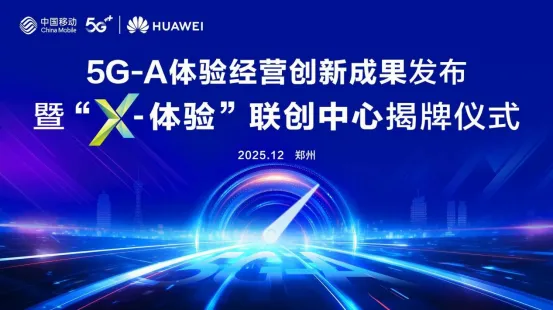
河南移动携手华为成立“X-体验”联创中心发布5G-A体验经营创新成果
Xin Hua Wang· 2025-12-17 03:59
Core Viewpoint - The collaboration between Henan Mobile and Huawei aims to enhance 5G-A experience and innovation, marking a shift from basic connectivity to a focus on customer experience in the telecommunications sector [8][11]. Group 1: Event Overview - The event held on December 12 showcased the launch of the "X-Experience" co-creation center and featured discussions on the evolution of 5G-A technology and innovative operational paths [1]. - The event utilized a hybrid format with both offline and online participation, gathering representatives from various sectors including operators, equipment manufacturers, and industry partners [1]. Group 2: Technological Innovations - The "X-Experience" interactive display area highlighted the latest innovations aimed at upgrading customer experiences through real business scenarios such as video streaming and cloud uploads [3]. - The demonstration focused on the "Experience Interactive Entry," which has been implemented on the Huawei Mate 80, allowing for visual and purchasable network differentiation rates, thus providing customized service entry points [5][10]. Group 3: Industry Development Discussion - Henan Mobile's Vice General Manager Wang Ying emphasized the transition of communication services from basic connectivity to a customer experience-driven model, aiming to enhance service quality through technological innovation [8]. - The company serves over 65 million customers in the province and has established the largest 5G-A premium network in Henan, with 19,000 5G-A cell sites [8]. Group 4: Key Achievements - Henan Mobile has achieved continuous 5G-A network coverage within the fourth ring of Zhengzhou and has created a premium demonstration area, leading the nation in key network capabilities [9]. - The number of 5G-A users has reached 2 million, positioning Henan Mobile among the top in the country, with the "Experience 2.0" service set to provide enhanced network products and direct service access [9]. Group 5: Future Collaboration - The unveiling of the "X-Experience Co-Creation Center" signifies a new phase in the partnership between Henan Mobile and Huawei, focusing on transforming service standards and accelerating the commercialization of innovative solutions [11]. - Both companies plan to deepen ecological cooperation and promote the widespread adoption of intelligent services, aiming to unlock the commercial potential of 5G-A technology [11].

5G-A商用一年多,这些亮点值得关注
3 6 Ke· 2025-09-25 04:10
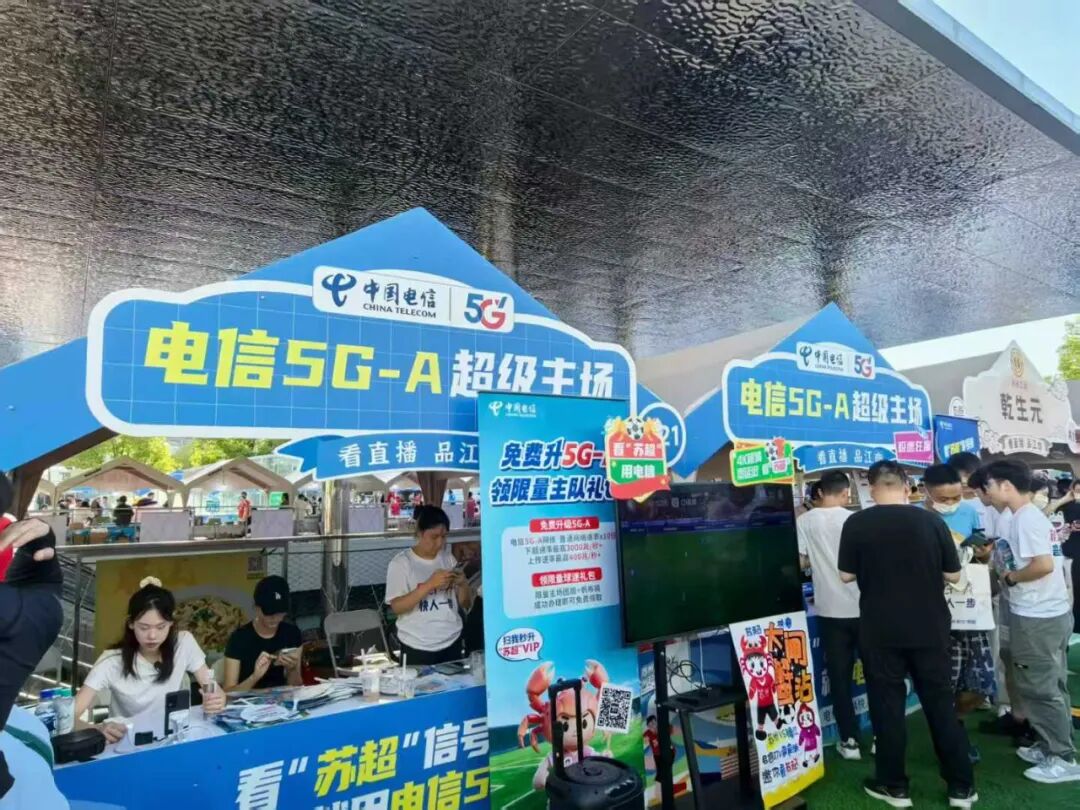
Group 1 - The core viewpoint of the article emphasizes the rapid commercialization and expansion of 5G-A in China, highlighting its significance in the context of AI advancements and digital transformation [1][3][22] - 5G-A is positioned as an evolution of 5G, addressing performance bottlenecks and enhancing functionalities to meet the demands of various industries [4][5][22] - The integration of 5G-A with AI technologies is creating new opportunities and value, transforming traditional business models and enabling innovative applications [7][8][22] Group 2 - As of now, over 300 cities in China have deployed 5G-A networks, with more than 30 million users and over 100 million compatible devices, expected to reach 250 million by the end of the year [9][11] - 5G-A has improved connection speeds and introduced "big uplink" capabilities, enhancing user experiences in high-bandwidth applications such as VR/AR and cloud gaming [11][12] - In the B-end market, 5G-A has successfully implemented over 5,000 private networks across various industries, showcasing its role as a core driver of industrial upgrades [17][20][21]
华为陈浩:激发体验经营心动时刻,加速5G-A商业成功
Zhong Guo Jing Ji Wang· 2025-06-20 06:48
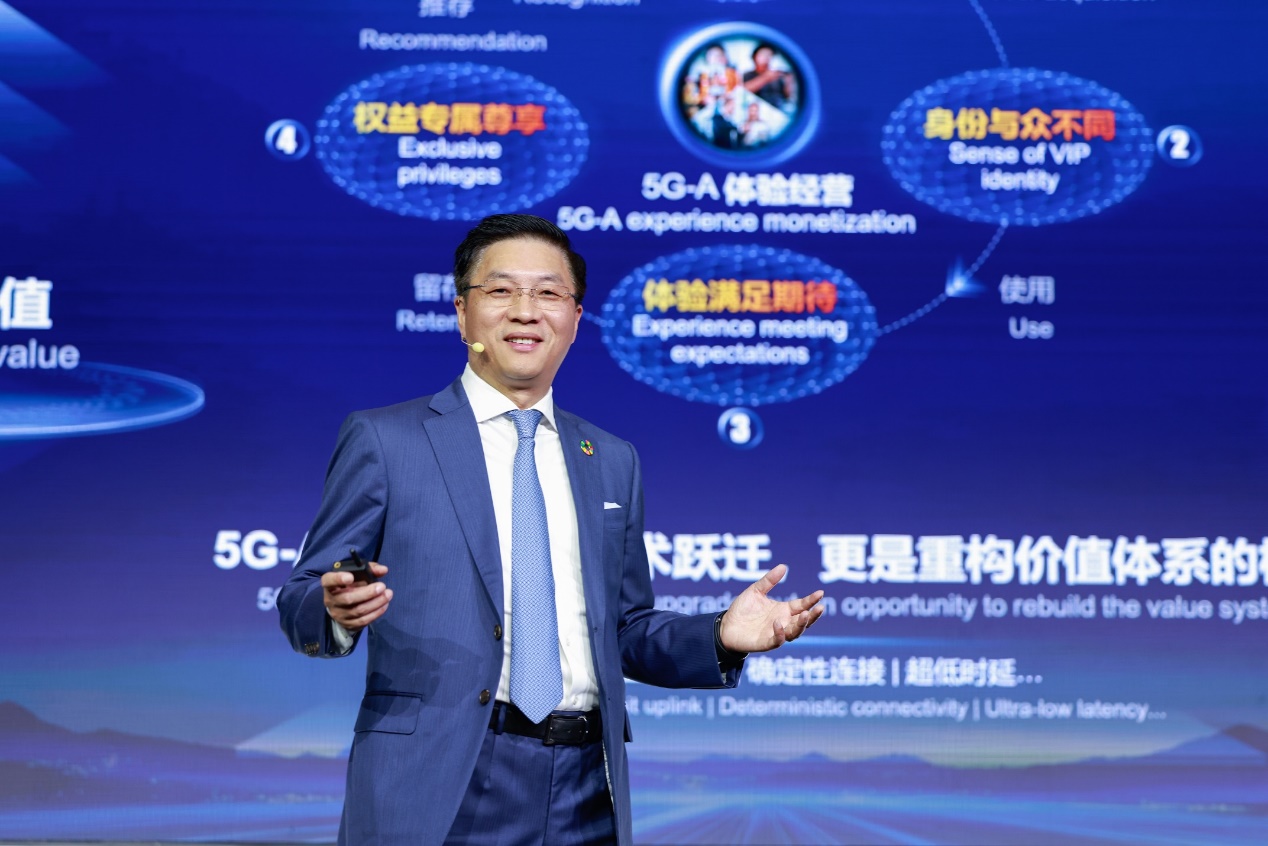
Core Insights - The transition from 5G to 5G-A represents not only a technological upgrade but also an opportunity to reconstruct the value system, focusing on emotional value to drive commercial growth [1][2] Group 1: 5G-A Commercialization - As of now, over 300 cities in China have achieved 5G-A coverage, with more than 10 million users [2] - 5G-A enhances user experience and empowers various sectors such as smart living, smart transportation, and smart production [2] Group 2: User Experience and Emotional Value - The shift from a traffic pricing model to an experience pricing model is being explored by global operators, emphasizing emotional resonance and user experience [2] - Four key emotional moments are identified to enhance user engagement: 1. Making services easily accessible through precise demand identification and multi-channel coordination [2] 2. Providing a sense of uniqueness through exclusive branding and expedited services for VIP users [3] 3. Ensuring ongoing satisfaction through continuous deep usage experiences for VIP users [3] 4. Offering exclusive rights and products that cater to users' emotional and social values [3][4] Group 3: Differentiated Experience Network - A differentiated experience network for 5G-A is essential, characterized by ubiquitous downlink perception, guaranteed uplink speed, and low latency to meet real-time business needs [4] - The network should support multi-scenario connections with low latency and lightweight connectivity [4] Group 4: Continuous Exploration - The approach to experience management in 5G-A is not fixed; it requires ongoing exploration and refinement [4]
5G-A与AI深度融合共绘通信产业新图景 2025年全球移动宽带菁英论坛召开
Zheng Quan Ri Bao· 2025-06-19 14:40
Group 1 - The core viewpoint of the articles emphasizes the transformative potential of the deep integration of mobile communication and artificial intelligence (AI), particularly through 5G-A technology, which is expected to unlock trillions in commercial value across various industries [1][2][3] - Huawei's executive Wang Tao highlighted that the rapid development of the mobile AI era injects new vitality into the mobile industry, shifting from app-centric to agent-centric models, and enhancing operational efficiency through the integration of AI and IoT [1] - The 5G-A network is anticipated to evolve from a traditional "connection pipeline" to an "experience engine," addressing the real-time interaction needs of a projected 6 billion active mobile intelligent entities by 2030 [2] Group 2 - In the industrial sector, 5G-A's low latency and high bandwidth are crucial for achieving embodied intelligence, which can significantly reduce risks and enhance productivity and safety in high-risk operations [2] - The logistics industry is expected to benefit from the combination of 5G-A's wide coverage and AI path planning, leading to improved efficiency and reduced costs, particularly in smart logistics applications [2] - The commercial success of 5G-A hinges on experience-driven business models, transforming network capabilities into high-quality user experiences, which is becoming a new consumer trend [3] Group 3 - Huawei's senior vice president emphasized the shift from traffic management to experience management, creating opportunities for new business models through AI-enhanced user experiences across various sectors [3] - The MWC25 Shanghai event served as a platform for industry leaders to discuss the acceleration of 5G-A commercialization and the role of AI in reshaping business and operational infrastructures [3]
5G-A与AI深度融合,变革背后藏着怎样的“商业新模式”机会?
Sou Hu Cai Jing· 2025-06-19 13:00
Core Viewpoint - The integration of mobile communication and artificial intelligence (AI) is creating new industrial landscapes and unlocking trillion-dollar business potential, as discussed at the Global Mobile Broadband Elite Forum during MWC Shanghai 2025 [1] Group 1: Mobile AI Development - The rapid development of the mobile AI era is injecting new vitality into the mobile industry, shifting from app-centric to agent-centric models [2] - The deep integration of AI and IoT is transforming the Internet of Things (IoT) into an entry point for an intelligent world, enhancing network intelligence across spectrum, energy consumption, and operational efficiency [2] Group 2: Industry Transformation - The combination of 5G-A's low latency and high bandwidth is crucial for achieving embodied intelligence in industrial applications, enabling real-time data processing and decision-making [2] - The logistics sector can benefit from 5G-A's wide coverage and AI path planning, improving efficiency and reducing costs, particularly in drone delivery systems [3] Group 3: Business Model Evolution - The transition from "connection pipeline" to "experience engine" is necessary for 5G-A networks to meet the demands of 6 billion mobile intelligent entities by 2030 [3] - Experience-driven business models are key to the commercial success of 5G-A, with a trend emerging towards "paying for experience" to meet the needs of new applications [3] Group 4: Strategic Recommendations - Operators should focus on building AI-centric network standards to support reliable connections and flexible scheduling in 5G-A networks [6] - There is an opportunity for operators to reshape their brand image and create new value by accelerating the shift towards experience-driven business models [6]
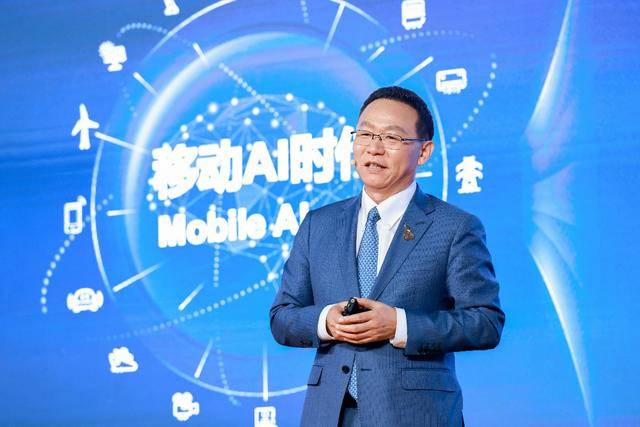
华为助力全球运营商加速发展5G-A,共筑AItoX新价值
Qi Lu Wan Bao· 2025-06-18 14:43
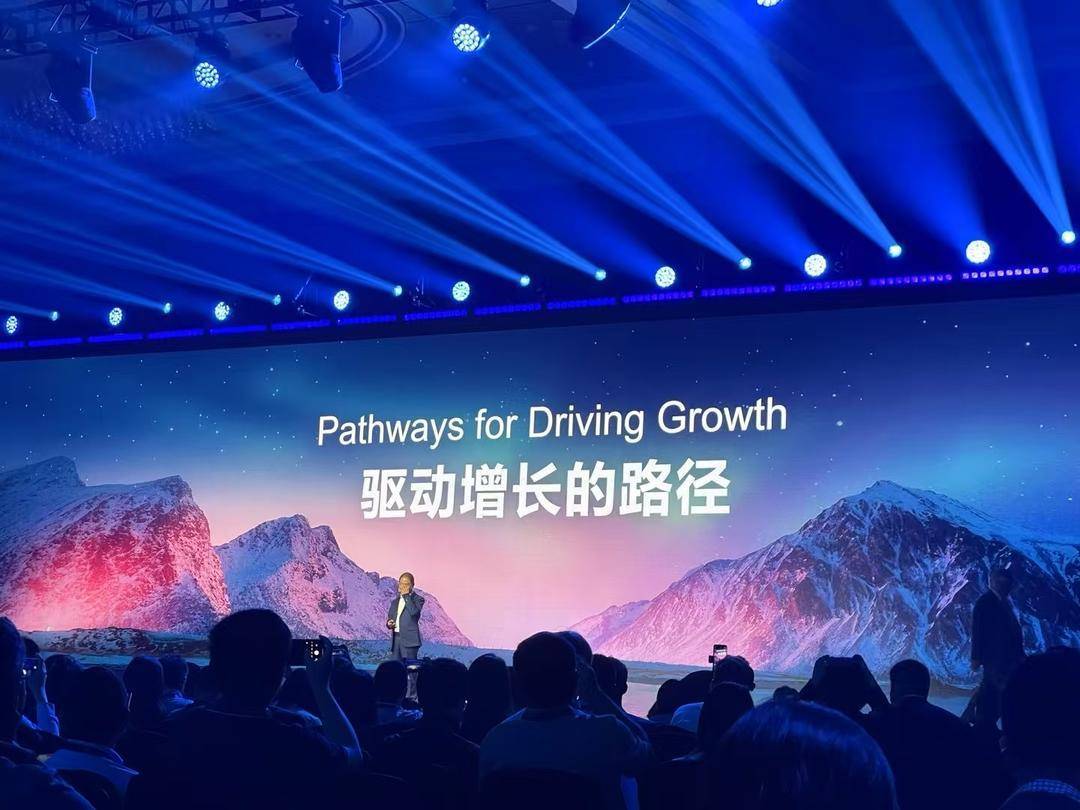
Core Insights - Huawei showcased its advancements in "5G-A experience business" and "AItoX intelligent body business paradigm" at the 2025 MWC Shanghai, emphasizing its commitment to accelerating towards an intelligent world [1] - The telecommunications industry is entering a stable development phase after nearly 40 years of rapid growth, facing challenges in finding new growth paths [1][2] Group 1: Business Innovations - Huawei, in collaboration with major domestic operators, launched 5G-A experience business and AItoX commercial innovations during the event [1] - The company introduced a new AI UBB solution that covers end-to-end services from home broadband to backbone networks, enhancing performance and enabling high-level autonomy for AI applications [1] Group 2: Growth Strategies - Huawei's Vice Chairman Xu Zhijun identified four paths to drive growth: focusing on end-user demand changes, stimulating supply and consumption of high-definition video traffic, connecting every vehicle with 5G, and linking all individual businesses with FTTR [1] - The company expressed willingness to explore growth opportunities with operators, acknowledging that different countries and operators face unique competitive environments [2] Group 3: Industry Trends - Over 300 cities in China have achieved 5G-A coverage, with over 10 million users, indicating a significant market penetration [4] - The telecommunications industry is undergoing a new wave of AI technology innovation, with operators leveraging their resources to reshape business models and infrastructure for new commercial growth [4] - Various sectors, including smart living, transportation, and production, are experiencing intelligent upgrades driven by 5G-A technology [4]
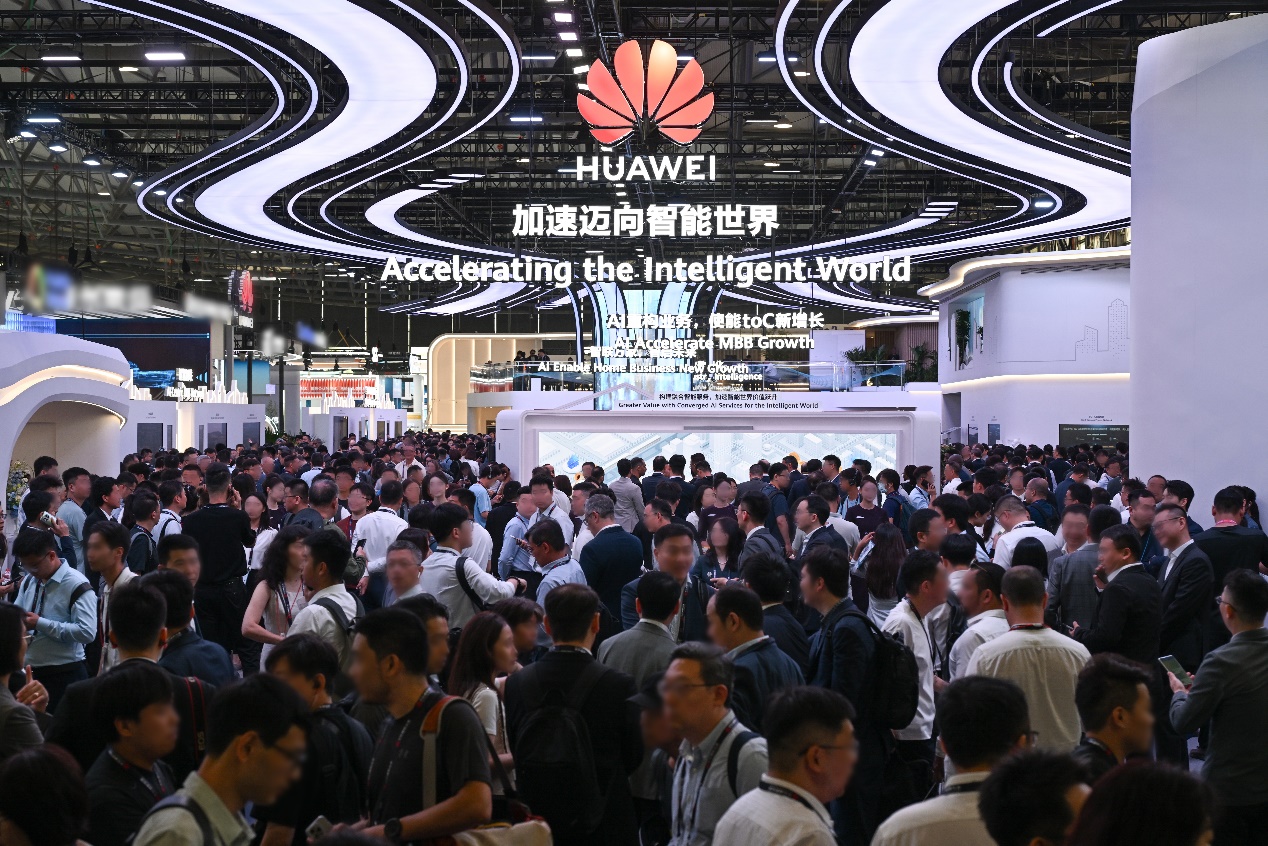
华为徐直军:通信行业以体验经营为代表的价值跃升新阶段已到来
Sou Hu Cai Jing· 2025-06-18 09:16
Core Insights - The 2025 World Mobile Congress (MWC) has officially started, showcasing Huawei's collaboration with major domestic operators on 5G-A experience operations and AItoX commercial innovations [2] - Huawei's Vice Chairman Xu Zhijun highlighted four paths to drive growth in the telecom industry, emphasizing the need to adapt to user demand changes and explore growth opportunities [2][3] Group 1: Industry Developments - The telecom industry has entered a stable development phase after nearly 40 years of rapid growth, facing challenges in finding new growth drivers [2] - Over 300 cities have achieved 5G-A coverage, with more than 10 million users, indicating a significant expansion of 5G-A services across China and the Middle East [3][4] Group 2: Regional Achievements - Sichuan Province has achieved full 5G-A coverage, with over 7,000 base stations operational, covering approximately 1,900 km² and a population of 20 million [5][6] - Major urban areas in Sichuan, including Chengdu, have continuous 5G-A network coverage in high-traffic regions, enhancing digital experiences in various sectors [5][6] Group 3: Technological Innovations - The telecom sector is undergoing a new wave of AI technology innovation, with a focus on experience-driven business models that will transform interactions among individuals, organizations, and society [5][6] - Global operators are embracing the AI era, leveraging their resources to reshape business operations, infrastructure, and maintenance for new commercial growth [5]