
供应收缩担忧

Search documents
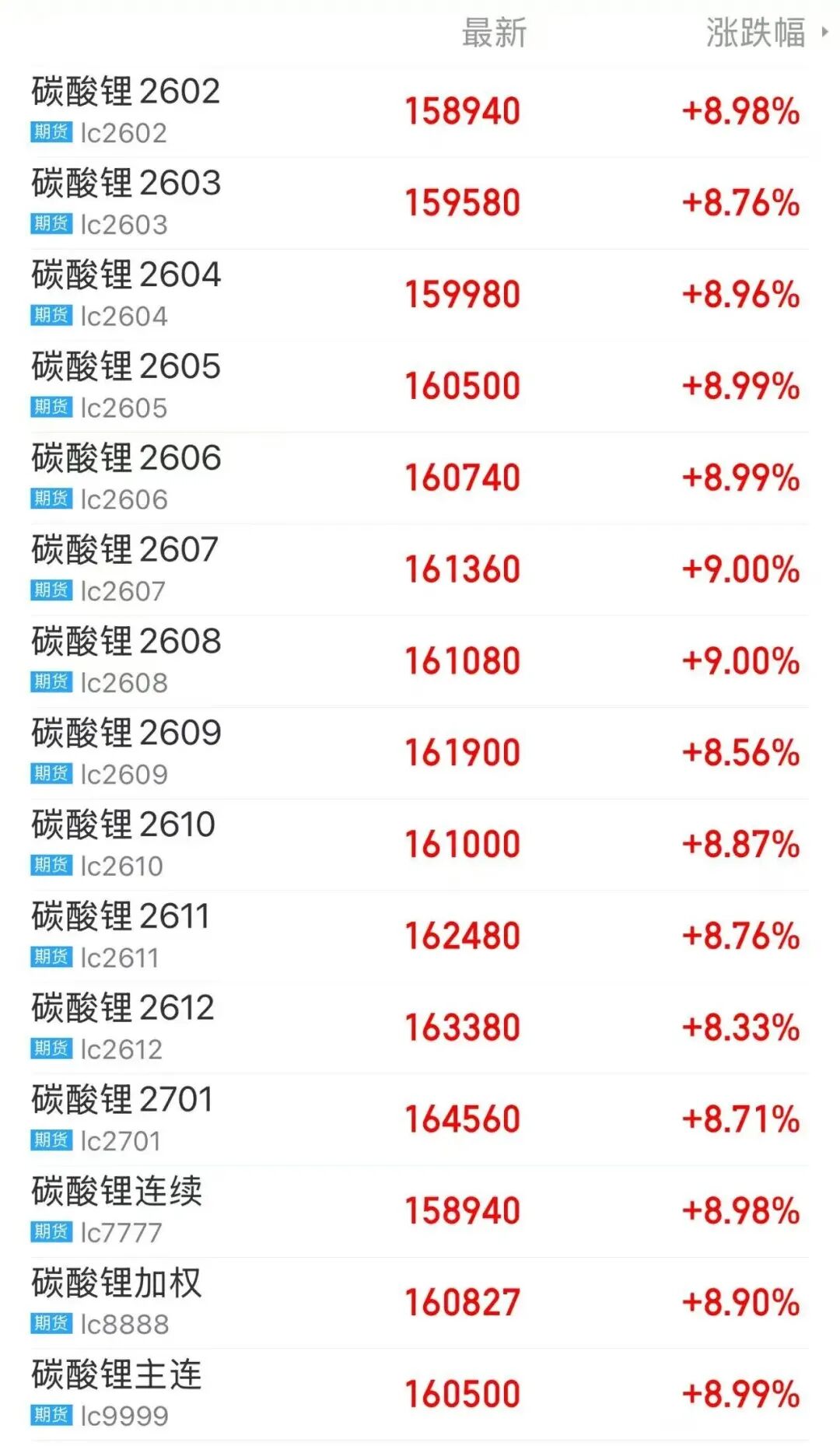
供应扰动发酵,碳酸锂期货多个合约涨停
Qi Huo Ri Bao· 2026-01-20 23:49
Core Viewpoint - The recent surge in lithium carbonate prices is primarily driven by concerns over supply constraints, particularly in the Jiangxi production area, where there are reports of potential production halts and increased regulatory scrutiny [3][4][6]. Group 1: Market Dynamics - The lithium carbonate price has seen significant increases, with futures prices rising by approximately 8.33% to 9.00% across various contracts [1]. - Analysts indicate that the market is experiencing a tight supply-demand balance, with current supply levels remaining high but limited potential for future increases [4]. - There is a notable shift in demand dynamics, with some downstream sectors, particularly in iron phosphate lithium, resuming production and increasing output after adjusting processing fees [4]. Group 2: Inventory and Supply Concerns - As of mid-January, lithium carbonate weekly inventory totaled 109,700 tons, reflecting a decrease of 263 tons week-on-week, with variations in inventory levels across different market segments [4]. - The current market is characterized by locked-up inventories, leading to limited available spot supplies, which is contributing to upward price pressure [4][5]. - Analysts express caution regarding the potential for price fluctuations as the market navigates between strong current realities and weaker future expectations [5]. Group 3: Regulatory and Risk Management - The introduction of new mining laws and stricter environmental regulations is expected to impact production norms and regulatory oversight in the lithium mining sector [3][4]. - In response to increasing uncertainties affecting lithium futures, the Guangxi Futures Exchange has implemented a series of risk control measures to ensure market stability [5].

FPG财盛国际:供需博弈加剧 原油价格高位震荡
Xin Lang Cai Jing· 2025-12-25 09:17
Core Viewpoint - The current oil price trend reflects a delicate balance between "demand recovery expectations" and "supply contraction concerns" as the market digests positive external economic data [1][3] Supply and Demand Dynamics - Brent and WTI crude oil prices have both maintained slight increases, with a cumulative rise of over 4.5% in the past five trading days, highlighting the influence of geopolitical risks on prices [1][3] - Recent economic data from major economies has exceeded expectations, particularly strong personal consumption expenditures and export performance, providing solid support for oil prices and alleviating recession fears [1][3] Supply Chain Challenges - A series of chain reactions are intensifying market concerns, as increased regulatory scrutiny and deepened sanctions are posing severe challenges to oil-exporting countries' logistics [4] - Several oil tankers are unable to dock or unload as planned, resorting to "floating storage" near shore, indicating saturation in onshore storage and revealing that export bottlenecks are transitioning from expectation to reality [4] Long-term Outlook - Despite short-term positive factors dominating, medium to long-term downside risks remain significant, with API data indicating an increase of approximately 2.4 million barrels in crude oil inventories, which has somewhat suppressed bullish sentiment [2][4] - The global oil inventory is expected to continue rising over the next two years, potentially subjecting the current rebound to long-term inventory pressure tests [2][4] - Investors are advised to remain rational, as geopolitical premiums offer short-term trading opportunities, but attention should be paid to the inventory growth curve before 2026 to mitigate risks of price corrections during seasonal demand declines [2][4]
