供需结构性错配

Search documents
环比最高涨90%,内存最新涨幅再创记录
Xuan Gu Bao· 2026-02-09 23:18
Industry Overview - The memory price tracking report by Counterpoint indicates a historical surge in memory prices, with DRAM prices for general servers expected to rise by 80%-90% in Q1 2026, driven by increased demand from AI applications [1] - NAND flash memory prices are also projected to increase by 80%-90%, alongside rising prices for certain HBM3e products, indicating a broad market trend of price escalation across all categories [1] - The server-grade 64GB RDIMM contract price has skyrocketed from $450 in Q4 last year to over $900, with expectations to surpass $1,000 in Q2 2026 [1] Demand Drivers - The core logic behind the current price surge is attributed to the exponential growth in storage demand driven by AI inference, coupled with a lag in supply-side capacity release [1] - Data centers are becoming the largest single market for memory products, with server DRAM expected to account for over 50% of the market by 2026, maintaining a long-term demand CAGR of 20% [1] Supply Constraints - The price increase in general server DRAM is primarily catalyzed by the iteration of GPUs, which has led to a significant rise in storage capacity and production demand, with new generation GPUs like B200 and B300 consuming DRAM capacity at a year-on-year growth rate of 20%-171% [1] - New supply capacity is expected to be concentrated in 2027 and beyond, indicating a continued structural mismatch in supply and demand in 2026, with AI-driven shortages unlikely to ease [1] Company Developments - Dawi Co., through its subsidiary Dawi Chuangxin, has successfully introduced major new clients in the communication and consumer electronics sectors while maintaining a stable core customer base, focusing on NAND and DRAM storage products [3] - Dongxin Co. is developing DRAM products that include DDR3(L) and LPDDR1/2/4X, contributing to the overall growth in the memory market [4]
黄金调整像“深蹲”,巨震给普通投资者敲警钟,后市这么做……
Yang Zi Wan Bao Wang· 2026-01-30 10:04
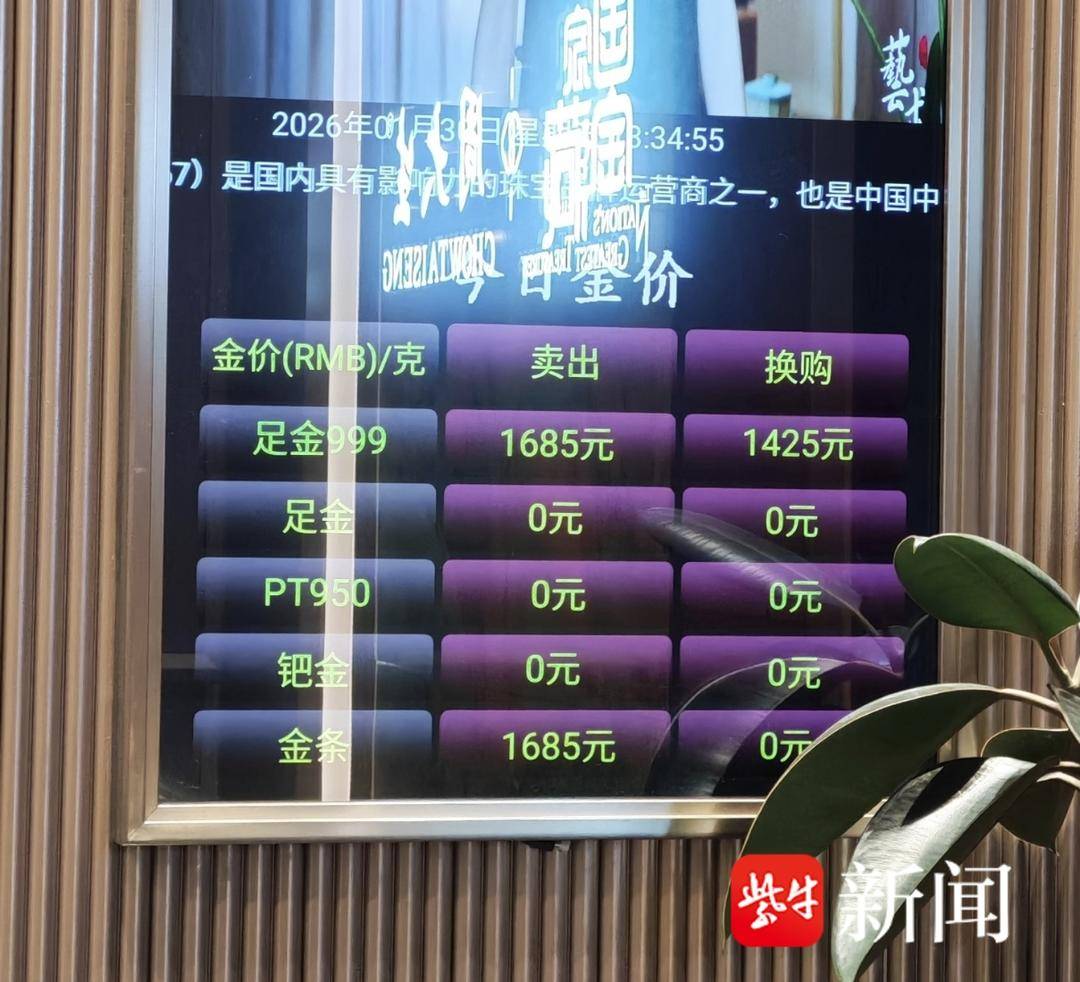
Core Viewpoint - The recent sharp decline in gold and silver prices is attributed to multiple factors, including profit-taking, changes in market sentiment, and signals from the Federal Reserve regarding interest rates, rather than a fundamental reversal of the bull market in precious metals [3][4]. Group 1: Market Dynamics - Gold and silver experienced a significant price drop after a period of rapid increase, with international precious metal prices falling sharply and domestic gold concept stocks also suffering losses [3]. - The core trigger for this decline was the Federal Reserve's recent meeting, which maintained interest rates and indicated that it would not rush to lower rates until inflation targets are met, leading to a correction in market expectations for rate cuts [3]. - The combination of profit-taking, reduced geopolitical risk premiums, and continuous reductions in gold ETFs contributed to a panic sell-off in the market [3][4]. Group 2: Long-term Outlook - The current adjustment in precious metals is viewed as a "deep squat" within a bull market rather than a fundamental trend reversal, with the underlying support for gold and silver prices remaining intact [4]. - Central banks globally continue to increase their gold holdings, reflecting a strategic shift towards diversifying the global monetary system and weakening trust in the dollar, which supports precious metal prices [4]. - Supply constraints due to environmental policies and mining difficulties, along with increased industrial demand from emerging sectors like AI and renewable energy, contribute to a structural mismatch in supply and demand for precious metals [4]. Group 3: Investment Considerations - Investors are advised to be cautious of short-term volatility even in clear trends, avoiding blind chasing of high prices and high-leverage trading tools [4][6]. - It is recommended that investors manage their positions rationally, with those who entered at high prices considering reducing exposure during rebounds, while those who invested at lower levels should wait for stabilization signals before making decisions [4]. - For gold stocks and related funds, it is suggested to focus on leading companies with resource advantages and stable performance, waiting for clearer signals before entering the market [6].

凯盛浩丰农业集团马铁民:农产品市场核心问题是“供需结构性错配”
Xin Lang Cai Jing· 2026-01-17 17:24
Core Viewpoint - The current agricultural product consumption market is facing challenges not due to insufficient demand, but rather a "structural mismatch" in supply and demand [3][6]. Group 1: Market Challenges - The traditional best-selling variety, Fuji apple, has reached saturation, while new apple varieties such as Ai Fei and Wang Lin are in high demand but short supply [3][6]. Group 2: Proposed Solutions - Three transformative changes are necessary to address the supply-demand mismatch: 1. Precise demand insight through digital tools to segment populations, regions, and categories [3][6]. 2. Innovation in production methods, promoting mechanization, biological pest control, and digital management to convert experience into standardized processes, enhancing quality and differentiation [3][6]. 3. Optimization of consumer reach via targeted content, media, and scenarios, improving supply chain efficiency through AI order distribution, origin warehouses, and digital logistics to ensure fresh delivery from farm to table, with traceability and transparency in management [3][6].