王林苹果

Search documents
神奇的中国
Xin Lang Cai Jing· 2026-02-01 06:56
Group 1 - The article highlights the remarkable changes and advancements in China that astonish foreigners, particularly in transportation and technology [1][2] - The experience of high-speed rail travel in China is emphasized, showcasing its comfort and efficiency compared to other countries lacking such infrastructure [2] - The adoption of mobile payment systems like WeChat Pay is noted as a significant cultural shift, making transactions more convenient and reducing the need for physical wallets [2][3] Group 2 - The growth of e-commerce and delivery services in China is illustrated through the protagonist's experiences with online shopping and receiving deliveries, indicating a shift in consumer behavior [3][4] - The article describes the integration of social media and online interactions in everyday life, exemplified by receiving food deliveries from online acquaintances, showcasing the interconnectedness of modern Chinese society [4]
吴霜:神奇的中国
Xin Lang Cai Jing· 2026-01-31 23:41
Group 1 - The article highlights the amazement of foreigners, particularly Charlie, at the rapid advancements and changes in China, especially in technology and infrastructure [3][6]. - Charlie's strong desire to experience high-speed rail in China reflects the absence of such technology in the country where he resides, showcasing the contrast between the two nations [6][7]. - The article emphasizes the convenience of modern payment systems like WeChat Pay, which has eliminated the need for physical wallets, further illustrating the technological progress in China [7][8]. Group 2 - The growth of e-commerce and delivery services in China is exemplified by Charlie's experience with online shopping and the frequent arrival of packages at his home, indicating a shift in consumer behavior [8][9]. - The article describes the integration of social interactions with technology, as seen when friends from different locations send food and drinks to Charlie, highlighting the interconnectedness facilitated by modern technology [9].


凯盛浩丰农业集团马铁民:农产品市场核心问题是“供需结构性错配”
Xin Lang Cai Jing· 2026-01-17 17:24
Core Viewpoint - The current agricultural product consumption market is facing challenges not due to insufficient demand, but rather a "structural mismatch" in supply and demand [3][6]. Group 1: Market Challenges - The traditional best-selling variety, Fuji apple, has reached saturation, while new apple varieties such as Ai Fei and Wang Lin are in high demand but short supply [3][6]. Group 2: Proposed Solutions - Three transformative changes are necessary to address the supply-demand mismatch: 1. Precise demand insight through digital tools to segment populations, regions, and categories [3][6]. 2. Innovation in production methods, promoting mechanization, biological pest control, and digital management to convert experience into standardized processes, enhancing quality and differentiation [3][6]. 3. Optimization of consumer reach via targeted content, media, and scenarios, improving supply chain efficiency through AI order distribution, origin warehouses, and digital logistics to ensure fresh delivery from farm to table, with traceability and transparency in management [3][6].

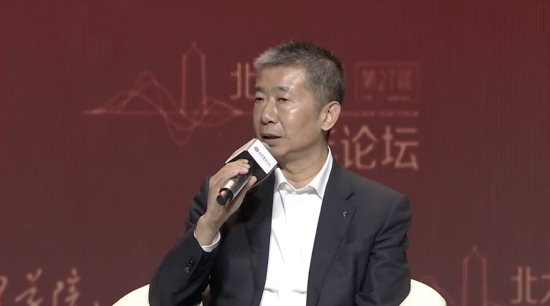
内需主导,聚力增长丨第二十七届北大光华新年论坛圆满举行
Xin Lang Cai Jing· 2026-01-17 13:45
Core Viewpoint - The 27th Peking University Guanghua New Year Forum focuses on "domestic demand-led growth" as a key theme, aligning with the central economic work conference's emphasis on strengthening the domestic market for the new phase of the 14th Five-Year Plan [1][19]. Group 1: Forum Overview - The forum was held on January 17, 2026, at Peking University, featuring prominent speakers including university officials and industry representatives [3][21]. - The event aims to contribute to the theoretical framework for the 14th Five-Year Plan and stimulate discussions on building a robust domestic market [1][19]. Group 2: Keynote Speeches - Liu Shijun discussed the shift from supply constraints to demand constraints in China's economic growth, emphasizing the need for a focus on consumption and human capital investment [7][24]. - Gao Peiyong highlighted the importance of stimulating residents' consumption as a key driver of economic growth, addressing challenges such as weak consumer confidence and the need for systemic reforms [10][26]. - Liu Qiao analyzed the paradox of low consumer spending in relation to high per capita consumption, suggesting policy reforms to enhance disposable income and consumer rates [12][29]. Group 3: Roundtable Discussion - The roundtable featured discussions on how new supply can create new demand, with industry leaders addressing the structural mismatches in consumer markets [14][32]. - Ma Tiemin pointed out the need for agricultural product market reforms to address supply-demand mismatches, advocating for digital tools and innovative production methods [15][33]. - Other participants emphasized the importance of understanding consumer behavior shifts and the need for companies to adapt their strategies to meet evolving market demands [16][34][35]. Group 4: Future Directions - Zhang Zheng summarized that creating new demand through new supply is a comprehensive process involving value creation, technological empowerment, and supply chain upgrades [18][36]. - The forum underscored the necessity for collaborative efforts among policymakers, capital providers, and entrepreneurs to foster a sustainable environment for innovation and growth [18][36].